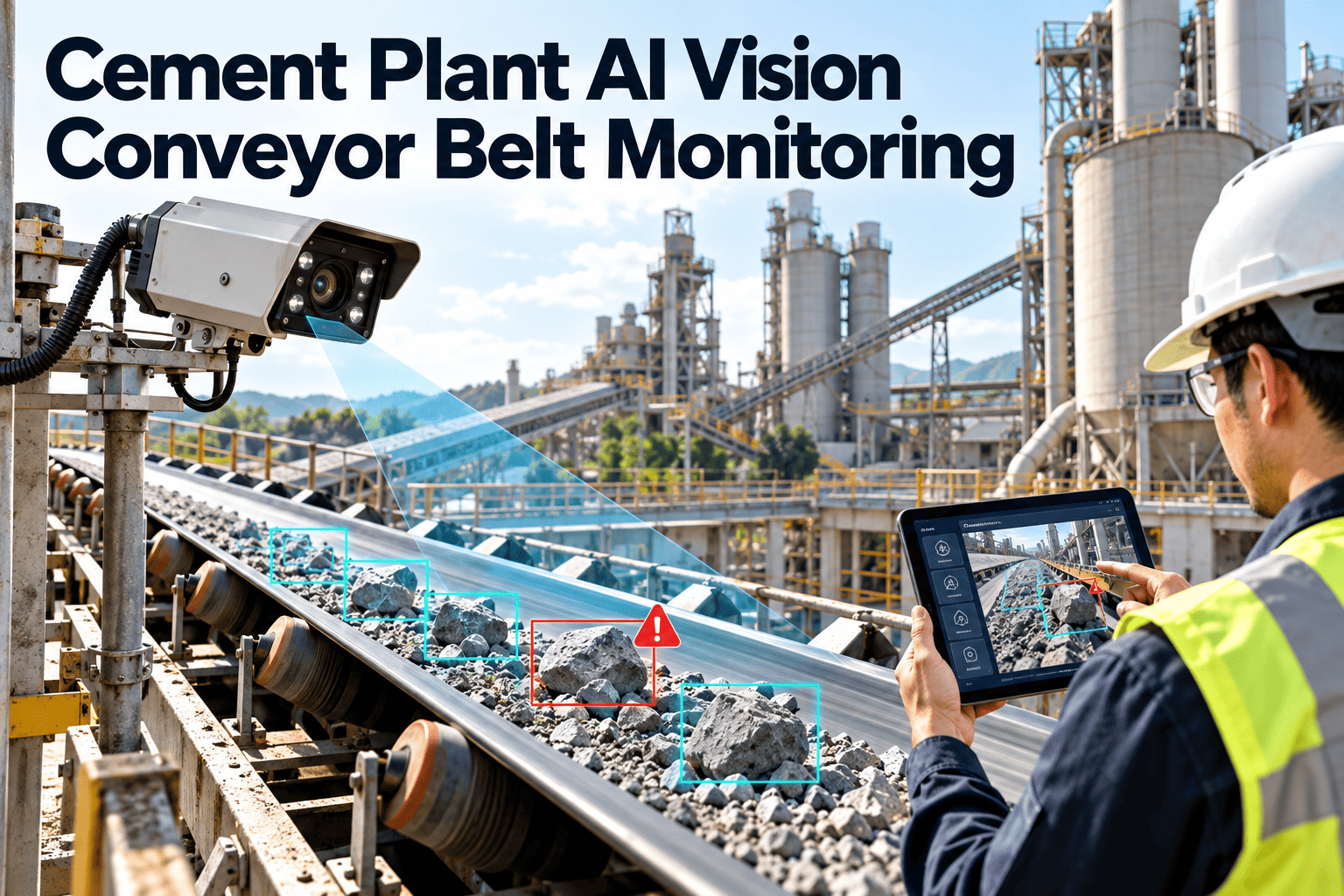
Conveyor belts move limestone, raw meal, coal, clinker, and cement through a plant, and a single torn or mistracked belt can stop a whole production line. Walk-around inspections catch some damage, but long, dusty, partly enclosed conveyors are hard to watch continuously. AI vision adds cameras and image analysis that flag spillage, misalignment, and surface damage while the belt runs. This guide covers what the technology can and cannot do, and how Oxmaint maintenance software turns each alert into inspected, tracked work.
Cement Plant AI Vision Conveyor Belt Monitoring
Move from occasional belt walks to continuous visual checks, and make sure every detected defect ends in a closed work order.
Why conveyor belts are a blind spot in cement plants
Belts run for long distances, often through covered galleries, dust, and hot zones where people rarely walk during operation.
What AI vision can detect on a belt
Detection quality depends on camera placement, lighting, and how well the model is trained on your own belts and materials.
| Condition | What the camera looks for | Typical maintenance response |
|---|---|---|
| Mistracking | Belt edge drifting toward one side or the frame | Check idler alignment, training idlers, and loading position |
| Spillage | Material outside the belt path or around transfer points | Inspect skirts, chute liners, and loading alignment |
| Carryback and build-up | Material clinging to the return side | Check scrapers and cleaners for wear |
| Surface damage | Cuts, gouges, and cover wear patterns | Inspect and schedule repair or splice work |
| Foreign objects | Tramp metal or oversized pieces on the belt | Stop and remove, then review upstream protection |
| Splice condition | Visible splice opening or damage | Inspect splice and plan repair in a stop |
| Blocked or empty flow | Unexpected material presence or absence | Check chutes, feeders, and upstream equipment |
From camera frame to closed work order
The value of vision is realised only if an alert becomes a verified action.
Capture
Cameras with suitable lighting record the belt surface, edges, and transfer points.Analyse
The model scores frames for known defect types and ignores normal variation.Alert
A confirmed detection is sent with an image, position, and time.Verify
A technician reviews the image or inspects the belt to confirm the finding.Act
A work order is raised, prioritised, and scheduled with parts and access.Learn
Findings feed back into model tuning and preventive routines.Make every belt alert traceable
Log inspections, raise work orders, and keep photo evidence against each conveyor asset in one system.
Cement-specific challenges for vision systems
Dust on lenses
Fine cement dust coats optics quickly. Cleaning and air purge checks need a schedule.Variable lighting
Galleries range from dark to sunlit. Dedicated lighting improves consistency.Similar-coloured material
Grey material on a dark belt can reduce contrast for certain defects.Heat and vibration
Clinker conveyors and nearby drives stress housings, mounts, and cabling.False alarms
Too many nuisance alerts lead crews to ignore the system. Tune thresholds carefully.Limited training data
Rare defects have few examples, so plants often start with simpler detections.Vision compared with other belt monitoring methods
| Method | Strength | Limitation |
|---|---|---|
| Manual inspection | Flexible and uses experienced judgement | Periodic, exposes people to moving equipment |
| AI vision | Continuous view of surface, edges, and spillage | Affected by dust, lighting, and model tuning |
| Thermal imaging | Finds hot idlers and bearings early | Shows heat, not surface damage |
| Belt rip detection sensors | Dedicated protection against longitudinal tears | Focused on one failure type |
| Vibration and motor current | Detects drive and roller issues | Little insight into belt surface |
Roll out in phases
- Phase 1Pick two or three critical conveyors, such as the limestone feed and clinker line, and record their failure history.
- Phase 2Trial cameras at transfer points and known trouble spots. Compare alerts with manual findings.
- Phase 3Define alert levels, owners, and response times, then connect alerts to work orders.
- Phase 4Extend to more belts, and add cleaning and calibration tasks for the cameras themselves.
Preventive routines that support vision monitoring
Camera system
- Clean lenses and check purge air
- Verify lighting output
- Check mounts and cabling
- Review false alarm log
Belt and structure
- Idler and training roller condition
- Scraper and skirt wear
- Splice and edge inspection
- Chute liner condition
KPIs to track
Alert-to-verify time
Time from detection to human confirmationConfirmed alert ratio
Real findings divided by total alertsBelt-related stops
Unplanned conveyor stoppages per monthSpillage clean-up work
Hours and orders spent on spill removalHow Oxmaint fits
Oxmaint manages the maintenance side. It does not perform image analysis, so vision tools and inspection findings remain your inputs.
Mobile inspections
Technicians confirm alerts and attach photos to the conveyor record.Work orders
Corrective jobs with priority, assignment, and closure verification.Preventive scheduling
Recurring idler, scraper, and camera cleaning tasks.Spare parts
Track belting, idlers, and skirt rubber for quick repairs.AI vision belt monitoring FAQs
Can AI vision replace belt inspections?
No. It extends coverage, but people still verify findings and carry out repairs.
Which belts should get cameras first?
Choose belts with high production impact, frequent spillage, or a history of tears.
How do we limit false alarms?
Tune thresholds on your own belts, require human confirmation, and review the alert log regularly.
Does Oxmaint analyse images?
No. Oxmaint records inspections, photos, and work created from your alerts.
How do we plan a pilot?
Start with two conveyors and defined alert owners, then book a demo to map the workflow.
Turn belt alerts into planned maintenance
Connect inspections, work orders, and spare parts so no detected defect is left without an owner.