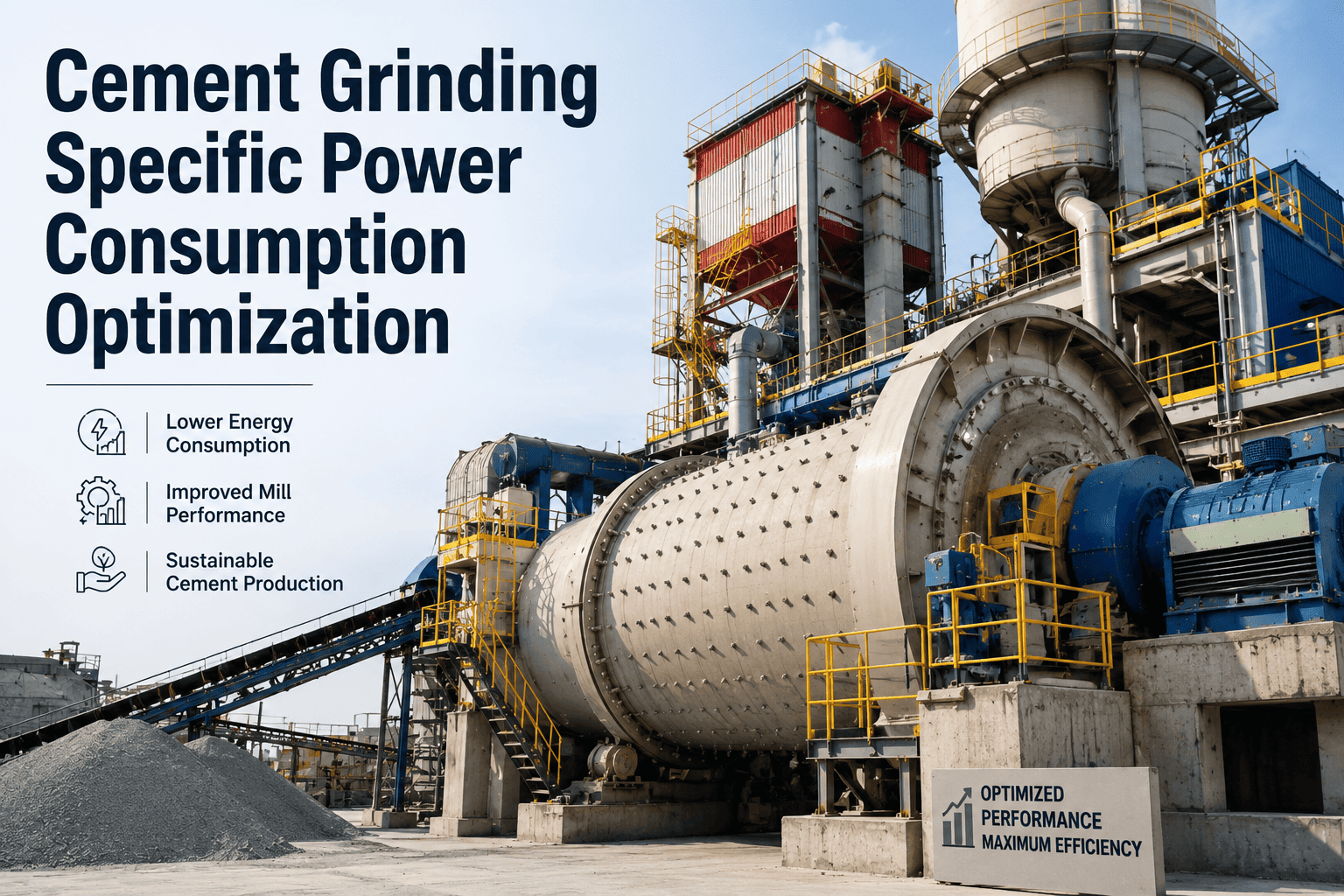
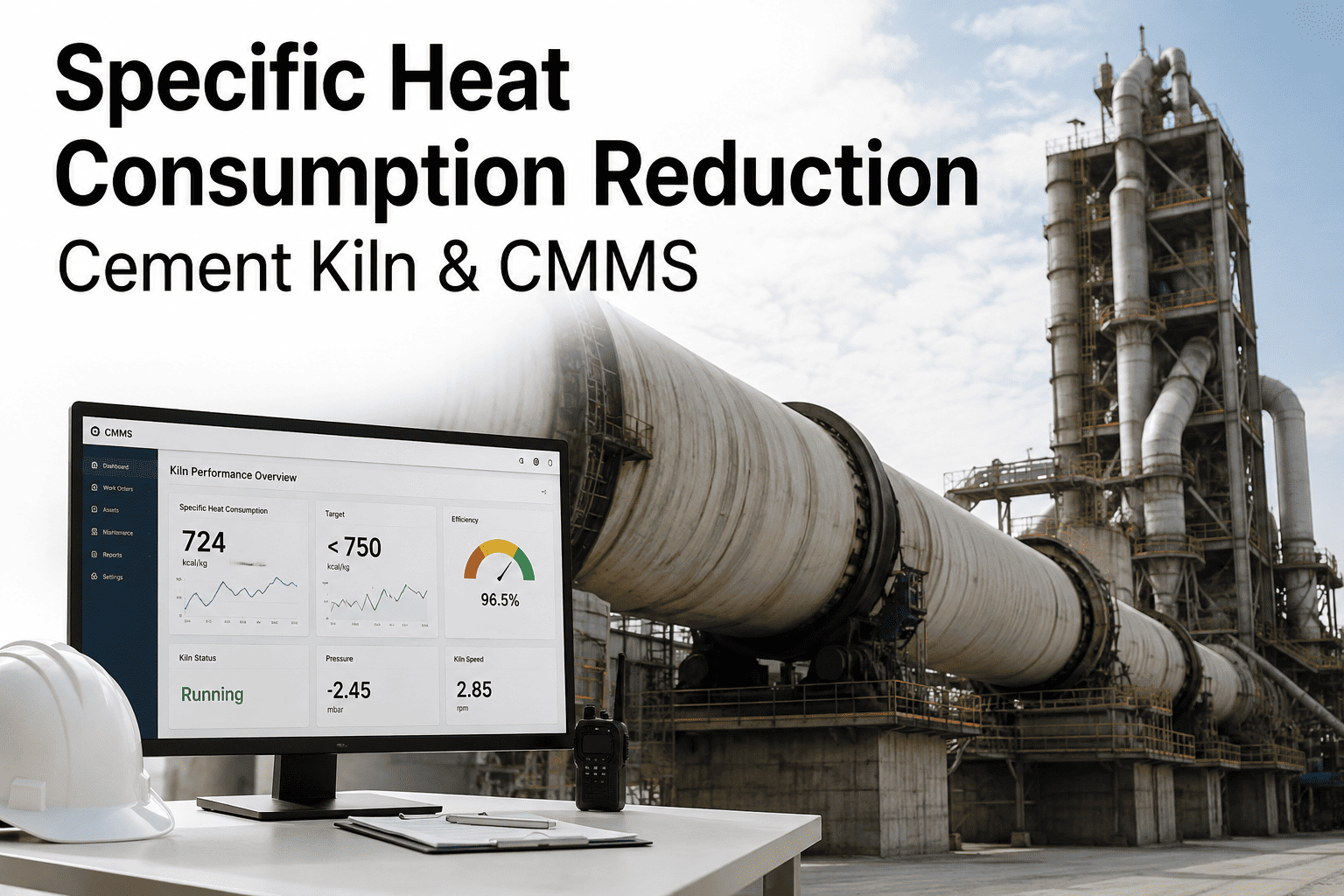
A cement plant consuming 120 kWh of electrical energy per ton of cement has no way of knowing whether that number represents strong performance or catastrophic waste — without a benchmark to measure against. Specific energy consumption (SEC) benchmarking compares your plant's energy performance at every process stage against domestic best practice, international best practice, and theoretical minimums, revealing exactly where your kilowatt-hours are being lost and how much each gap costs annually. Studies across 16 cement plants found that average technical electricity savings of 40% are achievable when facilities operate at international best practice levels, and even reaching domestic best practice unlocks 16% savings. With energy accounting for 40–45% of cement production costs, benchmarking is not an academic exercise — it is the difference between profitability and margin erosion. Sign up for Oxmaint to start tracking SEC across every process stage with automated benchmarking dashboards built for cement operations.
4.1B
metric tons of cement produced globally per year
7–8%
of global CO₂ emissions from cement manufacturing
110–120
kWh electrical energy per ton cement (industry average)
23%
average savings potential vs. international best practice
This guide provides cement plant engineers and operations managers with a complete SEC benchmarking framework — covering process-level benchmarks, regional comparisons, gap analysis methodology, improvement prioritization, and the digital tools that make continuous benchmarking sustainable rather than a one-time exercise.
What Is Specific Energy Consumption Benchmarking?
Specific energy consumption measures the energy required to produce one unit of output — expressed as kWh per ton for electrical energy and MJ or GJ per ton for thermal energy. Benchmarking takes this measurement further by comparing your plant's SEC against reference values: your own historical best, peer facilities with similar configurations, domestic industry averages, and global best-available-technology (BAT) benchmarks. The gap between actual SEC and benchmark SEC quantifies exactly how many kilowatt-hours per ton your plant wastes — and multiplying that gap by annual production tonnage and electricity cost per kWh gives you the annual dollar value of every inefficiency. A plant producing 1.5 million tons annually with a 15 kWh/ton gap at $0.08/kWh loses $1.8 million per year in excess electrical consumption alone.
Process-Stage SEC Benchmarks for Cement Production
Total plant SEC is a useful high-level metric, but it masks critical inefficiencies buried within individual process stages. Two plants can have identical total SEC while one hemorrhages energy in grinding and the other wastes it on compressed air. Breaking SEC into process-stage benchmarks reveals precisely where intervention delivers the highest return. Create your free Oxmaint account to configure process-level SEC tracking that automatically compares your readings against these benchmark ranges.
Raw Material Crushing
1–3
4–7
8–12
Raw Material Grinding
14–18
22–28
32–40
Kiln & Pyroprocessing Auxiliaries
18–22
24–28
30–38
Cement Grinding (Finish Mill)
24–28
32–38
42–55
Compressed Air & Utilities
4–6
7–10
12–18
Total Plant SEC
85–95
110–120
135–160
Best Available Technology (BAT)
Global Industry Average
Underperforming Plants
Thermal Energy Benchmarks by Kiln Technology
While electrical SEC drives the grinding and auxiliary cost equation, thermal SEC dominates overall energy expenditure — accounting for roughly 75% of total plant energy. Kiln technology is the single largest determinant of thermal performance, and upgrading from older wet-process technology to modern dry-process with preheater/precalciner delivers the most dramatic improvement. Plants still operating wet-process kilns consume nearly double the thermal energy of modern dry-process facilities.
Wet Process
5.0–6.0
GJ/ton clinker
Highest energy consumption due to water evaporation. Being phased out globally.
Semi-Dry / Semi-Wet
3.4–4.2
GJ/ton clinker
Intermediate technology. Moderate improvement over wet process but still above modern targets.
Dry Process (4-Stage PH)
3.1–3.4
GJ/ton clinker
Standard modern technology. Most plants globally now operate with 4+ stage preheaters.
Dry Process (5–6 Stage PH + PC)
2.9–3.1
GJ/ton clinker
Current best practice. Achievable with optimized preheater, precalciner, and waste heat recovery.
Gap Analysis: Quantifying Your Savings Potential
The gap analysis is the most commercially valuable output of any benchmarking exercise. It translates abstract performance differences into concrete dollar amounts that justify capital investment, prioritize maintenance actions, and set measurable improvement targets for operations teams. Below is a worked example showing how a mid-performing plant (120 kWh/ton total SEC) can quantify its savings potential at each process stage when targeting BAT benchmarks. Book a demo to see how Oxmaint automates gap analysis with real-time SEC tracking against configurable benchmarks per subsystem.
Process Stage
Current SEC
BAT Target
Gap (kWh/t)
Annual kWh Saved
Annual $ Saved
Raw Grinding
28
16
12
18,000,000
$1,440,000
Kiln Auxiliaries
27
20
7
10,500,000
$840,000
Cement Grinding
38
26
12
18,000,000
$1,440,000
Compressed Air
10
5
5
7,500,000
$600,000
Other (Conveyors, Lighting)
17
14
3
4,500,000
$360,000
TOTAL
120
81
39
58,500,000
$4,680,000
Stop Guessing Where Energy Dollars Go
Oxmaint's SEC benchmarking dashboards compare your plant's real-time performance against BAT, industry average, and your own historical best — per process stage, per shift, per day. Identify exactly which subsystems need attention and track improvement over time.
Technology Impact on SEC: Ball Mill vs. Vertical Roller Mill
Grinding technology is the single most impactful variable determining electrical SEC. The difference between ball mill and vertical roller mill (VRM) technology represents 30–40% reduction in specific energy consumption for the same product fineness. Understanding this technology gap is essential for benchmarking accurately — comparing a ball mill plant against VRM benchmarks without adjustment creates misleading gap analysis results.
Ball Mill (Conventional)
32–42
kWh/t cement grinding
Higher energy due to heat generation and low grinding efficiency (1–5% of energy goes to size reduction)
Requires periodic media replacement — worn media increases SEC by 10–15%
Classifier efficiency directly impacts recirculation load and energy waste
VS
Vertical Roller Mill (VRM)
20–28
kWh/t cement grinding
Compression grinding delivers 30–40% lower SEC for equivalent fineness
Simultaneous drying capability eliminates separate dryer energy consumption
Lower maintenance frequency but requires specialized roller/table inspection protocols
5-Step SEC Benchmarking Methodology
Effective benchmarking requires a structured methodology that accounts for production variables, raw material differences, product mix, and seasonal factors. A benchmarking exercise conducted without normalizing for these variables produces misleading comparisons that can drive wrong investment decisions.
01
Define Boundaries & Metering Points
Establish clear measurement boundaries for each process stage. Install or verify calibration on sub-meters at every motor control center, major feeder, and individual high-draw equipment. Without accurate sub-metering, total plant SEC is the only available metric — and it hides every subsystem inefficiency.
02
Collect Baseline Data Over Complete Cycles
Record energy consumption and production output at 15-minute intervals across minimum two complete production cycles. Include different operating conditions: full capacity, reduced throughput, and different product grades. Partial data produces misleading baselines.
Oxmaint automates data collection from connected meters and DCS systems, eliminating manual logging errors.
03
Normalize for Production Variables
Adjust SEC calculations for factors that legitimately affect energy consumption: raw material hardness (Bond Work Index), product fineness (Blaine), clinker-to-cement ratio, ambient temperature, and altitude. Comparing a plant grinding hard limestone at 4,200 Blaine against a benchmark derived from soft chalk at 3,600 Blaine produces meaningless results.
04
Compare Against Tiered Benchmarks
Benchmark against four reference tiers: your own historical best (achievable without investment), peer plants with similar technology and raw materials, domestic industry best practice, and international BAT. Each tier reveals different improvement opportunities — from operational tuning to capital investment decisions.
05
Quantify Gaps & Prioritize by ROI
Calculate the kWh/ton gap and annual cost at each process stage for each benchmark tier. Rank improvement opportunities by payback period: operational adjustments (weeks), maintenance corrections (months), equipment upgrades (1–3 years), and technology replacements (3–7 years). Link each opportunity to a
trackable KPI in your CMMS for continuous monitoring.
Common Factors That Inflate SEC Beyond Benchmarks
Understanding why your SEC exceeds benchmarks is as important as knowing the gap exists. The root causes fall into three categories: equipment degradation that maintenance teams can address, operational practices that process engineers can optimize, and technology limitations that require capital investment to overcome. Schedule a demo to see how Oxmaint correlates SEC deviations with equipment health data to pinpoint root causes faster.
Equipment & Maintenance
5–15%
Worn grinding media increasing specific energy per ton of product by forcing longer grinding cycles
3–8%
Low power factor from degraded capacitor banks causing reactive power penalties and distribution losses
2–5%
Bearing deterioration and misalignment increasing motor loads above rated operating current
Operational Practices
10–25%
Running below nameplate capacity — SEC rises sharply when mills operate below 70% throughput
15–30%
Damper-controlled fans instead of VFDs wasting energy through mechanical throttling of airflow
2–5%
Idling equipment during non-production hours consuming energy without producing output
Technology Gaps
30–40%
Ball mill vs. VRM technology — the single largest determinant of grinding circuit SEC
10–20%
First-generation separators vs. high-efficiency classifiers affecting recirculation ratio and energy waste
5–15%
Absence of waste heat recovery systems leaving recoverable thermal energy unused
Making Benchmarking Continuous, Not One-Time
A benchmarking exercise conducted once per year produces a snapshot that becomes obsolete within weeks as equipment degrades, operating conditions shift, and raw material composition changes. The plants that sustain efficiency gains embed SEC benchmarking into their daily operations through CMMS-integrated dashboards that compare real-time performance against stored benchmarks continuously. When SEC drifts above threshold on any subsystem, the dashboard triggers an automatic investigation work order — closing the loop between measurement and corrective action. Plants linking their benchmarking data to proactive downtime reduction strategies sustain savings 3x longer than those relying on periodic assessments alone.
Real-Time SEC Tracking
Live kWh/ton calculations per subsystem updated every 1–5 minutes, with rolling 4-hour, 24-hour, and 30-day trend overlays. Color-coded against benchmark tiers so operators see status at a glance.
Automated Threshold Alerts
When any subsystem SEC exceeds its benchmark by a configurable percentage (typically 5–10%), the system triggers an investigation alert with pre-assigned ownership and priority level.
CMMS Work Order Integration
Every SEC threshold breach auto-generates a work order in your CMMS with equipment ID, current vs. benchmark SEC, suggested inspection points, and deadline. Completed work orders feed back into the benchmarking dataset to verify improvement.
Quarterly Benchmark Recalibration
Benchmarks recalculated every 90 days using rolling averages adjusted for production volume, product mix, and raw material changes. Prevents stale baselines from masking gradual degradation.
Benchmark Every Kilowatt-Hour, Every Shift, Automatically
Oxmaint's SEC benchmarking module connects to your DCS and metering infrastructure, calculates process-stage SEC in real time, and triggers maintenance workflows when performance gaps appear. Pre-built cement industry benchmarks get you started immediately.
Frequently Asked Questions
What is a good specific energy consumption (SEC) for a modern cement plant?
Best-in-class modern dry-process cement plants with 5–6 stage preheaters and VRM grinding technology achieve total electrical SEC of 85–95 kWh per ton of cement. The global industry average sits around 110–120 kWh/ton. Plants operating above 135 kWh/ton are typically classified as underperformers with significant improvement potential across grinding circuits, fan systems, and compressed air infrastructure.
How do you normalize SEC for different raw materials and product grades?
Normalization adjusts for factors that legitimately affect energy consumption. For grinding SEC, normalize using the Bond Work Index of your raw materials and the target Blaine fineness of your product. For kiln thermal SEC, normalize using clinker-to-cement ratio and alternative fuel substitution rate. Industry benchmarking tools like BEST-Cement (developed by Lawrence Berkeley National Lab) provide standardized normalization frameworks specifically for cement plant comparisons.
What is the difference between benchmarking against BAT versus peer plants?
BAT (Best Available Technology) benchmarks represent what is technically achievable using the most energy-efficient commercially available equipment — essentially the theoretical minimum for that process with current technology. Peer benchmarking compares your plant against facilities with similar configurations, raw materials, and product mix. BAT benchmarks show maximum improvement potential, while peer benchmarks show what is realistically achievable without major technology changes.
How much can SEC benchmarking realistically save per year?
Research across multiple cement plant surveys shows average technical electricity savings potential of 12% when operating at domestic best practice and 23% at international best practice levels. For a 1.5 million ton/year plant with average electricity costs of $0.08/kWh, reaching domestic best practice saves approximately $1.6 million annually, and reaching international BAT levels saves approximately $3.3 million annually in electrical costs alone.
How often should SEC benchmarks be updated?
Internal benchmarks (your plant's historical best) should be recalculated quarterly using rolling 90-day averages to account for seasonal variations and production mix changes. Industry and BAT benchmarks should be reviewed annually as new technology becomes commercially available. Plants with continuous SEC monitoring through their CMMS can detect performance drift in real time, making the traditional annual benchmarking exercise a confirmation rather than a discovery.
Can a CMMS help with SEC benchmarking beyond just data collection?
A modern CMMS goes far beyond data collection for benchmarking. It correlates SEC changes with maintenance events (showing which repairs improved or degraded energy performance), auto-generates work orders when SEC exceeds benchmark thresholds, tracks the energy impact of every maintenance action over time, and provides trend analysis that reveals gradual degradation before it becomes a significant cost driver. This closed-loop integration between benchmarking data and maintenance execution is what separates plants that sustain savings from those that see improvements erode within months.
Should we benchmark thermal and electrical SEC separately or together?
Both separately and together. Total primary energy SEC (thermal + electrical converted to primary energy) provides a holistic efficiency picture useful for management reporting and carbon accounting. However, actionable benchmarking requires separate electrical and thermal SEC tracking because the improvement actions, responsible teams, and investment pathways differ completely. Grinding circuit electrical SEC is a maintenance and equipment issue, while kiln thermal SEC is primarily a process engineering and fuel management challenge.