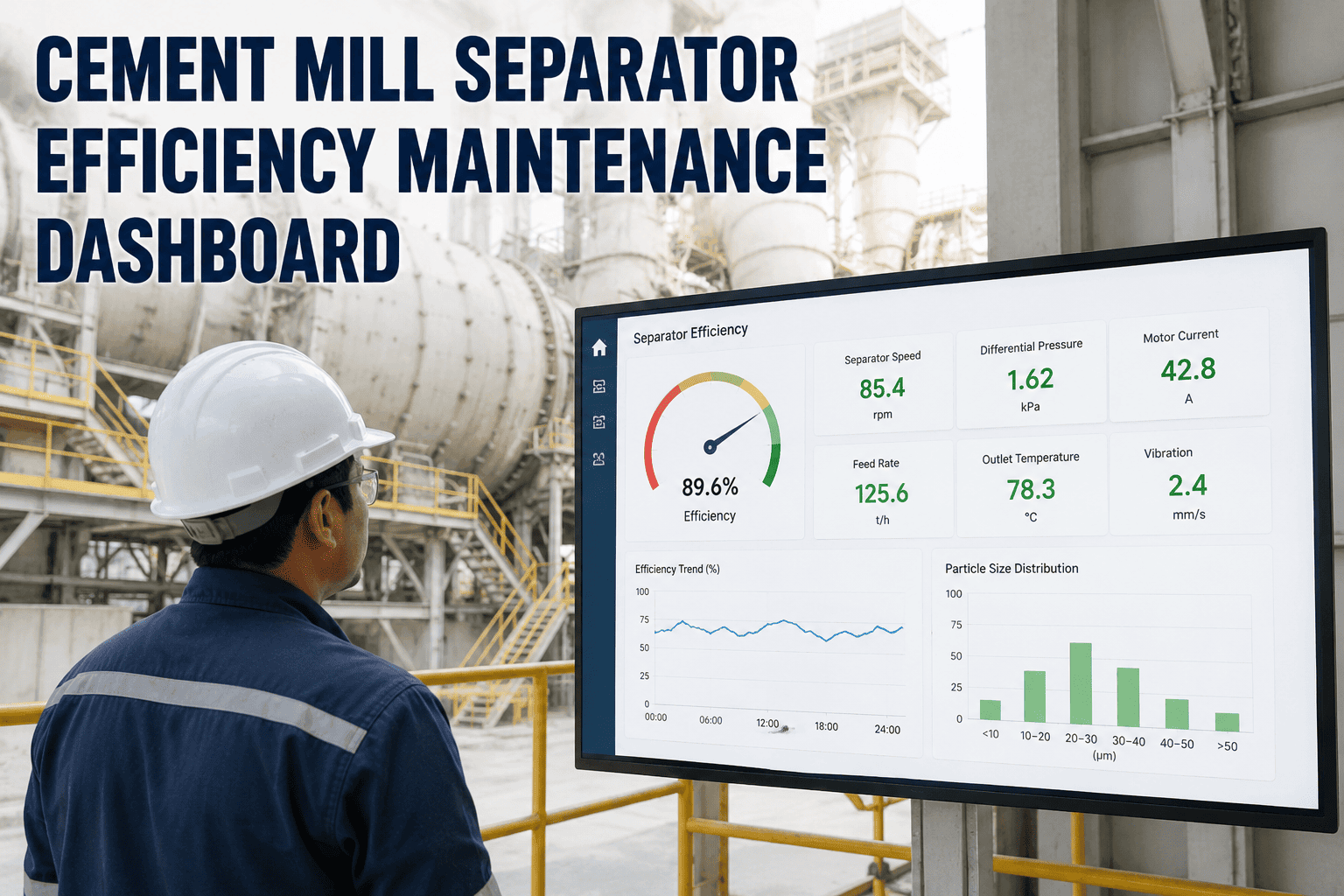
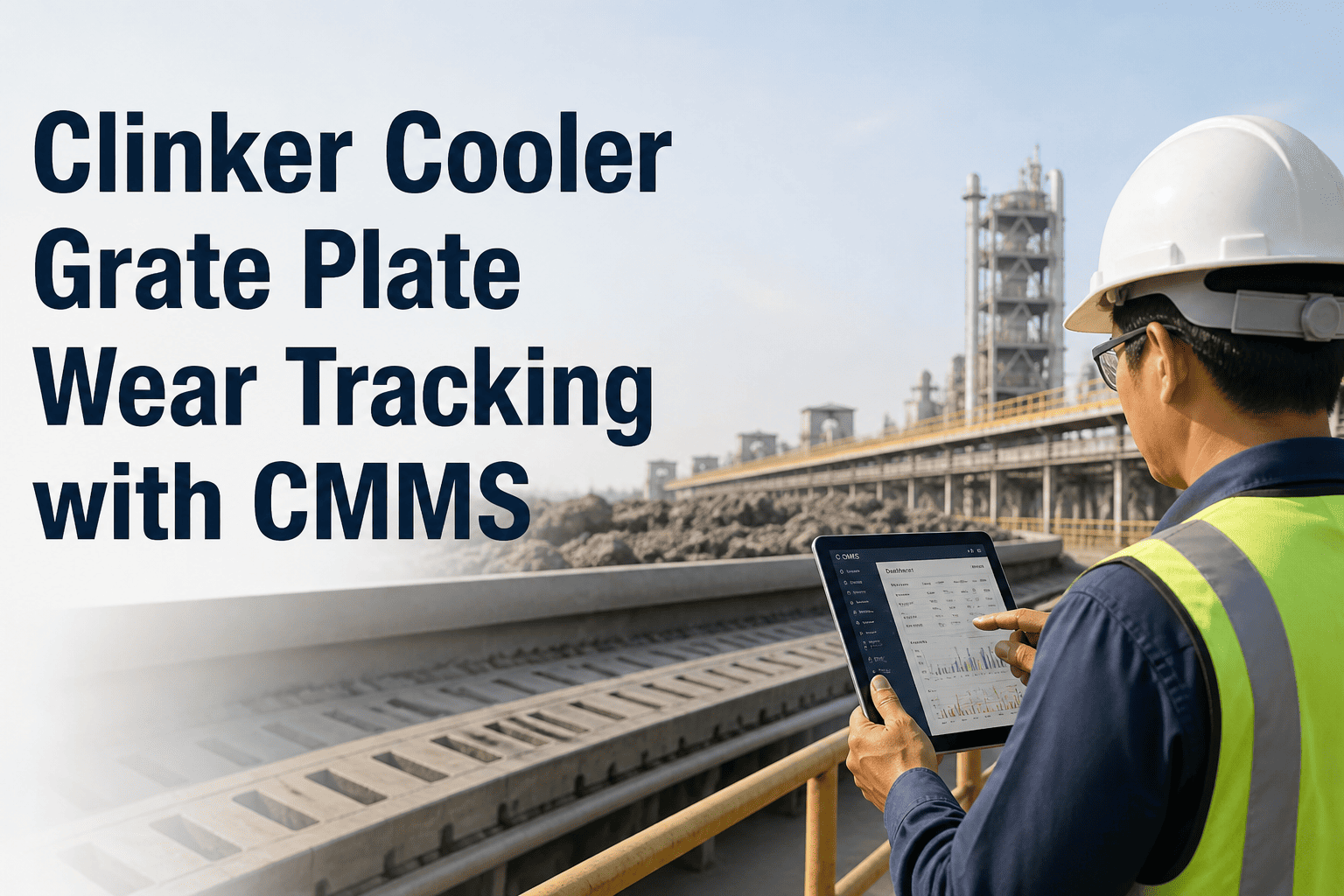
Cement plants operate on razor-thin margins where even a 1% improvement in OEE can translate to millions in annual savings. Yet most plants still rely on shift-end paper reports and monthly Excel reviews to track performance — by the time a problem surfaces, hours of production have already been lost.
This executive brief explores how leading cement producers are deploying AI-powered KPI dashboards to track production efficiency in real time, predict equipment bottlenecks, and optimize clinker-to-cement ratios. By replacing lagging indicators with live analytics, plants can move from reactive troubleshooting to proactive optimization. Start your production intelligence pilot today.
The Visibility Gap in Cement Operations
A typical cement plant runs 24/7 across kilns, mills, and packaging lines — yet production data is often siloed in SCADA screens, handwritten logs, and disconnected spreadsheets. Shift supervisors make decisions on gut feel instead of data. Unplanned downtime, quality deviations, and energy spikes go undetected until they hit the P&L. Assess your plant's KPI maturity.
Core KPIs Every Cement Plant Must Track
Effective production optimization starts with measuring the right metrics. AI-powered dashboards pull data from SCADA, DCS, lab systems, and maintenance logs to compute KPIs automatically — no manual entry, no formula errors, no delays. See the KPI dashboard in action.
□ Performance: Compares actual TPH against rated capacity in real time
□ Quality: Integrates lab results (free lime, fineness, SO₃) to flag off-spec batches
□ World-class cement OEE target: 85%+ — most plants operate at 65-75%
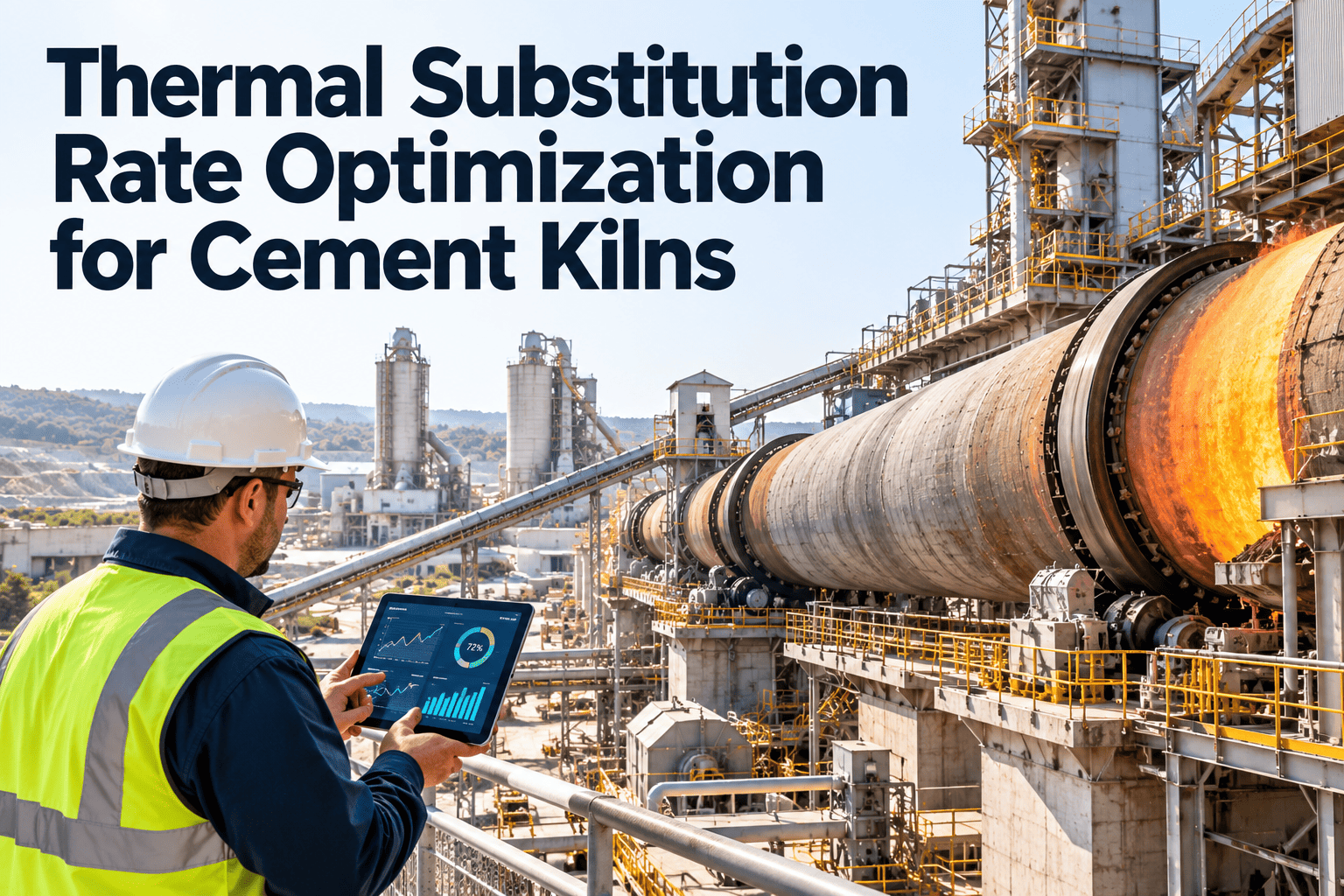
□ Monitor kiln feed rate, burning zone temperature, and specific heat consumption
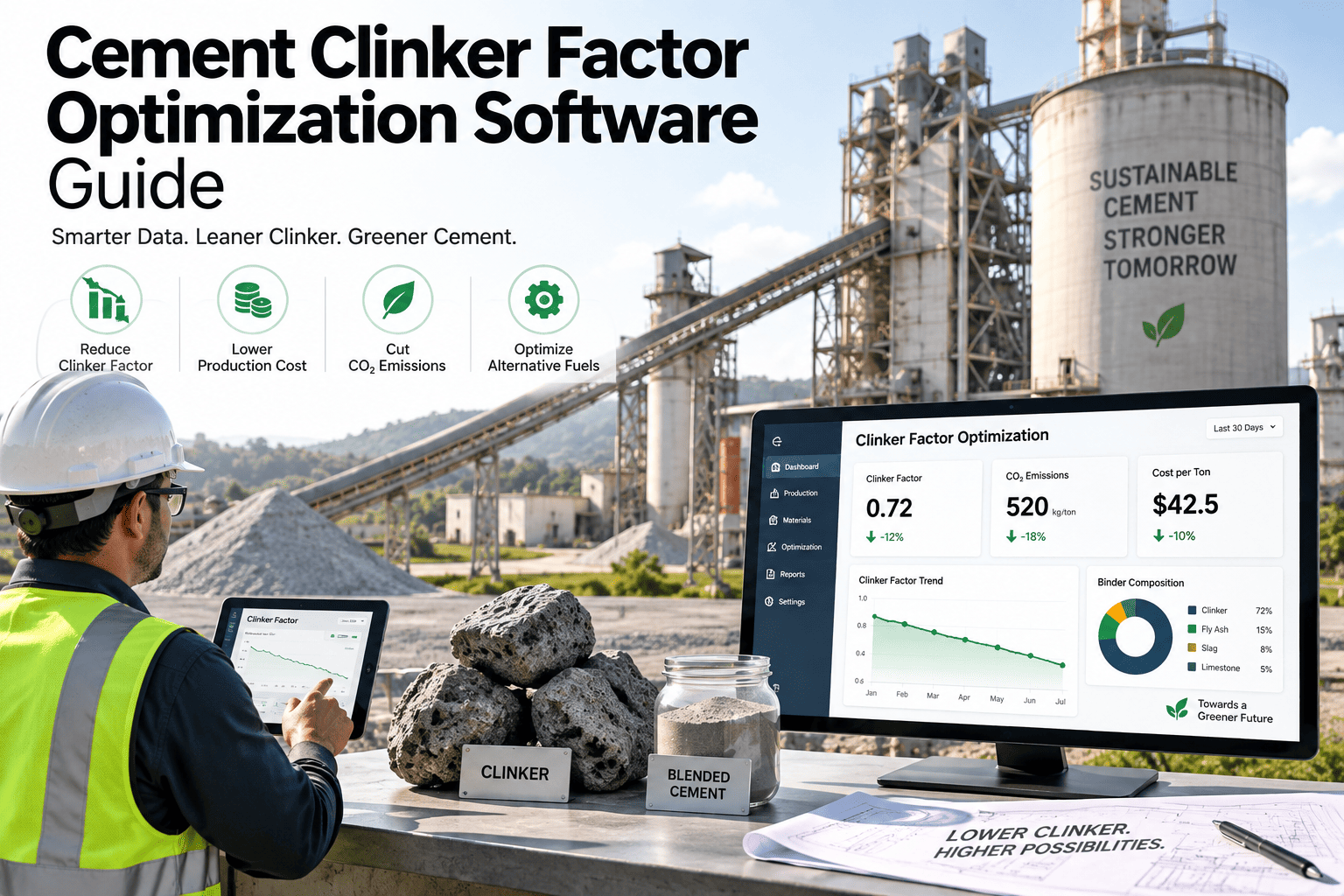
□ Alert when clinker factor exceeds threshold — triggers additive mix optimization
□ Correlate production rate (TPD) with energy consumption for optimal operating point
□ Specific power consumption (kWh/ton cement) — benchmark: 75-90 kWh/ton
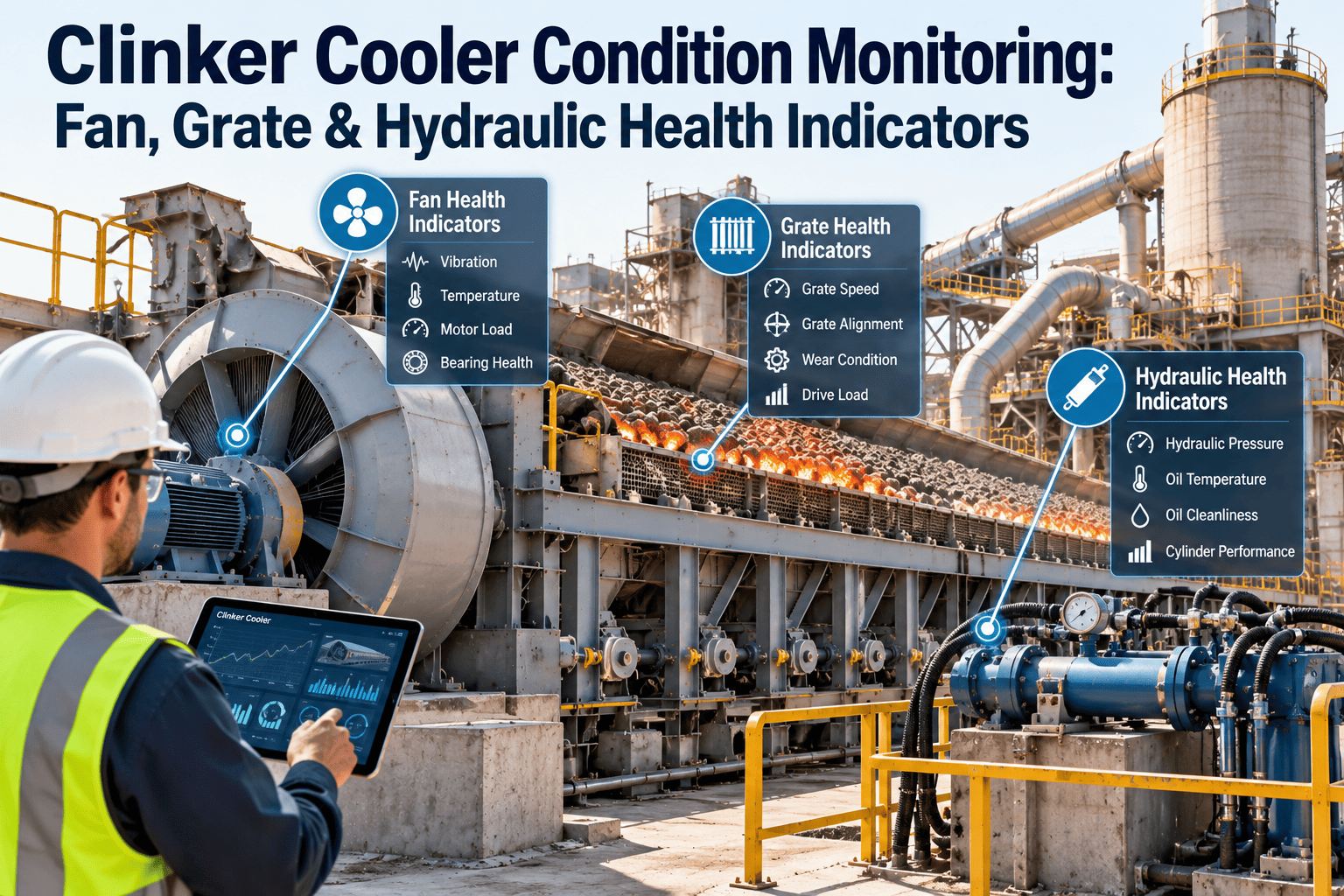
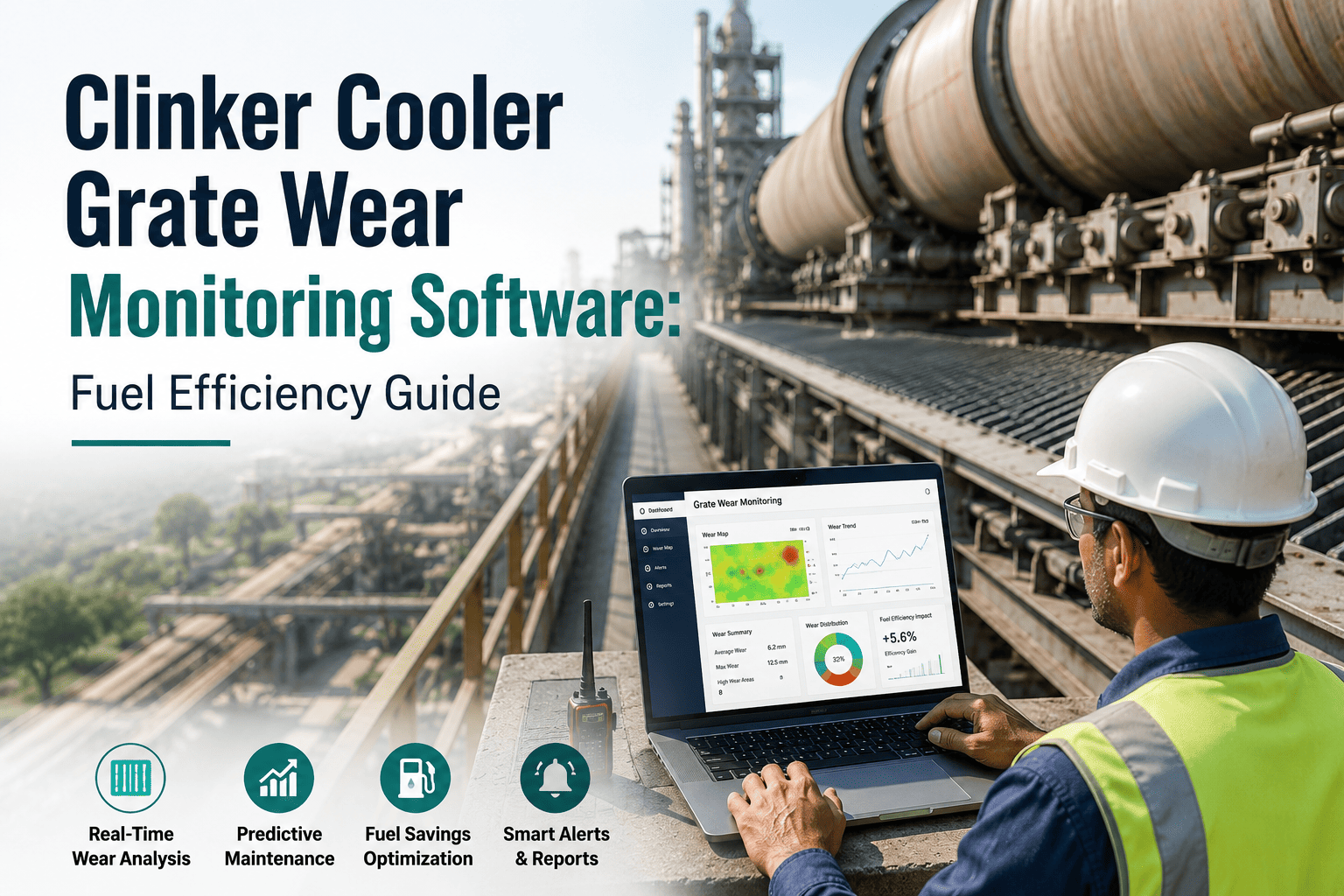
□ Kiln thermal efficiency and cooler heat recovery rate
□ Mill-specific energy: raw mill, cement mill, coal mill tracked independently
□ Pareto analysis of top 10 downtime causes updated hourly
□ Equipment utilization rate per section (kiln, raw mill, cement mill, packing)
□ MTBF and MTTR trends to measure maintenance effectiveness
AI-Powered Analytics: Beyond Basic Dashboards
Raw numbers on a screen aren't enough. AI analytics transform KPI data into prescriptive actions — identifying root causes, predicting bottlenecks, and recommending optimal setpoints. When the system detects efficiency dropping, it doesn't just alert; it tells you why and what to do. Activate intelligent production analytics today.
Manual Tracking vs. AI-Powered KPI Systems
The difference between manual KPI tracking and AI-powered systems isn't incremental — it's transformational. Plants using real-time analytics consistently outperform peers on every efficiency metric. Request a customized efficiency assessment.
Implementation Roadmap for Cement Plants
Deploying a KPI tracking system doesn't require ripping out existing infrastructure. The approach is layered — start with data integration, add dashboards, then activate AI optimization. Get your plant's digital roadmap.
Deliverable: Unified data layer across kiln, mills, and lab
Success Metric: 95%+ data availability and accuracy
Deliverable: Role-based dashboards with mobile access
Success Metric: Zero manual shift reports needed
Deliverable: Self-optimizing production intelligence
Success Metric: >10% OEE improvement within 6 months. Start your journey
Case Study: Integrated Cement Plant — 6,500 TPD
Frequently Asked Questions
OEE (Overall Equipment Effectiveness) combines three critical factors — Availability, Performance, and Quality — into a single percentage score. For cement plants, it reveals hidden losses across kiln lines, mills, and packing operations that individual metrics miss. A plant running at 68% OEE vs. 85% OEE on a 5,000 TPD line loses the equivalent of $4-6M in annual production capacity. OEE is the master metric because it exposes whether downtime, speed losses, or quality rejects are your biggest efficiency drain.
SCADA shows you raw process data — temperatures, pressures, flow rates — in real time. But it doesn't compute KPIs automatically, correlate variables across systems, or predict future problems. AI-powered KPI tracking sits on top of SCADA and pulls data from DCS, lab LIMS, maintenance systems, and energy meters to calculate OEE, clinker factor, specific energy consumption, and dozens of other metrics automatically. More importantly, it uses machine learning to detect anomalies, predict equipment failures, and recommend optimal setpoints — turning raw data into actionable intelligence.
Clinker factor is the ratio of clinker used per ton of cement produced. Since clinker production is the most energy-intensive and carbon-intensive step (accounting for ~60-70% of manufacturing cost and ~90% of CO₂ emissions), reducing clinker factor directly cuts both costs and emissions. Typical plants run at 0.78-0.85 clinker factor, but optimized blended cement formulations can bring it below 0.73. Real-time tracking alerts operators when clinker factor drifts above target, triggering adjustments in supplementary cementitious materials (SCMs) like fly ash, slag, or limestone to bring it back in line — saving $3-5 per ton of cement produced.
A typical implementation follows three phases over 12-16 weeks. Phase 1 (Weeks 1-4) focuses on data integration — connecting SCADA, DCS, and lab systems into a unified data layer. Phase 2 (Weeks 5-8) deploys live dashboards with role-based views and alert configurations. Phase 3 (Weeks 9-16) activates AI models for predictive analytics and optimization recommendations. Most plants see measurable OEE improvements within the first 60 days of dashboard deployment, with full ROI typically achieved in 5-8 months.
The critical energy KPIs include: specific heat consumption (kcal/kg clinker, benchmark 700-750), specific power consumption (kWh/ton cement, benchmark 75-90), kiln thermal efficiency, cooler heat recovery rate, and mill-specific energy for raw mill, cement mill, and coal mill independently. Additionally, tracking power factor, peak demand charges, and energy cost per ton of cement gives a complete financial picture. AI dashboards correlate these metrics with production parameters to identify the optimal operating point where energy efficiency and throughput are both maximized.
Yes. OxMaint's KPI platform is designed to layer on top of existing infrastructure without replacing it. It supports standard industrial protocols including OPC-UA, OPC-DA, Modbus TCP, and direct database connections to major DCS/SCADA platforms (Siemens, ABB, Honeywell, Yokogawa, Schneider). Data is pulled non-invasively — no changes to your control logic or PLC programs. The system also integrates with lab LIMS, ERP (SAP, Oracle), and existing maintenance CMMS to create a unified production intelligence layer.
Unplanned kiln stops are the single most expensive event in cement operations — each stop can cost $50,000-$200,000 in lost production, refractory damage, and restart energy. AI predictive analytics monitors hundreds of parameters simultaneously (bearing temperatures, shell temperatures, drive current, refractory thermal profiles, fan vibrations) and identifies subtle patterns that precede failures — often 24-72 hours before a breakdown occurs. This gives maintenance teams time to plan a controlled shutdown, prepare parts, and execute repairs during scheduled windows rather than emergency stops.
Based on typical cement plant implementations, the ROI sources include: 10-16% OEE improvement (translating to $2-6M additional annual production value), 8-15% reduction in specific energy consumption ($1-4M savings depending on plant size), 50-60% reduction in unplanned downtime, and 5-10% reduction in clinker factor (both cost and CO₂ savings). For a mid-size plant (5,000-6,500 TPD), total annual benefits typically range from $4-8M, with system payback achieved in 4-8 months. Request a customized ROI calculation for your specific plant parameters.
The platform integrates directly with your lab LIMS to pull quality test results (free lime, fineness/Blaine, SO₃, compressive strength, setting time) and maps them against production batches in real time. When any quality parameter drifts toward spec limits, the system alerts operators before off-spec cement is produced — shifting quality control from "test and reject" to "predict and prevent." It also maintains complete audit trails for IS/BIS, ASTM, and EN cement standard compliance, and auto-generates quality certificates and compliance reports.
Yes. OxMaint provides fully responsive dashboards accessible on any device — desktop screens in the control room, tablets for shift supervisors on the plant floor, and smartphones for management reviewing KPIs remotely. Role-based access ensures operators see relevant process KPIs, maintenance teams see equipment health and work orders, and executives see plant-level performance summaries. Push notifications deliver critical alerts directly to the right person's device, ensuring no efficiency loss goes unnoticed regardless of where team members are located.
Maximize Your Cement Plant's Potential
KPI tracking in cement production isn't about collecting more data — it's about converting data into decisions that drive throughput, reduce cost, and ensure consistent quality. AI-powered dashboards give every level of the organization, from control room operators to the CEO, the visibility they need to act fast.
Don't let another shift pass without knowing your real OEE. Take control of your production metrics with intelligent analytics. Schedule your plant efficiency briefing or start your KPI tracking pilot today.