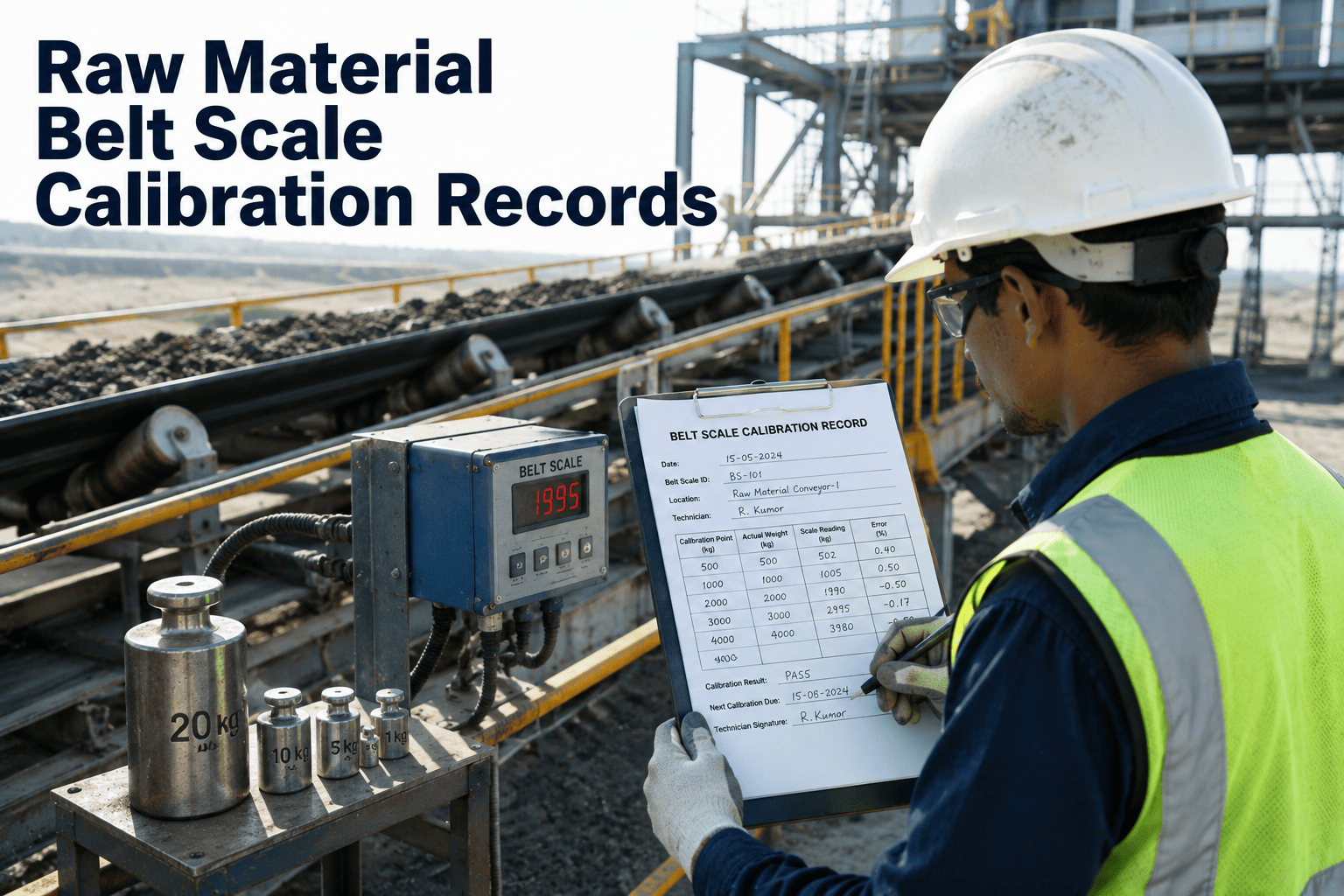
A cement dispatch unit in Rajasthan ran 340 truck movements a day through two weighbridges — neither had a calibration record newer than 14 months. When an audit flagged a 1.2% load discrepancy across 6,200 transactions, the financial exposure ran into crores before anyone opened a work order. The weighbridge had not failed visibly. It had drifted, quietly, across thousands of cycles with no one tracking calibration intervals or sensor wear. Facilities managing weighbridge calibration inside a structured CMMS like OxMaint maintain audit-ready records, catch drift before dispatch records are compromised, and close vendor repair cycles in days rather than weeks. If your dispatch accuracy depends on a weighbridge with no maintenance log, the risk is already active. Book a demo to see how OxMaint tracks weighbridge calibration and compliance.
Weighbridge Maintenance and Calibration Tracking for Cement Dispatch
Every tonne dispatched is only as accurate as the weighbridge that measured it. OxMaint gives cement plants a complete PM, calibration, and vendor repair log — so your dispatch records hold up to any audit, any time.
Why Weighbridge Drift Goes Unnoticed Until an Audit
A weighbridge does not fail the way a motor fails. There is no alarm, no stoppage, no visible indicator. Load cells degrade gradually due to mechanical fatigue, temperature cycling, and overload events. Indicator electronics drift with humidity and voltage variation. Junction boxes corrode in dusty cement environments. The result is a reading that is close enough to pass a daily check but wrong enough to matter across thousands of transactions.
Most cement plants track calibration on a paper register — if at all. When the Legal Metrology inspector arrives, locating the last calibration certificate becomes a scramble. When a customer disputes a load figure, there is no history to reference. When a sensor replacement is needed, the vendor call becomes urgent rather than planned.
What a Complete Weighbridge Maintenance Programme Covers
Weighbridge maintenance is not a single task — it spans mechanical inspection, electronic calibration, civil structure checks, and legal compliance documentation. Each domain has its own interval, qualified personnel, and record requirement.
Load cell checks cover mechanical seating, cable integrity, junction box moisture sealing, and individual cell output verification. Full calibration with certified test weights is required every 6 months for legal compliance — and after any overload event, structure repair, or component replacement.
Indicator units are checked for zero drift, span accuracy, and temperature compensation behaviour. Firmware currency and display legibility are verified. Controller communication to dispatch management systems is tested to prevent silent integration failures that produce incorrect automated records.
Deck surface checks identify cracking, surface debris buildup, and approach ramp condition that affect tare weight readings. Foundation movement from monsoon soil shifting is a common cause of sudden calibration loss in Indian cement plant environments — annual civil inspection prevents this failure mode.
Legal Metrology Act requires stamped calibration certificates with test weight records from a licensed metrology lab. Certificate expiry tracking in OxMaint generates renewal alerts 30 days before expiry — so your weighbridge is never dispatching under an expired certificate when an inspector arrives.
Voltage fluctuation in cement plant power environments is a primary cause of indicator drift and premature load cell failure. UPS battery health checks, surge protector continuity, and earthing resistance verification protect weighbridge electronics from the single largest environmental threat in most plants.
When a weighbridge requires specialist repair, the vendor call-to-completion cycle is tracked in OxMaint with work order status, parts supplied, recalibration confirmation, and certificate issuance. Every repair creates a history entry that feeds into the asset's reliability profile and future PM planning.
Is Your Last Calibration Certificate in a System — or a File Somewhere?
OxMaint stores every calibration certificate, test weight record, and repair history against the weighbridge asset ID — searchable in seconds during an audit, accessible on mobile during a shift.
Weighbridge Maintenance Schedule at a Glance
| Maintenance Task | Interval | Who Performs | Record Required | CMMS Trigger |
|---|---|---|---|---|
| Load cell output verification | Monthly | Maintenance tech | Reading log | Calendar PM |
| Full calibration with test weights | Every 6 months | Licensed metrology lab | Legal certificate | Certificate expiry alert |
| Junction box and cable inspection | Quarterly | Maintenance tech | Inspection checklist | Calendar PM |
| Indicator zero and span check | Monthly | Maintenance tech | Reading log | Calendar PM |
| Civil structure and deck inspection | Annually / Post-monsoon | Civil engineer | Inspection report | Calendar PM |
| UPS battery and surge protector check | Quarterly | Electrical tech | Reading log | Calendar PM |
| Legal Metrology certificate renewal | Every 6 months | Approved metrology lab | Stamped certificate | 30-day expiry alert |
How OxMaint Manages Weighbridge Compliance End-to-End
Each weighbridge is registered with make, model, capacity, installation date, bay location, and linked Legal Metrology certificate. The asset record becomes the single source of truth for every PM, calibration, and repair event.
Calibration certificate expiry dates, PM intervals, and vendor visit schedules are configured in OxMaint. Work orders generate automatically before deadlines — so the calibration lab visit is booked before the certificate lapses.
Maintenance technicians complete weighbridge checks on mobile, logging readings, observations, and photographs against structured checklists. Every result is time-stamped and tied to the asset record — not sitting in a paper register.
When breakdowns require specialist vendors, OxMaint tracks the work order from call-out through parts supply, repair completion, post-repair calibration, and certificate issuance — so the repair cycle is visible to maintenance managers, not just the person who made the call.
When Legal Metrology inspectors arrive, every certificate, calibration reading, PM record, and repair history is retrievable in seconds from OxMaint — no scramble, no missing records, no compliance risk from a paper register no one has updated.
Frequently Asked Questions
Your Dispatch Accuracy Is Only as Good as Your Last Calibration Record.
OxMaint registers each weighbridge as a compliance asset, automates calibration and PM schedules, tracks vendor repairs end-to-end, stores certificates digitally, and gives you audit-ready records in seconds — not a scramble.