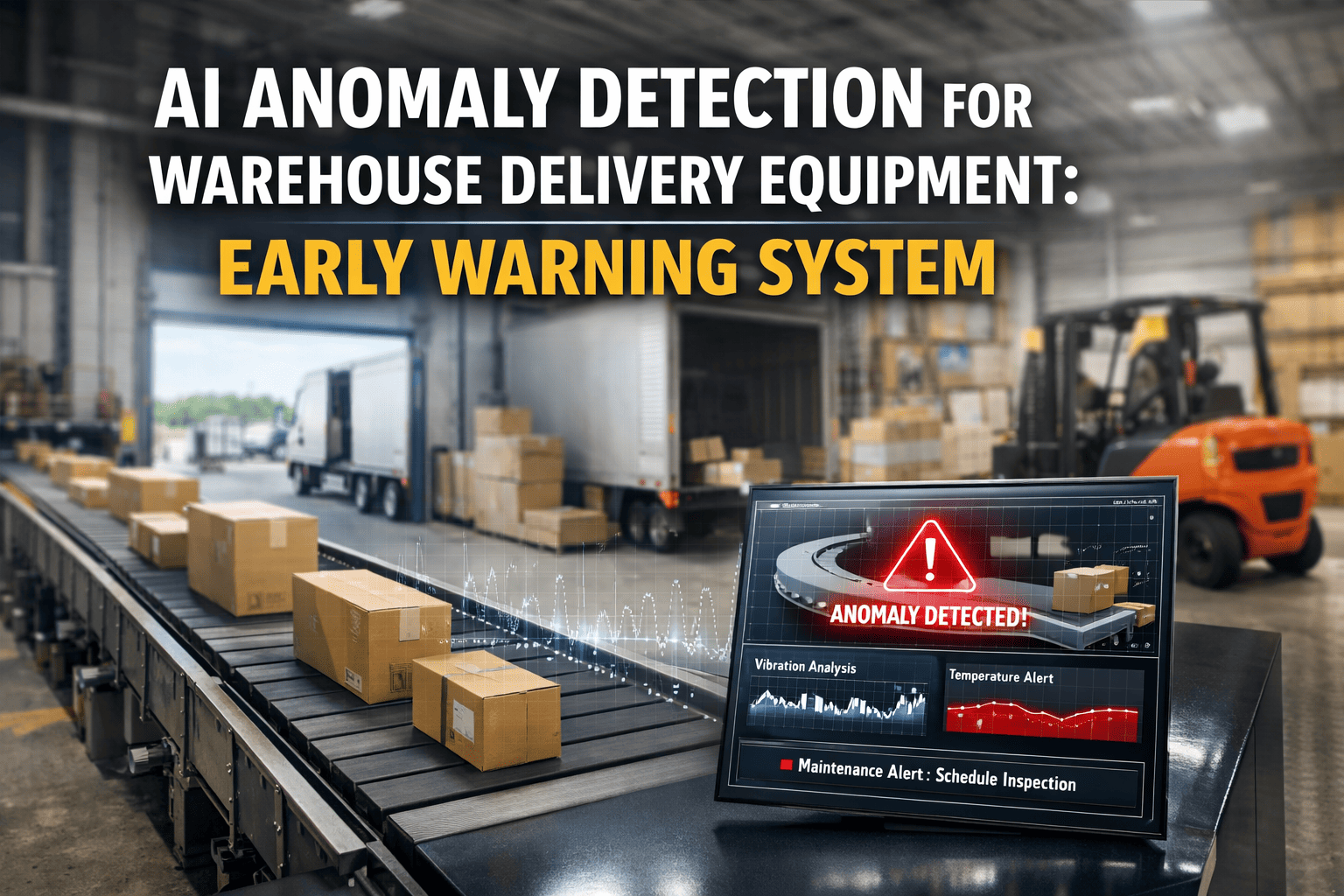
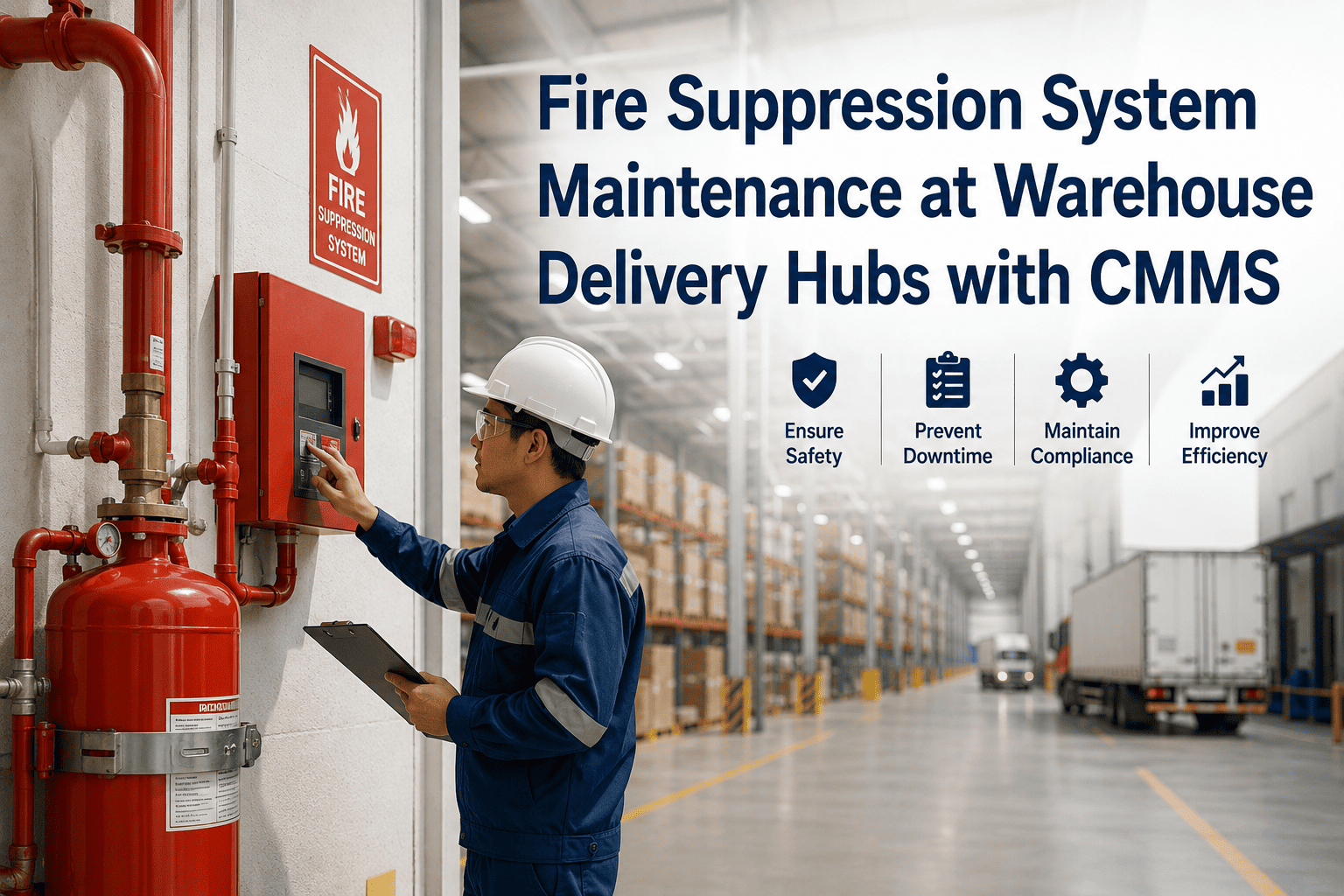
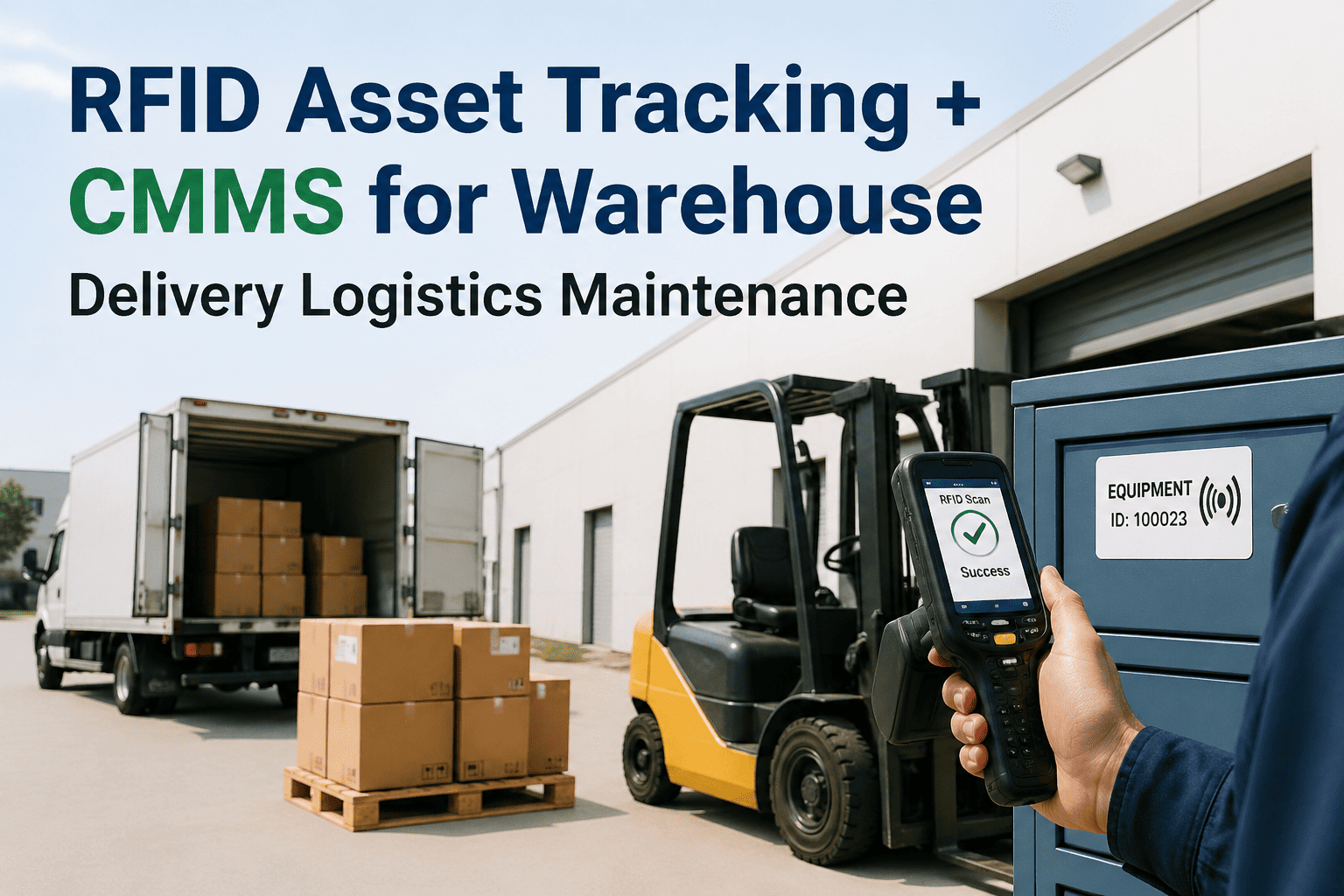
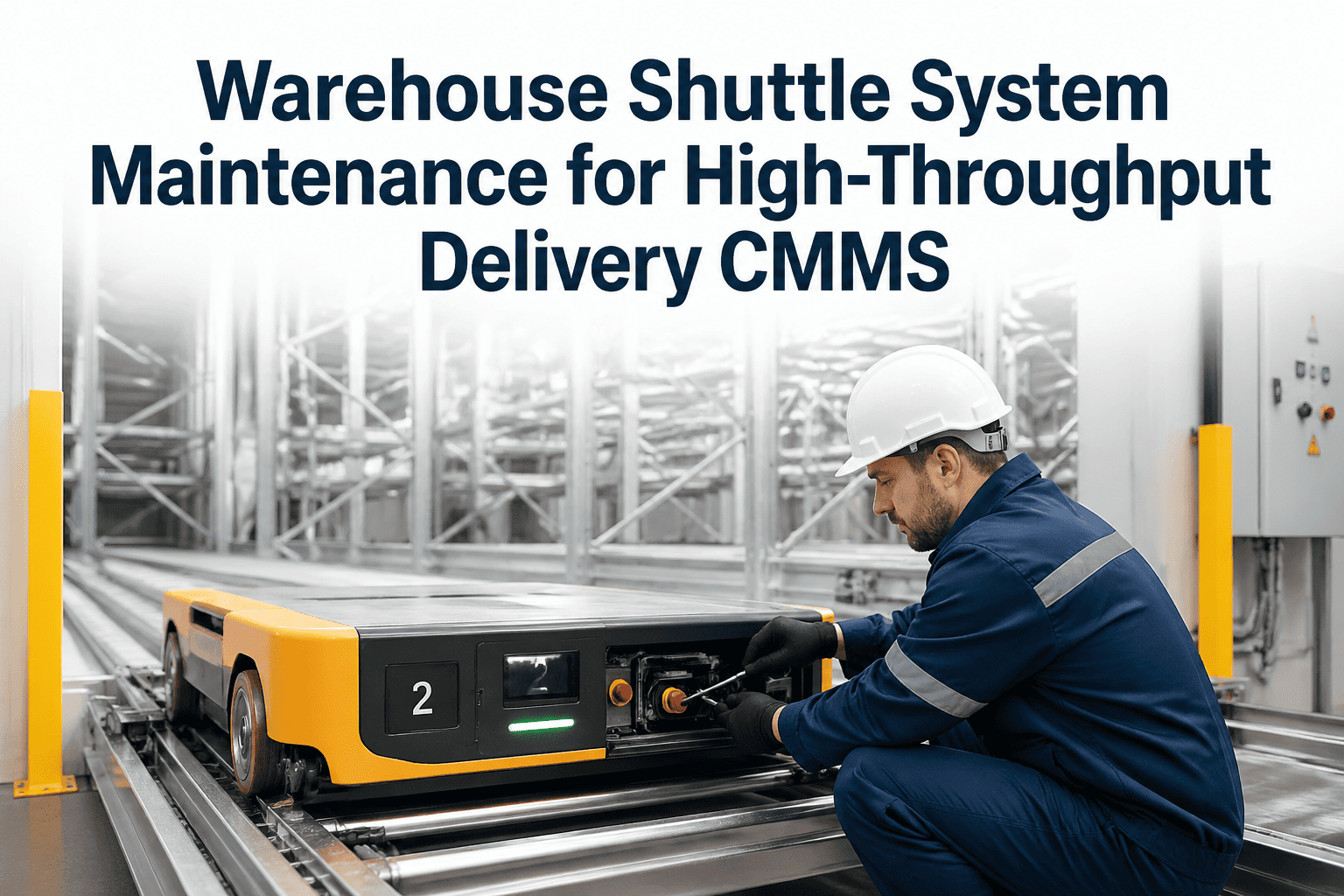
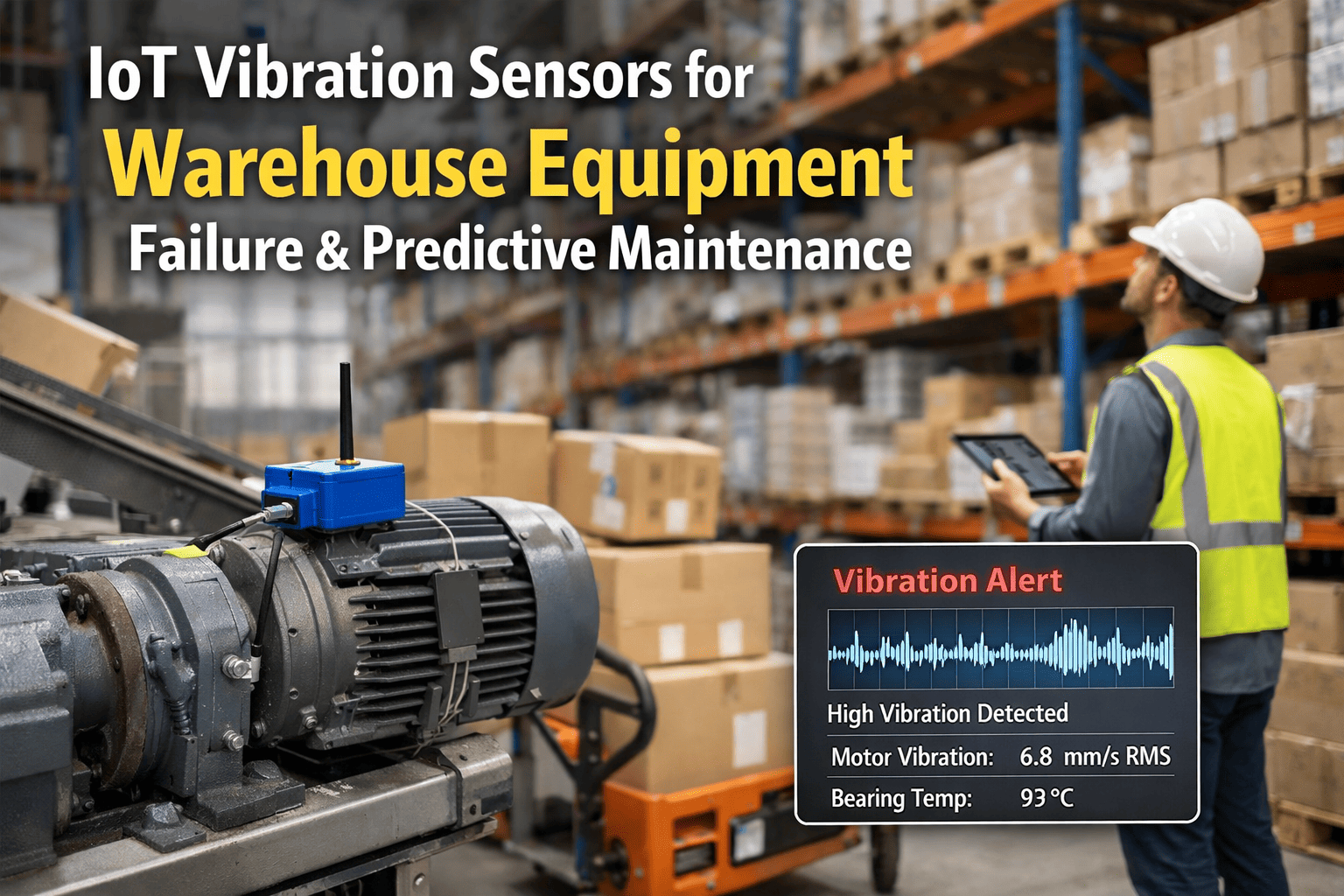
A conveyor bearing does not fail suddenly. It sends warning signals for 2 to 4 weeks before the catastrophic seizure that halts fulfilment throughput — subtle vibration shifts, micro temperature climbs, and motor current signature changes that are invisible to human inspection but unmistakable to a trained AI model. The problem is not that warehouse equipment fails unexpectedly. The problem is that the warning signals arrive as raw sensor noise that nobody is reading. AI anomaly detection reads those signals continuously, learns what "normal" looks like for every piece of equipment, and raises staged alerts the moment reality drifts from baseline. When that alert flows into a CMMS that can auto-create a work order scheduled during a low-volume maintenance window, you've built something closer to an immune system than a maintenance program. Book a demo to see how OxMaint converts sensor anomalies into work orders your team actually acts on.
Early Warning System · AI Anomaly Detection · Warehouse Equipment
AI Anomaly Detection for Warehouse Delivery Equipment: Early Warning System
Conveyors, dock systems, and sortation equipment send failure signals 2–4 weeks before they break. AI reads those signals. OxMaint turns them into scheduled work orders during your planned low-volume windows.
Detection Timeline — The Lead Time AI Gives You
Week -4
AI Detects Anomaly
Micro-signatures drift from learned baseline. Watch-level alert logged.
Week -2
Confirmed Degradation
Multi-signal confirmation. Work order auto-generated in CMMS.
Week 0
Manual Inspection Would Find It
Human-visible symptoms appear. Traditional maintenance catches it now.
Week +1
Catastrophic Failure
Unplanned stoppage. Emergency repair. Missed SLAs.
The Silent Failure Problem
Your Sensors Are Already Generating Failure Warnings. Is Anyone Reading Them?
Most warehouses have sensors installed. Most warehouses are not acting on the data those sensors generate. The gap between data collection and maintenance action is where every unplanned equipment failure lives — and where AI anomaly detection returns its highest ROI.
27%
of maintenance teams currently use predictive maintenance — the other 73% are running reactive or calendar-based programs on equipment that generates usable signal data.
2-4 wk
typical lead time AI anomaly detection provides before bearing and motor failures reach critical stage — enough time to order parts and schedule during planned downtime.
50%
decrease in downtime reported by facilities implementing AI-driven predictive maintenance, alongside 30% reduction in maintenance costs (Siemens production-line case).
80%
of unplanned conveyor downtime traces to just five failure categories — each with a distinct degradation signature AI can learn and flag weeks early.
What AI Detects
Five Failure Signatures AI Identifies Before Humans Can See Them
Every mechanical failure mode in warehouse delivery equipment has a corresponding sensor signature that develops over days or weeks before visible symptoms appear. The cards below describe the five highest-value detection categories — where AI anomaly detection consistently outperforms calendar-based inspection by the widest margin.
Bearing Degradation
Detected via: Vibration frequency signatures
Inner race, outer race, and roller damage each have distinct vibration frequency signatures. AI detects micro-defects weeks before audible bearing noise appears to technicians walking the floor.
Belt Tracking Drift
Detected via: Load cell asymmetry + roller speed
Belt misalignment begins as lateral drift measurable through load cell asymmetry and idler roller speed differential. Undetected, it progresses to edge wear, product spillage, and belt damage within days.
Motor Current Anomalies
Detected via: MCSA waveform analysis
Motor Current Signature Analysis catches drive-train problems without mechanical sensors. Gear wear, shaft misalignment, and load imbalance each leave a fingerprint in the electrical waveform that AI reads directly.
Thermal Drift
Detected via: Infrared temperature trending
Bearings, motors, and gearboxes heat up gradually as friction rises from degradation. AI detects thermal trends against seasonal baselines — catching issues that static temperature alarms miss in winter operations.
Acoustic Signature Shift
Detected via: Ultrasonic + audible frequency
Rollers, gears, and valves emit characteristic acoustic signatures. Ultrasonic microphones catch frequency shifts in ranges above human hearing — detecting lubrication loss and seal failures weeks ahead of visible symptoms.
The Detection Pipeline
From Raw Sensor Stream to Scheduled Maintenance Work Order
Anomaly detection is not a single algorithm — it is a four-stage pipeline that transforms continuous sensor data into prioritized, scheduled maintenance action. Each stage has a job, and each stage depends on the stage before it being reliable.
01
Continuous Data Ingestion
Input · Raw sensor streams
Vibration accelerometers, motor current transducers, infrared temperature probes, acoustic microphones, and belt speed encoders feed continuous streams at 100–1000 Hz sampling rates. Edge processors aggregate readings and transmit compressed feature sets to the analytics layer.
02
Baseline Learning
Process · 14 days per asset
AI establishes a healthy-state baseline per conveyor zone, motor, and component within 14 days of deployment. Seasonal throughput variation and peak-load patterns are factored into dynamic thresholds — so winter operations don't trigger false summer alerts.
03
Real-Time Anomaly Scoring
Process · Continuous comparison
Live sensor readings are compared against baselines every second. Trend degradation triggers staged alerts — watch, warning, action — each with a predicted time-to-failure estimate. Multi-signal confirmation prevents single-sensor noise from creating false positives.
04
Auto Work Order Generation
Output · CMMS action
Action-threshold alerts auto-generate a CMMS work order with component ID, fault description, recommended parts list, and a suggested repair window aligned to fulfilment schedule data. Completion feedback trains the model for improved accuracy over time.
Your Sensors Are Talking. OxMaint Listens — and Acts.
OxMaint ingests vibration, temperature, motor current, and acoustic data; runs continuous anomaly detection calibrated to conveyor, sortation, and dock equipment failure physics; and auto-generates work orders that land on technicians' mobile devices during your planned low-volume windows.
The Alert Fatigue Trap
Why Most Anomaly Detection Projects Fail — and How Multi-Signal Confirmation Fixes It
Alert fatigue is the silent killer of anomaly detection programs. The first rollout generates so many false positives that technicians learn to ignore the alerts — and when a real failure signal arrives, it goes unread. The three-column comparison below shows why threshold-based alerting fails, why naive AI fails, and what a production-ready detection system does differently.
Threshold-Based Alerts
Fixed rules like "alert if vibration > X"
Too many false alarms
Ignores seasonal and load variation
Triggers on transient spikes from normal operations
Technicians disable alerts within weeks
Real failures blend into the noise
Single-Signal AI
ML model on one sensor channel
Better, but still noisy
Learns baseline but misses cross-signal context
Vibration spike alone may not indicate failure
Generates 2–3x more alerts than necessary
Model drift reduces accuracy over time
Multi-Signal Confirmation
Correlated signals across sensor types
Production-ready accuracy
Alert only escalates when 2+ signals confirm
Vibration + temperature + current together
False positive rate drops dramatically
Technician trust maintained — alerts get acted on
Lead Time Gain
Comparing Detection Lead Time Across Maintenance Strategies
The single biggest operational advantage of AI anomaly detection is lead time — the gap between when a failure is first detectable and when it actually occurs. That gap determines whether maintenance happens during a planned low-volume window or during peak-season emergency conditions with a revenue hit attached.
Run-to-Failure
No warning — equipment fails, then you respond.
Calendar PM Schedule
Limited warning from scheduled inspections — misses issues between visits.
Threshold Monitoring
Warning when threshold crossed — but thresholds are set high to avoid false alarms.
AI Anomaly Detection
Earliest detection — enough lead time to order parts, schedule, and coordinate with operations.
Deployment Reality
What Happens in the First 90 Days of an AI Anomaly Detection Rollout
AI anomaly detection does not require replacing equipment or rewiring the facility. Most deployments follow the phased schedule below — delivering measurable results within the first 30 days and meaningful uptime gains by day 90.
Days 1–14
Sensor Connection & Data Ingestion
Connect existing sensors to OxMaint via OPC-UA, Modbus, MQTT, or direct API. If sensors aren't installed, a minimum viable sensor set is specified and deployed. Data flows into the platform without disrupting operations.
Days 15–30
Baseline Learning & Shadow Mode
AI learns healthy-state baselines per asset. Anomaly detection runs in shadow mode alongside existing monitoring — flagging events without triggering alerts — so technicians can validate accuracy before alerts go live.
Days 31–60
Alert Go-Live & Work Order Flow
Alert thresholds calibrated from shadow-mode results. Live alerts flow into the CMMS as structured work orders. Technicians confirm or clear each alert — feedback improves model accuracy from day one.
Days 61–90
Model Refinement & Expansion
False positive rate drops as the model learns. Detection lead time extends with each confirmed prediction. Coverage expands to additional asset classes — sortation, dock equipment, AMRs — from the proven conveyor foundation.
Frequently Asked Questions
AI Anomaly Detection for Warehouse Equipment — Common Questions
Do we need to install new sensors, or can AI work with data we already have?
Many AI systems extract value from existing PLC and SCADA data without new hardware. If sensors aren't installed, a minimum viable set is specified during onboarding — most deployments start with existing data.
Book a demo to assess your current sensor coverage.
How long before the AI model produces reliable alerts after deployment?
Baseline learning takes approximately 14 days per asset. Shadow mode runs for another 2 weeks to calibrate thresholds, meaning production-ready alerts typically go live 30 days after sensor connection.
Start a free trial to begin your baseline clock.
How does OxMaint avoid flooding technicians with false positive alerts?
OxMaint requires multi-signal confirmation — an alert only escalates to a work order when anomalies appear across at least two correlated sensor channels. This keeps alert volume manageable and trust high.
Book a demo to see the alert workflow.
Which warehouse assets deliver the fastest ROI from anomaly detection?
Can auto-generated work orders actually be scheduled during low-volume maintenance windows?
Anomaly Detection · OxMaint CMMS · Warehouse Delivery Equipment
Stop Reading Failure Reports. Start Reading Failure Signals.
Every conveyor, sortation system, and dock leveler in your warehouse is already emitting early warning signals. OxMaint's AI anomaly detection reads those signals continuously, confirms them across multiple sensor channels, and auto-creates work orders scheduled during your planned low-volume windows. Book a demo to see it running on a real warehouse asset.