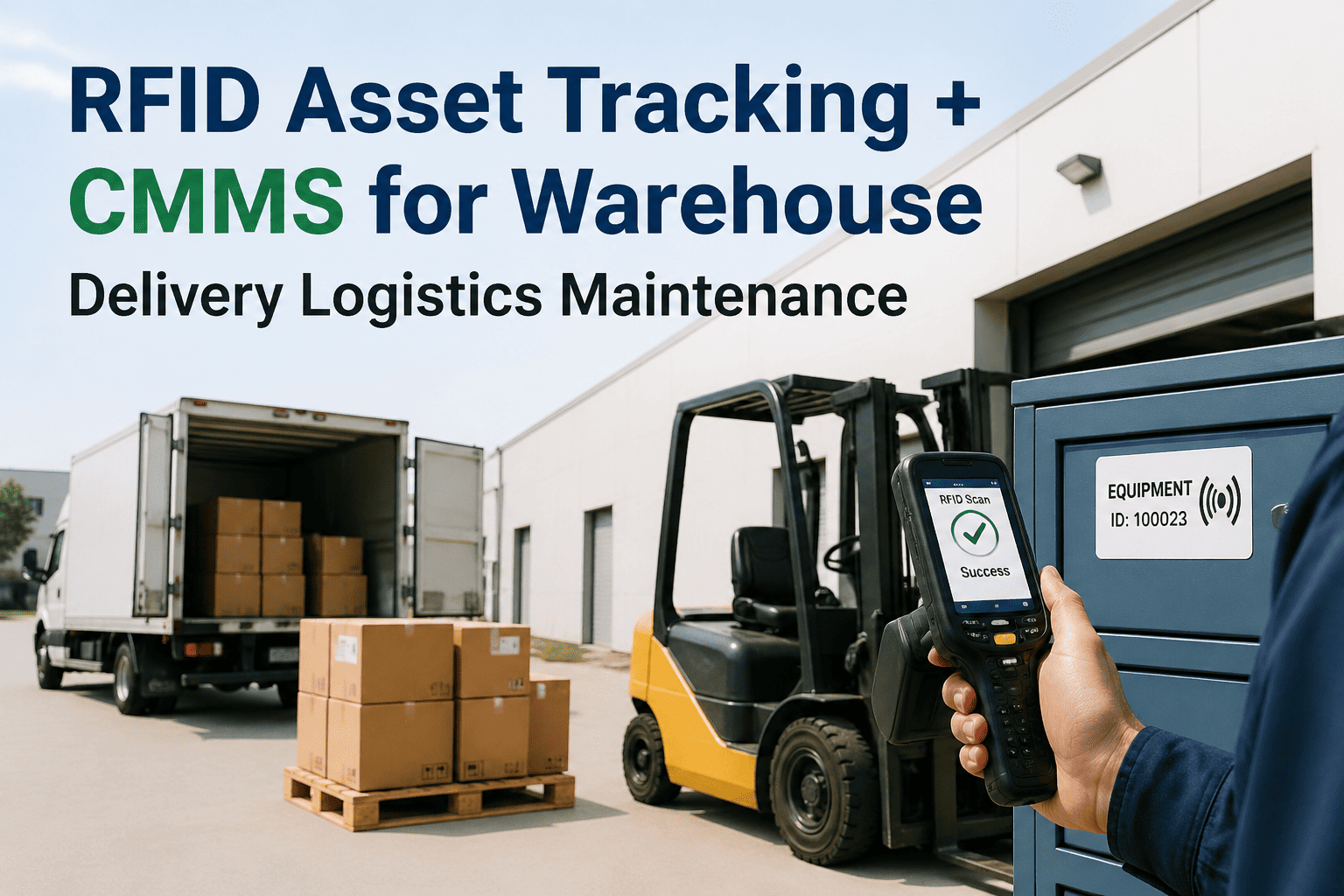
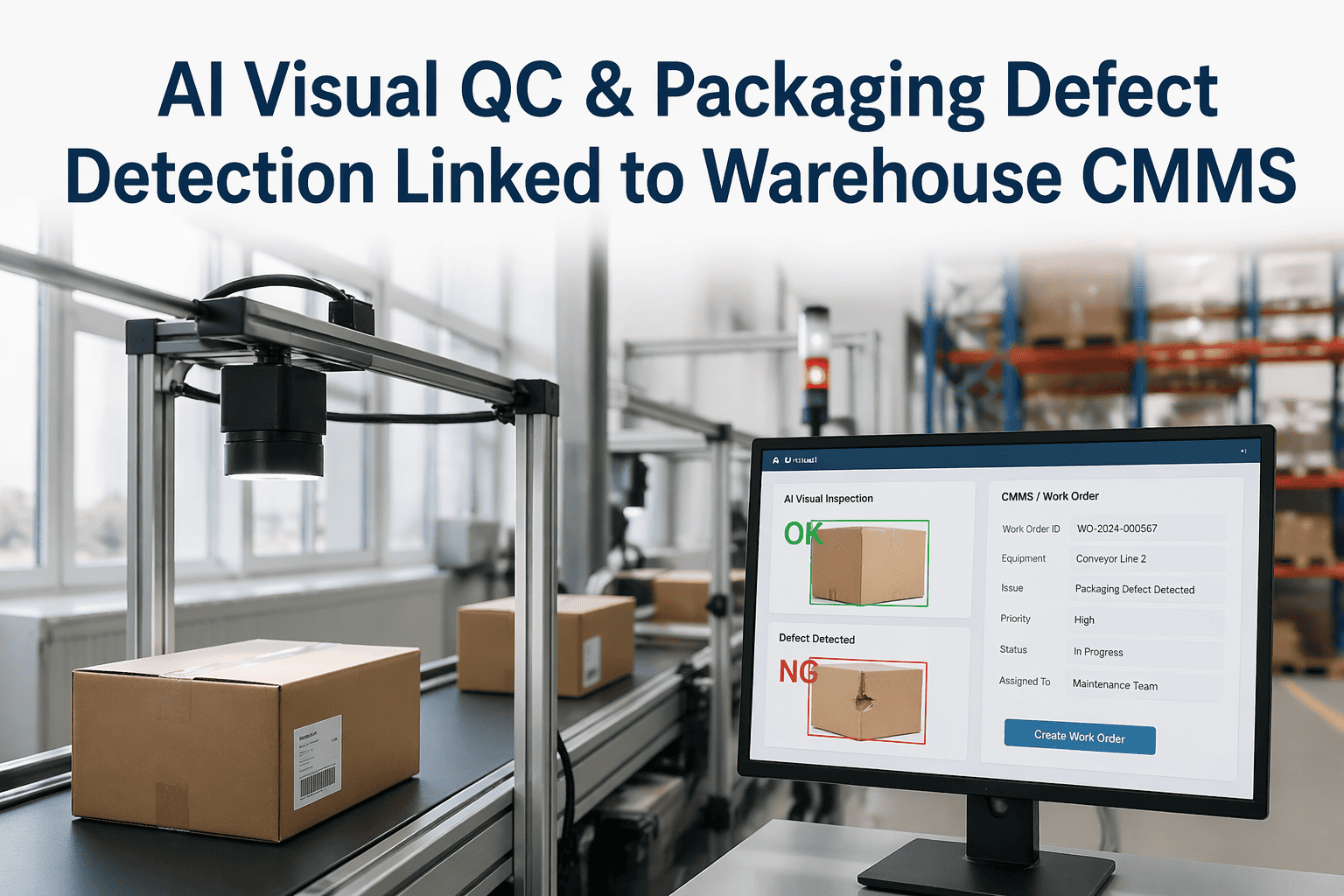
A missing label, a weak seal, a misaligned strap — these look like warehouse operator errors. They almost never are. The vast majority of warehouse delivery defects trace back to a specific piece of packaging-line equipment that was overdue for maintenance. Drift on a labeler applicator wheel produces mislabels that WMS can't catch. Worn heat-seal jaws produce leaking pouches that only fail at the customer's door. A frayed strapper tensioner produces broken straps that collapse loads in transit. Every one of these is a maintenance signal that a CMMS catches before it becomes a delivery defect — and a returned package, an angry customer, and a chargeback.
The Defect Chain — How a Maintenance Gap Becomes a Returned Package
Delivery defects do not start at the delivery doorstep. They start days earlier on a packaging line, at a specific machine with a specific symptom nobody logged. The chain from overdue maintenance to customer chargeback is predictable, measurable, and interruptible at any stage — but only if the maintenance team has visibility into which machine is drifting, which seal is degrading, and which sensor is fouling. Oxmaint turns each stage of this chain from invisible to tracked, with a work order generated the moment equipment drifts off spec.
Catch Packaging Defects Before They Leave the Dock
Oxmaint monitors every machine on the packaging line — seal temperatures, labeler pressures, strapper tension — and generates a work order the moment drift is detected. The defect chain breaks at Stage 01, not Stage 04.
Five Packaging Line Machines That Cause 82% of Delivery Defects
Every warehouse packaging line is different, but the failure profile across fulfillment centers is remarkably consistent. Five machine classes account for over 82% of outbound delivery defects: heat sealers and capping heads, labeler applicators, strapping and stretch-wrappers, checkweighers with barcode scanners, and conveyor drive transitions. Understanding which failure mode each machine produces — and which sensor or inspection catches it — is the foundation of a CMMS-driven defect-prevention program.
| Machine | Failure Mode | Delivery Defect Produced | Oxmaint PM Trigger |
|---|---|---|---|
| Heat Sealer & Capping Head | Seal bar temperature drift, jaw pressure loss, capping chuck wear reducing torque | Leaking pouches, loose caps, contaminated product on arrival, tamper-evidence failures | Daily temp calibration, weekly pressure test, quarterly chuck insert replacement |
| Labeler Applicator | Web tension drift, peel plate wear, applicator wheel slippage, sensor lens fouling | Mis-aligned labels, wrong SKU on package, unreadable barcodes causing hub mis-routing | Shift-start alignment check, hourly label sample capture, monthly peel plate replacement |
| Strapper & Stretch Wrapper | Tensioner spring fatigue, heater element wear on strap welds, film carriage belt wear | Broken straps in transit, unitized pallets collapsing on forklift handling, product crush damage | Weekly tension calibration, monthly weld-bar inspection, quarterly belt replacement |
| Checkweigher & Barcode Scanner | Load cell drift, scanner lens fouling, conveyor speed sensor drift, lighting degradation | Wrong-weight cartons passing QC, unreadable barcodes at sortation, WMS scan failures | Daily calibration check-weight test, weekly lens cleaning, quarterly load cell verification |
| Conveyor Drive & Transition | Roller bearing wear, belt tension loss, transition plate misalignment, drive motor overheating | Cartons dropping at transitions, product impact damage, line jams causing crush on trailing units | Weekly bearing temp scan, monthly belt tension check, quarterly transition alignment |
The Real Cost of a Single Packaging Defect
The purchase price of a mis-sealed pouch is a few cents. The delivered cost of that same pouch failing at the customer's door — returns, chargebacks, replacement shipping, customer service, brand damage — runs 40 to 120 times higher. Every CMMS business case rests on this multiplier.
How Oxmaint Prevents Defects — Four Capabilities in One Platform
Pre-built PM templates per machine class — with OEM-aligned task frequencies, calibration intervals, and parts requirements. Each template becomes a live asset record the moment equipment comes online. Book a demo to see the template library.
Reject rate per machine trended against PM compliance rate — the most actionable leading indicator in packaging. When reject rate climbs as PM compliance drops, the relationship is visible immediately, not months later.
Seal temperature out of range, labeler pressure below setpoint, strapper tension off — each sensor reading outside tolerance triggers an automatic work order before the first defective unit reaches dispatch.
Every PM task, calibration result, and changeover is recorded with timestamp, technician signature, and photo evidence. Audit-ready documentation generated automatically — no parallel spreadsheet required. Book a demo to see compliance records.
First-Attempt Delivery Success — Before and After CMMS Deployment
The single clearest metric for packaging-line maintenance effectiveness is first-attempt delivery success: the percentage of outbound shipments that reach the customer intact, on time, and accepted without dispute. Warehouses operating reactive maintenance programs routinely operate below 88%. Operations running a CMMS-driven packaging line PM program consistently push past 97% — the gap between the two states is almost entirely driven by packaging-line equipment condition.
- Reactive maintenance — equipment fixed after failure has already produced defective units
- Paper logs and memory — no machine-level reject rate tracking
- Spare parts ordered emergency-rate after breakdown at 3.2× premium pricing
- Compliance records assembled manually during audit window
- 47 unplanned stops per week at $22K per hour of downtime
- Returns rate 4.1% · retailer chargebacks averaging $180K per quarter
- Sensor-triggered work orders catch drift before defects reach dispatch
- Real-time reject rate tracked against PM compliance per machine
- Parts stocked proactively via consumption-pattern forecasting
- Audit-ready records generated automatically with every completed task
- Unplanned stops reduced by 68% within six months
- Returns rate below 0.9% · chargebacks reduced by 78% quarter-over-quarter
Productivity KPIs — Packaging Line Maintenance Impact
PM Schedule Cadence Per Machine Class
Ship 97% First-Attempt Success — Live on Your Lines in 3–5 Days
Oxmaint deploys on active packaging lines without shutting them down. Pre-built templates for fillers, sealers, labelers, strappers, and checkweighers go live in 3–5 days with no IT project required.
ROI Model — CMMS Investment vs Delivery Defect Cost Avoided
Compliance Coverage for Packaging Operations
| Framework | Requirement | Oxmaint Coverage |
|---|---|---|
| FSMA PCHF 21 CFR 117 | Food-grade packaging preventive controls — equipment maintenance records, sanitation verification, allergen changeover documentation, seal integrity testing | FSMA-aligned PM templates, allergen-changeover work-order workflow, swab-test result capture, audit-ready documentation export |
| GDP & GxP | Good Distribution Practice for pharmaceutical packaging — equipment calibration records, temperature-log integrity, serialization system availability | Calibration schedule enforcement, digital calibration certificate archive, hard-stop work orders that block line restart without QA approval |
| FDA 21 CFR 820 | Medical device packaging quality system regulations — equipment maintenance, process validation records, inspection records | Validated PM procedures, technician e-signature on task completion, photo evidence attachment, searchable inspection archive |
| ISO 9001 & BRC | Quality management system requirements — calibration control, measurement equipment records, preventive action documentation | ISO 9001-aligned calibration records, BRC packaging-site audit templates, corrective and preventive action tracking per asset |
| Retailer OTIF | On-Time-In-Full retailer compliance — packaging quality metrics, delivery integrity records, traceability from warehouse to dock | Reject-rate tracking per dispatch, packaging-quality evidence linked to shipment ID, OTIF dashboard for supplier portal submission |
Frequently Asked Questions
QHow quickly can a warehouse packaging operation get Oxmaint live on its lines?
QDoes Oxmaint integrate with our existing WMS and checkweigher systems?
QWhat is the payback period for a CMMS investment at a typical packaging warehouse?
QCan Oxmaint handle multiple packaging formats and allergen changeovers on one line?
QHow does Oxmaint help reduce retailer chargebacks from OTIF failures?
From 3.8% Reject Rate to 0.6% — Without Replacing Equipment
Oxmaint transforms packaging line maintenance from reactive firefighting to predictable defect prevention — with pre-built machine templates, sensor-triggered work orders, and audit-ready compliance records. Live on your lines in 3–5 days.