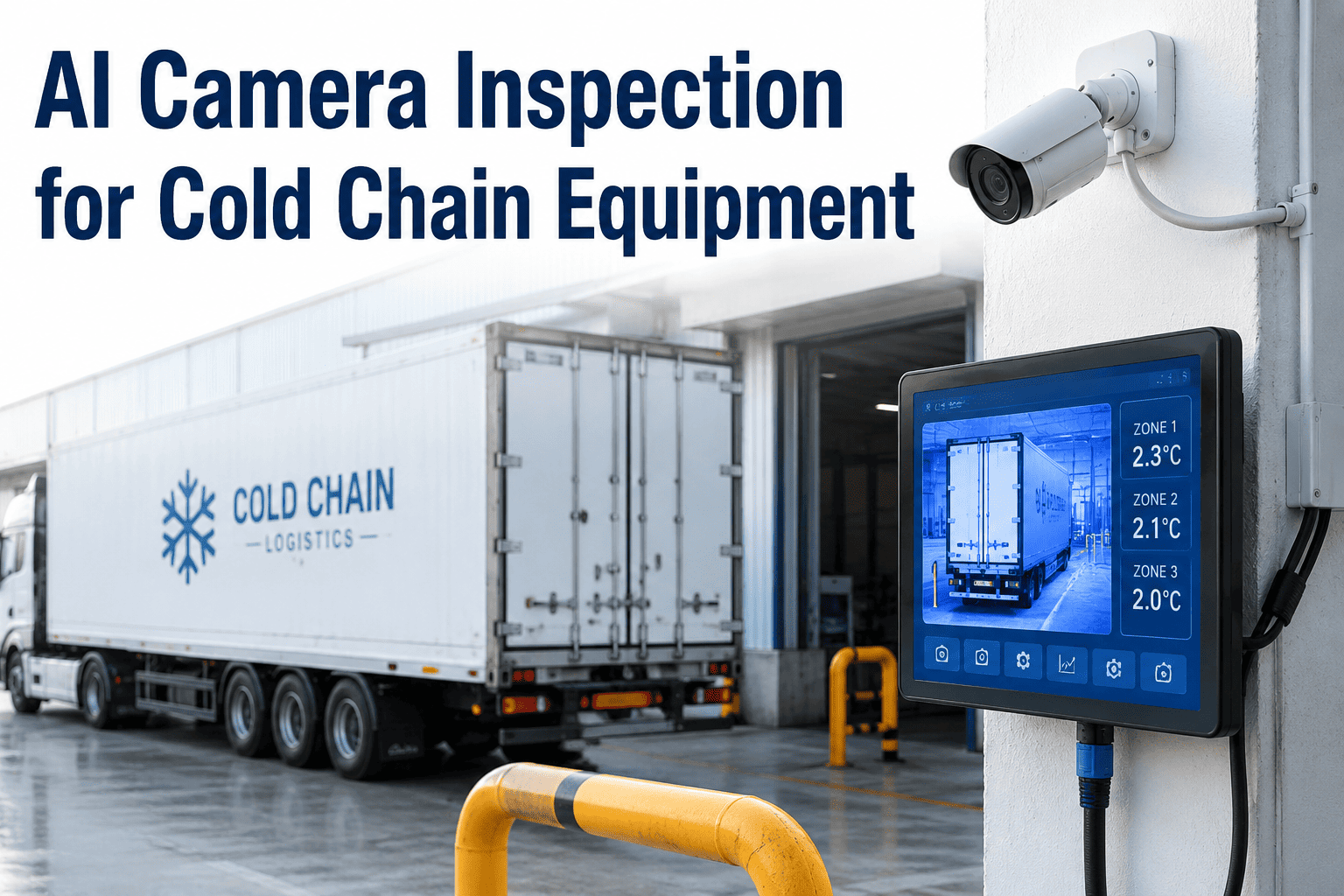
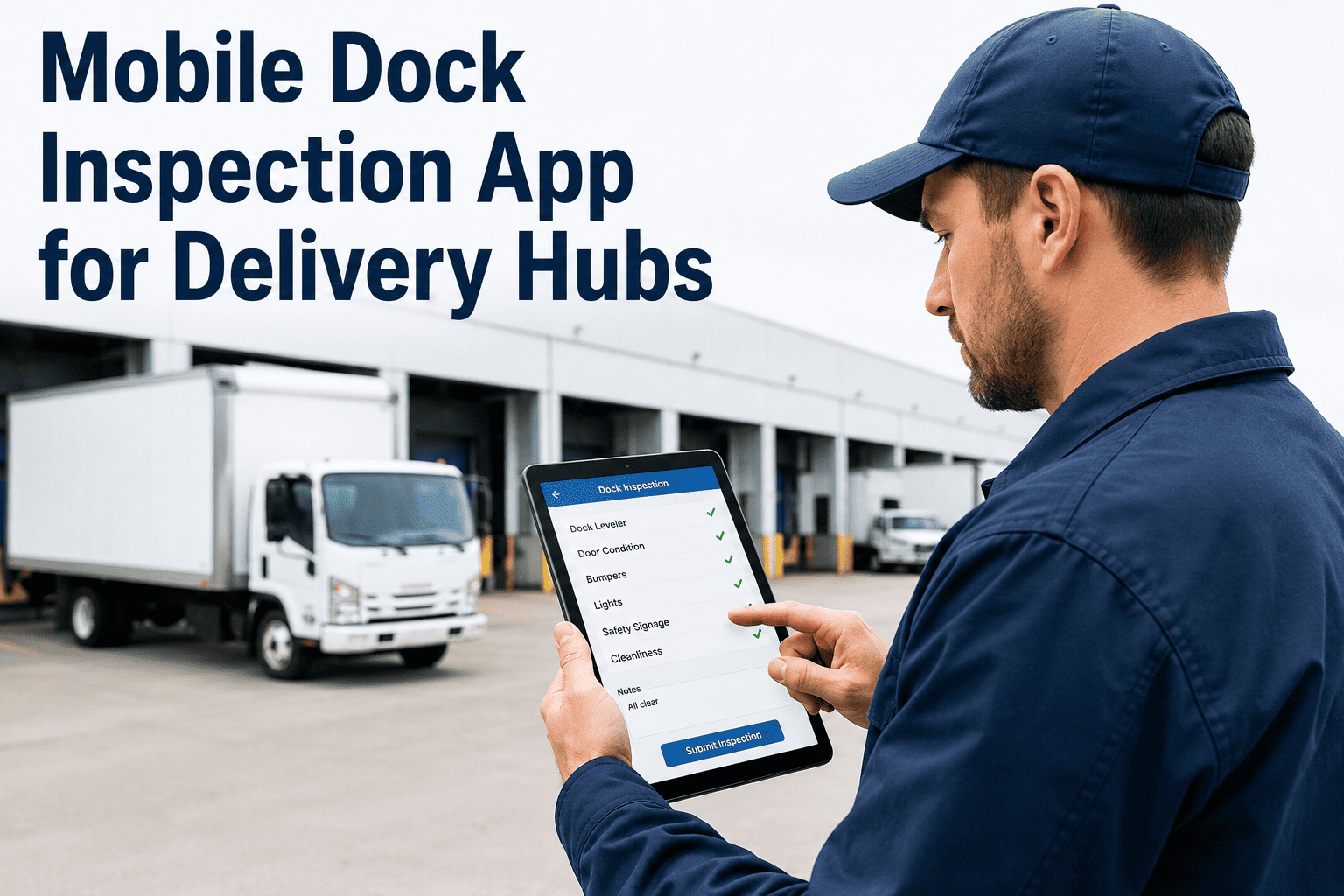
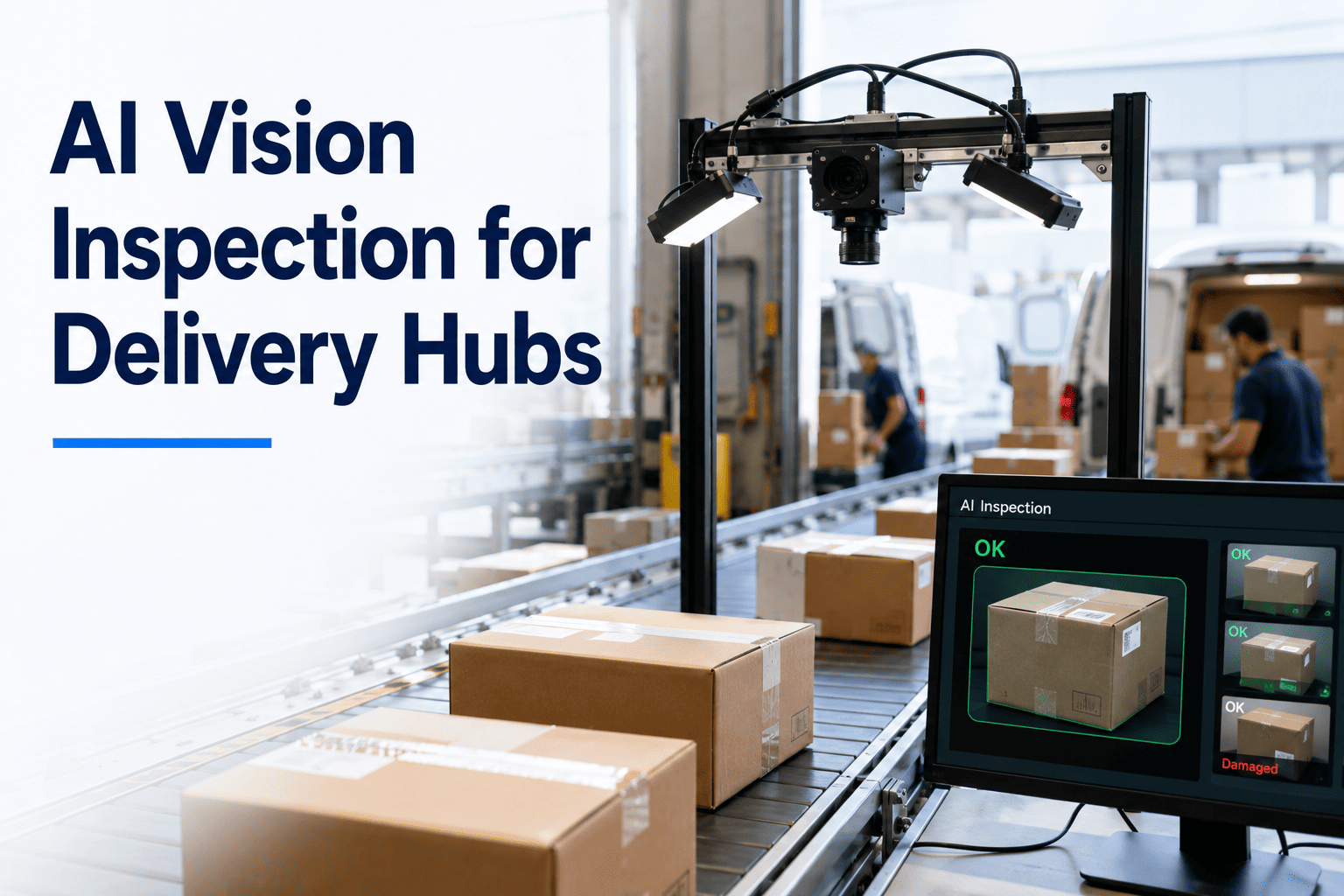
A reefer failure is invisible until the cargo is already lost. A hairline oil stain at a refrigerant fitting, a quarter-inch compression set in a door gasket, the first feathering of ice on an evaporator coil — none of it trips an alarm, none of it shows on a temperature log, and all of it is photographed every single day during pre-trip walk-arounds that nobody analyzes. Compressor failure alone accounts for over 40% of reefer breakdowns, and most are preceded by weeks of visible warning signs. AI camera inspection turns the photo your driver already takes into a defect score, a severity rank, and a work order — before the load goes warm on the highway. With OxMaint.ai, that visual signal becomes a scheduled repair instead of a 2 AM rejected load. Book a demo to see AI vision inspection score your reefer fleet from a single phone photo.
AI Vision Inspection · Cold Chain Delivery Maintenance
Your Driver Already Photographs the Failure. OxMaint Reads It.
Computer vision trained on refrigeration defects detects oil staining, coil icing, seal damage, and corrosion from an ordinary smartphone photo — then auto-generates a prioritized work order before the cold chain breaks.
40%+
of reefer breakdowns trace to compressor failure — most with weeks of visible warning
$25K
cost of a single preventable reefer event in repairs, lost load, and claims
84%
drop in temperature excursion rate reported after structured PM with digital records
$381B
global cold chain logistics market in 2025 — and equipment failure hits 17% of capacity
The Defect That Never Made It Onto a Work Order
Every cold chain failure leaves a visual fingerprint long before the temperature log shows a problem. The trouble is not that the signs are missing — it is that the photo capturing them gets filed and forgotten. AI vision closes that gap by reading the image the moment it is taken.
Oil Staining at Fittings
When refrigerant escapes it carries oil with it, leaving a dark residue around flare fittings, service caps, and coil joints. Oil staining is one of the most reliable visual indicators of a leak — and the first sign of a charge loss that ends in a continuously-running unit that can't hold setpoint.
Evaporator Coil Icing
A failed defrost cycle lets ice build progressively on the evaporator until airflow collapses and the unit can no longer hold temperature regardless of compressor output. The frost pattern is visible weeks before the load warms — and it photographs cleanly on any phone.
Door Seal Compression Set
A quarter-inch gap in a rear door gasket raises return-air temperature 5–8°F during loading, forcing continuous run and breeding condensation. Cuts, separation, and compression set are textbook visual defects a vision model flags instantly across all four seal edges.
Condenser Coil Blockage
A condenser 30% blocked with road debris raises discharge pressure up to 25%, cutting cooling capacity and shortening compressor life simultaneously. Debris packing, bent fins, and road damage are surface-level defects vision inspection catches at a glance.
Why It Matters
Unlike a cracked windshield or a flat tyre, a reefer failure is invisible until the cargo is already gone. The compressor seizes at hour 11 of a 14-hour overnight haul, the load warms past safe range, and the first anyone knows is a rejected delivery and a food safety investigation. AI camera inspection moves the detection point upstream — to the pre-trip photo, where the defect is still a $200 gasket and not a $25,000 claim. OxMaint scores that image, ranks the severity, and writes the work order while the truck is still in the yard.
From Phone Photo to Work Order in Four Steps
AI vision inspection is not a separate analytics platform or a bolt-on camera rig. It runs on the smartphone your team already carries, and the entire pipeline lives inside the same CMMS where your work orders, parts, and PM schedules already live.
Capture During the Walk-Around
The driver or technician photographs the reefer unit, coils, seals, and refrigerant lines during the routine pre-trip inspection. No special camera, lighting rig, or training — a modern phone camera exceeds the resolution the model needs. The photo attaches to the asset record automatically.
AI Scores the Image
A deep-learning model trained on refrigeration equipment in healthy and degraded states scans the photo for oil residue, frost patterns, corrosion, seal damage, bent fins, and missing caps. Each detected defect is classified and assigned a severity score in seconds, not at the next shop visit.
Work Order Auto-Generates
When a defect crosses its severity threshold, OxMaint creates a prioritized work order — timestamped, assigned to the right technician, with the photo as evidence and the required spare part pre-identified. No spreadsheet entry, no email that waits until morning, no defect lost between shifts.
Close the Loop with Evidence
Closure captures the repair, the corrected condition, and a follow-up photo for the audit trail. That evidence feeds FSMA and GDP documentation automatically — the calibrated-and-maintained proof inspectors increasingly expect as continuous records, not periodic manual logs.
Stop Filing the Photo. Start Reading It.
Every pre-trip walk-around already produces the images that predict the next reefer failure. OxMaint's AI vision turns each one into a scored defect and a tracked work order — before the load leaves the yard, not after it's rejected at the dock.
What the Camera Catches — Component by Component
Different cold chain components fail through different visual signatures. A trained vision model reads each one, and OxMaint maps every detection to the right intervention and the right detection window.
Compressor & Drive Coupler
Visual signal: oil weeping at the body, corroded mounts, fluid pooling beneath the unit
Over 40% of reefer breakdowns start here. Vision flags external oil and leak traces that precede seizure, so the rebuild is scheduled — not a roadside total loss.
Condenser Coil
Visual signal: debris packing, bent fins, bug and road-grime buildup on the front face
A 30% blockage drives discharge pressure up 25%. Vision quantifies fouling from the photo and triggers a cleaning work order before fuel burn and wear climb.
Evaporator Coil
Visual signal: ice accumulation, frost feathering, uneven coil coverage
Recurring ice means a defrost or seal problem, not just frost. Vision distinguishes normal frost from failure-grade icing and routes a defrost-system inspection.
Door Seals & Gaskets
Visual signal: cuts, separation from the channel, compression set, visible daylight gaps
A 1/4" gap adds 5–8°F of return-air heat. Vision inspects all four edges and flags the gasket before warm-air ingress forces continuous run and condensation.
Refrigerant Lines & Fittings
Visual signal: oily residue at flares, missing service caps, pitting corrosion on copper
Oil staining is the single most reliable leak indicator. Vision catches slow leaks at fittings and caps that persist for months before anyone notices.
Electrical & Connections
Visual signal: terminal corrosion, frayed wiring, burned connectors, heat discoloration
Heat-induced color change on connectors is a visible overheating sign that precedes insulation failure — detectable in a photo weeks before a thermal fault.
Why Cold Chain Equipment Demands Visual Inspection Now
The cold chain is bigger, faster, and more tightly regulated than it has ever been — and the cost of a single missed defect has never been higher. The market data tells the story.
$381B
Global Cold Chain Logistics Market, 2025
Projected to surpass $1 trillion by the early 2030s, driven by e-commerce grocery, pharmaceuticals, and last-mile refrigerated delivery. Refrigerated vehicles alone held the largest single share of the market in 2025 — and every one of them runs on equipment that fails through visible defects.
17%
of annual cold storage capacity utilization is impacted by equipment breakdowns and maintenance issues
20%+
spoilage losses in systems without reliable cold chain — versus 30–50% shelf-life gains when it holds
60%
of reefer failures stem from poor seasonal and preventive maintenance, not random breakdown
48%
IoT and digital monitoring adoption — but visual defect inspection remains largely manual and unanalyzed
Manual Walk-Around vs. AI Camera Inspection
The pre-trip inspection is not optional and it is not going away. The question is whether the photos it produces do any work after they're taken. Here is what changes when the camera gets a brain.
| Capability |
OxMaint AI Camera Inspection |
Manual Visual Walk-Around |
| Defect detection consistency |
Identical every photo, never fatigues |
Varies by inspector, shift, and pressure |
| Severity scoring |
Automatic, ranked by risk |
Subjective judgment call |
| Work order from a defect |
Auto-generated with photo evidence |
Manual entry, often skipped |
| Catches subtle early signs |
Oil traces, fin damage, hairline gaps |
Only obvious damage spotted |
| Compliance documentation |
FSMA / GDP audit trail automatic |
Paper logs, retrieval gaps |
| Special hardware required |
Any existing smartphone |
Eyes only, no record |
| Improves over time |
Learns your fleet's defect patterns |
Static, no learning |
| Defect lost between shifts |
Never — logged to the asset record |
Common handoff failure |
The Cost of One Warm Load
The math behind cold chain maintenance is brutal in one direction and overwhelming in the other. A single avoided excursion pays for the program many times over.
Single preventable reefer event (repair + lost load + claims)
Annual savings per trailer from structured PM
Downtime reduction with consistent maintenance
Fuel saved by a clean, well-maintained unit
Built for Cold Chain Compliance, Not Just Repairs
For temperature-controlled cargo, maintenance evidence is compliance evidence. OxMaint's vision inspection produces the documentation regulators ask for as a byproduct of doing the work.
01
FSMA Rule 204 Records
Documented temperature-equipment maintenance and calibration history, retrievable on demand. Every photo-scored inspection and its resulting work order build the proof that monitoring equipment was properly maintained throughout transport.
02
GDP & HACCP Evidence
Good Distribution Practice and HACCP frameworks demand systematic equipment care for pharmaceutical and food loads. Vision inspection timestamps and tracks each defect to closure, turning compliance from a defensive record search into a confident demonstration.
03
Continuous Monitoring Proof
Inspectors increasingly expect continuous documentation over periodic manual logs. When 90 days of refrigeration maintenance history is requested, an AI-equipped operation produces the complete report — with photo evidence — in seconds.
04
Cargo Claim Defense
A photo of the unit at departure showing it was sound is the strongest defense against a disputed cargo claim. Every inspection becomes part of the asset's evidentiary record, protecting the carrier when a load is questioned downstream.
Frequently Asked Questions
Do we need to install special cameras or sensors on our reefer fleet?
No. OxMaint's AI vision inspection runs on any standard smartphone your drivers and technicians already carry. Modern phone cameras exceed the resolution the detection model needs to identify oil staining, coil icing, seal damage, and corrosion. There is no camera rig, lighting setup, or hardware retrofit required — you capture the photo during the routine pre-trip walk-around and the model does the rest.
Start a free trial to test it on your own equipment photos.
How accurate is AI vision at catching real refrigeration defects?
The model is trained on thousands of images of refrigeration equipment in both healthy and degraded states, which lets it detect and classify physical defects like leaks, frost patterns, corrosion, and missing components from a single photo. Accuracy improves continuously as your team captures more images of your specific fleet, so the system learns the defect signatures unique to your reefer models and operating conditions over the first weeks of use. It works alongside your technicians, flagging what the eye misses under time pressure.
What happens after the AI detects a defect on a unit?
When a detected defect crosses its severity threshold, OxMaint automatically generates a prioritized work order — timestamped, assigned to the right technician, with the photo attached as evidence and the likely spare part already identified. Nothing gets lost in a spreadsheet or an email that waits until morning, and the defect is tracked to closure with a follow-up photo. The entire loop from capture to closure lives inside the same CMMS as your parts, PM schedules, and asset history.
Can this help with FSMA, GDP, and food safety compliance?
Yes. Every photo-scored inspection and its resulting work order build a continuous, retrievable maintenance record — exactly the kind of documentation FSMA Rule 204, GDP, and HACCP frameworks increasingly expect for temperature-controlled cargo. When an inspector requests maintenance history, you produce a complete report with photo evidence in seconds rather than searching through paper logs. It also creates a strong evidentiary trail to defend against disputed cargo claims.
Book a demo to see the compliance reporting in action.
Will this work with our mixed fleet of older and newer reefer units?
It works with equipment of any age because it inspects the physical condition visible in a photograph rather than relying on onboard electronics or telematics. Whether the unit is a current-generation reefer with a digital controller or an older trailer with a belt-driven compressor, the same visual defect signatures — oil staining, fin damage, gasket wear, coil icing — appear and are detectable. The model treats each unit as a set of visual conditions, so a mixed-vendor, mixed-generation fleet is managed in one OxMaint instance.
Catch the Defect in the Yard, Not on the Highway
AI camera inspection turns every pre-trip photo into a scored defect, a ranked priority, and a tracked work order — protecting your cold chain, your compliance record, and every load you carry. Live in your operation in weeks, running on the phones your team already holds.
AI Vision Inspection
Defect Detection
Auto Work Orders
FSMA & GDP Ready