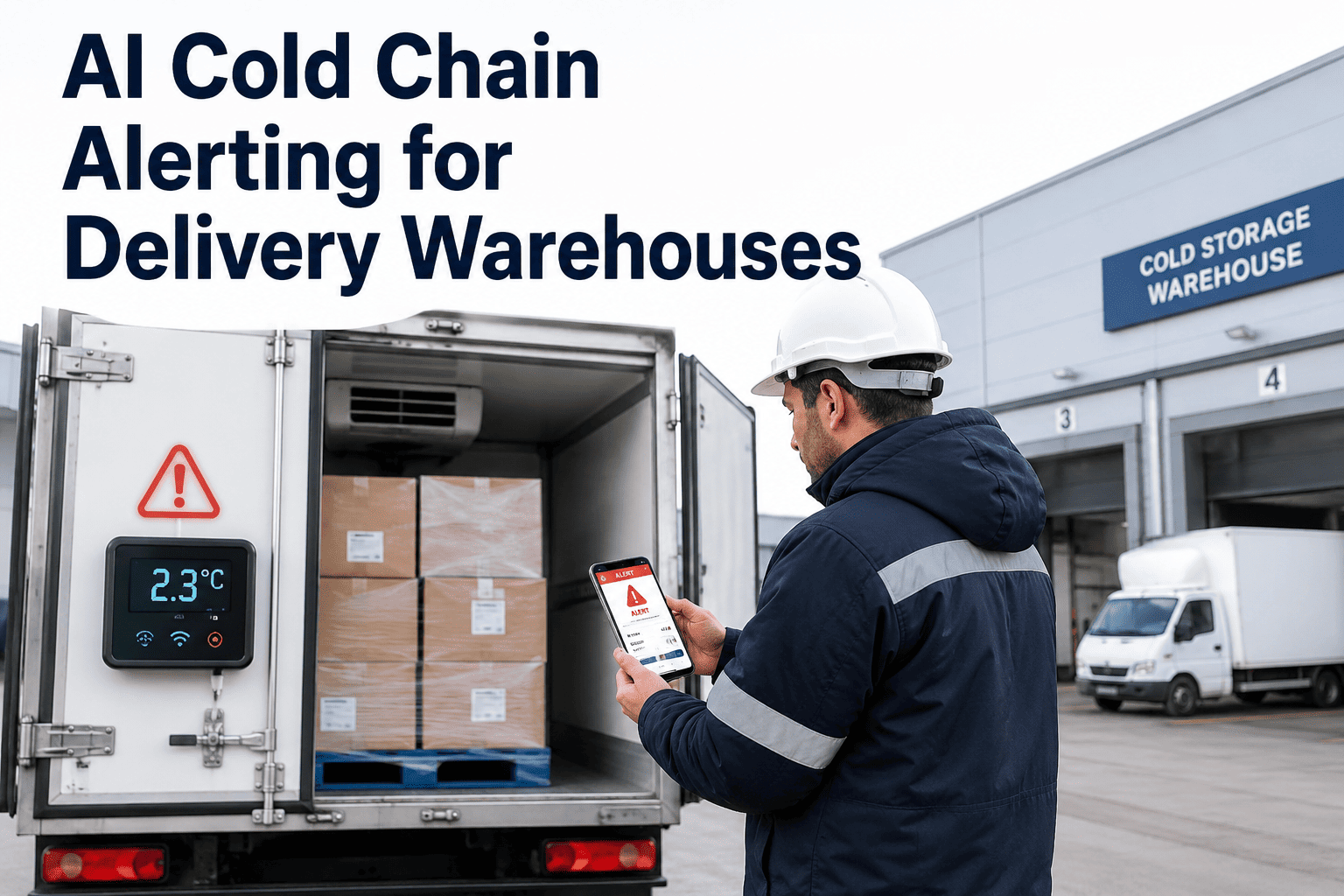
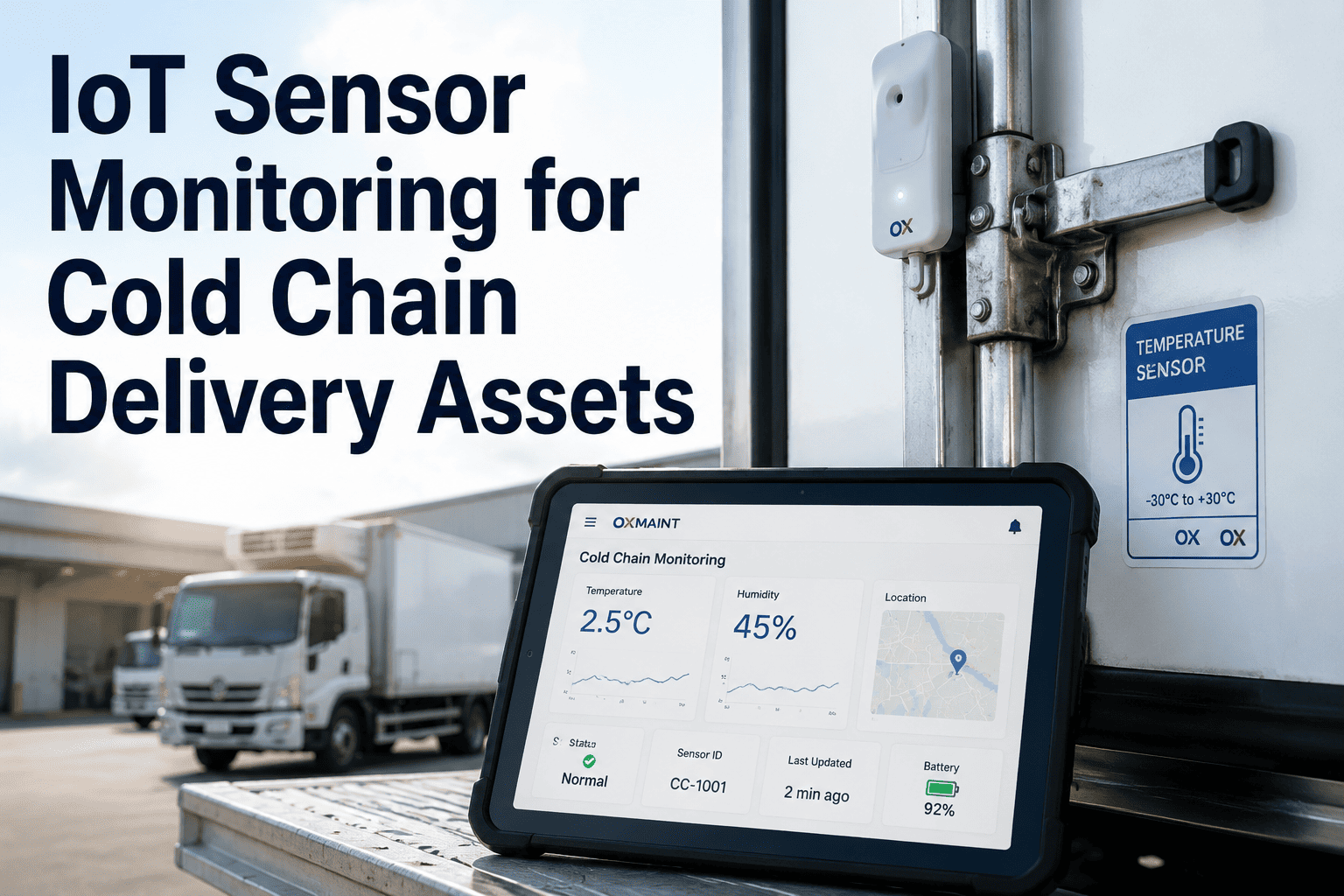
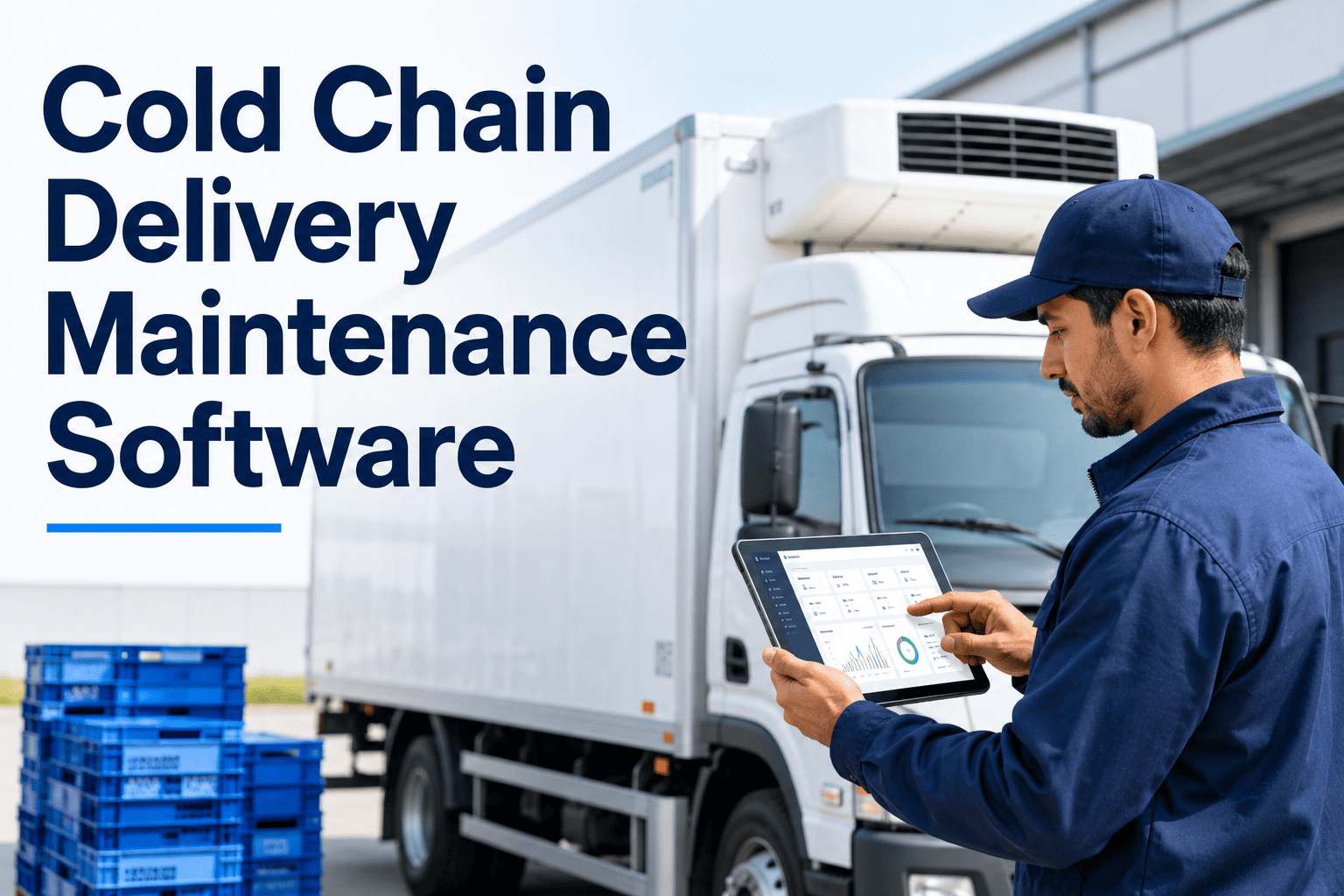
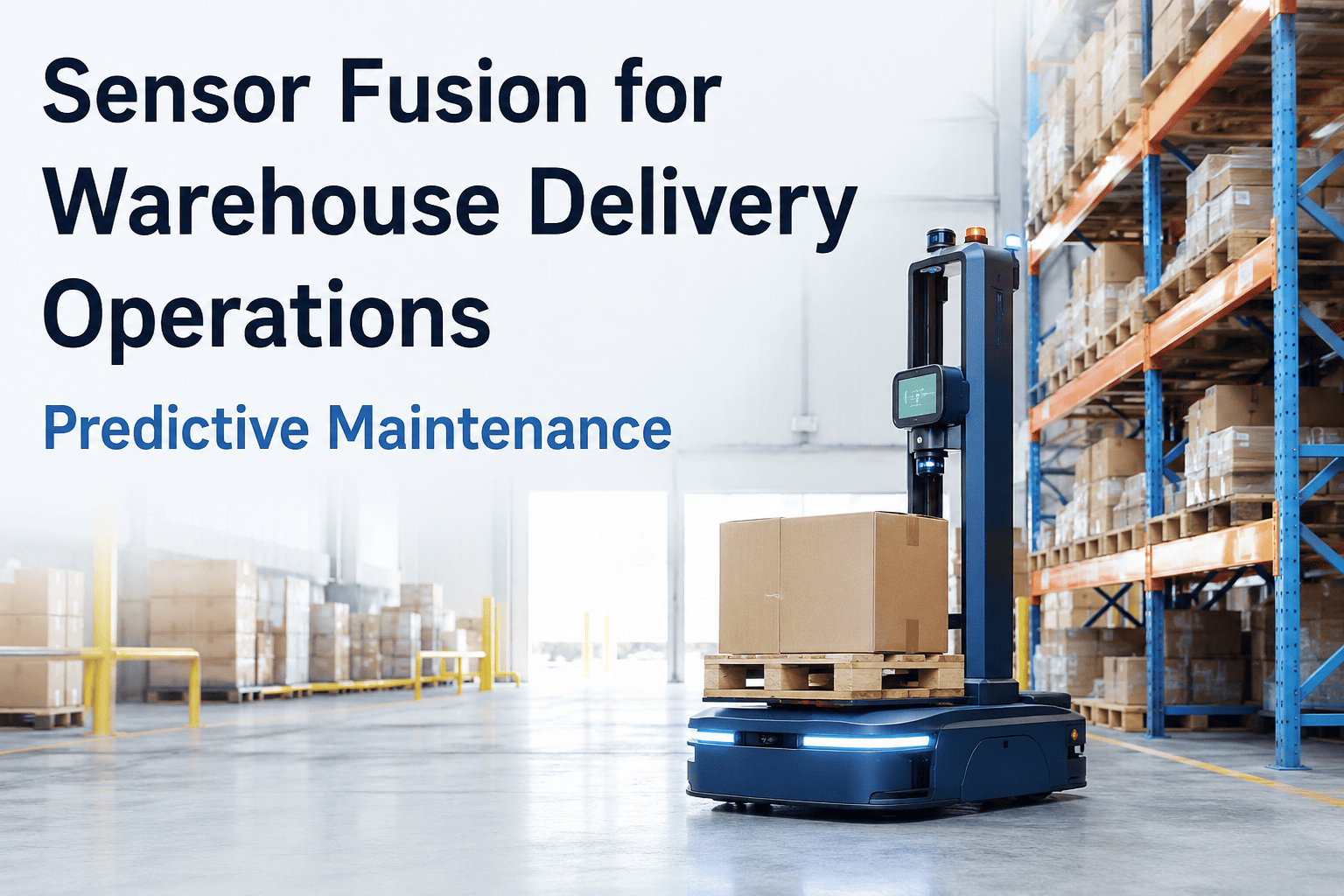
In a delivery warehouse, a refrigeration compressor does not fail all at once — it drifts. Suction pressure climbs, a fan motor draws more current, a freezer zone warms half a degree per hour overnight, and by the morning shift an entire dock of perishable parcels has crossed its safe temperature limit. By then the loss is locked in: spoiled product, blown delivery SLAs, and warranty claims with no defensible record. OxMaint's AI cold chain alerting platform reads sensor telemetry continuously, catches the drift hours before excursion, and turns every anomaly into an assigned work order — so your team fixes the unit while the parcels are still cold. Book a demo to watch it run.
Cold Chain
AI & Automation
Delivery Warehouses
AI Cold Chain Alerting for Delivery Warehouses
Detect refrigeration drift before it becomes a temperature excursion. Trigger graded alerts, auto-create work orders, and protect every delivery SLA with a defensible, timestamped record.
$500K
A two-hour excursion can ruin a single shipment
4–8 wk
Advance warning AI gives on mechanical refrigeration faults
30%
Fewer excursion incidents reported with sensor-linked alerting
$30B+
Spent yearly on cold chain energy — failing units waste it
The Cost of Silence
A Cold Zone Does Not Send a Memo When It Starts to Fail
In e-commerce and grocery delivery warehouses, the refrigerated dock is the highest-risk, lowest-visibility part of the operation. Parcels sit in cold staging for minutes to hours between pick and dispatch — and that is exactly where a quiet compressor fault turns into ruined inventory. Industry data shows even a minor two-hour temperature deviation can destroy a shipment worth half a million dollars, and the failure of a refrigeration unit in a storage facility delays deliveries and breaks the end-to-end cold chain. The problem is rarely the absence of a thermometer. It is that nobody is watching it at 3 a.m.
Detection gap
Drift hides until it is an excursion
A unit losing efficiency creeps up degree by degree. Manual checks every few hours miss the slope and catch only the spike — after product is already compromised.
Action gap
An alarm is not a fix
A buzzer on a freezer panel tells someone something is wrong. It does not assign a technician, attach the sensor reading, or open a work order with a deadline.
SLA gap
Spoiled parcels miss the truck
Quick-commerce and next-day promises leave zero slack. A dock that warms overnight pulls product from the morning dispatch and breaks the delivery window.
Proof gap
No record when the claim lands
When a customer or auditor asks whether the cold chain held, paper logs and personal phone photos cannot produce a timestamped, defensible answer on demand.
The Escalation Ladder
From First Anomaly to Work Order — Graded by Severity
OxMaint does not treat every reading the same. It scores deviations against learned baselines for each zone and asset, then escalates through defined tiers. A small drift gets watched; a confirmed trend toward the safe limit gets a technician dispatched before product is at risk.
Tier 1
Watch
Sensor reading drifts outside the normal band but stays well within the safe limit.
Logged silently. AI begins trend tracking. No human interruption yet.
Tier 2
Notify
A sustained slope toward the limit, or a correlated signal — fan current up, suction pressure rising.
Shift supervisor pinged with the live reading and projected time-to-limit.
Tier 3
Dispatch
Trend confirms the zone will breach its safe range within the response window.
Work order auto-created, assigned to on-call refrigeration tech with diagnostic data attached.
Tier 4
Escalate
Excursion imminent or work order unacknowledged past its deadline.
Re-routed up the chain to the facility manager; affected parcels flagged for hold and inspection.
The Pipeline
Sensor Signal to Closed Work Order — With Zero Manual Handoffs
Every cold zone in the warehouse feeds telemetry into OxMaint. The platform reads it, reasons about it, and acts on it — connecting the sensor on the freezer to the wrench in the technician's hand without a person re-typing anything.
01
Ingest telemetry
Temperature, humidity, compressor load, suction and discharge pressure, fan current, and door-open events stream in from existing sensors over standard protocols.
→
02
Detect the pattern
AI compares live readings against each asset's learned baseline and seasonal curve, flagging the degradation signatures that calendar checks and simple thresholds miss entirely.
→
03
Grade and alert
The deviation is scored on the escalation ladder and routed to the right person at the right tier — with the projected time until the safe limit is breached.
→
04
Open the work order
A work order is created automatically — asset, location, sensor snapshot, suspected root cause, and repair guidance all pre-filled. The technician opens it already knowing what to fix.
→
05
Close with proof
The fix is logged against the original alert, the temperature trace is archived, and the whole event becomes a timestamped, audit-ready record of an excursion that never happened.
Catch the drift while the parcels are still cold
Stop staffing the cold dock with hourly clipboard checks. Let OxMaint watch every zone continuously and dispatch a fix before a single SLA is at risk.
Excursion Timeline
The Same Night, Two Ways
A failing evaporator fan in a chilled staging zone, traced minute by minute. The difference between a manual operation and AI alerting is not whether the unit fails — it is whether anyone catches it before the morning dispatch.
Without AI alerting
11:40 PMFan current rises. No one is watching the panel.
1:15 AMZone warms 1.5°. Within range, so the local alarm stays silent.
4:30 AMSafe limit breached. Panel buzzer sounds in an empty dock.
6:00 AMShift arrives. Parcels already spoiled; morning route short.
ResultProduct loss, missed SLA, no defensible record.
With OxMaint
11:40 PMFan current anomaly logged. AI starts trend tracking.
12:10 AMSlope confirmed. On-call tech gets a Tier 3 dispatch.
12:55 AMWork order opens pre-filled. Tech heads to the unit.
1:40 AMFan replaced. Zone holds. Trace archived to the record.
ResultZero loss, SLA intact, full audit trail closed.
What Gets Monitored
Every Signal That Precedes a Cold Chain Failure
| Monitored Signal |
What It Warns Of |
Typical Lead Time |
Auto-Action |
| Zone temperature trend |
Cooling capacity loss before excursion |
Hours |
Graded alert |
| Compressor load and vibration |
Bearing wear, compressor degradation |
4–8 weeks |
Work order |
| Suction / discharge pressure |
Refrigerant loss, circuit fault |
2–4 weeks |
Work order |
| Evaporator fan current |
Fan motor failure, airflow loss |
1–3 weeks |
Dispatch alert |
| Door-open and defrost events |
Process error driving warm-up |
Real time |
Supervisor ping |
| Power draw per unit |
Efficiency drop, early degradation |
Weeks |
Trend flag |
The Payoff
What Delivery Warehouses Gain
90%+
AI prediction accuracy on major refrigeration failure modes after training
<5%
False-positive rate once baselines are calibrated to your zones
24/7
Continuous coverage of every cold zone — no overnight blind spot
100%
Timestamped closure proof on every alert for SLA and compliance
FAQ
Frequently Asked Questions
Do I need to replace my existing refrigeration sensors to use OxMaint?
No.
OxMaint connects to the sensors and monitoring systems already on your cold storage equipment — temperature probes, pressure transducers, vibration sensors, and fan current monitors — over standard protocols. It ingests data from your existing controllers and building systems rather than requiring a rip-and-replace. If a critical zone has a genuine coverage gap, the platform identifies it so you can add a low-cost wireless sensor only where it actually matters.
How is AI alerting different from the alarm already built into my freezer panel?
A panel alarm fires only once a reading has already crossed a fixed threshold — by which point product is often already compromised. OxMaint's AI tracks the trend and the correlated early signals, projecting when a zone will breach its safe limit hours in advance. Instead of a buzzer in an empty dock, you get a graded alert routed to a named person and, at the dispatch tier, an automatically created work order with the diagnostic data attached. The goal is to fix the unit before the excursion, not to record it after.
Does the system create work orders automatically, or just send notifications?
Both, graded by severity. Minor drift is watched silently and minor trends notify a supervisor, but once the AI confirms a zone is heading toward its safe limit within the response window, it creates a full work order on its own — pre-filled with the asset, location, sensor snapshot, suspected root cause, and repair guidance. The technician opens it already knowing what to fix. If that work order goes unacknowledged past its deadline, OxMaint escalates it up the chain automatically so nothing stalls overnight.
Can OxMaint produce the records I need for SLA disputes and food-safety audits?
Yes. Every alert and its resolution are stored as a timestamped event, with the temperature trace, the responsible technician, and the closure time all linked together. When a customer questions whether the cold chain held or an auditor requests proof of corrective action, the platform produces an organized, evidence-backed record on demand — no scrambling through paper logs or personal phones.
Book a demo to see the closure record built end to end.
How long before the alerting becomes accurate for my specific warehouse?
The platform begins watching from day one using pre-trained models for common refrigeration assets, then sharpens to your environment as it learns each zone's normal behavior across daily and seasonal cycles. Prediction accuracy on major failure modes typically exceeds ninety percent after the initial training period, with false positives falling below five percent once baselines settle. Because it learns continuously from your equipment, the alerting keeps getting more precise the longer it runs in your facility.
Protect every cold parcel and every delivery promise
OxMaint watches your refrigeration around the clock, catches the drift before it becomes an excursion, and turns every anomaly into an assigned, documented fix. No spoiled inventory. No missed SLAs. No undefendable claims.