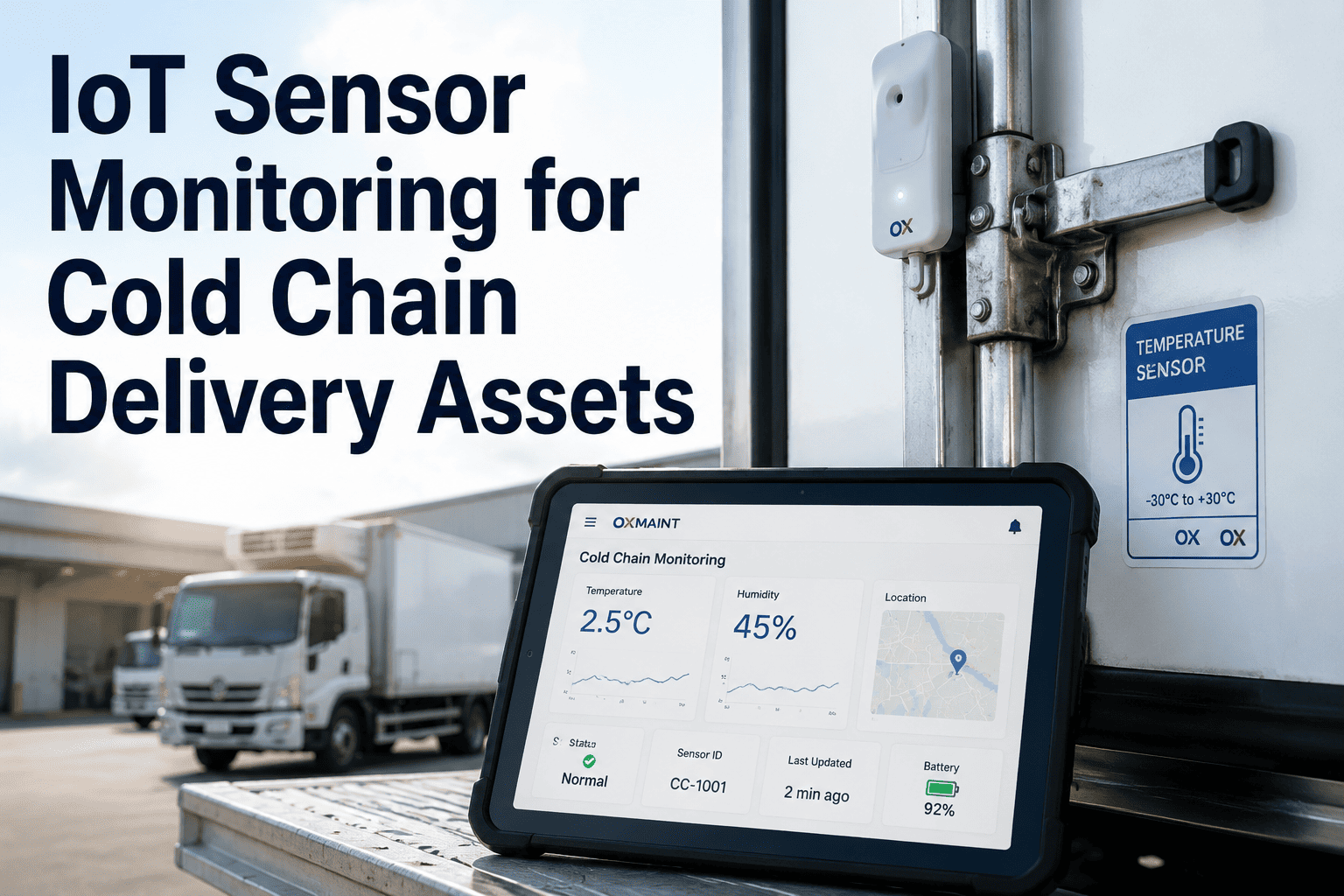
At 2:14 AM on a Thursday in Atlanta, a Nuro delivery robot carrying 340 units of insulin crossed a Kroger parking lot in August heat. The refrigeration compressor inside had been drawing 18% more current than baseline for nine days. Nobody noticed—the maintenance team tracked compressor health on a shared Google Sheet that hadn’t been updated since the previous Tuesday. At 2:17 AM, the compressor failed. Internal cargo temperature climbed from 4°C to 11°C in fourteen minutes. By the time the robot reached its delivery zone, every unit of insulin was compromised. Total product loss: $28,400. But the real cost came three days later when the pharmacy chain’s compliance team pulled the cold chain audit trail—and found six more robots in the fleet with compressor current readings trending the same direction. They suspended the entire contract pending a fleet-wide review. Eight weeks of revenue gone. The compressor that failed cost $380 to replace. The documentation gap cost $1.2 million in suspended contracts.
Cold chain delivery robots aren’t just robots that happen to carry cold things. They’re mobile refrigeration units operating in uncontrolled environments—summer asphalt radiating 140°F, winter roads cracking seals, vibration degrading compressor mounts every mile. The margin for error is zero. A 2°C temperature excursion doesn’t just spoil product—it creates regulatory violations, contract breaches, and liability exposure that cascades through the entire supply chain. In 2026, with autonomous cold chain delivery projected to handle $8.2 billion in temperature-sensitive last-mile logistics across North America, the operators who survive are the ones who treat maintenance as a cold chain control point, not an afterthought. This guide covers exactly how.
Cold Chain Compliance: What Regulators Actually Enforce
Cold chain delivery robots operate at the intersection of food safety, pharmaceutical regulation, transportation law, and robotics standards. The regulatory landscape in 2026 isn’t a single framework—it’s four overlapping ones, each with documentation requirements that assume you can prove temperature integrity for every second of every delivery.
FDA 21 CFR Part 211 governs pharmaceutical storage and transport temperatures with zero tolerance for undocumented excursions. The Food Safety Modernization Act (FSMA) requires preventive controls for food transport including continuous temperature monitoring and corrective action documentation. DOT 49 CFR Part 173 covers hazardous materials in transport—which includes certain biological products that cold chain robots increasingly carry. And NIST guidelines for autonomous delivery systems add requirements for sensor calibration documentation and system validation records that most operators haven’t even heard of yet.
The pattern is clear: every regulator assumes continuous, tamper-proof, timestamped documentation. Paper logs and spreadsheets can’t deliver that for a fleet of robots operating 24/7 across multiple zones. Sign up free to see what automated cold chain compliance documentation looks like.
The Cascading Cost of Cold Chain Failures
When a traditional refrigerated truck has a compressor failure, you lose one truckload. When a cold chain robot fleet has a systemic maintenance gap, you lose contracts. The economics are uniquely punishing because failures create cascading consequences across product loss, regulatory action, and customer trust simultaneously.
Temperature Excursion Product Loss
A single compressor failure during a pharmaceutical delivery destroys the entire cargo. Insulin, vaccines, biologics cannot be re-chilled and resold. Average pharmaceutical cargo value per robot delivery is $2,800 to $12,000.
Impact: $2,800-$28,000 per excursion eventContract Suspension / Termination
Pharmacy chains and hospital networks have zero-tolerance clauses for cold chain breaches. A pattern of excursions triggers contract review. One major grocery chain suspended a 40-robot delivery contract for 8 weeks after 3 excursion events in a quarter.
Impact: $150,000-$1.2M per contract suspensionFDA / FSMA Enforcement Actions
Undocumented temperature excursions that reach patients trigger FDA investigation. Warning letters, consent decrees, and import alerts can follow, each visible to every current and potential customer in the industry.
Impact: $100,000-$2M+ per enforcement actionCompressor and Refrigeration Waste
Without condition-based monitoring, operators replace compressors, condensers, and refrigerant on fixed schedules, discarding components with 35-50% remaining useful life. Refrigeration components cost 3-5x more in robot form factors than truck equivalents.
Impact: $2,400-$4,200 per robot per year in premature partsThe math is simple: one prevented excursion event pays for a year of CMMS-managed maintenance. Book a demo to see how predictive compressor monitoring eliminates excursion events entirely.
Spreadsheet Tracking vs. CMMS for Cold Chain Robot Fleets
Cold chain adds a dimension that standard robot maintenance doesn't have: continuous environmental monitoring that's legally required to be tamper-proof. Spreadsheets fail this requirement by design.
| Criteria | Spreadsheets / Manual | CMMS Platform |
|---|---|---|
| Temperature monitoring continuity | Gaps between manual readings (hourly at best) | IoT sensor integration, continuous, tamper-proof |
| Excursion detection speed | Discovered after delivery (or not at all) | Real-time alerts within 30 seconds of breach |
| Compressor health tracking | Reactive, noticed when it fails | Current draw, vibration, cycling pattern trending |
| Sensor calibration scheduling | Calendar reminders (frequently missed) | Auto-scheduled with compliance lock-out if overdue |
| Cargo compartment sanitation logs | Paper checklists at each depot | Digital log with photo proof and technician sign-off |
| Refrigerant leak detection | Annual inspection (leaks develop in weeks) | Pressure trend monitoring with automated alerts |
| FDA/FSMA audit response | Days to compile from multiple spreadsheets | Complete delivery-level cold chain proof in 60 seconds |
| Battery vs. refrigeration power allocation | No visibility into power draw competition | Real-time energy budget monitoring per subsystem |
| Annual compliance cost (40-robot fleet) | $180,000+ (staff, spoilage, penalties) | $32,000-$55,000 (platform + reduced waste) |
Every cold chain delivery that completes without a documented, continuous temperature record is a compliance violation waiting to be discovered. Start free and eliminate that risk from your next delivery.
ROI of CMMS-Managed Cold Chain Robot Maintenance
These numbers model a 40-robot cold chain delivery fleet operating across 3 depot locations, a typical mid-scale pharmaceutical and grocery last-mile operation in 2026.
| Savings Category | Annual Impact | Calculation Basis |
|---|---|---|
| Prevented temperature excursion losses (8/yr avoided) | $112,000 | 8 events x $14,000 avg cargo value destroyed |
| Extended compressor life (40% longer service) | $38,400 | 40 robots x $960 avg savings per compressor/yr |
| Reduced refrigerant waste (leak early detection) | $16,800 | 60% fewer emergency refrigerant recharges fleet-wide |
| Eliminated manual compliance labor | $72,000 | 1.5 FTE compliance admin eliminated across 3 depots |
| Avoided contract suspensions (1/yr prevented) | $150,000 | 1 contract suspension avoided x avg revenue impact |
| Battery life extension (optimized power allocation) | $24,000 | 20% longer battery cycles through thermal load balancing |
| Total Estimated Annual Savings | $413,200 | 40-robot fleet, 3 depot locations |
At $413K annual savings against $32K-$55K platform cost, cold chain CMMS delivers 7-12x ROI in year one. Book a demo and we'll model your fleet's specific cold chain economics.
Critical Cold Chain Maintenance Metrics
Standard robot fleet KPIs aren't enough for cold chain. You need metrics that capture refrigeration health, temperature integrity, and the unique power dynamics of running both drive and cooling systems from the same battery.
| Metric | Target (2026 Best Practice) | Why It Matters | Red Flag Threshold |
|---|---|---|---|
| Temperature Excursion Rate | 0 per 1,000 deliveries | Any excursion = product loss + compliance risk | Above 0.1% = systemic failure |
| Compressor Current Draw Variance | ≤ 5% above baseline | Rising current = developing mechanical failure | Above 15% = ground for service |
| Sensor Calibration Currency | 100% within schedule | Uncalibrated sensors = legally invalid readings | Any sensor 1+ day overdue |
| Refrigerant Pressure Stability | ≤ 3% weekly variance | Pressure drops signal developing leaks | Above 8% = leak investigation |
| Battery-to-Cooling Power Ratio | ≤ 35% allocated to cooling | Higher ratio = reduced range, overworked battery | Above 45% = thermal redesign needed |
| Cargo Compartment Sanitation Rate | 100% per protocol | FSMA requires documented cleaning compliance | Below 95% = audit finding |
| Mean Time Between Cooling Failures | ≥ 2,000 operating hours | Industry benchmark for miniaturized compressors | Below 1,200 hrs = fleet review |
If you're not tracking compressor current variance and refrigerant pressure weekly, you're waiting for excursions to tell you something is wrong. Sign up free to start monitoring cold chain health metrics from today.
Implementation Roadmap: Cold Chain CMMS in 60 Days
Cold chain robot fleets can't afford 90-day rollouts. Every day without continuous monitoring is a day your temperature records have gaps that auditors will find.
Case Study: 60-Robot Pharma Delivery Fleet Eliminates Excursions
A pharmaceutical last-mile delivery operator running 60 cold chain robots across 5 depot locations in the southeastern US was averaging 2.8 temperature excursion events per month. Each excursion destroyed an average of $14,000 in pharmaceutical product. Worse, their largest hospital network client had issued a final warning: one more documented excursion event and the $3.4 million annual contract would be terminated.
The root cause was invisible degradation. Compressors were developing failures over 7-14 days that nobody could see in weekly manual checks. Refrigerant leaks were dropping system capacity by 15-20% before anyone noticed temperature climbing. Sensor calibrations were 30+ days overdue on a third of the fleet. Book a walkthrough to see how this operator solved every one of these problems.
We went from 2.8 excursion events per month to zero in 47 days. Not reduced, eliminated. The compressor current monitoring caught seven developing failures in the first three weeks that would have been mid-delivery catastrophes. Our hospital network client renewed for three years instead of the one-year deal they had been offering. The platform paid for itself before we finished implementation.
Real-Time Cold Chain Fleet Dashboard
This is what the operations manager checks before the first delivery dispatches each morning.
Key Capabilities for Cold Chain Robot Fleets
Cold chain robot maintenance requires everything standard robot CMMS offers plus an entire refrigeration management layer that most platforms don't have. Sign up free and explore these capabilities with your fleet.
IoT Temperature Integration
Continuous temperature data from every cargo compartment streamed to CMMS. Tamper-proof logging meets FDA 21 CFR Part 11 electronic records requirements.
Compressor Health Prediction
Current draw, vibration, and cycling pattern analysis detects compressor degradation 2-3 weeks before failure. Auto-generated service orders prevent mid-delivery breakdowns.
Refrigerant Leak Trending
System pressure monitored continuously. Gradual drops that indicate developing leaks trigger alerts weeks before cooling capacity is affected.
Sensor Calibration Lockout
Auto-scheduled calibration with compliance lockout. Robots with expired sensor calibrations cannot be dispatched, eliminating the #1 audit finding.
Battery-Cooling Power Optimization
Real-time monitoring of power allocation between drive and refrigeration systems. Alerts when cooling load threatens delivery range.
Automated Sanitation Scheduling
FSMA-compliant cleaning schedules with digital sign-off, photo documentation, and automated compliance reporting for food safety audits.
Benefits by Role
Cold chain CMMS delivers value to every stakeholder, from the technician servicing compressors to the executive defending audit findings to clients.
Fleet Operations Managers
- Real-time cold chain status across every robot
- Zero-excursion delivery record for client reporting
- Predictive scheduling that maximizes fleet availability
- Multi-depot visibility from a single dashboard
Refrigeration Technicians
- Compressor health data before touching any unit
- Refrigerant pressure trends eliminate diagnostic guesswork
- Mobile work orders with robot-specific cooling specs
- Digital sign-off eliminates compliance paperwork
Cold Chain Compliance Officers
- Continuous temperature audit trails per delivery
- Automated sensor calibration compliance tracking
- FDA/FSMA-ready export packages in seconds
- Excursion root cause analysis with full data history
VP Operations / BD Leaders
- Zero-excursion record as competitive differentiator
- Client-facing compliance dashboards for contract renewals
- Cost-per-delivery trending with cold chain overhead
- Scalability proof for enterprise pharma partnerships