The logistics manager watched helplessly as $2.3 million worth of vaccines arrived at the distribution center with compromised temperature data. Somewhere during the 72-hour journey across three continents, the cold chain had broken—but nobody knew exactly when, where, or for how long. Without continuous cold chain monitoring, the entire shipment faced rejection, insurance disputes dragged on for months, and patients waited for replacement doses that would take weeks to manufacture. Meanwhile, competitors using manual temperature logging discovered spoilage only after products reached pharmacies, triggering costly recalls and destroying consumer trust. This reactive approach to cold chain management costs the pharmaceutical industry $35 billion annually in spoiled products, while food supply chains lose 40% of perishables before reaching consumers. Advanced cold chain packaging and real-time monitoring technology is revolutionizing temperature-controlled logistics by providing continuous visibility, predictive alerts, and documented compliance throughout the supply chain. Companies implementing smart cold chain solutions report 60-80% reduction in product losses, 45% fewer compliance violations, and complete end-to-end traceability that transforms liability nightmares into competitive advantages. Teams ready to eliminate cold chain failures can sign up for free and deploy smart monitoring workflows immediately, or book a demo to see the platform in action.
Modern cold chain management combines advanced packaging materials, IoT sensors, cloud analytics, and automated alerting to maintain product integrity from origin to destination. Phase-change materials provide extended thermal protection without power. GPS-enabled sensors transmit real-time location and temperature data every few minutes. Machine learning algorithms predict excursions before they happen based on ambient conditions and route analysis. Blockchain-verified records create immutable audit trails satisfying FDA, WHO, and international regulatory requirements. For pharmaceutical distributors, food manufacturers, and biotech companies where temperature deviations mean destroyed products and endangered patients, intelligent cold chain packaging solutions aren't optional investments—they're essential infrastructure separating industry leaders from organizations one spoilage incident away from catastrophic recalls and regulatory sanctions.
Cold Chain · IoT Monitoring · 5 Minute Read
Cold Chain Packaging Solutions and Real-Time Monitoring
From advanced thermal packaging to IoT-enabled tracking—ensuring product integrity, regulatory compliance, and complete supply chain visibility for temperature-sensitive goods.
Reduction in Product Losses
Fewer Compliance Violations
24/7
Real-Time Monitoring
Continuous Temperature Tracking
The Cold Chain Challenge: Why Traditional Methods Fail
Traditional cold chain management relies on periodic temperature checks, passive packaging assumptions, and reactive problem discovery—approaches fundamentally inadequate for today's global supply chains and stringent regulatory requirements. These methods create invisible gaps where product integrity silently degrades until damage becomes irreversible. Modern cold chain monitoring technology closes these gaps with continuous visibility and predictive intelligence. Organizations ready to transform their cold chain operations can Sign Up for Free to implement smart monitoring workflows immediately.
Blind Spots in Manual Logging
Manual temperature recording captures snapshots hours or days apart, missing critical excursions that occur between readings. A truck's refrigeration unit failing at 2 AM goes undetected until morning delivery. Temperature logs at origin and destination show compliance while 18 hours of thermal abuse in transit remain invisible—enough to destroy vaccine potency or accelerate bacterial growth in perishables.
Detection Gap:
Manual logging misses 70-85% of temperature excursions
Solution: Continuous IoT monitoring with 1-5 minute data intervals captures every deviation regardless of when or where it occurs
Inadequate Packaging Performance
Standard insulated packaging provides limited thermal protection—often just 24-48 hours under ideal conditions. But shipments face extreme tarmac temperatures (up to 65°C), delayed flights, customs holds, and last-mile delivery challenges. Generic packaging specifications fail to account for actual route conditions, ambient temperature variations, and unexpected delays that routinely extend transit times.
Protection Gap:
40% of shipments exceed planned transit times; packaging fails in 25% of these cases
Solution: Advanced phase-change materials and route-specific packaging qualification ensure protection through worst-case scenarios
Compliance Documentation Failures
Paper-based records, manual data entry, and disconnected systems create compliance nightmares. Auditors find gaps in temperature documentation, missing chain-of-custody records, and unverifiable timestamps. When recalls occur, organizations cannot prove which lots were affected or trace products through distribution networks—turning localized problems into company-wide crises.
Audit Risk:
35% of FDA warning letters cite inadequate cold chain documentation
Solution: Automated, tamper-evident digital records with blockchain verification satisfy strictest regulatory requirements
Reactive Problem Discovery
Most cold chain failures are discovered only at destination—after products have been compromised for hours or days with no opportunity for intervention. Quality teams reject entire shipments because they cannot determine which units remained within specification. Insurance claims require evidence that often doesn't exist. Root cause analysis becomes impossible without continuous data.
Response Delay:
Average 18-36 hours between excursion occurrence and discovery
Solution: Real-time alerts enable immediate intervention—rerouting shipments, activating backup cooling, or expediting delivery
Ready for Complete Cold Chain Visibility?
Transform your temperature-controlled logistics with real-time IoT monitoring, predictive analytics, and automated compliance documentation. Join industry leaders protecting product integrity and reducing losses with intelligent cold chain solutions.
Advanced Packaging Technologies: The Foundation of Cold Chain Integrity
Modern cold chain packaging has evolved far beyond simple insulated boxes. Today's solutions combine advanced materials science, thermal engineering, and performance validation to maintain precise temperature ranges for extended periods. Understanding these technologies helps organizations select appropriate solutions for their specific requirements. Book a demo to see how monitoring integrates with advanced packaging systems.
Temperature-Specific PCM Formulations
Phase change materials absorb and release thermal energy while maintaining constant temperature during phase transitions. Custom PCM formulations target specific ranges: -20°C for frozen products, 2-8°C for vaccines and biologics, 15-25°C for controlled room temperature medications. Unlike water-based ice packs, engineered PCMs prevent both freezing and overheating.
Impact: Maintains target temperature range for 96-120+ hours; eliminates freeze damage in refrigerated products; provides consistent thermal performance regardless of ambient conditions.
Reusable vs. Single-Use Systems
Reusable PCM packaging systems provide superior thermal performance and lower per-shipment costs for high-volume operations. Conditioning protocols ensure consistent energy content. Single-use systems eliminate return logistics and contamination concerns for certain applications. Hybrid approaches use reusable outer containers with single-use temperature control elements.
Impact: Reusable systems reduce packaging costs 40-60% over two years; single-use systems add $15-50 per shipment but eliminate reverse logistics complexity.
Ultra-High Performance Insulation
Vacuum insulated panels provide thermal resistance 5-10x greater than conventional polyurethane foam at fraction of the thickness. Microporous core materials encased in gas-tight barriers maintain vacuum integrity. VIP-based cold chain packaging achieves pharmaceutical-grade temperature control in compact form factors suitable for air freight weight restrictions.
Impact: Reduces packaging volume 50-70% versus foam equivalents; extends protection duration 2-3x; enables longer shipping lanes without active refrigeration.
Aerogel and Advanced Composites
Next-generation insulation materials combine aerogel blankets, multi-layer reflective barriers, and engineered air gaps for maximum thermal resistance. These composites resist compression damage, maintain performance over repeated use, and provide consistent insulation even when partially damaged—unlike VIPs that fail completely if punctured.
Impact: Provides 30-40% weight reduction versus equivalent protection; maintains 85%+ performance even after minor physical damage.
Portable Refrigeration Units
Battery-powered or plug-in refrigeration units provide active cooling for high-value or ultra-sensitive shipments. Compressor-based and thermoelectric systems maintain precise temperatures regardless of ambient conditions. GPS-enabled units report location, temperature, power status, and door-open events in real-time through cellular networks.
Impact: Maintains exact target temperature indefinitely with power; protects shipments worth $100K-$10M+ through worst-case scenarios; provides complete chain of custody documentation.
Smart Containers and Pallets
Pallet-scale active containers combine refrigeration, monitoring, and communication in reusable platforms suitable for bulk pharmaceutical and food shipments. Integrated sensors monitor not just temperature but humidity, shock, tilt, and light exposure. Remote control capabilities allow temperature setpoint adjustment during transit.
Impact: Handles 500-2000kg payloads with consistent conditions; enables same container farm-to-pharmacy or manufacturer-to-patient traceability.
Packaging Performance Specifications
Frozen (-20°C ± 5°C)
Dry ice or PCM systems | 48-96 hour protection | Applications: vaccines, biologics, cell therapies, frozen foods
Refrigerated (2-8°C)
PCM with VIP insulation | 72-120+ hour protection | Applications: vaccines, insulin, fresh produce, dairy
Controlled Room Temp (15-25°C)
Thermal blankets or PCM | 48-96 hour protection | Applications: pharmaceuticals, diagnostics, certain biologics
Ultra-Cold (-70°C or below)
Dry ice with VIP or active systems | 24-72 hour protection | Applications: mRNA vaccines, cell therapies, specialty biologics
IoT Monitoring Technology: Real-Time Visibility Across the Supply Chain
Internet of Things sensors and connectivity transform cold chain management from periodic sampling to continuous monitoring with instant alerts. These technologies provide unprecedented visibility into conditions throughout the logistics journey. Book a demo to explore intelligent monitoring capabilities.
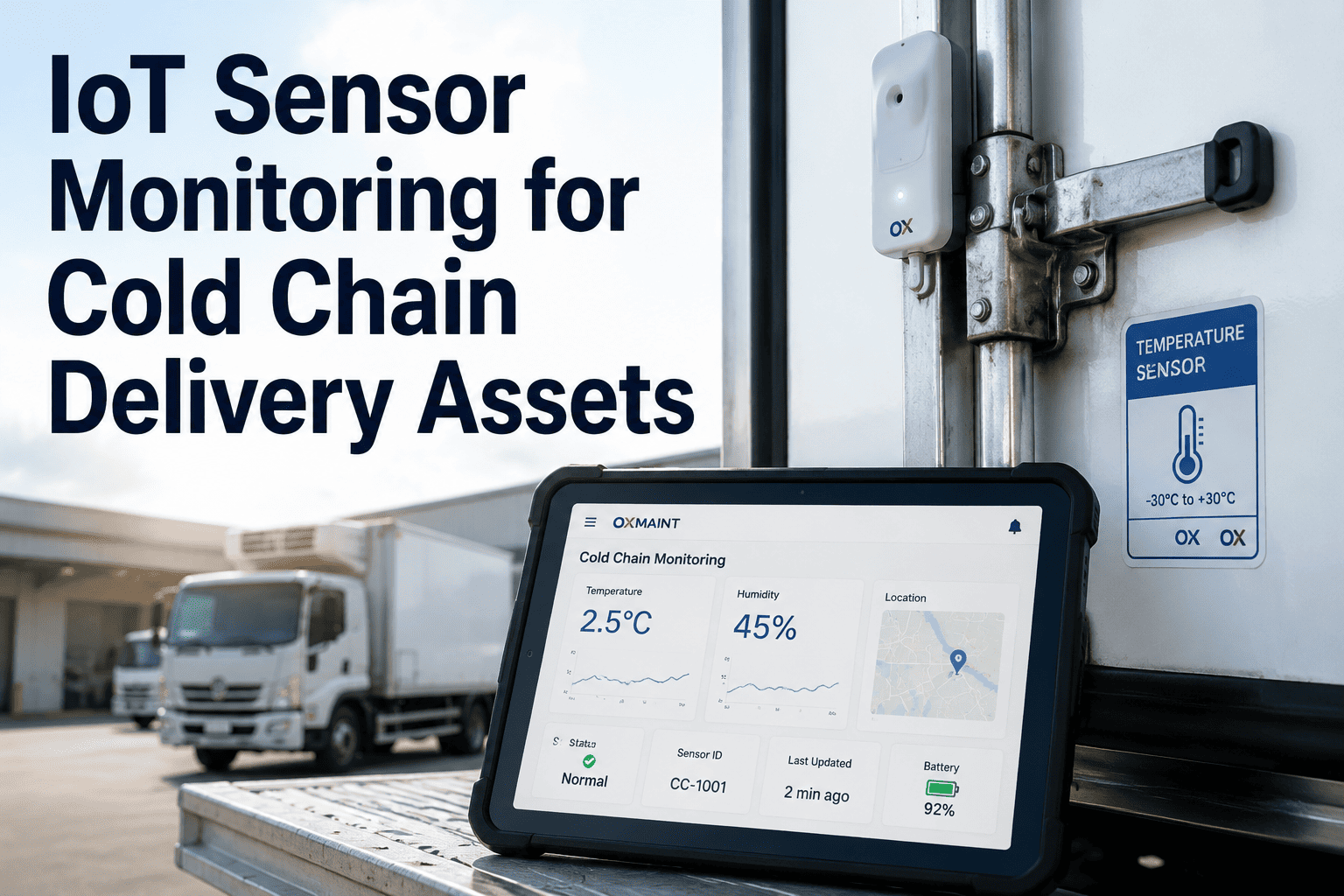
Temperature Sensors: High-accuracy thermistors or RTDs measure temperature at ±0.1-0.5°C accuracy with configurable sampling intervals from 30 seconds to 15 minutes. Multiple sensors per shipment capture gradients and identify problem locations within packages.
Humidity Monitoring: Relative humidity tracking identifies moisture intrusion, condensation risk, and improper packaging. Critical for products sensitive to both temperature and humidity—many pharmaceuticals, electronics, and specialty foods require specific humidity ranges.
Shock and Tilt Detection: Accelerometers record impact events, drops, and rough handling that can damage temperature-sensitive products. Tilt sensors identify if shipments were positioned incorrectly. Data provides evidence for carrier claims and identifies problematic handling points.
Cellular Connectivity: 4G/5G-enabled devices transmit data in real-time regardless of WiFi availability. Global SIM cards maintain connectivity across international borders. Typical transmission intervals of 5-15 minutes balance visibility against battery life and data costs.
Satellite Communication: For remote locations, ocean freight, and areas without cellular coverage, satellite-enabled loggers ensure continuous monitoring. Dual-mode devices use cellular when available and fail over to satellite automatically.
GPS Location Tracking: Integrated GPS tracking provides continuous location visibility, enabling geofenced alerts (shipment left approved route), ETA predictions, and correlation between location and temperature events (airport tarmac exposure, warehouse dwell time).
Real-Time Dashboards: Centralized visibility into all active shipments with color-coded status indicators. Drill-down capabilities show detailed temperature graphs, location history, and alert chronology. Mobile apps enable monitoring from anywhere.
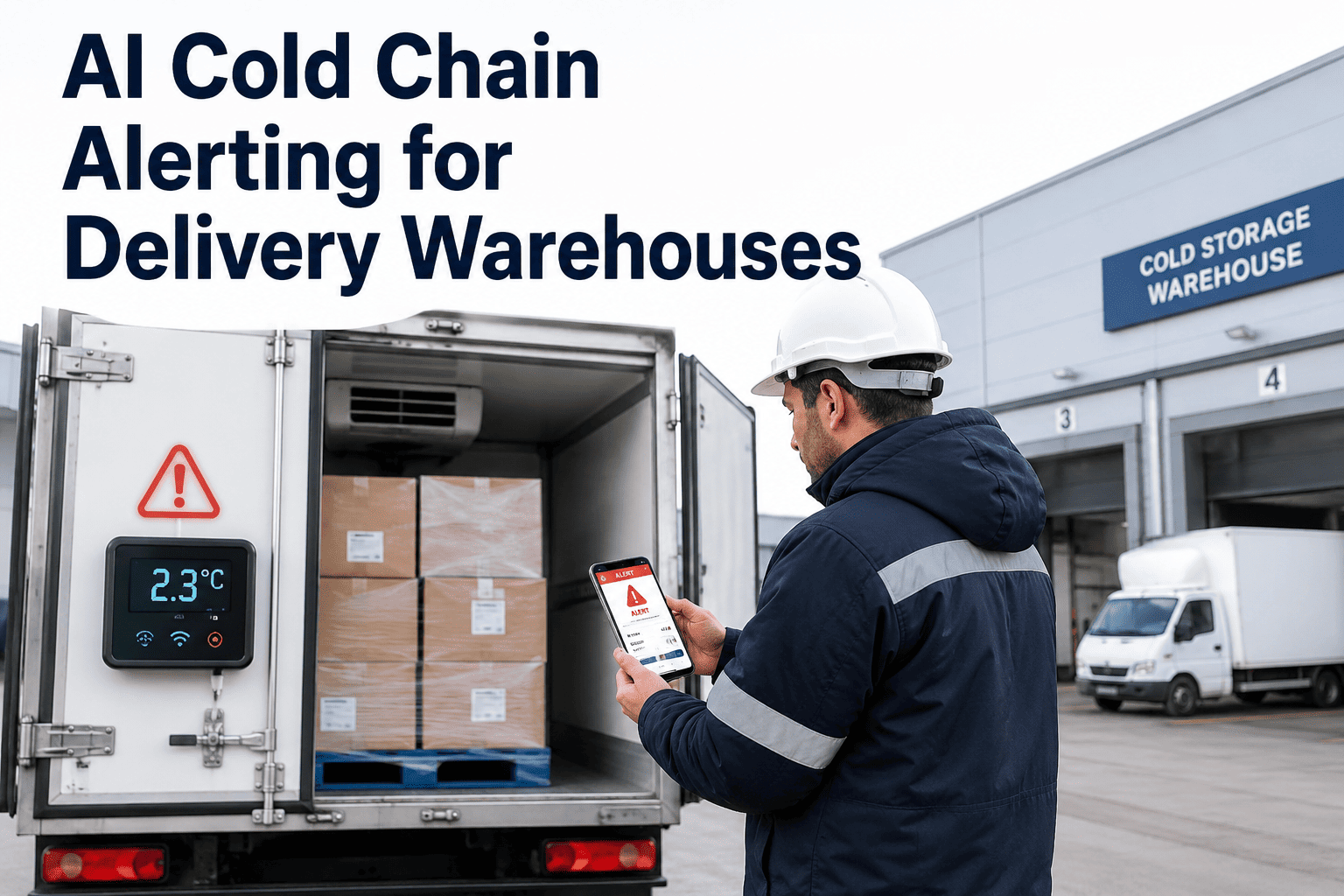
Automated Alerting: Configurable thresholds trigger instant notifications via email, SMS, or push notification when temperatures approach or exceed limits. Escalation protocols ensure critical alerts reach decision-makers even outside business hours.
Predictive Analytics: Machine learning algorithms analyze current conditions, weather forecasts, and historical patterns to predict excursions before they occur—enabling proactive intervention rather than reactive damage control.
Regulatory Compliance and Documentation
Cold chain monitoring must satisfy stringent regulatory requirements from FDA, WHO, IATA, and international health authorities. Proper compliance documentation protects products, patients, and organizations from compliance failures.
FDA 21 CFR Part 11 Compliance
Electronic records with full audit trails
Digital monitoring systems must meet electronic records requirements including secure, computer-generated timestamps, audit trails showing all data modifications, electronic signatures for record approval, and system access controls preventing unauthorized changes. Validated systems ensure data integrity throughout product lifecycle.
GDP (Good Distribution Practice)
Complete chain of custody documentation
WHO GDP guidelines and EU GDP requirements mandate documented temperature control throughout pharmaceutical distribution. Monitoring systems must provide continuous records, deviation reports, and evidence that products remained within specification from manufacturer to patient. Qualification protocols verify packaging performance.
IATA Perishable Cargo Regulations
Air freight compliance for temperature-sensitive goods
International air transport requires specific packaging standards, labeling requirements, and documentation for temperature-controlled cargo. PCR Chapter 17 specifies requirements for pharmaceutical shipments including pre-departure temperature verification and carrier handling instructions.
FSMA (Food Safety Modernization Act)
Sanitary transportation compliance
FDA food transportation requirements mandate temperature control during transport of foods requiring refrigeration. Shippers must specify requirements, carriers must comply, and both must maintain records demonstrating compliance. Real-time monitoring provides documentation for Sanitary Transportation Rule requirements.
DSCSA Track and Trace
Pharmaceutical serialization and tracking
Drug Supply Chain Security Act requires product tracing throughout pharmaceutical distribution. Cold chain monitoring integrates with serialization systems to provide complete product history including manufacturing, storage conditions, and distribution path—essential for investigation during recalls or suspected counterfeiting.
Blockchain Verification
Immutable, tamper-evident records
Distributed ledger technology creates permanent, unalterable records of cold chain events. Temperature readings, location data, and handling events recorded on blockchain cannot be modified retroactively—providing auditors and regulators absolute confidence in data authenticity.
Industry Applications: Tailored Cold Chain Solutions
Different industries face unique cold chain challenges requiring specialized approaches. Understanding sector-specific requirements ensures appropriate technology selection and implementation. Organizations can Sign Up for Free to explore solutions tailored to their industry.
1
Pharmaceutical Distribution
Vaccine distribution requires strict 2-8°C maintenance with zero tolerance for freeze events that destroy potency. Biologics demand precise temperature bands, humidity control, and protection from light exposure. Clinical trial materials need complete chain of custody documentation for regulatory submissions. mRNA vaccines require ultra-cold storage and precise monitoring through last-mile delivery.
2
Fresh Food and Produce
Fresh produce respiration rates and shelf life depend directly on temperature maintenance during transport. Different products require different conditions—leafy greens need near-freezing while tropical fruits require higher temperatures. Ethylene monitoring prevents ripening acceleration. Real-time visibility enables dynamic routing to minimize transit time when delays threaten quality.
3
Frozen Food Supply Chain
Frozen foods require consistent -18°C or colder maintenance to prevent quality degradation and bacterial growth during thaw-refreeze cycles. Ice cream, seafood, and frozen prepared meals each have specific requirements. Monitoring must detect door-open events and loading dock temperature breaks that create hidden quality problems.
4
Biotech and Life Sciences
Cell therapies, tissue samples, and research materials often require ultra-cold temperatures (-80°C or liquid nitrogen) with extremely narrow tolerance bands. Products worth $100,000-$1M+ per shipment justify premium packaging and monitoring investments. Some materials are irreplaceable—patient-specific cell therapies cannot be reproduced if damaged.
5
Chemical and Diagnostics
Diagnostic reagents, laboratory chemicals, and reference standards require controlled storage to maintain accuracy and shelf life. Some chemicals become hazardous if frozen or overheated. Calibration standards require documented temperature history to certify measurement validity. Multi-temperature shipments need segregated monitoring within single containers.
6
Floral and Specialty Agriculture
Cut flowers, bulbs, and specialty agricultural products require precise temperature and humidity control during international transport. Products often spend 24-72 hours in transit across multiple climate zones. Ethylene sensitivity requires controlled atmosphere in addition to temperature management. Seasonal demand creates peak period capacity challenges.
ROI Analysis: Quantifying Cold Chain Investment Value
Smart cold chain solutions deliver measurable financial returns through loss prevention, efficiency improvements, and compliance protection. Understanding these economics builds the business case for technology investment:
Product Loss Prevention
60-80% reduction in spoilage losses
Real-time monitoring enables intervention before damage occurs—rerouting shipments, activating backup systems, or expediting delivery. Early detection prevents entire shipment rejection. Pharmaceutical companies report $500K-$5M+ annual savings from prevented losses depending on product values and shipping volumes.
Insurance Premium Reduction
15-30% lower cargo insurance costs
Documented monitoring programs demonstrate risk management sophistication to insurers. Real-time alerts reduce claim severity by enabling intervention. Complete records accelerate claim processing and reduce disputes. Some insurers require continuous monitoring for high-value pharmaceutical coverage.
Compliance Protection
Avoid $500K-$50M+ regulatory penalties
FDA warning letters, import alerts, and consent decrees from cold chain failures create massive business disruption. Complete documentation demonstrates compliance during inspections. Blockchain-verified records provide irrefutable evidence of proper handling. Proactive monitoring prevents the incidents that trigger regulatory action.
Recall Cost Reduction
80% smaller recall scope with traceability
When problems occur, granular tracking data identifies exactly which lots, shipments, and distribution points were affected. Precise traceability enables targeted recalls instead of broad market withdrawals. Reduces recall costs by millions while protecting patients who received unaffected product.
Operational Efficiency
25-40% reduction in quality hold times
Automated documentation eliminates manual data entry and paperwork delays. Products with clean monitoring records release immediately upon arrival. Quality teams focus on exceptions rather than reviewing every shipment. Faster release improves inventory turns and reduces working capital requirements.
Customer and Market Value
Competitive differentiation and retention
Pharmaceutical manufacturers increasingly require cold chain documentation from distributors. Food retailers demand visibility into supplier cold chains. Demonstrated monitoring capabilities win business that competitors without technology cannot access. Premium pricing opportunity for guaranteed cold chain integrity.
Frequently Asked Questions
What temperature ranges can IoT sensors monitor?
Modern cold chain sensors cover the full range of temperature-controlled logistics: ultra-cold (-80°C and below for cell therapies and mRNA vaccines), frozen (-20°C to -25°C for standard frozen products), refrigerated (2-8°C for vaccines and fresh foods), and controlled room temperature (15-25°C for many pharmaceuticals). Sensors are rated for specific ranges—verify that selected devices are validated for your required temperatures. Multi-range loggers can monitor from -40°C to +70°C in a single device with ±0.3°C accuracy.
How much do cold chain monitoring solutions cost?
Costs vary significantly by technology level. USB data loggers for post-trip download start at $15-50 per device with no recurring fees. Real-time cellular-enabled monitors range from $75-300 per device plus $5-20/month connectivity fees. Enterprise platforms with unlimited users, analytics, and compliance features typically run $500-2,000/month plus device costs. For pharmaceutical companies shipping high-value products, monitoring costs are negligible compared to the value protected—typically less than 0.5% of shipment value for complete real-time visibility.
How do I validate cold chain packaging for regulatory compliance?
Packaging qualification follows a standard protocol: define the temperature range and duration requirements based on your product and shipping lanes; perform thermal mapping to identify worst-case ambient conditions your shipments encounter; conduct chamber testing at these extremes to verify packaging maintains required conditions; validate with actual shipment studies using calibrated monitoring; document everything in a qualification report for regulatory review. Revalidate annually and whenever packaging design, routes, or products change. Most pharmaceutical companies use third-party labs for independent validation.
What happens when a temperature excursion is detected during transit?
Real-time monitoring enables several intervention options depending on excursion severity and product sensitivity. Minor excursions might trigger rerouting to expedite delivery before cumulative exposure causes damage. Significant events can prompt diversion to nearby facilities with proper storage. If recovery isn't possible, the shipper can initiate return-to-sender procedures rather than delivering compromised product. All excursions require documentation and quality review—monitoring data feeds directly into deviation management systems for investigation and disposition decisions according to product-specific stability data.
Can cold chain monitoring integrate with existing logistics systems?
Yes, modern monitoring platforms offer extensive integration capabilities. APIs connect with transportation management systems (TMS), warehouse management systems (WMS), and enterprise resource planning (ERP) platforms. Standard integrations exist for SAP, Oracle, and other major enterprise systems. Data exports in CSV, JSON, and XML formats support custom integrations. Some platforms integrate directly with carrier tracking systems to correlate temperature events with shipment milestones. Electronic data interchange (EDI) connections automate documentation exchange with trading partners.
How long do monitoring device batteries last?
Battery life depends on device type, transmission frequency, and temperature exposure. Basic USB loggers with no real-time transmission last 1-3 years on coin cell batteries. Cellular-enabled real-time monitors typically achieve 30-90 days with hourly transmission at room temperature—cold temperatures reduce battery performance. Rechargeable devices eliminate battery life concerns for reusable applications. For long-duration shipments (ocean freight, extended storage), select devices specifically designed for extended operation or use loggers with larger battery packs. Always verify battery life exceeds expected trip duration with significant margin.
Protect Your Temperature-Sensitive Products
Join industry leaders using intelligent cold chain monitoring to prevent losses, ensure compliance, and maintain product integrity from origin to destination. The future of temperature-controlled logistics is connected—start your transformation today.