A vehicle that leaves the depot without a completed inspection is a liability, not an asset. For delivery fleets, skipping or shortcutting preventive maintenance checks is the single most common cause of mid-route breakdowns, SLA failures, and emergency repair bills that run 3x the cost of planned servicing. This checklist gives fleet managers and drivers a complete, structured maintenance inspection framework — covering daily pre-trip checks, weekly vehicle walkarounds, monthly service intervals, and quarterly deep inspections. Use Oxmaint to digitize and automate every item on this checklist or book a free walkthrough to see how fleet teams run it in under 10 minutes per shift.
$4,700
average cost of one unplanned breakdown a checklist would have prevented
40%
fewer breakdowns with a structured preventive maintenance program
68%
of delivery disruptions trace back to avoidable, trackable maintenance gaps
3x
lower repair cost when faults caught on inspection vs. road breakdown
How to Use This Checklist
This checklist is organized into four inspection tiers — Daily, Weekly, Monthly, and Quarterly. Each tier builds on the last. Daily checks are fast and driver-led. Weekly and monthly checks add depth. Quarterly inspections are comprehensive and should involve a qualified technician. Print and laminate the daily section for each vehicle, or use Oxmaint's mobile app to complete and log every item digitally — with timestamps, fault flags, and automatic work order creation when issues are found.
Daily
5–10 min per vehicle
Pre-Trip Driver Check
Completed by the driver before every departure. Covers lights, tires, cab controls, brakes, mirrors, and cargo area. Any fault must be reported before the vehicle moves.
Responsible: Driver
Weekly
20–30 min per vehicle
Extended Walkaround
Adds fluid level checks, tire pressure with gauge, battery terminals, and belt and hose visual inspection on top of the daily items. Catches slow-developing issues before they escalate.
Responsible: Driver or Fleet Coordinator
Monthly
45–60 min per vehicle
Mechanical Inspection
Covers brakes, suspension, steering, drivetrain, air filter, and safety equipment. Requires fleet coordinator or fleet lead sign-off. Any fault generates a work order for resolution.
Responsible: Fleet Coordinator + Sign-off Required
Quarterly
90–120 min per vehicle
Full Technical Inspection
Complete powertrain, chassis, undercarriage, and electrical inspection by a qualified technician. Generates a full service record entry per vehicle used for compliance, budgeting, and fleet replacement decisions.
Responsible: Qualified Technician
Run every checklist item digitally — auto-log faults and create work orders
Oxmaint's mobile inspection app replaces paper checklists with timestamped, searchable records for every vehicle, every shift.
Start Free Trial
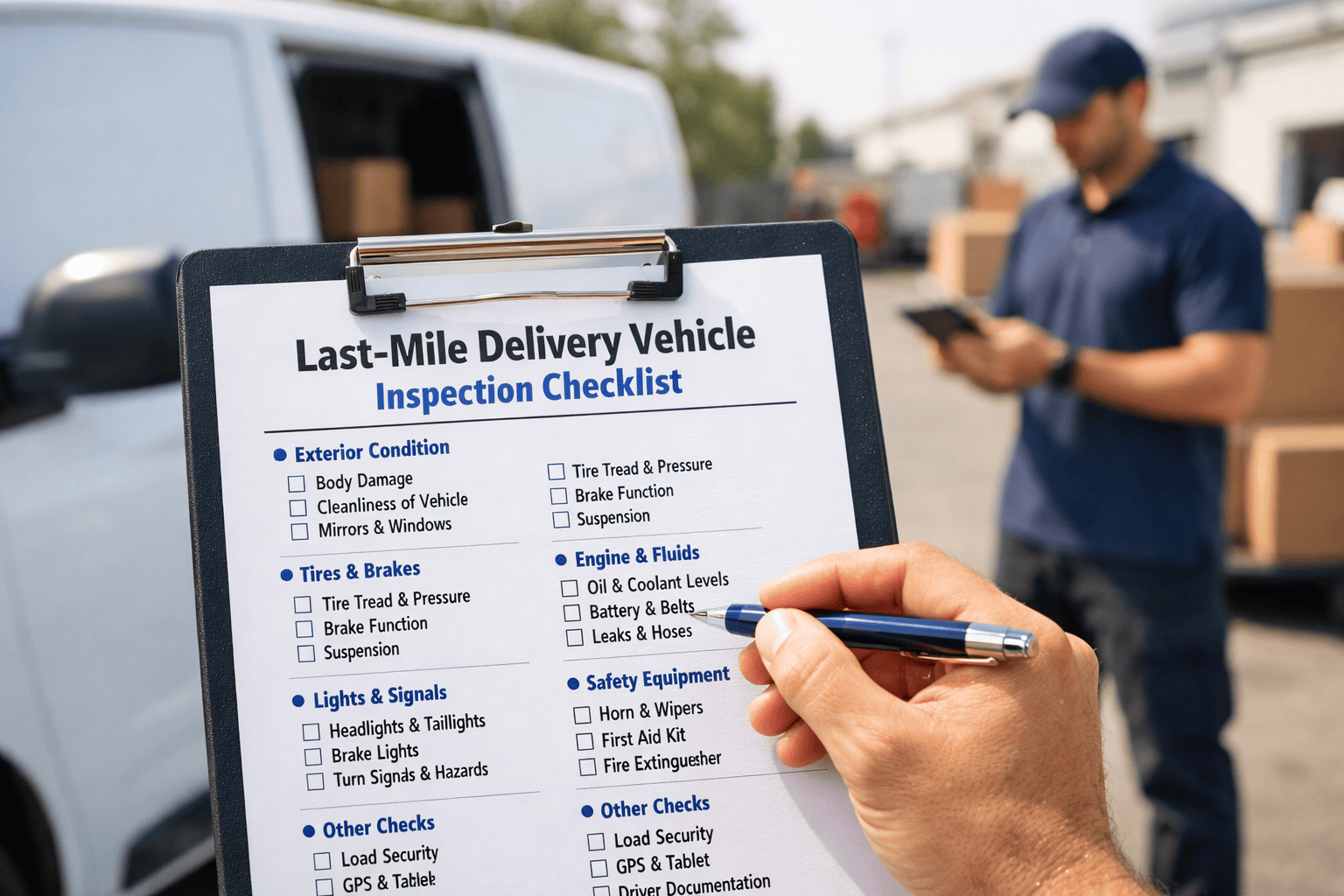
Daily Pre-Trip Inspection Checklist
Completed by the driver before every shift departure. Any item marked as a fault must be reported to dispatch before the vehicle moves. Sign up free to give every driver a digital version of this checklist on their phone.
Exterior and Lights
Headlights — low and high beam functional
Tail lights and brake lights operational
Turn signals — front and rear working
Reverse lights and audible reverse alarm active
No visible body damage, cracks, or loose panels
Mirrors — clean, adjusted, and undamaged
Windshield — no cracks or chips in driver line of sight
Tires and Wheels
All tires visually inflated — no flats or low pressure visible
No visible sidewall cuts, bulges, or embedded objects
Lug nuts present and tight on all wheels
No wheel damage or bent rims visible
Cab and Controls
Seat belt functional and not frayed
Windshield wipers functional — blades in good condition
Dashboard warning lights — none illuminated at startup
Brakes — firm pedal, no grinding noise on test application
Steering — no excessive play or pulling to one side
Fuel level sufficient for planned route
Cargo Area
Cargo doors open, close, and latch correctly
Cargo area clean and free of loose debris
Load securing equipment present and in good condition
Fire extinguisher present and within inspection date
Weekly Inspection Checklist
Completed once per week by driver or fleet coordinator. Includes fluid levels and extended mechanical checks that go beyond the daily visual inspection. Book a demo to see how Oxmaint schedules weekly checks automatically by vehicle and assigns them to the right person.
Fluid Levels
Engine oil level — within MIN/MAX range on dipstick
Coolant level in reservoir — at or above MIN line
Brake fluid level — within operating range
Power steering fluid level — within range
Windshield washer fluid — topped up
No fluid leaks visible under vehicle when parked
Tires (Extended)
Tire pressure checked with gauge — all tires at manufacturer spec
Tread depth — minimum 4/32" remaining on all tires
Uneven wear pattern noted — flag for alignment check if present
Battery and Electrical
Battery terminals — clean, no corrosion or loose connections
Battery hold-down bracket secure
Alternator charging indicator — no warning light
Belts and Hoses (Visual)
Serpentine/drive belt — no visible cracks or fraying
Coolant hoses — no swelling, cracks, or soft spots
No loose or disconnected hose clamps
Replace paper checklists with digital inspection records that auto-trigger work orders
Every fault flagged on a mobile inspection creates an automatic work order — assigned, tracked, and resolved without dispatcher relay.
Book a Demo
Monthly Service Checklist
Completed monthly by fleet coordinator or qualified technician. Items flagged here should generate a work order for resolution before next month's service window. Sign up free to auto-schedule monthly checks by vehicle and mileage in Oxmaint.
Brakes
Brake pad thickness — above minimum service limit
Brake rotor condition — no deep scoring or heat discoloration
Brake lines — no cracks, leaks, or chafing
Parking brake — holds vehicle on incline
No brake fluid contamination or discoloration
Suspension and Steering
Shock absorbers — no leaks, excessive bounce on compression test
Tie rods and steering linkage — no excessive play
Wheel bearings — no grinding noise on rotation
CV joints or U-joints — no clicks or vibration under load
Engine and Drivetrain
Oil change due — check mileage against service interval
Air filter — inspect, replace if visibly clogged
Fuel filter — check against replacement interval
Transmission fluid — level and color within spec
Exhaust system — no unusual smoke color or loud exhaust noise
Safety Equipment
First aid kit — present, stocked, and within expiry
Fire extinguisher — pressure in green zone, pin intact
Warning triangles or flares — present in vehicle
Vehicle registration and insurance documents — current and accessible
Quarterly Deep Inspection Checklist
Performed every 3 months or at defined mileage intervals by a qualified technician. This inspection generates a full service record entry per vehicle. Results feed into fleet replacement and budget planning decisions.
Powertrain and Fluids
Engine oil change and filter replacement
Coolant flush — check freeze protection level
Transmission fluid check and top-up or change
Differential fluid — check level and condition
Spark plugs — inspect or replace per interval
Chassis and Undercarriage
Frame and subframe — no cracks, corrosion, or damage
Exhaust mounts — secure, no contact with frame
Driveshaft — no excessive play, U-joints intact
Fuel tank and lines — no leaks or corrosion
Wheel alignment — check and adjust if needed
Electrical and Systems
Battery load test — capacity above 70% CCA
Alternator output — verify charging voltage
OBD diagnostic scan — no stored fault codes
GPS and telematics unit — operational and synced
All cab electronics — navigation, comms, camera
What Happens When Checklist Items Are Completed Digitally in Oxmaint
+
Every completed item is timestamped and logged to the vehicle's service record automatically
+
Any fault flagged on inspection creates a work order immediately — no dispatcher relay needed
+
Inspection compliance tracked per driver and vehicle — completion rates visible in dashboard
+
Recurring fault patterns on the same vehicle automatically flagged for early PM scheduling
Common Mistakes That Make Checklists Ineffective
01
Paper checklists with no fault escalation path
A driver marks a fault on a paper sheet. The sheet goes in the cab. No one acts on it. The vehicle departs anyway. Digital checklists that auto-create work orders on fault detection eliminate this gap entirely.
02
Checklist completion not tracked or enforced
When inspection completion is voluntary or un-verified, completion rates fall to 40–60% on busy days. Mandatory mobile sign-off with timestamped records keeps rates above 95%.
03
Monthly and quarterly checks deferred during peak periods
The periods when maintenance is most likely to be deferred — peak delivery seasons — are exactly when vehicle reliability matters most. Auto-scheduled PM with manager sign-off required prevents deferral from becoming a habit.
04
Inspection records not connected to maintenance history
When inspection data lives separately from service history, fault patterns are invisible. Connecting inspections to vehicle maintenance records — automatically — is what turns a compliance checklist into a predictive maintenance signal.
40%
Fewer unplanned breakdowns with a consistent inspection and PM program
95%+
Inspection completion rate with digital mobile checklists vs. paper
3x
Lower repair cost when faults caught on inspection vs. road breakdown
"Fleets that run structured digital inspection programs see 40% fewer mid-route breakdowns and recover their implementation investment within 6–12 months through reduced emergency repair costs alone."
Fleet Maintenance Benchmark Report
Delivery Operations Performance Study, 2026
How Oxmaint Digitizes and Automates This Entire Checklist
Oxmaint turns every item on this checklist into a tracked, logged, actionable digital record — completed on driver smartphones, auto-scheduled by vehicle, and connected directly to PM scheduling and work order management. Start free and have your first digital inspection running today — or book a live walkthrough tailored to your fleet size and inspection requirements.
Mobile Pre-Trip Inspection App
Drivers complete digital checklists on their smartphones before every shift. Faults flagged instantly to dispatch with photo evidence. Timestamped records created automatically per vehicle.
Auto-Scheduled PM by Mileage and Calendar
Weekly, monthly, and quarterly inspection schedules auto-generated per vehicle based on mileage and calendar triggers. Assigned to the right team member with deadline reminders.
Fault-to-Work-Order Automation
Any fault flagged during a mobile inspection automatically creates a work order — routed to the assigned technician with full fault details. No dispatcher relay, no paper trail, no delay.
Vehicle Service History Per Asset
Every inspection record, work order, and repair event logged against the vehicle's full service history. Recurring fault patterns surfaced automatically for early PM action.
Inspection Compliance Dashboard
Completion rates tracked per driver, vehicle, and depot in real time. Fleet managers see exactly which vehicles or shifts are missing inspections — and can intervene before a fault goes unreported.
Parts Inventory Integration
When a recurring fault pattern triggers early PM, parts required for the service are checked against inventory automatically. Reorder alerts generated before stock runs out.
Stop Running Maintenance on Paper. Start Running It on Data.
From daily pre-trip inspections to quarterly deep checks — Oxmaint gives delivery fleet managers a digital maintenance system that catches faults before they become breakdowns, logs every inspection automatically, and connects checklist data directly to PM scheduling and work orders.
No credit card required — Free setup for delivery operations teams
Frequently Asked Questions
How often should delivery vehicles be inspected?
Delivery vehicles should have a driver-led visual inspection completed before every shift — typically 5–10 minutes per vehicle. In addition, a more comprehensive fluid and mechanical check should be completed weekly, a full mechanical inspection monthly, and a deep technical inspection quarterly or at defined mileage thresholds. The daily check is the most critical because it catches departure-risk faults before they reach the road.
What is the difference between a pre-trip inspection and preventive maintenance?
A pre-trip inspection is a driver-led safety check completed before departure — it identifies visible or detectable faults that make a vehicle unsafe or likely to fail that shift. Preventive maintenance is scheduled technical servicing — oil changes, brake inspections, filter replacements — based on mileage or calendar intervals. They work together: inspections catch emerging issues early, and PM scheduling ensures those issues are addressed on a defined timeline rather than waiting for a breakdown.
What happens if a driver finds a fault on a pre-trip inspection?
Any fault detected on a pre-trip inspection should be reported to dispatch before the vehicle moves. If the fault affects safety — brake issues, tire damage, steering problems, warning lights — the vehicle should be taken out of service until the fault is resolved. In Oxmaint, a fault flagged on a mobile inspection automatically creates a work order, notifies the assigned technician, and logs the event to the vehicle's service history — eliminating the risk of fault reports getting lost in verbal communication chains.
Why do paper inspection checklists fail in practice?
Paper checklists fail for three reasons: they have no enforcement mechanism, they have no escalation path when faults are found, and they generate no usable maintenance data. Drivers can skip items, mark everything as passing under time pressure, or report a fault that goes unread until it becomes a breakdown. Digital inspection apps with mandatory completion, photo fault documentation, and automatic work order creation eliminate all three failure modes.
Can Oxmaint handle inspection compliance across multiple depots?
Yes. Oxmaint tracks inspection completion rates per vehicle, per driver, and per depot from a single dashboard. Fleet managers at a central location can see which depot locations or vehicle groups are missing inspections in real time — without phone calls or manual reporting. Inspection schedules, checklists, and compliance thresholds can be configured differently for each depot if needed.