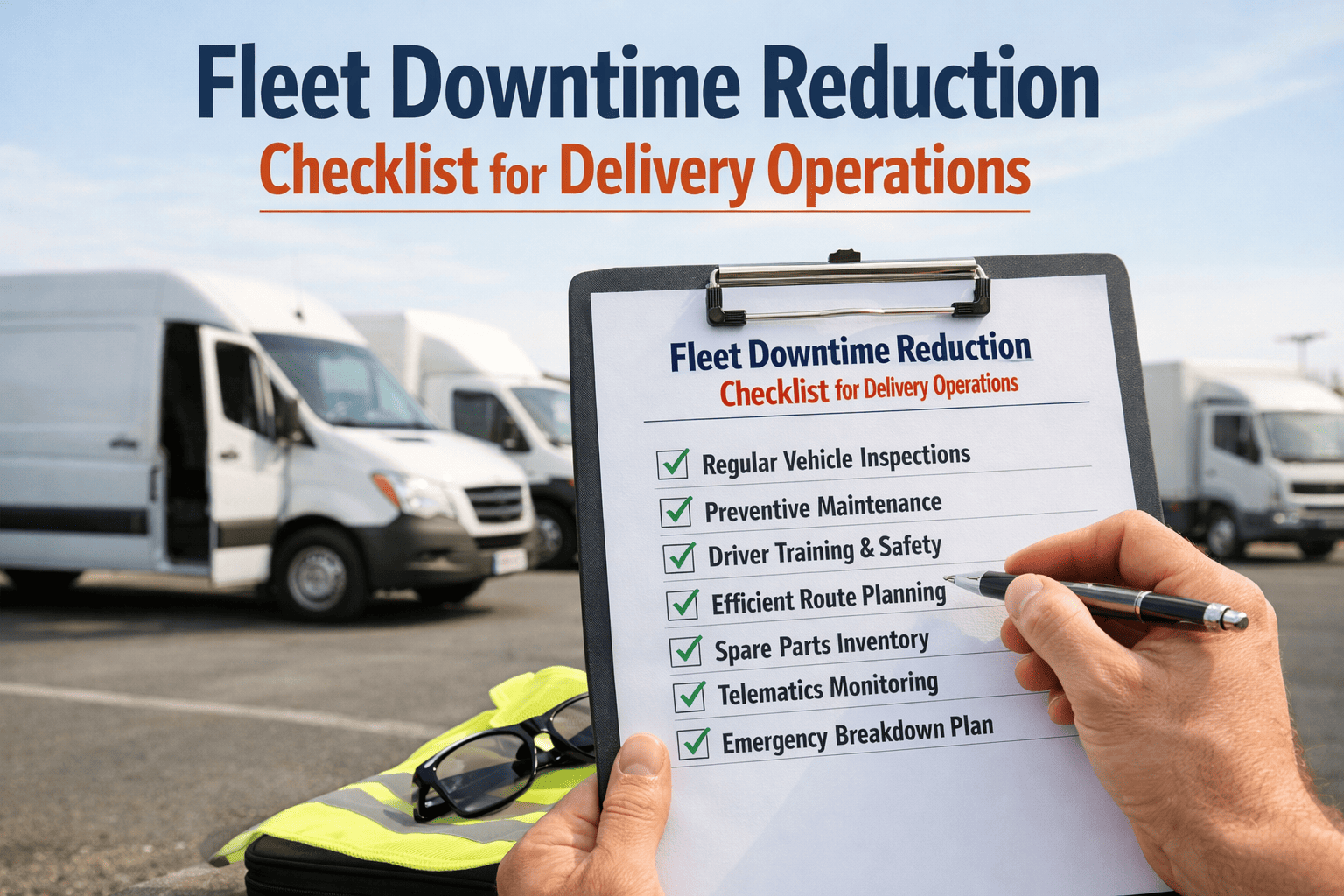
Micro-fulfillment fleets operate on a completely different clock than traditional delivery networks. When your promise is same-day or 30-minute delivery, your vehicles need to be dispatch-ready in minutes — not after a 40-minute pre-trip process that holds up the first wave. The standard fleet inspection checklist was designed for long-haul routes, not the 80-stop urban sprint cycles that micro-fulfillment vehicles run. Drivers returning from one run and reloading for the next don't have time for exhaustive checks, but skipping them entirely creates the reliability failures that turn your fastest delivery promise into your worst customer experience. OxMaint's mobile inspection platform solves exactly this — fast digital pre-route checks, flagged directly to maintenance, keeping your micro-fulfillment fleet road-ready at scale. Sign in to OxMaint to digitize your vehicle readiness workflow, or book a demo to see micro-fulfillment fleet inspection in action.
Last-Mile SLA & Downtime / Mobile Inspections
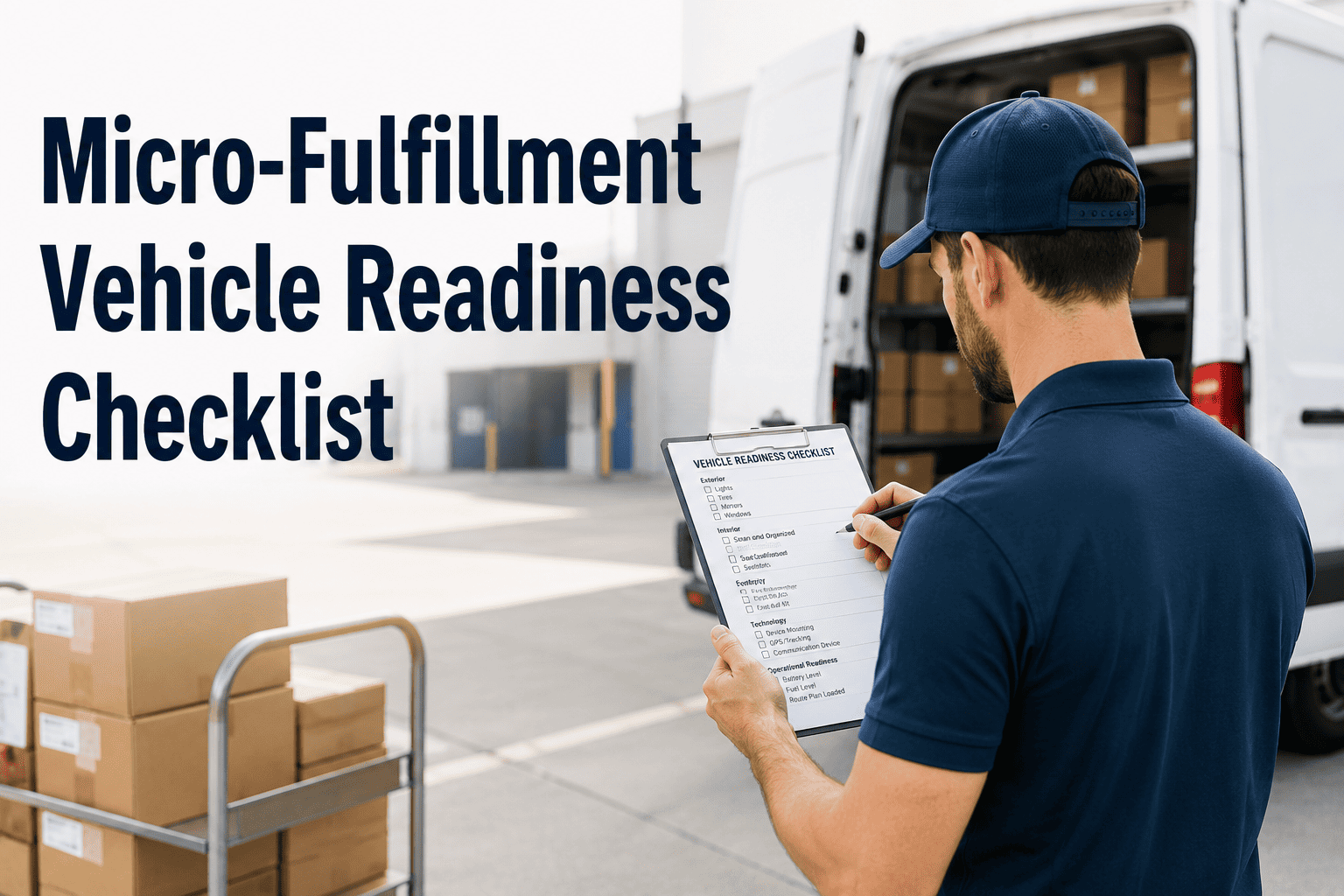
Micro-Fulfillment Vehicle Readiness Checklist
The fast, mobile-first pre-route inspection process built for micro-fulfillment fleets running multiple daily cycles — covering every critical check without slowing dispatch.
4 min
Target inspection time per vehicle per cycle in OxMaint mobile
30 min
Delivery promise many micro-fulfillment operators commit to customers
$17.20
Average cost of one failed first-attempt delivery — inspection prevents this
Why Standard Fleet Inspection Checklists Don't Fit Micro-Fulfillment
A traditional pre-trip checklist takes 20–45 minutes and covers dozens of items designed for a vehicle that runs one route per day and parks overnight. Micro-fulfillment vehicles run 3–5 cycles per day, dispatch from hubs with minimal dwell time, and operate at stop-count intensity that creates accelerated wear patterns on specific systems. The inspection process needs to match the operating model — fast, mobile, targeted at the failure points that actually ground micro-fulfillment vehicles.
Traditional Pre-Trip Inspection
45-minute paper checklist
Generic 40+ point coverage
Driver discretion on pass/fail
Paper filed, maintenance unnotified
One inspection per day at departure
No link to work order system
VS
OxMaint Mobile Inspection
Under 4 minutes on mobile app
Targeted checks for high-cycle wear
Mandatory photo capture for defects
Instant alert to maintenance team
Between-cycle checks supported
Auto work order on flagged defect
Faster Dispatch, Safer Fleet
Digital Pre-Route Checks That Take 4 Minutes, Not 40
OxMaint's mobile inspection tool is built for the speed micro-fulfillment operations demand — completing targeted vehicle readiness checks in minutes and flagging defects to maintenance instantly, before they become mid-route failures.
The Micro-Fulfillment Vehicle Readiness Checklist
This checklist is structured around the failure modes most likely to ground a micro-fulfillment vehicle — organized by inspection zone and optimized for speed. Complete it in OxMaint's mobile app to auto-generate work orders on any flagged item.
Tyre pressure — all four wheels
High stop-count urban routes deflate tyres faster than highway miles. Under-inflation at 20% below spec increases blowout risk by 3x and raises fuel consumption noticeably. Check pressure digitally and log in OxMaint.
Tyre tread visual — sidewall and tread face
Look for cuts, bulges, and irregular wear patterns. Micro-fulfillment vehicles running tight urban turns wear inner-edge tread unevenly — a tread issue that only shows on the inside edge may not be visible without a walk-round crouch check.
Wheel nut security — visual and tap check
Loose wheel nuts are a safety-critical immediate out-of-service item. Flag and photograph any visual gap or audible rattle. OxMaint generates a Priority 1 work order automatically for any wheel security fault.
Brake pedal feel — firmness at half-travel
A spongy brake pedal indicates air in the hydraulic line or fluid loss. Micro-fulfillment vehicles brake 3–4x more per mile than highway vehicles, making brake system integrity the highest-priority daily check.
Steering response — wheel play on idle
More than 25mm of free play in the steering wheel at rest indicates worn steering components. Log any response change from the previous cycle — trends in steering feel often precede component failures that only become apparent under load.
Handbrake effectiveness
Particularly critical for vehicles operating on urban gradients. Test hold on a slight slope if available. A handbrake that engages fewer than 4 clicks before holding is approaching service limit and should be flagged for inspection.
All exterior lights — indicators, brake, reverse
Walk-round light check before departure. A failed brake light is a roadside stop and potential fine. In OxMaint, flag the specific light position (e.g. offside rear indicator) so the work order routes to the correct repair task without a technician diagnosis step.
Dashboard warning lights on engine start
Wait 10 seconds after ignition to confirm all warning lights extinguish. Any remaining warning — engine, battery, oil pressure, or traction control — should be logged in OxMaint with a photo of the dashboard, triggering an OBD fault pull before dispatch.
Cargo door latches and seals
Check that all cargo door latches engage fully and that door seals are intact. A door that won't close securely on a multi-cycle day creates load security and damage liability. Log seal degradation for scheduled replacement before it becomes an in-route issue.
Load securing fixtures and floor condition
Verify tie-down points, shelving brackets, and floor anchor points are undamaged. Micro-fulfillment vehicles load and unload rapidly across multiple daily cycles, and repeated loading cycles degrade load fixtures faster than traditional delivery configurations.
Engine oil level — dipstick check
Check on first cycle of the day before engine has been running. Low oil on a vehicle about to run 80+ stops in stop-start urban conditions risks engine damage that costs many times the 30 seconds this check takes.
Coolant reservoir — visual level check
Extended urban idling in loading zones raises engine temperature more than highway driving. Verify coolant is between min and max marks. If the reservoir is below minimum on first-cycle check, flag in OxMaint — don't add coolant without checking for underlying loss cause.
Visible leaks — ground check beneath vehicle
Photograph any fluid on the ground directly beneath the vehicle and log location and colour in OxMaint. Dark oil spots under the engine bay, clear fluid under the front, and green fluid under the radiator all indicate different systems and route to different work order types.
Mirrors and seatbelt
Mirror adjustment and seatbelt function are non-negotiable safety checks. In shared micro-fulfillment fleets where multiple drivers use the same vehicle across the day, mirrors reset between cycles should be part of every between-cycle check, not just the morning inspection.
Windshield and wiper condition
A cracked windshield in the driver sightline is an out-of-service item in most jurisdictions. Wiper condition matters particularly in first-cycle morning checks during wet weather. Log any glass damage with a photo — OxMaint routes glass repair work orders separately from mechanical faults.
What Happens After a Defect Is Flagged in OxMaint
1
Driver Flags Defect in App
Selects defect category, severity level, and uploads a photo directly from the OxMaint mobile inspection screen. Takes under 30 seconds per defect.
2
Maintenance Team Notified Instantly
OxMaint sends an automatic alert to the assigned technician with the vehicle ID, defect type, photo, and severity classification — while the driver is still completing the rest of the inspection.
3
Work Order Auto-Generated
A work order is created automatically with the vehicle asset record, defect description, driver notes, and linked photo. No manual transcription from paper. The technician picks it up on mobile and begins repair or triage immediately.
4
Dispatch Decision Made
For non-critical defects, the vehicle goes out and the work order is scheduled for the return window. For safety-critical defects, OxMaint flags the vehicle as out-of-service in the dispatch dashboard so the route is reassigned before it causes a missed delivery.
5
Compliance Record Created
Every inspection — pass or fail — is timestamped and stored against the vehicle asset record. This builds the audit-ready DVIR documentation your operation needs for regulatory compliance and insurance purposes.
High-Cycle Wear: What Micro-Fulfillment Vehicles Wear Out Faster
Brake Pads
Wear Rate: 2–3x faster than highway fleet
Urban stop-start driving applies brakes 3–5x more per mile than mixed or highway operation. A micro-fulfillment vehicle running 80 stops per day reaches brake service intervals significantly faster than standard PM schedules account for.
Tyres
Wear Rate: Uneven wear from tight turns
Repeated tight cornering in urban residential streets causes disproportionate inner-edge tread wear and accelerated sidewall stress. Tyre rotation intervals need to be significantly shorter for micro-fulfillment vehicles than standard fleet schedules.
Suspension and Bushings
Wear Rate: 40–60% faster in urban conditions
Urban road surfaces, kerb approaches, and speed bumps stress suspension components continuously. Worn suspension shows in vehicle handling feel before it becomes visually apparent — a key reason driver-reported handling changes should always generate a work order, not a shrug.
Starter Motor and Battery
Wear Rate: High cold-start frequency
Multiple daily engine starts across 3–5 cycles per vehicle place higher cycle demand on starter motors and battery charge capacity than single-cycle operations. Battery load tests at 6-month intervals are the minimum for high-cycle micro-fulfillment fleets.
Frequently Asked Questions
How long should a pre-route vehicle inspection take for a micro-fulfillment fleet?
A targeted mobile inspection covering the highest-risk systems should take 4–6 minutes. OxMaint's structured digital checklist guides drivers through only the checks relevant to high-cycle urban operations, capturing photo evidence of defects and generating automatic alerts — without the 30–45 minutes a traditional paper form requires.
Sign in to build your inspection template.
What vehicle systems need inspection between cycles in multi-run micro-fulfillment operations?
Between-cycle checks should focus on tyre pressure and condition, brake feel, cargo door function, and any visible fluid loss beneath the vehicle. Full pre-departure checklists are completed on the first cycle; between-cycle checks are abbreviated to the 3–4 systems most likely to change state during an urban delivery run.
How does OxMaint handle safety-critical defects found during pre-route inspection?
Safety-critical defects flagged in OxMaint's mobile inspection automatically generate a Priority 1 work order and mark the vehicle as out-of-service in the dispatch dashboard. The maintenance team is alerted in real time, and the vehicle cannot be dispatched until the work order is resolved and the vehicle cleared.
Book a demo to see the defect escalation workflow.
Does OxMaint's mobile inspection create DOT-compliant DVIR records?
Yes. Every inspection completed in OxMaint is timestamped, driver-attributed, and stored against the vehicle asset record — creating the DVIR documentation trail required for DOT compliance. Photo evidence, defect classifications, and resolution records are all captured and audit-accessible without manual filing.
Can OxMaint support fleets where multiple drivers share the same vehicle across daily cycles?
Yes. OxMaint's mobile inspection assigns each inspection to the logged-in driver, creating an individual accountability record for every cycle check regardless of how many drivers share a vehicle. Defects flagged by any driver are visible to the maintenance team in real time, so condition changes between morning and afternoon cycles are captured and acted on.
Dispatch-Ready in Minutes
Vehicle Readiness Checks at the Speed Micro-Fulfillment Demands
OxMaint's mobile inspection tool gives your drivers a fast, targeted pre-route check that takes under 5 minutes — flagging defects to maintenance instantly, building your compliance record automatically, and keeping your micro-fulfillment fleet ready for every cycle of the day.