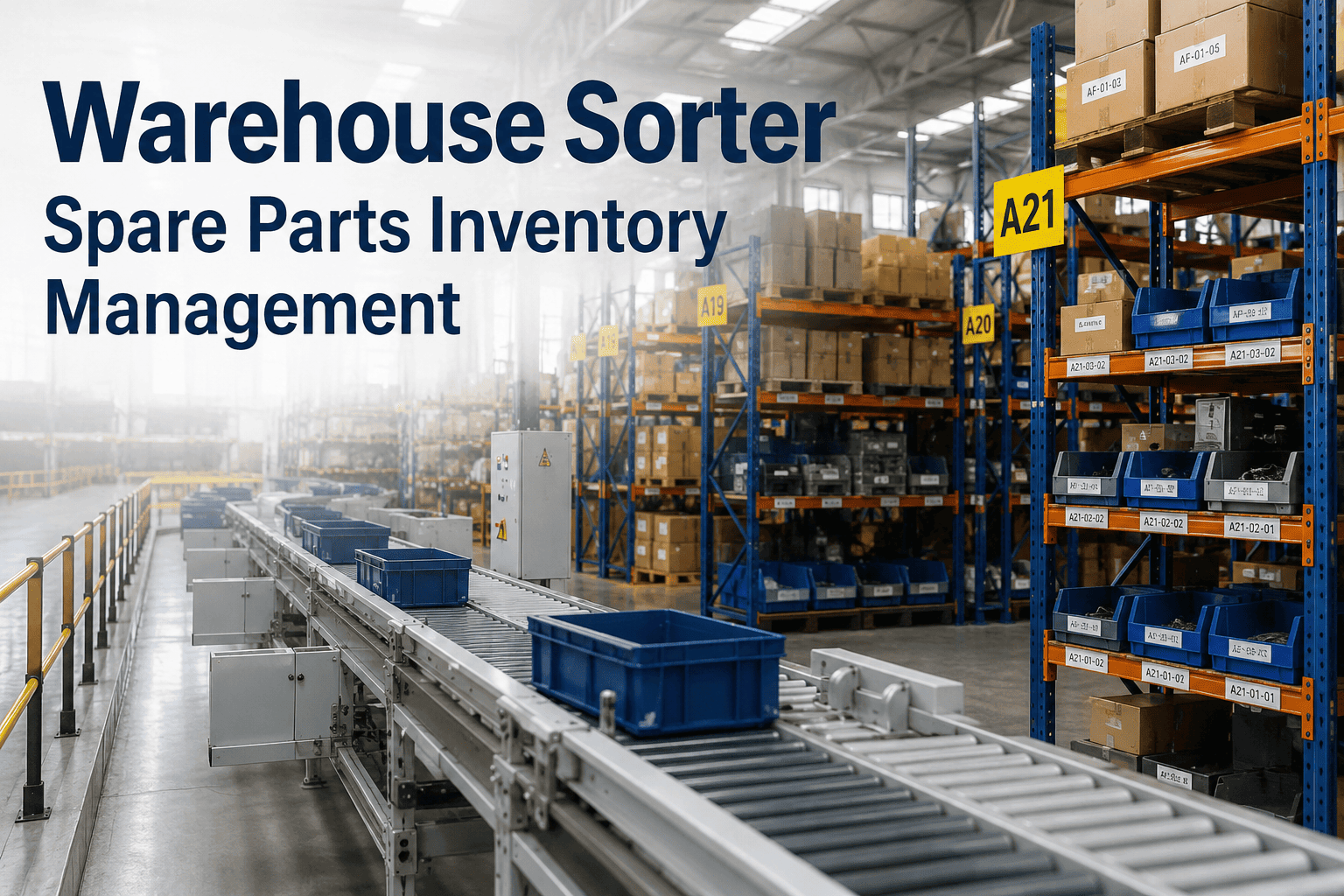
Packaging lines are bleeding $2.3M annually in hidden carrying costs — not from production downtime, but from the spare parts graveyards accumulating dust in warehouse corners. Between 35% of MRO inventory never rotating, critical OEM parts trapped in 16-week lead times, and emergency expediting fees consuming 12% of maintenance budgets, spare parts optimization is the highest-ROI lever most packaging operations ignore. The manufacturers dominating OEE in 2026 are not stockpiling more parts — they are engineering precision inventory systems that guarantee availability at 40% lower carrying costs. Schedule a spare parts audit to expose exactly where your capital is trapped in dead stock and critical gaps.
Where Is Your Spare Parts Strategy Destroying Shareholder Value?
Before you can optimize, you must understand how spare parts economics silently erode profitability. Inventory losses accumulate across six capital traps — from obsolete OEM components to phantom stock records — and the compound effect locks up working capital that could fund automation upgrades or debt reduction.
The Six Capital Traps in Packaging Spare Parts ManagementEach percentage represents typical capital inefficiency in packaging MRO operations
Non-Rotating & Obsolete Stock
30–40%
Overstocked Generic Consumables
15–22%
Emergency Expediting Premiums
8–12%
Phantom Inventory (System vs. Physical)
6–10%
Critical Stockouts & Downtime
5–9%
Supplier Consolidation Misses
4–7%
The Criticality-Velocity Matrix: Segmenting Your Parts Strategy
Vital & Fast-Moving
Critical spares with high turnover
Strategy: Safety stock optimization, local stocking, supplier partnerships
The Availability-Cost Curve: Engineering the Optimal Frontier
Spare parts optimization is not about minimizing inventory — it is about engineering the optimal trade-off between parts availability and carrying cost. The traditional approach pushes both metrics in the wrong direction: excessive safety stock drives 94% availability at punitive cost, while lean approaches sacrifice availability for marginal savings. Precision optimization achieves 98.5% availability at 60% of traditional carrying costs through statistical demand forecasting, criticality segmentation, and intelligent pooling.
Nine Precision Strategies for Spare Parts Excellence
Each strategy targets specific failure modes in packaging MRO supply chains. They are sequenced by capital velocity — start with strategies that release trapped cash fastest, then layer in availability improvements for compounding returns.
Not all parts deserve equal attention. ABC analysis segments by annual consumption value; XYZ segments by demand volatility. AX parts (high value, stable demand) get tight inventory control. CZ parts (low value, erratic demand) are candidates for elimination or on-demand sourcing. One beverage packaging operation discovered 40% of SKUs were CZ items consuming 15% of warehouse space — immediate elimination released $400K in working capital. Sign Up automatically using Oxmaint's inventory analytics engine.
02
Deploy Probabilistic Demand Forecasting
Safety stock optimized 30%Stockouts reduced 60%
Static min/max levels fail in packaging environments where demand patterns shift with production campaigns, seasonality, and asset aging. Implement forecasting that considers: lead time variability, demand distribution (not just averages), and criticality-weighted service levels. Critical servo motors get 99% service levels; generic bearings get 95%. Oxmaint integrates with CMMS work order history to generate dynamic reorder points that adapt to actual consumption patterns, not historical averages.
Critical OEM components — custom gears, legacy PLC modules, proprietary sealing systems — become unobtainable without warning when suppliers discontinue lines or exit markets. Build lifecycle dashboards tracking: years in service, supplier end-of-life notifications, last-buy opportunities, and remanufacturing alternatives. Oxmaint alerts 18 months before predicted obsolescence, triggering proactive last-buy decisions or engineering change orders rather than emergency scavenging.
Purchase cost reduced 12%Lead time variability cut 40%
Fragmented supplier bases multiply transaction costs and prevent volume leverage. Consolidate MRO spend with strategic partners willing to invest in your success: consignment stocking, technical support, and guaranteed availability agreements. Negotiate framework contracts with 90% of forecasted spend locked in pricing, leaving 10% for market testing. Oxmaint tracks supplier performance (OTD, quality, lead time consistency) to identify consolidation candidates and partnership upgrade opportunities.
05
Implement Vendor-Managed Inventory (VMI) for Consumables
Fast-moving consumables — bearings, seals, pneumatic fittings, drive belts — should never consume your working capital. Transfer inventory ownership to suppliers who manage stock levels based on your consumption data. They bear carrying costs; you pay only on consumption. VMI agreements typically include guaranteed availability clauses and automatic replenishment triggers. Oxmaint provides suppliers secure API access to anonymized consumption data, enabling true demand-driven replenishment without manual intervention.
06
Build Cross-Plant Inventory Pooling Networks
Safety stock reduced 35%Availability improved to 99%
Multi-plant packaging operations duplicate safety stocks at every facility — irrational when plants share common OEM equipment. Create virtual inventory pools: each plant holds primary stock for assigned critical parts, with 24-hour transfer agreements to sister plants. Statistical pooling reduces system-wide safety stock by 30–40% while improving availability through risk diversification. Oxmaint's multi-location inventory module enables real-time visibility across plants with automated transfer order generation when local stock depletes.
07
Eliminate Phantom Inventory Through Cycle Counting Discipline
Inventory accuracy improved to 99.5%Emergency purchases cut 50%
System records showing 12 units when physical count reveals 3 — phantom inventory triggers stockouts despite apparent availability. Implement ABC-weighted cycle counting: A items counted monthly, B items quarterly, C items annually. Root-cause every variance: receiving errors, BOM inaccuracies, pilferage, or system timing issues. Oxmaint generates intelligent count lists based on transaction velocity and historical accuracy, focusing attention where discrepancies are most likely. One food packaging plant discovered $280K in phantom stock through disciplined cycle counting — capital that appeared on books but provided zero availability.
Packaging lines accumulate equipment variants over decades — five filler brands, three conveyor OEMs, seven labeling systems — each with unique spare parts requirements. Strategic standardization during replacement cycles consolidates parts demand, increasing velocity per SKU and enabling deeper supplier partnerships. Target 80% equipment standardization within 5-year capital planning horizons. Oxmaint tracks parts commonality across equipment types, identifying standardization opportunities that procurement can embed in future capital specifications.
09
Unify Intelligence with Spare Parts-Centric CMMS
Inventory optimization sustainedTotal cost of ownership reduced 20%
Spare parts optimization requires unifying demand signals (CMMS work orders), supply parameters (lead times, costs), and strategic rules (criticality, service levels) in one system. Oxmaint is engineered for this: automatic reorder point calculation based on failure history, BOM-linked parts demand forecasting, supplier performance scorecards, and multi-plant inventory visibility. Without this digital backbone, optimization degrades within 18 months as manual overrides and emergency purchases corrupt the system. Sign Up and achieve optimization steady-state within 60 days.
Your Competitors Are Already Optimizing Spare Parts Economics
67% of packaging manufacturers with $100M+ revenue have implemented advanced inventory optimization in the past 24 months. The gap is widening: leaders achieve 98.5% parts availability at 12% inventory carrying cost, while laggards struggle with 92% availability at 22% carrying cost. Oxmaint provides the optimization infrastructure to close this gap without massive consulting engagements or years of implementation.
Supply chain volatility and capital cost pressures are transforming spare parts from a maintenance afterthought into a strategic finance priority. Here is what the data reveals about the operating environment and why precision inventory management is now a competitive necessity.
34%
increase in OEM spare parts lead times since 2022, forcing either excessive safety stock or unacceptable downtime risk
$847B
global working capital trapped in MRO inventory across manufacturing, with packaging operations carrying 40% excess stock on average
18%
average annual carrying cost of inventory (capital, storage, insurance, obsolescence) — every $1M in excess stock costs $180K yearly
5.2x
cost multiplier for emergency parts procurement versus planned purchasing — the premium paid when stockouts force expediting
Your 90-Day Capital Release Roadmap
Optimization without execution is merely analysis. This phased approach moves your operation from inventory chaos to precision management, with each phase releasing measurable working capital and improving availability metrics.
Days 1–30
Discovery & Segmentation
Upload complete spare parts master data to Oxmaint: SKUs, costs, quantities, locations, suppliers, and equipment associations. Run ABC-XYZ segmentation analysis to identify immediate elimination candidates (CZ items). Conduct physical cycle count of all A-items to establish baseline accuracy. Calculate current inventory carrying cost and days of supply by segment. This phase typically identifies 20–25% of inventory for immediate rationalization.
Days 31–60
Optimization & Partnership
Implement probabilistic reorder points for AX and AY items based on demand volatility analysis. Launch VMI agreements for fast-moving consumables (BX/BZ items), transferring carrying cost to suppliers. Establish critical spare lifecycle tracking for high-value, long-lead components. Begin cross-plant inventory pooling for common OEM equipment. Execute elimination of confirmed obsolete stock. Expect 30–35% reduction in carrying cost by day 60 with availability improving to 96%.
Days 61–90
Systematization & Scale
Expand cycle counting discipline to B-items with automated variance root-cause analysis. Implement supplier scorecards tracking OTD, quality, and lead time consistency. Launch equipment standardization roadmap for next capital cycle. Establish monthly inventory optimization review with finance and maintenance leadership. By day 90, the full 40% carrying cost reduction is achieved with 98.5% parts availability sustained through automated replenishment.
Need immediate working capital release? Our spare parts optimization team will analyze your inventory data, identify elimination candidates, and build a 90-day roadmap to release trapped capital while improving availability.
Track these metrics weekly. In spare parts optimization, leading indicators predict financial outcomes before cash flow statements confirm them. If these metrics degrade, they pinpoint exactly which strategy requires intervention.
Inventory Carrying Cost %
Target: <12% of inventory value
Annual cost of capital, storage, insurance, and obsolescence — the ultimate efficiency metric for spare parts economics
Parts Availability (Critical)
Target: 98.5%+
Percentage of critical spare parts requests fulfilled from stock — directly correlates with production line uptime protection
Inventory Turns (MRO)
Target: 4.0+ annually
Annual consumption divided by average inventory — higher turns indicate efficient capital deployment without stockout risk
Stockout Frequency (Critical)
Target: <2% of work orders
Percentage of maintenance work orders delayed by parts unavailability — leading indicator of production downtime risk
Emergency Purchase %
Target: <5% of MRO spend
Purchases requiring expediting premium due to stockouts — every 1% reduction saves 5.2x in total procurement cost
Inventory Record Accuracy
Target: 99.5%+
Percentage of SKUs with system quantity matching physical count — foundation of all optimization strategies
Release 40% of Trapped Working Capital in 90 Days
Every month of delay costs your operation $50K–$200K in unnecessary carrying costs while stockouts continue disrupting production. Oxmaint delivers the spare parts optimization platform engineered for packaging operations: ABC-XYZ segmentation, probabilistic forecasting, multi-plant pooling, and supplier VMI integration — all unified in one system. Deployment takes days, not years, and your procurement team achieves optimization steady-state within the first quarter.
Is 40% working capital reduction realistic without compromising availability?
Yes. The 40% figure comes from eliminating non-rotating stock (30–40% of typical inventory), optimizing safety stocks through statistical forecasting (20–30% reduction), and transferring consumables to VMI (100% carrying cost elimination). Most packaging operations simultaneously improve parts availability from 92% to 98.5% because optimization replaces guesswork with precision. Capital is released from excess safety stocks and obsolete items; availability improves through better demand forecasting and criticality segmentation. Schedule an assessment to calculate your specific capital release potential.
How do we handle long-lead critical components without excessive safety stock?
Long-lead critical items require lifecycle management, not just inventory buffering. Strategies include: (1) supplier partnerships with guaranteed availability agreements, (2) consignment stocking where suppliers hold inventory until consumption, (3) cross-plant pooling to share risk across multiple facilities, (4) remanufacturing relationships for legacy components, and (5) last-buy decisions triggered by obsolescence alerts 18 months in advance. Oxmaint tracks lead times, consumption trends, and equipment criticality to recommend the optimal strategy per component rather than defaulting to expensive safety stock.
Why is CMMS integration essential for spare parts optimization?
Spare parts demand is driven by maintenance events — work orders, preventive maintenance schedules, and failure history. Without CMMS integration, demand forecasting relies on historical consumption averages that miss the causal drivers. Oxmaint unifies asset management with inventory optimization: work orders automatically generate parts reservations, preventive maintenance schedules drive predictable demand, and failure history informs criticality rankings. This integration enables probabilistic forecasting that static inventory systems cannot achieve. Sign Up in action.
What happens to our existing ERP inventory data?
Oxmaint integrates seamlessly with existing ERP systems (SAP, Oracle, Microsoft Dynamics) via API or scheduled data exchange. Your ERP remains the system of record for financial transactions; Oxmaint becomes the intelligence layer for optimization — segmentation analysis, demand forecasting, and reorder point calculation. Implementation requires no ERP customization or data migration disruption. Most packaging operations are fully integrated and optimizing within 5 business days.
How do we prevent optimization degradation over time?
Optimization requires continuous monitoring because demand patterns shift, suppliers change, and new equipment introduces new parts requirements. Oxmaint sustains optimization through: automated ABC-XYZ reclassification quarterly, dynamic reorder point adjustment based on rolling demand history, supplier performance scorecards that flag partnership degradation, and obsolescence alerts that trigger proactive lifecycle decisions. The system learns from every transaction, ensuring optimization improves rather than degrades over time. Book a demo to see sustained optimization in practice.