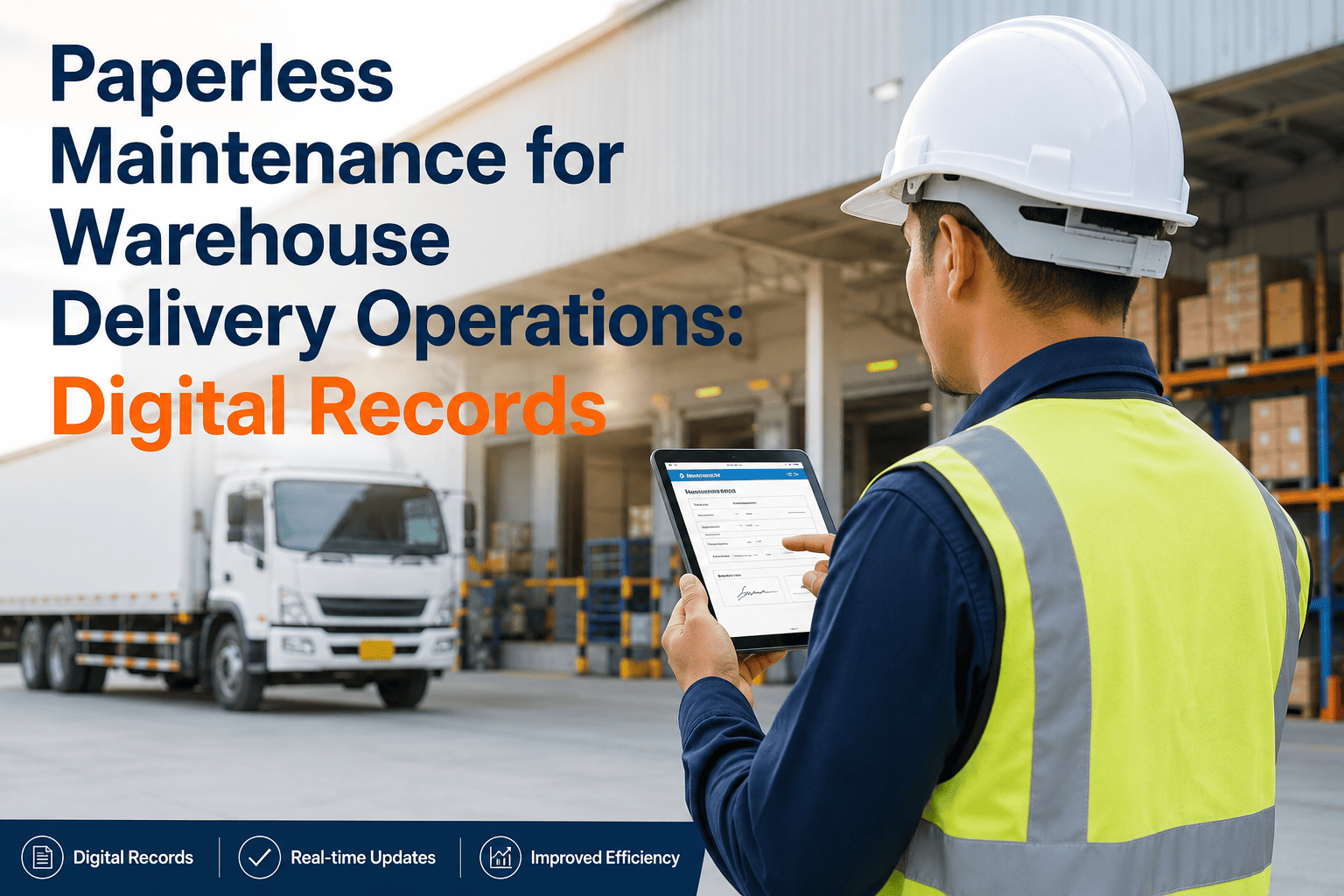
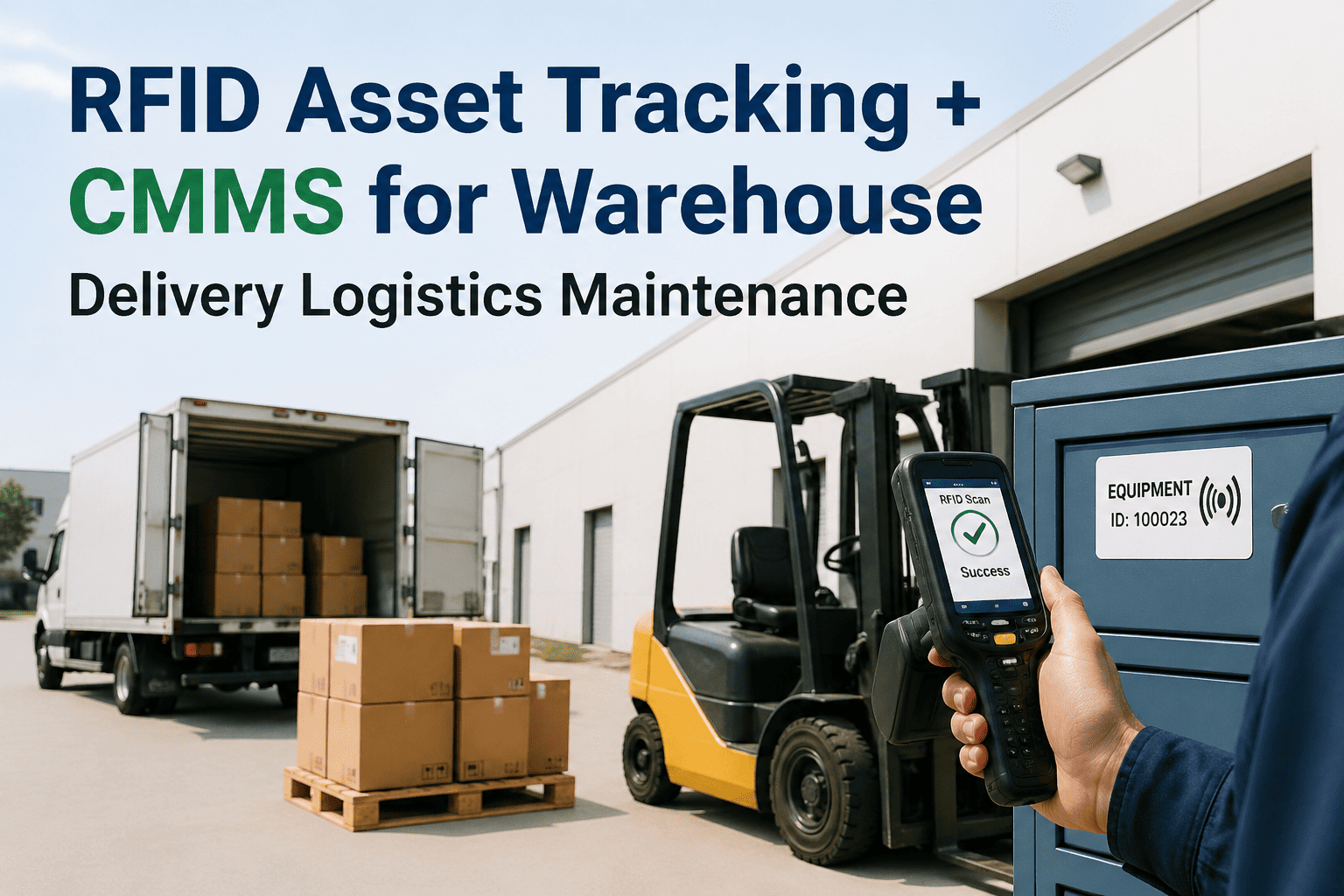
Walk into any warehouse running paper-based maintenance and you will find the same three problems within ten minutes: a clipboard with inspection sheets that no one has updated since last Tuesday, a shift handover note that mentions a forklift making a strange noise but gives no asset ID or work order number, and a compliance audit coming up next month that will require a maintenance manager to manually reconstruct six months of service history from folders. Paper does not just create inefficiency — it creates invisible risk that only becomes visible when an asset fails or an auditor arrives. Moving to a digital CMMS with structured maintenance records eliminates all three problems simultaneously. Start a free trial with Oxmaint CMMS to see how digital maintenance records transform warehouse operations, or book a 30-minute session with our logistics maintenance specialists to review your current documentation gaps.
The Core Problem
What Paper-Based Warehouse Maintenance Actually Costs You
Paper maintenance logs feel low-cost because there is no software licence to pay for. The real costs are buried in slower fault detection, missed PM intervals, compliance failures, and institutional knowledge that disappears when a technician moves to another shift or leaves the business. Digitising maintenance records does not just tidy up the paperwork — it fundamentally changes how quickly your team can detect deteriorating assets, respond to faults, and demonstrate compliance to auditors or 3PL clients.
Compliance Gaps
Paper logs cannot enforce required fields or sign-off sequences. A technician under time pressure skips three data points on an inspection form. That gap is invisible until an audit reveals it — at which point the missed inspection counts as a compliance failure, not a paperwork oversight.
Slow Fault Detection
When a technician notices a conveyor belt making unusual noise and writes it in a logbook, that information reaches a maintenance planner only when someone reads the logbook. In a busy warehouse, that delay is measured in hours or shifts — long enough for a developing fault to become a full failure.
Lost Asset History
Paper service records are tied to a physical location — a folder, a filing cabinet, a specific building. When records are needed urgently during a breakdown, they are either unavailable, incomplete, or missing entirely. Digital records are searchable in under ten seconds from any device, anywhere.
Shift Change Failures
Paper-based shift handover for maintenance depends on the outgoing technician writing down everything relevant and the incoming technician reading and understanding it. Digital CMMS handover shows every open work order, pending inspection, and active alert on a live dashboard — no manual transcription required.
By the Numbers
The Operational Impact of Going Paperless in Warehouse Maintenance
These figures represent documented outcomes from warehouse and logistics operations that transitioned from paper-based maintenance logs to digital CMMS platforms. They reflect what happens when maintenance data becomes searchable, structured, and real-time — not when a software licence is purchased.
73%
Reduction in time spent preparing compliance documentation for audits
41%
Fewer missed PM intervals in the first 90 days after switching to digital triggers
2.8×
Faster fault-to-work-order response time when maintenance is reported digitally vs paper
60%
Reduction in time spent on shift handover for maintenance teams using live digital dashboards
Ready to Replace Paper Logs With Digital Records That Actually Work?
Oxmaint CMMS comes with pre-configured warehouse asset templates, digital inspection forms with enforced required fields, and real-time shift dashboards — ready to deploy in under two weeks.
What Digital Records Look Like
Five Maintenance Record Types That Must Be Digital in Warehouse Delivery Operations
Not all maintenance documentation carries the same operational or compliance weight. These five record types are the ones that create the most risk when held on paper — and deliver the most measurable value when moved to a digital CMMS.
01
Preventive Maintenance Completion Records
Every completed PM task should generate a timestamped digital record that includes: technician ID, asset ID, all inspection data points, condition rating, and any corrective actions raised. Paper PM completion records cannot enforce these fields — a digital form with required-field validation ensures every PM generates a complete, audit-ready record regardless of who completed it or what shift they were working.
Timestamp
Technician ID
Condition Rating
Corrective Actions
02
Fault Reports and Reactive Work Orders
When an operator reports a fault — a forklift making unusual noise, a conveyor belt slipping — a digital work order must be created immediately and tied to the asset's history. Paper fault reports are frequently lost, not acted on by the next shift, or recorded with insufficient detail to enable root cause analysis later. Digital fault reports are searchable, assignable, and linked to every previous fault on the same asset.
Asset Link
Priority Flag
Root Cause Log
Shift Context
03
Inspection Checklists for Safety-Critical Assets
Forklift pre-use inspections, dock leveller safety checks, and racking integrity inspections are safety-critical records — not routine paperwork. On paper, a missed signature or skipped field is hard to detect until a safety incident makes it relevant. A digital checklist with mandatory fields, photographic evidence requirements, and supervisor sign-off workflows ensures these records are complete and defensible every time.
Mandatory Fields
Photo Evidence
Supervisor Sign-off
Auto-alert on Fail
04
Spare Parts Usage and Inventory Records
Every part used in a maintenance job should be recorded against the work order and deducted from inventory automatically. Paper-based parts tracking relies on technicians logging usage manually after the job — a step that is routinely skipped under time pressure. Digital parts sync means every work order completion updates inventory in real time, so the next technician who needs the same part knows exactly what is available before they start the job.
Auto Inventory Deduct
Reorder Trigger
Cost per Work Order
Supplier History
05
Contractor and Third-Party Service Records
Planned maintenance carried out by external contractors — OEM service visits, specialist equipment calibrations, lift truck annual inspections — must be captured in the same digital system as internal maintenance records. Paper contractor service sheets are frequently filed separately from the main maintenance log and therefore invisible during SLA reviews or compliance audits. Digital CMMS allows contractor-completed work orders to be uploaded, linked to the asset, and included in the full maintenance history.
Contractor ID
Certificate Upload
Asset Link
SLA Tracking
Compliance and Audit Value
How Digital Maintenance Records Change Your Audit Experience
Compliance audits are one of the most resource-intensive activities for warehouse maintenance managers operating on paper systems. A digital CMMS does not just make audits easier — it changes the nature of what auditors see and what they can verify.
Paper-Based Maintenance
Audit prep takes 2–5 working days to manually compile records
Incomplete forms result in unexplained gaps in maintenance history
Records exist in one physical location — unavailable remotely or during night shift
Contractor service sheets filed separately, frequently missing from asset history
No trend data available — individual records cannot be aggregated for analysis
High risk of record loss due to damage, misfiling, or staff turnover
Digital CMMS Records
Full maintenance history exported in minutes from any device
Required-field validation prevents incomplete records from being submitted
Searchable from any location, on any device, at any hour
Contractor work orders linked directly to asset — always part of complete history
Trend reports generated automatically across any date range or asset class
Tamper-proof timestamped records — permanently stored and fully searchable
Transition Roadmap
Going Paperless: A Realistic 8-Week Transition Plan for Warehouse Maintenance Teams
The most common reason warehouse operations delay digital maintenance adoption is the assumption that transition will be disruptive. A structured 8-week plan allows parallel running, gradual technician onboarding, and progressive data migration without disrupting active maintenance operations.
Week 1–2
Asset Register and Hierarchy Setup
Import your existing asset list into the CMMS. Define the asset hierarchy — site, zone, asset class, individual asset ID. Assign criticality ratings to each asset class. This step can be done from existing spreadsheets or paper inventories.
Week 3–4
PM Schedule Configuration and Digital Form Setup
Recreate your existing PM schedule in the CMMS with digital inspection forms. Configure shift-based or hour-based triggers for high-cycle assets. This is the step where paper checklists become structured digital forms with required fields and condition rating scales.
Week 5–6
Technician Onboarding and Parallel Running
Train technicians on mobile work order completion. Run digital and paper systems in parallel for two weeks — technicians complete both the paper form and the digital record for each job. This builds confidence and catches any form gaps before paper is retired.
Week 7–8
Paper Retirement and Reporting Baseline
Retire paper forms. Configure the first set of automated reports — open work orders, overdue PMs, asset condition trends. By the end of week 8, your maintenance manager has a live digital dashboard replacing the weekly paper report review meeting.
Frequently Asked Questions
Paperless Warehouse Maintenance: Common Questions
How do we handle maintenance records for areas of the warehouse with poor Wi-Fi coverage?
Modern CMMS mobile apps including Oxmaint support offline work order completion — technicians complete the digital form without connectivity and the record syncs automatically when the device reconnects to Wi-Fi or cellular. This eliminates the argument that paper is needed for connectivity reasons.
Try Oxmaint's offline mode in your free trial.
What happens to historical paper maintenance records — do we need to digitise everything?
You do not need to digitise every historical record before going live. Most operations set a go-live date and digitise new records from that point forward, while archiving paper records for the minimum required retention period. High-value historical data — major overhaul records, warranty documentation — can be scanned and attached as PDFs to asset profiles.
Book a session to plan your data migration approach.
Can digital maintenance records satisfy 3PL client compliance requirements?
Yes, and typically more effectively than paper. Digital CMMS records provide timestamped, tamper-proof audit trails that can be exported in standard formats for client SLA reviews. Oxmaint supports client-specific report exports that include full maintenance history per asset, sorted by site or zone — exactly the format 3PL clients require for periodic compliance reviews.
How long does it take warehouse technicians to adapt to digital work orders?
Most technicians are completing mobile work orders independently within five to seven working days of onboarding. The key is a mobile-first CMMS where the core work order flow — raise, inspect, photograph, close — takes under two minutes on a smartphone. Complexity comes later; the daily workflow must be fast enough that paper never feels easier.
Oxmaint's mobile-first design is built for this.
Does switching to digital records require replacing our existing WMS or ERP system?
No. A CMMS sits alongside your WMS and ERP, not in place of them. Modern platforms including Oxmaint offer API integrations to share asset and maintenance data with existing ERP systems — so your maintenance records enrich operational reporting without requiring any system replacement or disruption to existing workflows.
Your Next Audit Should Take Minutes, Not Days
Oxmaint CMMS gives warehouse maintenance teams instant-searchable digital records, enforced inspection data capture, and tamper-proof compliance audit trails — replacing paper logs across every shift, site, and asset class from day one.