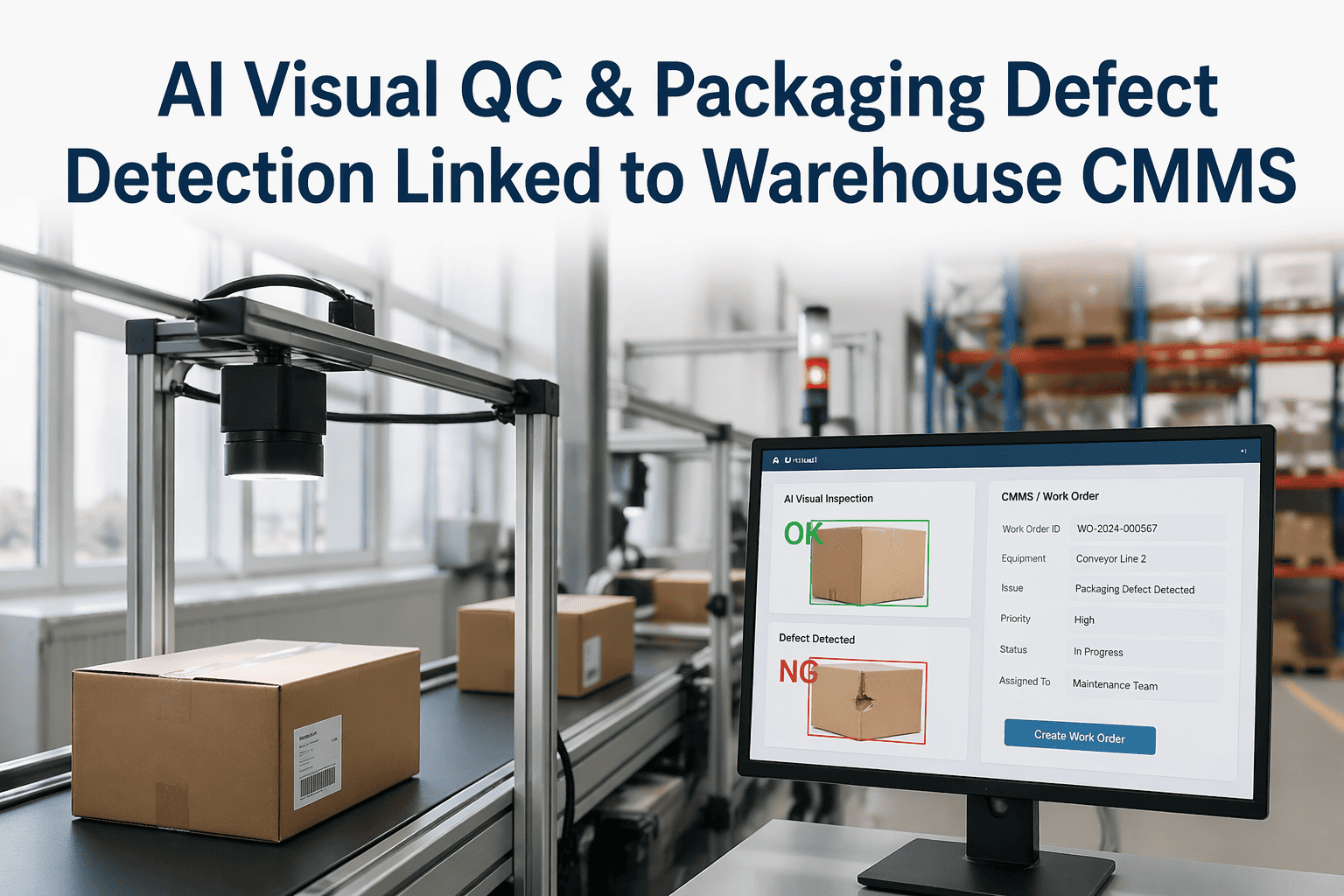
Packaging lines are shipping 3.2% defective units past human inspectors — and that failure rate is accelerating as line speeds push 600 units per minute and packaging complexity multiplies. Between micro-leaks in flexible pouches escaping bubble tests, label misregistration invisible to the naked eye, and foreign material contamination triggering $2M recalls, traditional quality control is collapsing under modern throughput demands. The packaging leaders capturing 99.97% quality rates in 2026 are not adding more inspectors — they are deploying multi-spectral vision systems that detect defects 400x faster and 50x more accurately than human capability. Schedule demo to identify exactly where your inspection gaps are bleeding quality and customer trust.
Where Is Your Quality Control Failing Modern Packaging Demands?
Before you can upgrade inspection capability, you must understand how legacy quality methods create systematic escape paths. Defect leaks accumulate across six inspection failure modes — from physiological human limits to outdated single-point sensors — and the compound effect erodes brand equity while inflating cost of poor quality (COPQ).
The Six Inspection Failure Modes in Packaging QualityEach percentage represents typical defect escape rate contribution in high-speed packaging operations
Human Visual Inspection Fatigue
18–25%
Insufficient Resolution for Micro-Defects
12–18%
Speed-Accuracy Trade-off Collapse
8–14%
Spectral Blindness (UV/IR Misses)
6–11%
3D Geometry Inspection Gaps
5–9%
No Real-Time Statistical Feedback
4–8%
Inspection Technology Capability Matrix
Capability
Detection Speed
Defect Size Limit
Spectral Range
3D Measurement
Consistency (8hr shift)
Data Traceability
Cost per Inspection
Human Inspection
60 UPM
0.3mm
Visible
No
70% → 40%
Manual
$0.08
Basic Vision
300 UPM
0.1mm
RGB
2D only
99%
Limited
$0.02
Multi-Spectral Vision
800+ UPM
0.01mm
UV-VIS-IR
3D + AI
99.97%
Full SPC
$0.005
$4.7M
Average annual cost of poor quality (COPQ) for mid-sized packaging operations — including recalls, rework, customer chargebacks, and brand damage from inspection escapes
The Detection Depth Stack: Engineering Zero-Defect Packaging
Modern packaging quality requires inspecting multiple material layers simultaneously — surface aesthetics, seal integrity, barrier properties, and dimensional precision. Single-sensor inspection cannot capture this complexity. The solution is spectral layering: combining visible, infrared, ultraviolet, and X-ray detection in coordinated arrays that build comprehensive quality assurance without throughput penalties.
Multi-Spectral Inspection Architecture for Packaging
Deep learning algorithms correlate multi-spectral signatures to classify defects with 99.97% accuracy, eliminating false rejects while catching previously invisible failure modes
Eight Vision System Strategies for Packaging Perfection
Each strategy targets specific packaging quality challenges — from high-speed label application to hermetic seal verification. They are sequenced by implementation complexity and ROI velocity, starting with upgrades that transform existing lines without mechanical overhaul.
01
Deploy Line-Scan Cameras for 100% Surface Coverage
Defect detection up 400%False rejects down 85%
Area-scan cameras miss defects between frames at high speeds. Line-scan technology builds continuous images at 800+ feet per minute with zero gaps, capturing micro-defects (0.01mm) invisible to area sensors. Install at critical control points: post-print, post-label, and final seal. One beverage converter eliminated 12,000 mislabeled units per month with line-scan OCR verification at 600 bottles per minute. Sign up to configure line-scan integration with Oxmaint's vision system management module.
02
Implement Thermal IR for Seal Integrity Verification
Flexible packaging seals fail from contamination, temperature variance, or pressure inconsistencies — invisible to visual inspection. Thermal IR cameras detect seal temperature signatures in real-time: cold spots indicate incomplete fusion, hot spots suggest material thinning. Deploy immediately post-seal jaw release for 100% coverage. Unlike destructive bubble testing, thermal verification inspects every package without throughput penalty. Oxmaint correlates thermal data with seal jaw maintenance schedules to predict degradation before failures occur.
03
Activate UV Fluorescence for Security & Coating Verification
Pharmaceutical and luxury packaging require invisible security features and precise coating application. UV-excited fluorescence reveals: authentic security fibers, proper adhesive application on tamper-evident seals, and UV-cured coating uniformity. Deploy UV line-scan arrays at 365nm and 254nm wavelengths to catch both intentional security features and process deviations. Integration with Oxmaint enables automatic rejection routing and regulatory compliance logging for FDA 21 CFR Part 11 requirements.
04
Deploy 3D Laser Profilometry for Dimensional Precision
Thermoformed trays, injection-molded closures, and embossed features require geometric verification impossible with 2D imaging. Laser triangulation sensors build 3D point clouds at production speed, comparing every unit to CAD specifications: wall thickness, draft angles, undercut dimensions, and surface flatness. Detect forming tool wear before it produces out-of-spec parts. One medical device manufacturer reduced tray rejection from 3.2% to 0.1% by catching subtle forming variations invisible to operators.
Metal detectors miss non-ferrous contaminants (glass, stone, dense plastics) and cannot verify internal package completeness. X-ray inspection detects foreign objects down to 0.3mm while simultaneously confirming: correct component count, proper assembly orientation, and fill volume accuracy. Essential for ready-meal trays, pharmaceutical kits, and multi-component consumer goods. Modern dual-energy X-ray systems distinguish material density, eliminating false rejects from benign variations.
Rule-based vision systems fail when defects vary in appearance or new failure modes emerge. Deep learning networks trained on thousands of defect examples classify anomalies by type, severity, and root cause: print smear vs. contamination vs. material flaw. When new defect types appear, operators annotate 50–100 examples; the system learns overnight without programmer intervention. Oxmaint integrates AI classification with work order generation — critical defects trigger immediate maintenance alerts with image evidence attached.
07
Establish Real-Time SPC with Vision-Driven Feedback
Process drift detection instantScrap reduction 45%
Vision systems generate massive quality data: dimensions, color values, defect frequencies, positional accuracy. Aggregate this into real-time statistical process control (SPC) dashboards showing Cpk trends, control limit breaches, and pattern recognition (runs, cycles, shifts). When vision detects subtle degradation — label placement drifting 0.1mm over 1000 units — the system alerts operators before out-of-spec production accumulates. Oxmaint's SPC engine correlates vision data with upstream process parameters to identify root causes: tooling wear, temperature drift, or material variation.
08
Unify Vision Intelligence with CMMS Integration
Maintenance response speed 5xVision uptime 99.5%
Vision systems require precise maintenance: lens cleaning, lighting calibration, software updates, and mechanical alignment. Without systematic care, detection accuracy degrades imperceptibly until defect escapes spike. Oxmaint CMMS manages vision system maintenance: automated cleaning schedules based on production volume, calibration tracking with tolerance verification, and predictive replacement of LED lighting before intensity drops below detection thresholds. Vision-derived defect data automatically generates maintenance work orders when patterns indicate forming tool wear or print drift — transforming quality inspection into predictive maintenance intelligence. Sign up to deploy integrated vision management and achieve 99.5% inspection system availability.
Your Competitors Are Already Deploying Multi-Spectral Vision
78% of pharmaceutical packaging operations and 64% of food packaging lines now operate 100% automated inspection. The quality gap is becoming unbridgeable: leaders achieve 99.97% detection rates at 800+ UPM, while laggards struggle with 97% rates at 200 UPM with human inspectors. Oxmaint provides the integration layer connecting vision hardware to maintenance intelligence and quality compliance — the digital backbone for zero-defect operations.
Regulatory pressure and consumer expectations are converging to make 100% inspection mandatory, not optional. Here is what the data reveals about the quality environment and why vision system investment is now survival infrastructure.
99.97%
detection rate threshold required for pharmaceutical serialization compliance — impossible without multi-spectral vision systems
$12M
average cost of a major food recall for foreign object contamination — preventable with X-ray inspection at 0.3mm sensitivity
600+
units per minute inspection speeds now standard for beverage and flexible packaging — 10x beyond human capability
45%
of packaging quality defects are micro-defects (<0.1mm) invisible to human inspectors but detectable with line-scan vision
Your 90-Day Vision System Transformation
Technology deployment without systematic integration creates isolated islands of data. This phased approach moves your operation from manual inspection to AI-driven quality assurance, with each phase building detectable quality improvements and maintenance intelligence.
Days 1–30
Assessment & Critical Point Mapping
Audit current inspection coverage: identify all defect escape points, measure current detection rates by defect type, and quantify COPQ impact. Deploy Oxmaint to baseline vision system maintenance requirements and integrate existing quality data. Map critical control points where vision deployment delivers maximum ROI: typically post-print, post-fill, and final seal. Establish baseline metrics: false reject rates, detection accuracy, and inspection throughput. This phase typically reveals 15–20% quality improvement potential from immediate upgrades.
Days 31–60
Deployment & AI Training
Install line-scan visible spectrum systems at highest-impact control points. Deploy thermal IR for seal verification on flexible packaging lines. Implement AI classification with initial training on 500+ defect examples per category. Configure automatic rejection routing and quality data logging. Integrate vision systems with Oxmaint for maintenance scheduling: lens cleaning, calibration verification, and lighting intensity checks. Expect detection rates to improve from 97% to 99.5% and false rejects to drop 70% by day 60.
Days 61–90
Integration & Intelligence Layer
Add spectral layers (UV, NIR) for security and barrier verification. Deploy X-ray for contamination-critical applications. Activate real-time SPC dashboards with automatic process drift alerts. Establish predictive maintenance protocols: vision-derived defect patterns trigger upstream maintenance before failures cascade. Train quality and maintenance teams on integrated workflows. By day 90, achieve 99.97% detection rates with 0.03% defect escape and full regulatory compliance documentation automated.
Need immediate quality escape analysis? Our vision specialists will audit your current inspection coverage, identify defect blind spots, and design a multi-spectral architecture targeting your highest-risk failure modes.
Track these metrics weekly. In vision-driven quality, leading indicators predict COPQ outcomes before customer complaints confirm them. If these metrics degrade, they pinpoint exactly which spectral layer or AI model requires recalibration.
Detection Rate (Critical Defects)
Target: 99.97%+
Percentage of critical defects caught before shipment — the ultimate measure of inspection system effectiveness and regulatory compliance
False Reject Rate
Target: <0.5%
Good product incorrectly rejected — excessive false rejects waste material and capacity; target <0.5% through AI tuning
Inspection Throughput (UPM)
Target: Match line speed +20%
Units per minute inspected without quality degradation — vision systems must exceed line speed to prevent bottlenecks
Defect Escape Rate (PPM)
Target: <300 PPM
Parts per million defects reaching customers — world-class packaging operations achieve <100 PPM with multi-spectral vision
Vision System Uptime
Target: 99.5%+
Percentage of production time with active inspection — requires systematic maintenance of cameras, lighting, and software
Time-to-Detect New Defects
Target: <24 hours
Hours required to train AI on new defect type and deploy detection — measures system adaptability to process changes
Achieve 99.97% Quality at Production Speed
Every day of delay ships defective product that erodes customer trust and invites regulatory action. Oxmaint delivers the integration platform for multi-spectral vision systems: maintenance management ensuring 99.5% inspection uptime, AI training data management, real-time SPC correlation, and automatic work order generation from quality drift patterns. Deployment connects your vision hardware to predictive maintenance intelligence within weeks, not years.
Can we achieve 99.97% detection without replacing entire packaging lines?
Yes. Most vision upgrades retrofit existing lines without mechanical changes. Line-scan cameras, thermal IR, and UV arrays mount above existing conveyors with minimal clearance requirements. X-ray systems require shielded enclosures but integrate with standard line configurations. The 99.97% target is achieved through spectral layering — adding detection modalities rather than line replacement. One flexible food packaging operation achieved 99.95% detection by adding thermal IR and line-scan visible systems to a 10-year-old form-fill-seal line. Schedule demo to map upgrade requirements for your specific lines.
How do we prevent AI vision systems from rejecting good product?
False rejects stem from over-sensitive training or insufficient defect examples. The solution is iterative AI tuning: (1) initial training on 500+ verified defect examples, (2) production validation with human override logging, (3) retraining on borderline cases where human inspectors disagree with AI, and (4) continuous learning as new defect types emerge. Oxmaint manages this learning loop: tracking override reasons, flagging retraining triggers, and versioning AI models for regulatory traceability. Target false reject rates <0.5% within 30 days of deployment.
Why is CMMS integration essential for vision system success?
Vision systems degrade predictably: lens contamination accumulates, LED intensity drops 20% over 10,000 hours, and mechanical vibration shifts calibration. Without systematic maintenance, detection accuracy drifts imperceptibly until defect escapes spike. Oxmaint CMMS automates vision system care: cleaning schedules based on production volume, calibration tracking with pass/fail tolerance verification, and predictive LED replacement before intensity thresholds breach. Vision-derived defect patterns automatically generate upstream maintenance work orders — transforming quality data into predictive asset management. Sign up to see integrated vision management capabilities.
What is the ROI timeline for multi-spectral vision deployment?
Payback typically occurs within 8–14 months through: (1) COPQ reduction — 2–4% defect escape elimination saves $1–3M annually for mid-sized operations, (2) line speed increases — 15–20% throughput improvement when inspection no longer bottlenecks, (3) labor reallocation — quality inspectors redeployed to value-added roles, and (4) recall prevention — single avoided recall justifies entire system investment. Phased deployment starting with visible spectrum line-scan delivers measurable ROI within 60 days, funding subsequent spectral layer additions.
How does Oxmaint differ from standalone vision system software?
Standalone vision software manages image capture and defect classification; Oxmaint manages the complete quality ecosystem: vision system maintenance ensuring detection consistency, AI model versioning for regulatory traceability, defect data correlation with upstream process parameters, automatic work order generation from quality drift, and integration with broader CMMS asset management. It is the operational intelligence layer that transforms vision hardware into predictive quality infrastructure — with packaging industry pre-configuration that deploys in days. Schedule demo to see integrated vision management.