
Urban delivery operations in 2026 are under pressure from every direction. Traffic gridlock, vehicle breakdowns, last-mile bottlenecks, and rising fuel costs have turned city logistics into one of the most complex challenges in the industry. For fleet managers and operations leads, staying ahead means moving beyond manual tracking and reactive fixes — and adopting smarter, data-driven systems built for the pace of city delivery. Start managing your fleet smarter today or book a free demo to see how Oxmaint helps urban delivery teams cut downtime and delays.
Why Urban Delivery Is Getting Harder
City streets were not designed for today's delivery density. E-commerce growth has pushed package volumes up 40% since 2020, but road infrastructure has barely changed. Add in restricted loading zones, peak-hour congestion windows, and rising customer expectations for same-day delivery — and the pressure on urban fleets is immense.
The teams struggling most are those still operating on spreadsheets, phone calls, and manual check-ins. Without real-time visibility into vehicle location, maintenance status, and route performance, small problems become expensive disruptions fast. Sign up free and centralize your fleet operations — no credit card required.
Unpredictable traffic patterns extend delivery windows, increase fuel burn, and force drivers into costly re-routing decisions without data support.
Reactive vehicle maintenance means breakdowns happen mid-route. A single vehicle out of service in a city can cascade into missed SLAs across an entire zone.
Last-mile bottlenecks, failed delivery attempts, and poor stop sequencing create compounding delays that erode customer trust and increase cost-per-delivery.
The Real Cost of Congestion on Fleet Operations
Congestion is not just a time problem — it is a cost multiplier. Every hour a delivery vehicle sits in traffic burns fuel, delays subsequent stops, and increases driver overtime. For fleets running 20 or more urban vehicles, unmanaged congestion can add $80,000 or more in annual operating costs. Book a demo to get a customized cost analysis for your fleet size and routes.
| Congestion Impact | Without Optimization | With Smart Fleet Ops |
|---|---|---|
| Daily Fuel Waste | +28% excess burn | Baseline consumption |
| Stops Per Shift | 12–15 stops avg | 18–22 stops avg |
| Driver Overtime | 4–6 hrs/week/driver | Under 1 hr/week |
| On-Time Delivery | 71% success rate | 93%+ success rate |
| Customer Complaints | High volume, reactive | Proactive communication |
Downtime: The Hidden Fleet Killer
Vehicle breakdowns during urban delivery runs are more costly than most managers realize. Beyond the repair bill, a single mid-route breakdown can strand a driver, delay 30+ deliveries, and require emergency vehicle redeployment. Yet most city fleets still operate on reactive maintenance — fixing vehicles only after they fail. Sign up free and set up your first preventive maintenance schedule today.
Mileage-based alerts ignored or overlooked in busy dispatch environments. Vehicles leave the depot with unresolved flags.
Vehicle fails during peak delivery hours. Driver stranded. Dispatcher scrambles for backup. Deliveries missed.
After-hours mechanic, tow cost, expedited parts. Average emergency repair runs 3x the cost of planned maintenance.
Missed delivery commitments trigger penalty clauses, customer escalations, and potential contract loss.
Four Strategies to Reduce Urban Delivery Delays
Stop sequencing based on traffic windows, loading zone availability, and delivery time commitments. Reduces total drive time per run by 15–25%.
Schedule maintenance during off-peak hours before vehicles are due for breakdown. Eliminate reactive repair disruptions that cascade through the day's schedule.
Replace radio calls and paper tickets with digital work orders. Dispatchers see every vehicle's status in real time. Reassignments happen in seconds, not minutes.
Track on-time delivery rates, delay frequency, and cost-per-stop by neighborhood or delivery zone. Identify chronic problem areas and redesign routes accordingly.
What Good Urban Delivery Operations Look Like
Key Metrics Every Urban Fleet Manager Should Track
If you cannot measure it, you cannot improve it. These four metrics form the core of any high-performing urban delivery operation. Oxmaint's analytics dashboard tracks all of them automatically — sign up free to start tracking your fleet performance now.
Percentage of deliveries completed within the committed window. Benchmark target: 92% or higher for urban routes.
Time vehicles are available for active delivery vs. time in maintenance or repair. Target: 95%+ uptime for high-frequency fleets.
Total operating cost divided by completed stops. Tracks efficiency across routes and helps identify underperforming zones.
Deliveries completed on first attempt without rescheduling. Failed attempts are the highest cost-per-delivery scenario.
How Oxmaint Supports Urban Delivery Teams
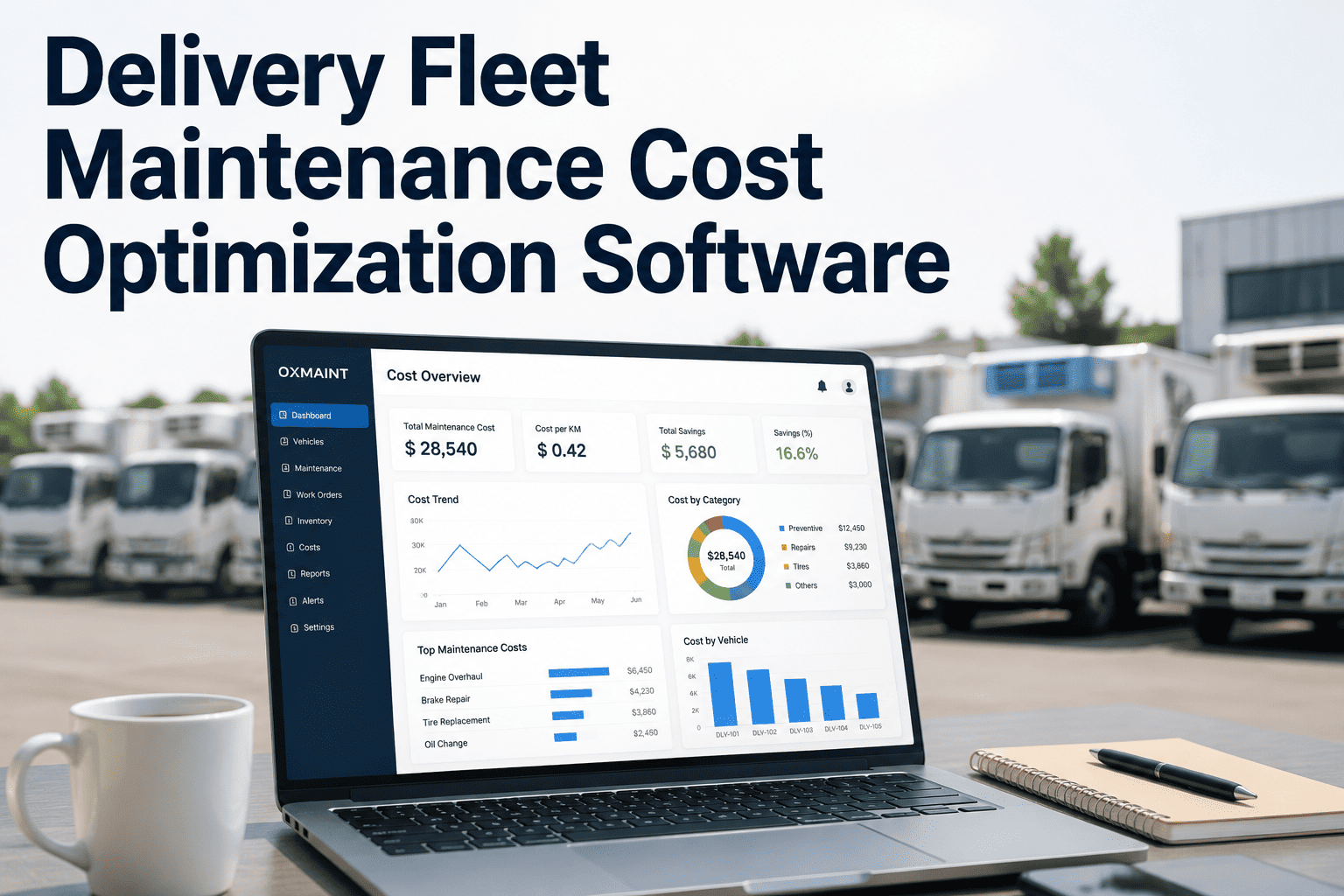
Oxmaint brings fleet maintenance, work order tracking, inspections, and analytics into one platform built for the pace of city delivery operations. Start for free and have your first PM schedules running in under a day — or book a live walkthrough tailored to your fleet.
Schedule, track, and complete all vehicle maintenance from a single dashboard. Auto-generate work orders based on mileage, engine hours, or time.
Digital pre-trip and post-trip checklists completed on driver smartphones. Issues flagged instantly to dispatch before vehicles leave the yard.
Every maintenance task, repair job, and inspection is logged and visible in real time. No more phone tag between drivers, technicians, and dispatchers.
Track spare parts stock levels, set reorder thresholds, and ensure the right components are available before a breakdown becomes a multi-day delay.
Delivery performance, fleet utilization, and maintenance cost reports broken down by vehicle, zone, or time period for smarter decision-making.
Connect existing GPS and OBD hardware to Oxmaint for combined location visibility and vehicle health monitoring in a single operations view.

.png)


