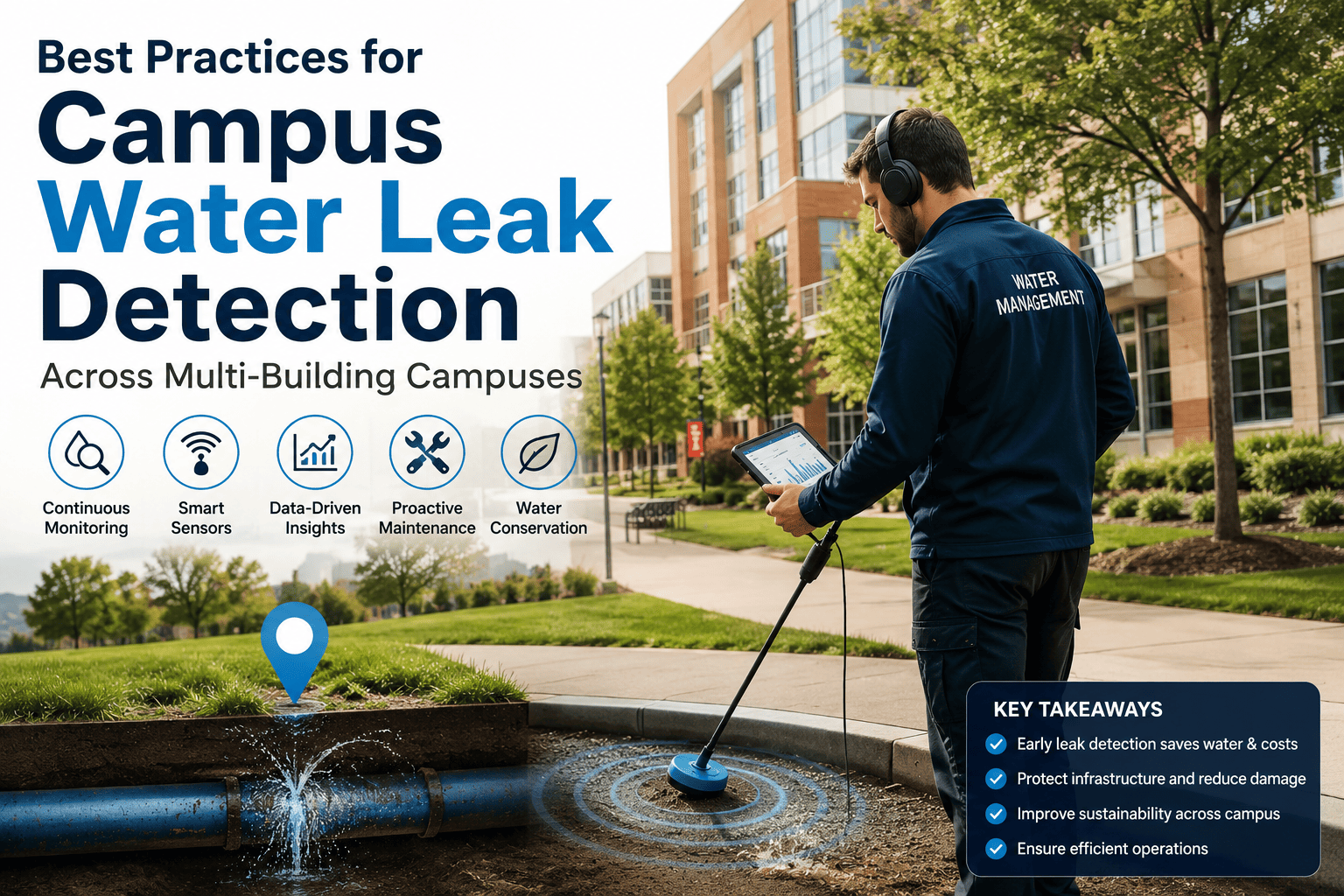
Detecting a leak in one building is straightforward. Doing it consistently across twelve buildings of different ages, plumbing layouts, and occupancy schedules is where most campus programs fall apart — alerts get missed, response varies by site, and no one has a single view of where water risk is concentrated. Multi-building campuses need shared standards, not twelve separate ad-hoc setups, because the same coverage gap quietly multiplies with every building you add. The best practices below give every site one detection standard, one escalation rulebook, and one dashboard, so a leak in the oldest residence hall is handled exactly like one in the newest science wing. Teams ready to centralize can Sign Up Free and onboard their first cluster of buildings in days.
One Detection Standard Across Every Building You Manage
OxMaint gives a multi-building campus a single live map of water risk — every sensor, every alert, every open work order across every site in one dashboard. Standardize escalation once and it applies to all buildings, so response never depends on which campus the leak happens to be in.
The Multi-Building Problem — Why One Site's Setup Will Not Scale
When each building runs its own informal process, the gaps do not stay isolated. They compound, and the campus loses any single view of total water risk.
Best Practices — The Centralized Monitoring Model
A central dashboard sees every building. Standards flow outward to each site, and alerts flow back to one place for routing and record-keeping.
Each building reports into the same system. A leak anywhere becomes a standardized, routed, logged work order — and the campus keeps one continuous record of water risk across the whole portfolio.
The Standards Checklist — Apply Identically to Every Building
Define these once. Consistency across sites is what turns a collection of sensors into an actual program.
Coverage Reference — Match Sensors to Building Type
| Building Type | Primary Risk Zones | Coverage Priority |
|---|---|---|
| Residence Halls | Restroom stacks, water heaters, laundry lines | High — 24/7 occupancy |
| Academic Buildings | Mechanical rooms, roof drains, corridor risers | High — daytime density |
| Labs & Research | Sink clusters, deionized water lines, equipment | Critical — asset value |
| Dining & Kitchens | Supply lines, grease interceptors, dishwashing | High — constant use |
| Athletics & Rec | Pool plant, locker plumbing, boiler rooms | Medium — clustered risk |
| Utilities & Plant | Chilled-water valves, distribution mains, pumps | Critical — cascade risk |
See Water Risk Across Every Building in One Live View
Stop reconciling alerts from twelve different systems after the damage is done. OxMaint puts every sensor, every building, and every open work order on one map — so you standardize response once and apply it everywhere, instantly.
Frequently Asked Questions
Why can't each building just run its own leak detection setup?
How does centralized monitoring work across many buildings?
Can building managers still see only their own site?
What if the campus network goes down during a break?
How do we report water risk to leadership across all sites?
Twelve Buildings, One Standard, One Dashboard
A multi-building campus does not need twelve separate water programs. It needs one. OxMaint unifies sensors, alerts, escalation, and reporting across every site, so the oldest residence hall and the newest science wing are protected by exactly the same rules.