Campus library networks are quietly one of the most complex maintenance environments in education — multi-building, heavily trafficked, climate-sensitive, and expected to operate without disruption through every academic term. Districts and universities managing three or more library buildings without a unified maintenance system are leaving serious gaps in asset coverage, compliance tracking, and response times. This guide lays out the practical framework that high-performing campus facilities teams use to standardize library maintenance across buildings, reduce reactive work orders, and extend the life of HVAC, electrical, and specialty systems. If your team is still tracking work orders in email threads or paper logs, start a free Oxmaint account to bring every building into one maintenance dashboard, or book a 30-minute session with our campus facilities specialists.
Campus Facilities Guide
Best Practices for Library Facility Maintenance Across Multi-Building Campuses
From climate control scheduling to cross-building asset audits — the systems that keep campus libraries running without reactive chaos.
3x
More reactive work orders in libraries without PM schedules
40%
Of library HVAC failures preventable with monthly inspections
68%
Of campus facilities teams manage 3+ library buildings simultaneously
Why Multi-Building Library Maintenance Breaks Down
A single library building is manageable. Three, five, or eight buildings across a campus — each with its own age, systems profile, and occupancy pattern — becomes something else entirely. Most campus teams don't fail because of lack of effort. They fail because the coordination infrastructure isn't there.
01
No unified asset register
Each building's equipment history lives in a different place — a spreadsheet here, a folder there. No one has the full picture until something breaks.
02
PM schedules that don't travel
Preventive maintenance checklists built for one building rarely get applied consistently across others. Buildings fall out of sync within one academic year.
03
Technician time lost to coordination
Without a shared dispatch system, technicians spend 15–20% of their shift on logistics — finding out where to go, what parts to bring, and what was done last visit.
04
Compliance gaps across buildings
Fire suppression, elevator inspections, and ADA compliance checks are often tracked per building by different people, making district-level audit prep a scramble.
The 5-Layer Maintenance Framework for Campus Libraries
High-performing campus facilities teams don't manage buildings one at a time. They operate a layered system that works across every building in the portfolio simultaneously.
Layer 1
Universal Asset Register
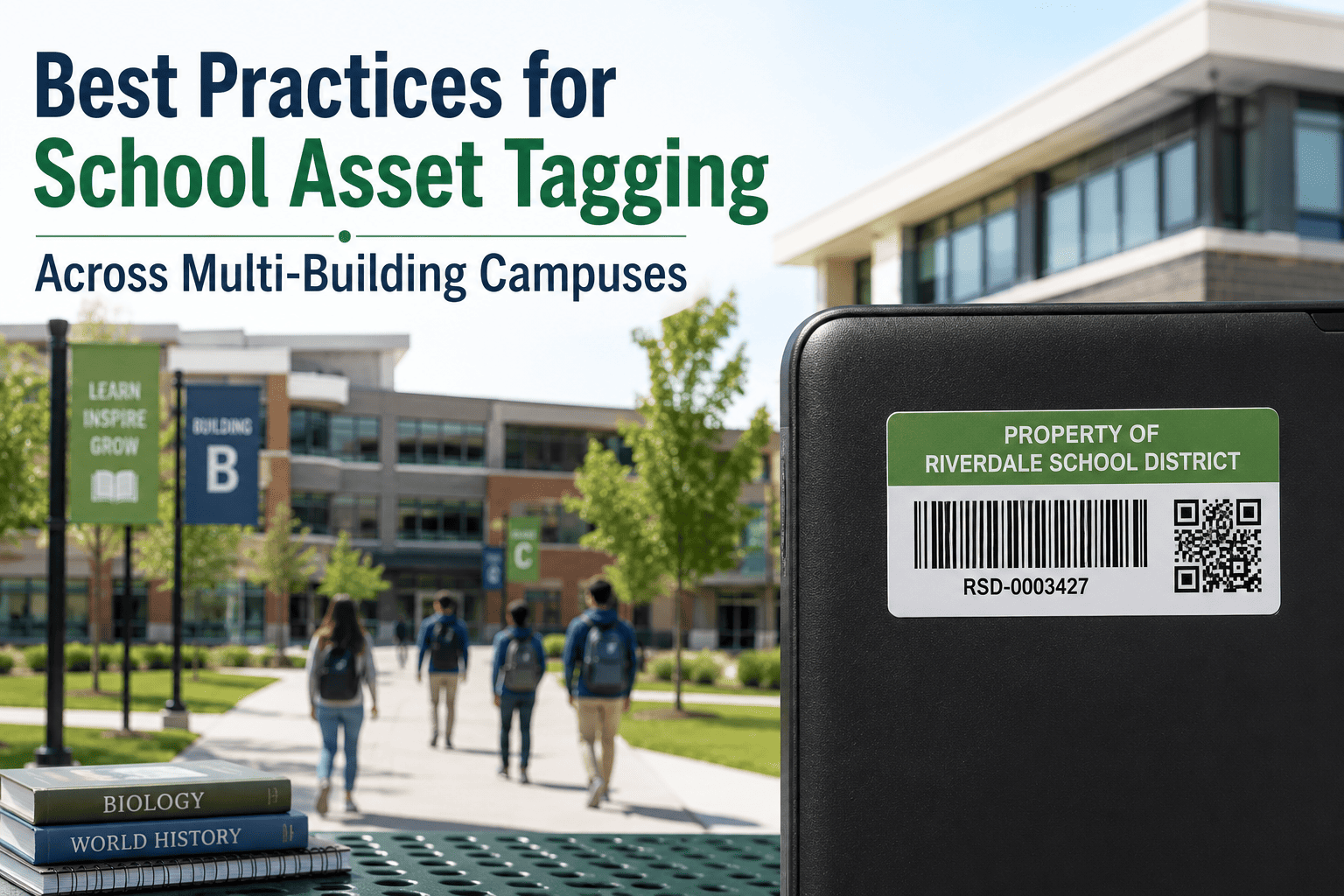
Every piece of equipment across every library building entered in one system with the same naming convention, asset ID format, and location hierarchy. This is the foundation everything else depends on. Without it, PM scheduling, work order routing, and reporting are all guesswork.
Layer 2
Building-Specific PM Templates
Each library building gets a PM schedule tailored to its systems — HVAC age and type, roofing material, elevator count, specialty collections requiring humidity control. Templates share a common structure but branch for building-specific assets. Updating the master template propagates changes across all buildings.
Layer 3
Centralized Work Order Dispatch
All reactive and planned work orders flow through one system with clear priority tiers — critical (affecting building access or climate control), high (affecting patron-facing services), and standard. Technicians receive assignments on mobile, log completion with photos, and don't need to call in for status updates.
Layer 4
Compliance Calendar
Fire suppression tests, elevator certificates, boiler inspections, and ADA audits are scheduled in the same system as maintenance tasks — with lead time alerts, assigned owners, and document storage for certificates. Compliance gaps show up on the same dashboard as maintenance backlog.
Layer 5
Cross-Building Performance Reporting
Monthly reports compare PM completion rates, reactive work order volume, and mean time to repair across buildings. The buildings with the most reactive volume get attention first. The data turns budget conversations from opinion-based to evidence-based.
Oxmaint connects your entire campus library portfolio in one maintenance system. Asset registers, PM schedules, work orders, and compliance calendars — across every building, in one dashboard.
Critical Systems by Library Building Type
Not all campus library buildings have the same maintenance profile. A 1970s branch library and a purpose-built research facility need different attention. Here is what matters most in each type.
| Building Type |
Top Maintenance Priority |
Most Common Failure |
PM Frequency |
Compliance Focus |
| Main Research Library |
Climate control — rare collections humidity |
HVAC sensor drift causing humidity exceedance |
Monthly HVAC, quarterly envelope |
Fire suppression, sprinkler certification |
| Branch / Satellite Library |
Roofing and water intrusion |
Roof penetration leaks above stacks |
Biannual roof, annual electrical |
Egress lighting, exit sign testing |
| Digital / Media Center |
Electrical load management and UPS |
UPS battery failure, server room cooling |
Monthly electrical, quarterly UPS |
Data room fire suppression, OSHA wiring |
| Historic / Landmark Building |
Facade and masonry preservation |
Water infiltration through original masonry |
Annual masonry, biannual structural |
Historic preservation compliance, ADA retrofit |
| Multi-Purpose Learning Commons |
High-traffic flooring and restrooms |
Plumbing fixture failures from peak occupancy |
Weekly walk-throughs, monthly plumbing |
ADA, elevator certificate, occupancy load |
How AI Predictive Maintenance Changes the Library Campus Equation
Traditional PM schedules are calendar-based — they trigger on time elapsed, not on actual equipment condition. AI predictive maintenance shifts that logic, using work order history, failure patterns, and equipment age data to flag assets before they fail. For campus library networks, this means fewer mid-semester HVAC outages and fewer emergency work orders interrupting exam periods.
Before AI PM
HVAC serviced every 90 days regardless of runtime or load
Failures discovered by patrons or staff, not maintenance teams
Emergency work orders during finals week — high cost, high disruption
Budget requests based on historical averages, not building data
With Oxmaint AI PM
Service triggers based on actual usage patterns and failure history
System flags at-risk assets 2–4 weeks before predicted failure window
PM tasks auto-scheduled around academic calendar — away from peak periods
CapEx requests backed by asset condition data and remaining useful life estimates
Frequently Asked Questions
How do we standardize PM schedules across buildings with very different ages and systems?
Start with a master PM template that covers common systems (HVAC, electrical, plumbing, fire safety) at standard intervals. Then add building-specific tasks as sub-items tied to unique assets in that building. Oxmaint lets you create a base template and extend it per building without duplicating the entire schedule.
Try it free to see how template inheritance works.
What is the right PM frequency for library HVAC systems?
For libraries with rare or archival collections, monthly filter checks and quarterly full HVAC inspections are the minimum. Standard branch libraries can operate on quarterly filter and biannual full inspections. High-occupancy buildings like learning commons need monthly checks year-round. Oxmaint's AI layer adjusts suggested frequency based on your actual work order history.
How do we track compliance deadlines across 5 or more buildings without missing anything?
The key is treating compliance tasks the same as PM tasks — not as a separate list. In Oxmaint, compliance inspections are scheduled as recurring work orders with document attachment slots for certificates. Dashboard alerts fire 30 days before expiry.
Book a demo to see the compliance calendar in action.
Can our team use Oxmaint on mobile while working across buildings?
Yes — the Oxmaint mobile app is designed for technicians moving between buildings. QR scan to pull up an asset, log work, attach photos, and close work orders without going back to a desk. All data syncs in real time to the central dashboard your facilities manager sees.
How long does it take to get a multi-building campus set up in Oxmaint?
Most campus teams complete the initial setup — asset import, PM template creation, and team onboarding — within two weeks. Oxmaint's onboarding support includes a campus facilities specialist who can help map your building hierarchy and migrate existing asset lists.
Sign up free to start the process.
Bring Every Library Building Into One Maintenance System
Stop managing campus library maintenance building by building. Oxmaint gives your team a unified asset register, PM scheduling, work order dispatch, and compliance tracking — across every building on your campus, from one dashboard.