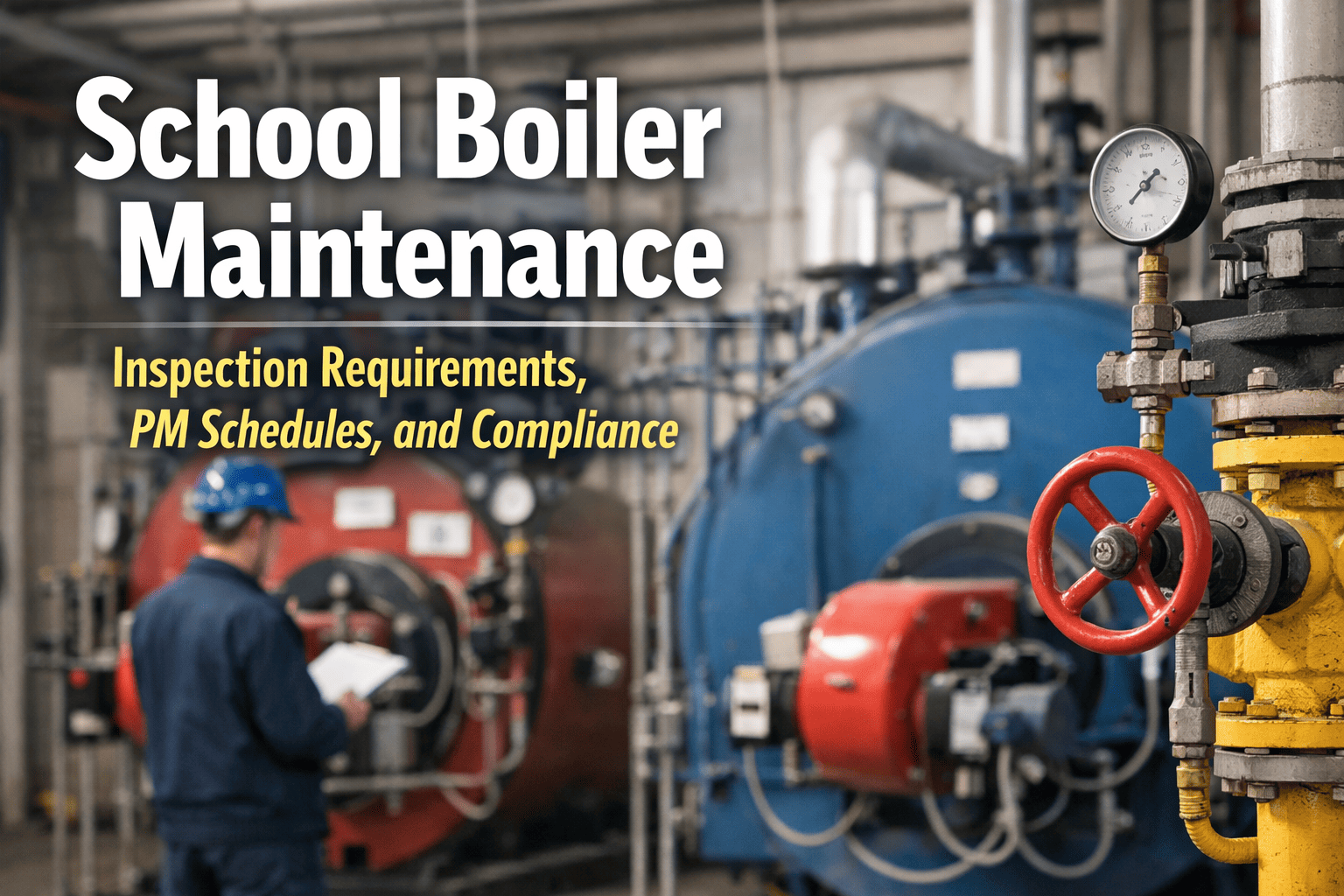
The call came at 4:47 AM on the coldest morning of January—a Tuesday, the first day back from winter break. The central plant operator noticed the 600-horsepower fire-tube boiler serving the north campus quad had tripped on low water cutoff overnight. By the time the facilities director arrived at 5:30 AM, building temperatures in four residence halls housing 1,200 students were already dropping below 60°F. The dining hall couldn't produce hot water for food prep. Three laboratory buildings lost the heating needed to maintain stable conditions for active research projects. The emergency boiler repair took 14 hours and cost $38,000 in parts and overtime labor. The low water cutoff had been cycling intermittently for six weeks. A maintenance technician had noted it in a hallway conversation with the plant supervisor. No work order was created. The annual boiler inspection was four months overdue. The repair that would have cost $1,200 and two hours of scheduled downtime during fall break instead cost $38,000, displaced 1,200 students, jeopardized research, and generated a state boiler inspector citation that triggered a compliance review of every pressure vessel on campus. Book a Demo to see how centralized boiler and chiller tracking prevents these failures.
This guide provides a systematic framework for managing campus boiler and chiller preventive maintenance—from fire-tube boilers and centrifugal chillers to cooling towers and steam distribution systems—with the scheduling discipline, documentation practices, and compliance protocols that state inspectors, insurance carriers, and campus administrators expect. Sign Up to start scheduling boiler and chiller maintenance digitally.
State boiler inspectors and insurance carriers don't accept "we check it regularly" without records. Build verifiable maintenance documentation before the next inspection.
Digital logs for every water treatment test, every safety device verification, every vendor service visit — timestamped, tamper-evident, and exportable by equipment, date range, or compliance category in seconds. Automated scheduling ensures no boiler inspection, no condenser tube cleaning, no water treatment vendor visit falls through the cracks during staff turnover or budget cycles.
Why Central Plant Failures Are Campus-Wide Emergencies
Campus boilers and chillers aren't like individual building HVAC units that affect a single space. They are centralized systems that serve entire building clusters through steam or chilled water distribution networks. When a central boiler fails in January, every building on that loop loses heat simultaneously. When a chiller fails in September, classrooms, residence halls, laboratories, and data centers overheat in unison. There is no backup for deferred maintenance on equipment that serves thousands of occupants across dozens of buildings.
| Without PM Scheduling | With Systematic CMMS |
|---|---|
| Boiler runs until low water cutoff trips or tube fails—emergency repair at 3–5x cost | Scheduled inspections catch water treatment drift, tube scaling, and control issues months before failure |
| Chiller performance degrades slowly—nobody notices until buildings overheat | Condenser approach temperature trended monthly, efficiency decline triggers service before failure |
| State inspector arrives—plant engineer scrambles through filing cabinets for records | Complete inspection history, water treatment logs, and safety device test records generated instantly |
| New plant operator inherits zero knowledge of equipment condition or service history | Full asset history, vendor contacts, operating procedures, and PM schedules available from day one |
| Capital replacement requests based on "it's old" without data | Repair cost history, efficiency trending, and failure frequency justify replacement with concrete numbers |
The Anatomy of a Central Plant Failure
Understanding why boilers and chillers fail—not just that they fail—transforms central plant maintenance from reactive crisis management into systematic prevention. The 5 Whys technique reveals the true root causes that paper logs and verbal reports consistently miss.
Example: Centrifugal Chiller Failure Disrupts Campus for 8 Days
Critical Campus Central Plant Equipment & Failure Consequences
Every piece of central plant equipment has specific failure modes, inspection requirements, and consequences when maintenance lapses. Understanding these categories focuses maintenance resources where they matter most. Sign Up to start categorizing and tracking central plant assets.
| Equipment Category | Common Failure Modes | Root Causes | Impact Severity |
|---|---|---|---|
| Fire-Tube Boilers | Low water cutoff failure, tube scaling/rupture, refractory degradation, burner fouling | Water treatment neglect, combustion tuning deferred, safety device testing skipped, sediment accumulation | Critical — Campus heating loss + safety hazard |
| Water-Tube Boilers | Tube corrosion, economizer leak, feedwater pump failure, superheater damage | Oxygen pitting from inadequate deaeration, scale from poor water chemistry, valve seat erosion | Critical — Steam distribution failure campus-wide |
| Centrifugal Chillers | Compressor motor trip, condenser tube fouling, refrigerant leak, oil contamination | Tube cleaning deferred, water treatment lapsed, vibration from bearing wear, purge unit failure | Critical — Campus cooling loss, research/data center risk |
| Absorption Chillers | Crystallization, solution pump failure, tube corrosion, vacuum loss | Improper shutdown procedure, inhibitor depletion, air ingress from leak, water chemistry neglect | Critical — Extended repair timeline (weeks) |
| Cooling Towers | Fill media deterioration, fan motor/belt failure, basin fouling, Legionella proliferation | Water treatment lapses, mechanical neglect, drift eliminator damage, seasonal startup neglect | High — Chiller efficiency loss + public health risk |
| Steam Distribution | Steam trap failure, condensate return leaks, pipe insulation degradation, PRV malfunction | Trap testing neglected, corrosion from oxygen in condensate, insulation moisture damage, valve seat wear | High — Energy waste + building-level heat loss |
| Pumps & Variable Frequency Drives | Seal failure, bearing wear, impeller erosion, VFD fault, cavitation | Alignment drift, vibration from imbalance, water quality issues, electrical supply problems | Medium — Distribution loop impairment |
Root Cause Categories for Campus Central Plant Failures
Boiler and chiller failures cluster into predictable categories. Understanding these patterns allows facilities directors to build maintenance programs that address systemic vulnerabilities rather than chasing individual breakdowns.
Water Chemistry & Treatment
- Boiler water hardness exceeding limits causing tube scale
- Oxygen scavenger depletion allowing corrosion pitting
- Cooling tower biocide treatment lapsed enabling Legionella
- Condensate pH below threshold corroding return piping
- Glycol concentration inadequate for freeze protection
- Makeup water quality degradation from source changes
Equipment Age & Condition
- Boiler refractory cracking from thermal cycling beyond design life
- Chiller compressor bearing wear from 25+ years of operation
- Cooling tower fill media deterioration from UV and chemical exposure
- Steam trap internals worn past effective seating
- VFD capacitor degradation from age and heat exposure
- Control system obsolescence preventing parts replacement
Maintenance Gaps
- Annual boiler inspection deferred past state-required deadline
- Chiller condenser tube cleaning skipped during summer
- Cooling tower seasonal startup checklist not completed
- Steam trap survey not conducted annually
- Burner combustion tuning not performed seasonally
- Safety relief valve testing overdue
Operational Factors
- Rapid boiler startup without proper warmup procedure
- Chiller operated below minimum load causing surge
- Cooling tower operated in freezing conditions without basin heater
- Steam system operated with excessive blowdown wasting energy
- Plant sequencing logic overridden manually without documentation
- Load shedding during peak demand causing equipment stress
Organizational Issues
- Plant engineer retirement taking institutional knowledge
- Water treatment vendor contract expired without renewal
- Capital replacement budget deferred for academic building priorities
- Central plant staffing reduced during budget constraints
- Maintenance records kept in paper logbooks in plant control room
- No succession plan for specialized plant operator certifications
External Factors
- Natural gas supply interruption affecting boiler operation
- Electrical grid instability damaging VFDs and controls
- Extreme weather events exceeding equipment design capacity
- Refrigerant regulation changes (HFC phasedown) affecting chiller service
- Municipal water quality changes impacting treatment chemistry
- State boiler code updates requiring equipment modifications
Document every water treatment log, every safety device test, every vendor service visit. Build the institutional knowledge that survives staff turnover and proves compliance during inspections.
Every water chemistry reading links to the asset record, every out-of-range result auto-generates a corrective work order with assigned owner and deadline, every vendor visit gets timestamped documentation attached to the equipment it serviced. Creates an unbroken chain from daily testing to annual state inspection that no filing cabinet or spreadsheet can replicate.
Boiler Maintenance: The Highest-Stakes Equipment Category
Boiler failures carry the most severe consequences on any campus—from catastrophic safety events involving pressure vessels to campus-wide heating loss during peak winter demand. Understanding boiler-specific failure modes is essential for any campus central plant maintenance program. Book a Demo to see boiler compliance tracking features.
| Failure Mode | Warning Signs | Root Cause Analysis Focus | Prevention Strategy |
|---|---|---|---|
| Low Water Condition | Low water cutoff alarm cycling, makeup water valve running frequently, sight glass readings inconsistent | Cutoff probe fouling, blowdown procedure, feedwater system, condensate return losses | Weekly low water cutoff test, monthly probe cleaning, annual feedwater system audit |
| Tube Scaling/Fouling | Flue gas temperature rising, fuel consumption increasing, water treatment results drifting | Water chemistry program compliance, blowdown frequency, hardness breakthrough, makeup water quality | Daily water treatment testing, monthly tube inspection during boiler off-cycle, annual fireside cleaning |
| Burner Malfunction | Flame instability, delayed ignition, abnormal combustion noise, excess CO in flue gas | Fuel-air ratio drift, igniter electrode wear, flame scanner contamination, gas pressure variance | Seasonal combustion tuning, monthly flame scanner cleaning, annual burner overhaul |
| Refractory Degradation | Hot spots on boiler jacket, visible cracks during shutdown inspection, increased radiation loss | Thermal cycling frequency, refractory age, rapid startup practices, combustion impingement | Annual refractory inspection during shutdown, controlled startup procedures, repair cracks immediately |
| Safety Valve Malfunction | Valve weeping at normal pressure, valve fails to lift during test, corrosion on valve seat | Testing frequency, valve age, water chemistry effect on seats, installation orientation | Annual safety valve testing per ASME/state code, replace at manufacturer interval, document every test |
Chiller Maintenance: Protecting Campus Cooling Infrastructure
Chiller failures during cooling season create cascading problems across campus—from overheated classrooms affecting academic performance to research laboratory temperature excursions risking millions in grant-funded work to data center thermal events threatening IT infrastructure.
| Chiller Type | Key PM Tasks | Frequency | Consequence of Neglect |
|---|---|---|---|
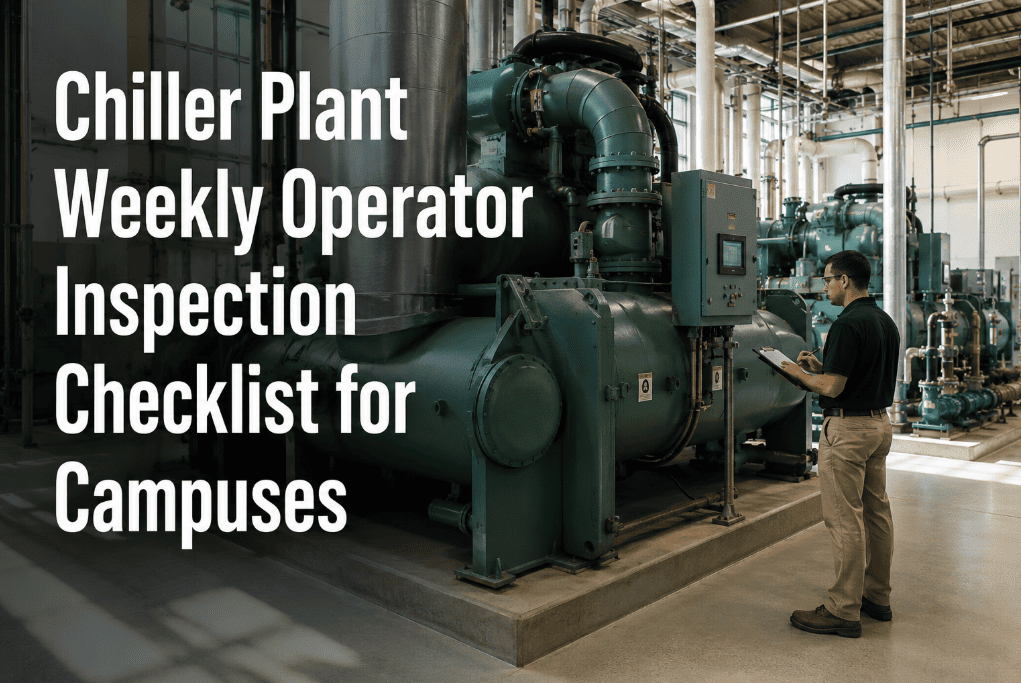
| Centrifugal | Condenser tube cleaning and eddy current testing, oil analysis, refrigerant analysis, vibration monitoring, motor insulation resistance | Annual tube clean, quarterly oil/refrigerant sample, monthly vibration trending | Tube fouling reduces efficiency 30–40%, compressor trip on high head pressure, catastrophic bearing failure |
| Screw | Oil filter replacement, refrigerant charge verification, motor amp draw trending, condenser maintenance | Semi-annual oil/filter, quarterly refrigerant check, monthly operating log review | Oil degradation causes rotor scoring, refrigerant loss reduces capacity progressively, undetected until failure |
| Air-Cooled | Coil cleaning, fan motor and blade inspection, refrigerant charge, compressor oil, control calibration | Quarterly coil cleaning, semi-annual comprehensive, monthly visual inspection | Dirty coils increase energy consumption 20–30%, fan failure causes compressor high-pressure trip |
| Absorption | Solution concentration test, vacuum integrity check, inhibitor level, tube bundle inspection, purge operation | Monthly solution test, annual vacuum/tube inspection, weekly purge check during operation | Crystallization from improper shutdown requires weeks of recovery, vacuum loss degrades performance dramatically |
Preventive Maintenance Framework for Campus Central Plants
Follow this systematic approach to build a comprehensive central plant maintenance program that prevents boiler and chiller failures and creates the documentation trail that state inspectors, insurance carriers, and campus leadership require.
Inventory Every Central Plant Asset
Tag every piece of equipment with a unique identifier: boilers, chillers, cooling towers, pumps, VFDs, heat exchangers, steam traps, expansion tanks, chemical feed systems, and controls. Record manufacturer, model, serial number, installation date, rated capacity, operating pressure, refrigerant type, and warranty status. Attach nameplate photos and O&M manuals digitally.
Establish Water Treatment Monitoring
Implement documented water chemistry testing for all boiler feedwater, condensate return, chilled water loops, and cooling tower water—minimum daily for boilers during operation, three times weekly for cooling towers. Digital logging with automatic alerts at parameter excursions creates tamper-evident records that satisfy inspectors and insurance carriers.
Build PM Schedules Aligned to Regulatory Requirements
Create maintenance schedules based on state boiler code inspection deadlines, ASHRAE chiller maintenance guidelines, manufacturer recommendations, and equipment age. Align annual shutdowns with academic calendar breaks. Assign tasks to certified operators and specialized vendors with automated reminders and escalation for overdue items.
Train Plant Operators as Diagnostic First Responders
Central plant operators interact with equipment daily. Train them to recognize early warning signs—unusual vibration, temperature anomalies, pressure fluctuations, abnormal sounds, water chemistry drift—and document observations immediately through the CMMS mobile app. Formalize daily operator rounds with digital checklists that capture readings and observations.
Track Every Work Order, Vendor Visit, and Inspection
Every repair, vendor service call, water treatment visit, state inspection, and PM completion gets documented with timestamps, actions taken, parts used, readings recorded, and cost. This data drives replacement timing decisions, budget justifications, and creates the audit trail for regulatory compliance.
Analyze Equipment Performance and Failure Patterns Seasonally
Review equipment performance data at the end of each heating and cooling season. Trending condenser approach temperatures, boiler stack temperatures, pump efficiency curves, and energy consumption per ton of cooling reveals degradation invisible to daily observation. Use data to schedule corrective maintenance during the next academic break.
Maintenance Priority Hierarchy
When multiple central plant issues compete for attention and budget, use this hierarchy to prioritize based on safety risk, campus impact, and regulatory exposure.
Boiler Safety Device Failures
Low water cutoff malfunction, safety relief valve discharge, flame failure, gas leak detection. Any boiler safety device anomaly requires immediate shutdown and investigation before restart. State code violations and catastrophic failure risk. Respond within 1 hour.
Primary Chiller or Boiler Trip
Compressor lockout on high pressure, boiler trip on combustion fault, primary chilled water pump failure. Loss of heating or cooling capacity to occupied buildings during peak demand. Respond within 4 hours and activate backup equipment immediately.
Water Treatment Excursions
Boiler water chemistry outside limits, cooling tower biocide levels below threshold, chilled water glycol concentration low. Not immediately catastrophic but causes accelerating damage if unaddressed. Respond within 24 hours.
Secondary Equipment Issues
Condensate pump seal leak, cooling tower fan belt wear, VFD fault alarm on redundant pump, steam trap failure. Important for efficiency and long-term reliability but manageable with workarounds. Respond within 48 hours.
Performance Optimization
Efficiency trending showing gradual decline, pipe insulation deterioration, cosmetic issues, control system software updates, energy audit recommendations. Plan and schedule during next available academic break.
A chiller compressor trip on the first 95°F day of September becomes a campus-wide crisis within hours. Automated PM scheduling ensures condenser tubes are clean, water treatment is current, and operating parameters are verified before cooling season starts.
Seasonal startup checklists auto-deploy to plant operators 30 days before each heating and cooling season, tracking every verification step from water chemistry baselines to safety device testing to vendor contract renewals. Missed items escalate through facilities management chain before equipment goes online under load.
Seasonal Maintenance Calendar for Campus Central Plants
Campus boilers and chillers operate on predictable seasonal cycles that align with the academic calendar. Scheduling major maintenance during break periods minimizes disruption while ensuring equipment is ready for peak demand when students, faculty, and researchers return. Sign Up to build your seasonal PM calendar.
| Season / Break Period | Boiler Tasks | Chiller Tasks | Common Tasks |
|---|---|---|---|
| Fall Startup (Aug–Sep) | Verify boiler readiness: combustion tuning, safety device testing, low water cutoff verification, water treatment startup | Monitor chiller performance under peak cooling load, verify condenser water treatment is maintaining targets | Confirm all vendor contracts current, verify operator certifications up to date, review emergency procedures |
| Thanksgiving Break | Inspect boiler flame scanner, check burner electrodes, verify feedwater system, sample water chemistry | Begin chiller shutdown procedures if cooling demand has ended for the season | Steam trap survey on accessible distribution piping, pump seal inspection, check building heating complaints |
| Winter Break (Dec–Jan) | Annual fireside and waterside inspection, refractory inspection and repair, safety valve testing | Annual condenser tube cleaning and eddy current testing, oil analysis, compressor inspection, motor megging | Cooling tower winterization or off-season maintenance, VFD inspection, control system calibration |
| Spring Break (Mar) | Mid-season combustion check, verify water treatment performance, inspect boiler controls | Pre-season chiller startup preparation: verify refrigerant charge, oil levels, control setpoints | Review energy consumption data vs prior year, calibrate building-level metering, update trend logs |
| Summer Break (May–Aug) | Full boiler shutdown, annual inspection by state inspector, major repairs, refractory replacement | Monitor chiller performance, mid-season condenser cleaning if needed, cooling tower fill inspection | Capital replacement projects, pipe insulation repairs, pump overhauls, control system upgrades |
Best Practices for Central Plant Equipment Longevity
Systematic prevention addresses the root causes that drive most campus boiler and chiller failures. These practices address the most common failure patterns identified across hundreds of campus central plant audits.
Poor water chemistry is the #1 root cause of both boiler tube failure and chiller condenser fouling. Automate chemical feed where possible, test daily during operation, and never let vendor contracts lapse. A $15,000 annual water treatment program prevents $200,000+ equipment damage.
A 0.001-inch layer of fouling on condenser tubes increases chiller energy consumption by 10%. Annual tube cleaning during winter break maintains design efficiency. Add eddy current testing every 3–5 years to detect tube wall thinning before leaks occur.
Low water cutoffs, safety relief valves, flame safeguard controls, and high-limit pressure switches exist to prevent catastrophic failure. Test per state boiler code and manufacturer requirements—never skip or defer. Document every test with date, method, and result in CMMS.
Failed steam traps waste 15–25% of a campus steam system's energy. Annual ultrasonic or temperature-based surveys identify failed-open traps that are invisible to visual inspection. A $5,000 survey typically identifies $50,000–$100,000 in annual energy savings.
Plot condenser approach temperature, boiler stack temperature, chilled water delta-T, and pump differential pressure monthly. Gradual trends reveal degradation invisible to daily observation and enable maintenance scheduling before performance becomes unacceptable.
Schedule annual boiler inspections, chiller tube cleaning, cooling tower overhauls, and major pump repairs during winter break, spring break, or summer break. Build a 12-month calendar at the start of each academic year. Never schedule equipment shutdowns during finals, move-in, or commencement.
Compliance Documentation: What Inspectors and Insurers Require
When state boiler inspectors arrive, when insurance carriers conduct loss control surveys, when the board of trustees asks about deferred maintenance—your documentation tells the story of whether you managed central plant equipment proactively or left it to chance. Sign Up to be inspection-ready every day.
| Documentation Required | What Inspectors Want to See | How CMMS Provides It |
|---|---|---|
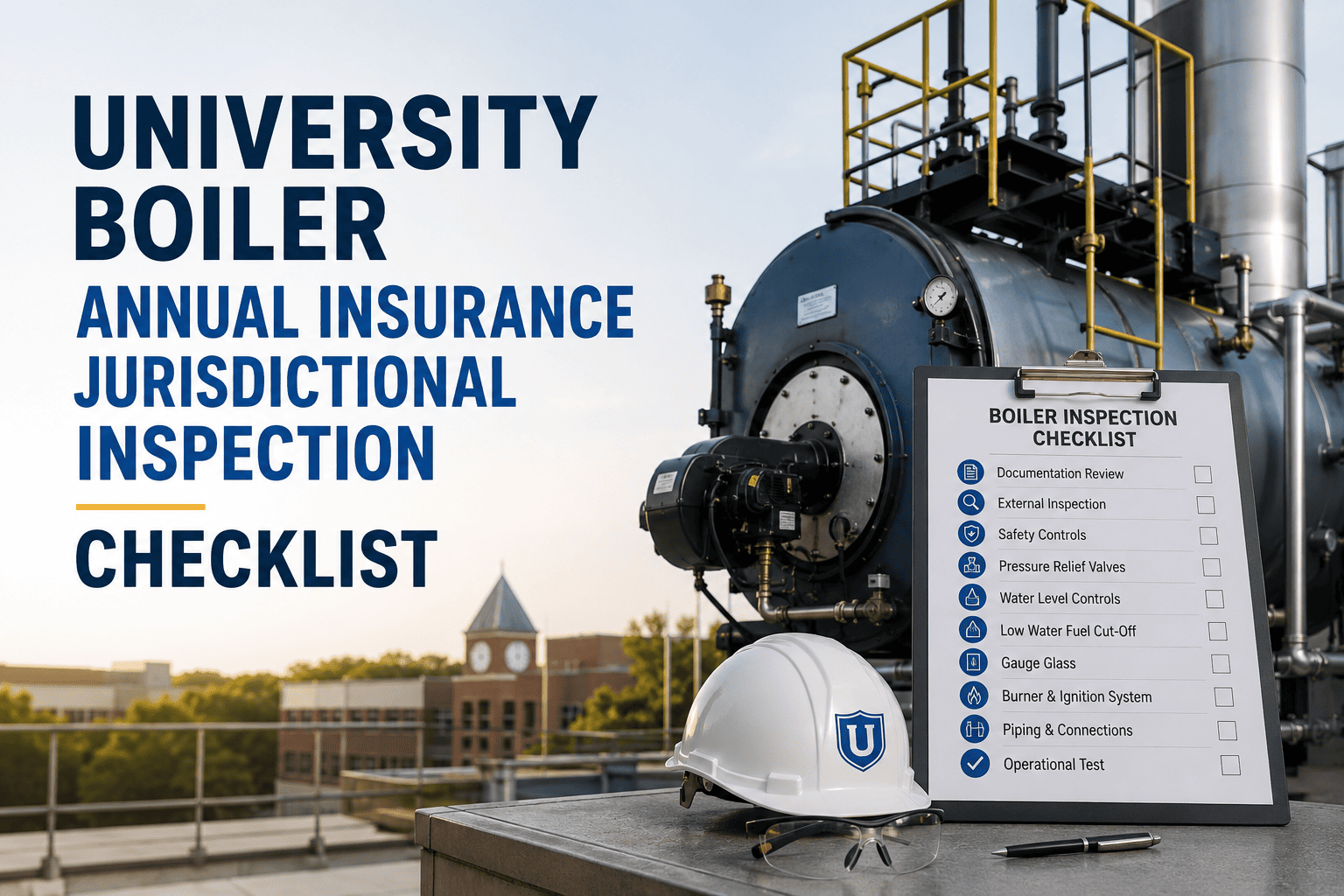
| Boiler Inspection Records | Current state inspection certificate, internal and external inspection reports, deficiency corrections documented | Digital inspection records with completion timestamps, deficiency tracking through resolution, certificate expiration alerts |
| Water Treatment Logs | Consistent daily testing during operation with results within acceptable ranges, corrective actions for excursions | Digital logs with automatic timestamps, out-of-range alerts, and corrective action documentation linked to work orders |
| Safety Device Testing | Low water cutoff tests, safety valve tests, flame safeguard tests—all documented with dates, methods, and pass/fail | Scheduled testing tasks with required data fields, photo documentation, automatic escalation for failed tests |
| Operator Certification | Current boiler operator licenses for all personnel operating pressure vessels, training records | Personnel certification tracking with expiration alerts, training record documentation, automatic renewal reminders |
| Refrigerant Management | EPA Section 608 compliance for chiller refrigerant handling, leak detection records, recovery documentation | Refrigerant tracking per unit with charge amounts, leak rates calculated automatically, vendor certification verified |
| Vendor Service Records | Contractor service reports for specialized maintenance, annual chiller inspection reports, water treatment vendor visits | Vendor visit tracking with uploaded service reports, linked to equipment records, contract expiration monitoring |
Frequently Asked Questions
How often should campus boilers be inspected?
State boiler codes typically require annual internal and external inspections by a state-commissioned or insurance company inspector. Beyond code-required inspections, best practice includes: weekly operator rounds with documented readings, monthly low water cutoff testing, seasonal combustion tuning at heating season startup, and annual fireside/waterside cleaning and inspection during summer shutdown. Safety device testing frequency varies by state but should occur at minimum annually. Schedule state inspections during summer break when boilers can be taken offline without affecting campus heating. Sign Up to automate inspection scheduling.
What is the most critical preventive maintenance task for campus chillers?
Annual condenser tube cleaning is the single highest-impact PM task for water-cooled centrifugal and screw chillers. Fouled condenser tubes force the compressor to operate against elevated head pressure, increasing energy consumption by 10–40% and dramatically increasing the risk of compressor motor trip or bearing failure. Schedule tube cleaning during winter break when chillers are offline. Combine with eddy current testing every 3–5 years to detect tube wall thinning. For air-cooled chillers, the equivalent critical task is quarterly condenser coil cleaning. Book a Demo to see chiller PM scheduling features.
How do we manage boiler and chiller maintenance during academic breaks?
Academic breaks are the optimal window for major central plant maintenance because equipment can be taken offline without affecting campus operations. Build an annual maintenance calendar at the start of each academic year that maps every major PM task to a specific break period: boiler fireside/waterside inspection during summer break, chiller tube cleaning during winter break, cooling tower overhaul during spring break. Start scheduling vendor appointments 3–4 months in advance—qualified chiller service contractors book quickly for winter break work. Create specific startup and shutdown checklists in your CMMS for each seasonal transition.
What water treatment program should a campus central plant maintain?
A comprehensive campus water treatment program covers four systems: boiler feedwater (oxygen scavenger, pH control, hardness prevention, blowdown management), condensate return (pH monitoring, amine treatment for corrosion control), cooling tower water (biocide for Legionella prevention, scale inhibitor, corrosion inhibitor, blowdown control), and closed chilled water loops (corrosion inhibitor, glycol management for freeze protection). Testing frequency should be daily for boiler water during operation, three times weekly for cooling tower water, and monthly for closed loops. A qualified water treatment vendor should visit at minimum monthly during operating seasons. Annual cost for a comprehensive program is typically $15,000–$40,000—a fraction of the $200,000+ cost of a single major equipment failure caused by water chemistry neglect. Sign Up to track water treatment compliance.
When should we repair versus replace aging campus boilers or chillers?
Apply the 50% rule as a starting point: if a single repair costs more than 50% of replacement cost, replace. For boilers, also consider replacement when: the unit is past 30 years and requiring increasingly frequent tube repairs, refractory replacement costs are escalating, efficiency has declined below 80% combustion efficiency, or controls are obsolete and parts unavailable. For chillers, consider replacement when: COP has declined more than 20% from rated efficiency, refrigerant is being phased out under HFC regulations making future service uncertain, three or more compressor-related failures have occurred in 24 months, or tube wall thinning exceeds 30% of original thickness. Track total annual maintenance cost per unit in your CMMS—when annual maintenance consistently exceeds 15% of replacement cost, the business case for replacement becomes compelling. Equipment efficiency modeling should include utility cost savings that offset capital investment.
Your Campus Heating and Cooling Depends on Equipment You Cannot Afford to Neglect
Every deferred boiler inspection, every skipped condenser tube cleaning, every lapsed water treatment contract moves your central plant closer to the failure that displaces thousands of students and costs hundreds of thousands of dollars. Build the systematic maintenance program your campus—and your inspectors—expect.