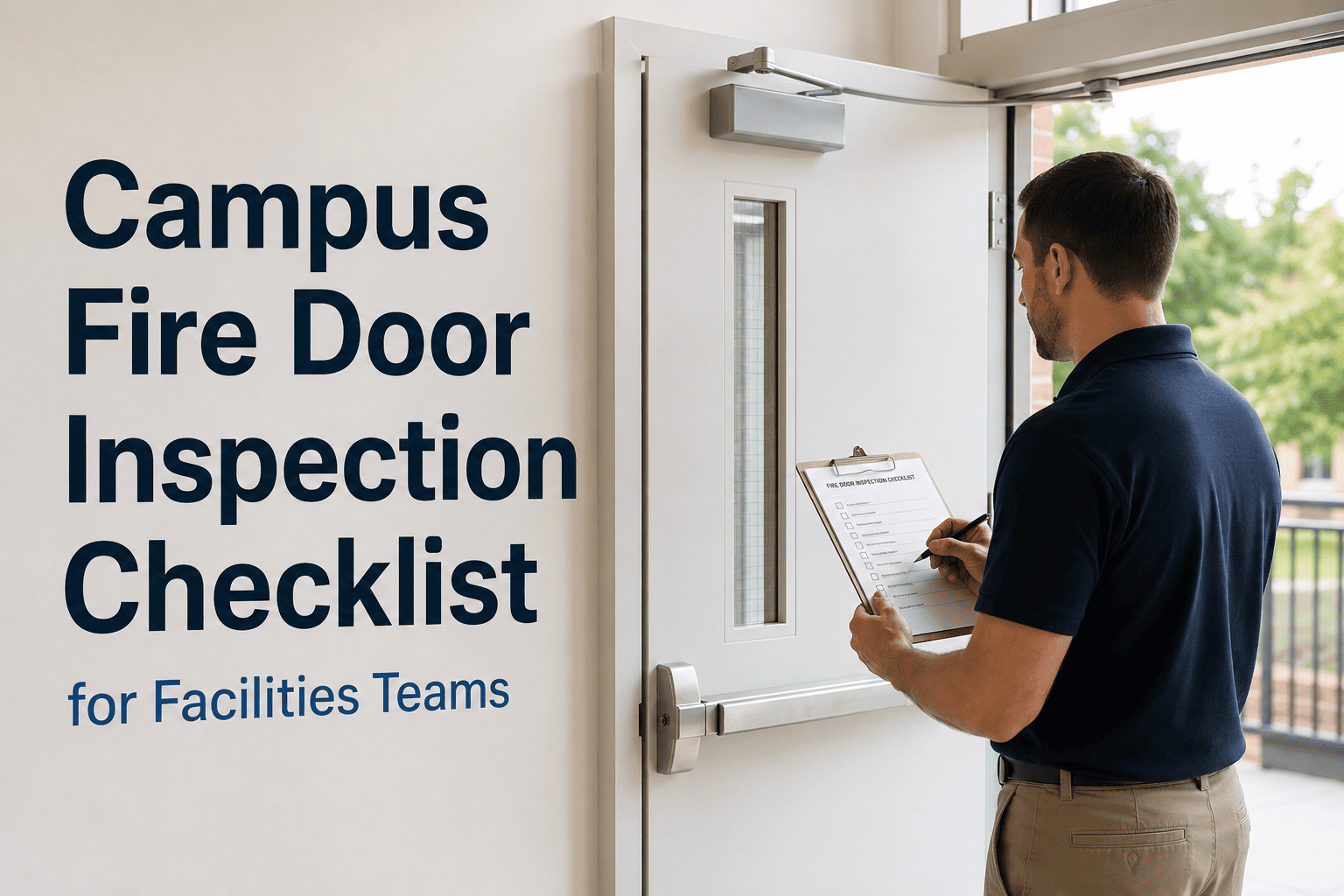
A residence hall fire alarm at a southeastern university activated at 11:47 PM on a Tuesday in October. The system detected smoke in a third-floor laundry room, initiated the building alarm sequence, and transmitted a signal to the monitoring company. Except the signal never arrived. The digital alarm communicator transmitter had failed silently three months earlier during a thunderstorm—and no one had tested it since the annual inspection the previous January. The 412 students in the building evacuated on the audible alarm alone, but the fire department received no automatic notification. A student called 911 seven minutes after activation. The fire department arrived four minutes after that—eleven minutes total response versus the three-minute target for monitored alarms. The fire was contained to the laundry room, but the investigation revealed failures across every fire protection system in the building: the communicator had no supervision, the quarterly sprinkler inspection was five months overdue, two stairwell pressurization fans were inoperable, and 14 fire extinguishers had expired service tags. The state fire marshal issued $34,000 in citations. The university's insurer raised the campus-wide premium by $187,000 annually. The communicator repair cost $380. Book a demo to see how digital fire system tracking prevents these failures.
Campus fire protection systems are interconnected networks of alarms, sprinklers, suppression systems, egress components, and communication equipment that must function as a coordinated whole during an emergency. A single failed component can break the chain that saves lives. This checklist guide covers every fire protection system on a campus, the specific inspection requirements and frequencies mandated by NFPA codes, and how digital tracking ensures nothing is missed across dozens of buildings with thousands of individual components. Sign up free to start tracking campus fire inspections digitally.
Annual Inspections
required for a typical 30-building campus across all NFPA frequencies
Avg. Citation Cost
per fire marshal visit with multiple deficiency findings on campus
Fume Hood Failures
of fire suppression systems fail on first annual test due to missed maintenance
Fire Alarm System Inspection Checklist
Fire alarm systems are the first line of detection and notification. Every component in the alarm chain—from the initiating device through the control panel to the notification appliances and monitoring connection—must be tested at prescribed intervals per NFPA 72. A failure anywhere in this chain means occupants may not receive warning and the fire department may not receive automatic notification.
Fire Alarm Inspection — NFPA 72
Never miss a fire alarm inspection deadline. Oxmaint auto-schedules every NFPA 72 inspection across every building with mobile checklists, photo documentation, and automatic deficiency work orders.
Sprinkler System Inspection Checklist
Automatic sprinkler systems control or extinguish 96% of fires where they operate—but only when every valve is open, every pipe is charged, every head is unobstructed, and the water supply is adequate. NFPA 25 defines inspection, testing, and maintenance requirements at weekly, monthly, quarterly, and annual frequencies.
Sprinkler System Inspection — NFPA 25
Suppression, Egress & Life Safety Checklist
Specialized suppression systems protect high-risk spaces—kitchens, server rooms, labs, generator rooms—where water-based sprinklers are inappropriate. Egress systems ensure safe evacuation. Each has distinct NFPA requirements that must be tracked separately. Sign up free to track every system type in one platform.
Suppression & Egress Inspection
Fire Extinguisher Inspection Checklist
Portable fire extinguishers are the most numerous fire protection asset on any campus—and the most frequently cited for inspection failures. NFPA 10 requires monthly visual inspections by building staff, annual maintenance by a certified technician, 6-year internal examination for stored-pressure units, and 12-year hydrostatic testing.
Monthly
Visual Inspection
Verify extinguisher is in designated location, unobstructed, and visible. Check pressure gauge in green zone. Confirm safety pin and tamper seal intact. Inspect for physical damage, corrosion, or leakage. Initial and date the inspection tag.
Annual
Certified Maintenance
Licensed technician performs thorough examination: external condition, internal mechanics, agent weight or pressure, hose and nozzle condition, and operating instructions legibility. Attach new annual service tag with technician ID.
6-Year
Internal Examination
Stored-pressure extinguishers require complete internal examination every 6 years. Discharge, inspect internal components, replace defective parts, recharge, and verify operation. Record examination date on the label.
12-Year
Hydrostatic Test
Pressure test the cylinder at required test pressure per DOT or manufacturer specifications. Failed units must be condemned and replaced. Record test date, pressure, and technician certification on permanent label.
QR-code every extinguisher across every building. Scan with the Oxmaint mobile app for instant history, inspection status, and one-tap deficiency reporting. Auto-schedule monthly visuals, annual maintenance, 6-year internals, and 12-year hydrostatic tests.
NFPA Inspection Frequency Reference
Every fire protection system on campus has specific testing frequencies mandated by its governing NFPA code. Missing any single inspection creates a compliance gap that fire marshals cite and insurance auditors flag. This reference maps every system to its required schedule.
Fire Alarms — NFPA 72
Detectors: semi-annual sensitivity. Pull stations: annual. FACP: annual. DACT: annual. Batteries: semi-annual. Visual inspection: monthly.
Sprinklers — NFPA 25
Valves: weekly. Gauges: weekly. Waterflow: monthly. Main drain: quarterly. Full flow: annual. Internal pipe: every 5 years.
Extinguishers — NFPA 10
Visual: monthly. Maintenance: annual. Internal exam: 6-year. Hydrostatic: 12-year. Replacement at condemnation.
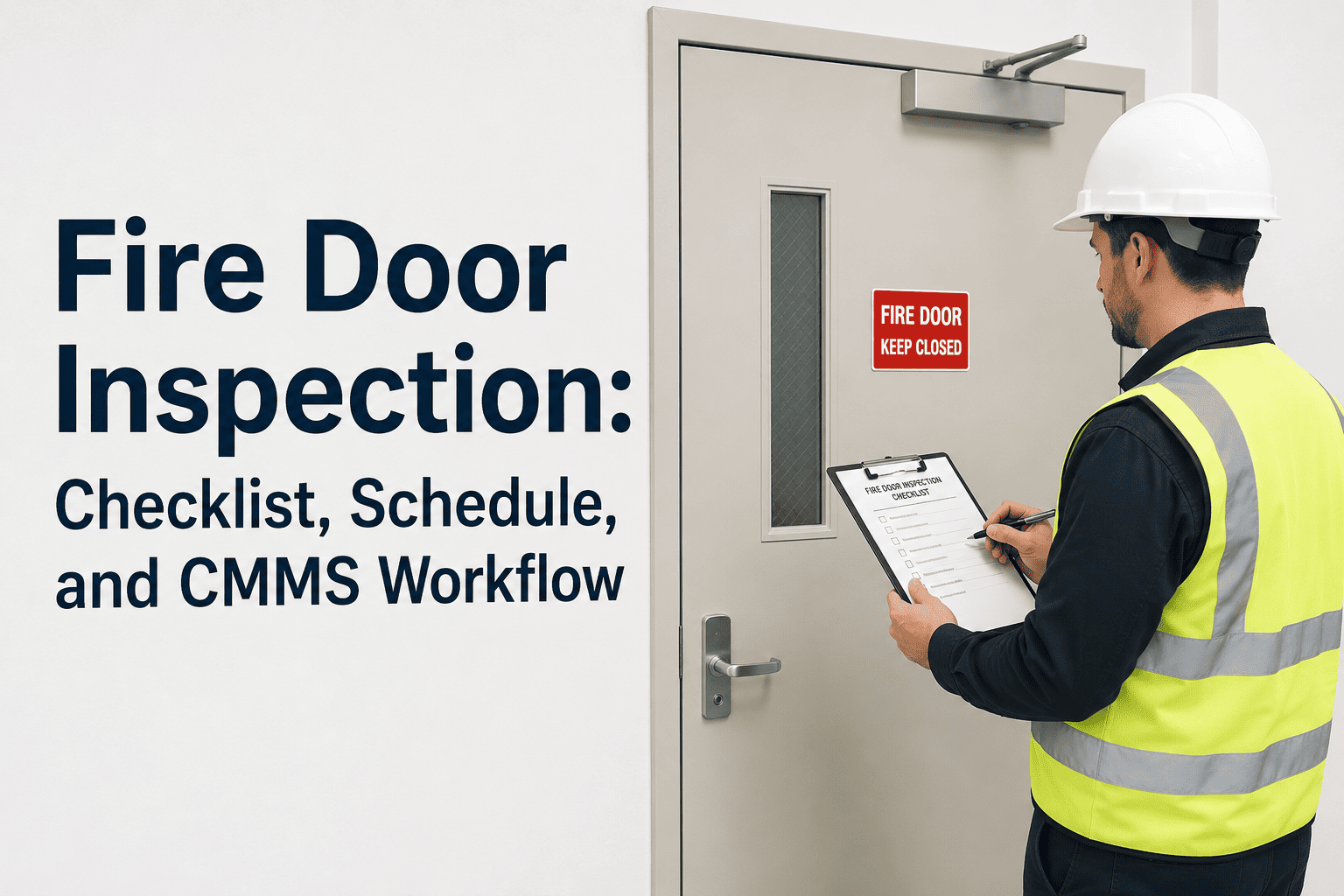
Fire Doors — NFPA 80
Self-closing test: annual. Latch verification: annual. Smoke seal: annual. Fire damper operation: annual. Hold-open device: annual.
Emergency Lights — NFPA 101
30-second functional: monthly. 90-minute battery: annual. Exit sign illumination: monthly. Backup power: annual.
Kitchen Hoods — NFPA 17A
Full service: semi-annual. Fusible links: replace every 6 months. Agent weight: semi-annual. Gas shutoff: semi-annual.
Campus Fire Compliance KPIs
Define these metrics before the academic year begins. Track them continuously. Review them before every fire marshal visit. What gets measured in fire compliance is what gets maintained—and what protects students.
100%
Inspection Completion
Every scheduled inspection completed on time across all frequencies
Zero
Overdue Inspections
No expired tests at any time for any system in any building
<4 hrs
Critical Response
Time from critical deficiency identification to repair initiation
Zero
Fire Marshal Citations
No violations found during state fire marshal inspections
<48 hrs
Deficiency Resolution
Average time from finding to corrective action completion
95%+
First-Pass Audit Rate
Buildings passing insurance and regulatory audits without findings
The $187,000 annual insurance premium increase at the university that opened this guide was not caused by the fire. It was caused by the documentation failures the investigation uncovered. The fire was contained to one room. The compliance gaps spanned every building on campus.
— Based on actual university OCR and fire marshal investigation findings
Common Fire Inspection Failures and How to Prevent Them
These are the findings that fire marshals cite most frequently on campus inspections—and the systemic fixes that prevent them from recurring.
X
Expired Extinguisher Tags
The single most common fire code citation on campus. Annual service tags expire and no one notices until the fire marshal does.
Fix: Auto-schedule annual service 30 days before tag expiration. Mobile app sends push notifications to assigned technician. Overdue items escalate to supervisor automatically.
X
Missed Quarterly Sprinkler Tests
Quarterly main drain tests and alarm device tests are frequently missed because they fall between the more visible monthly and annual cycles.
Fix: Digital scheduling with distinct quarterly calendar. System generates work orders automatically—no human memory required.
Sign up free to auto-schedule every frequency.
X
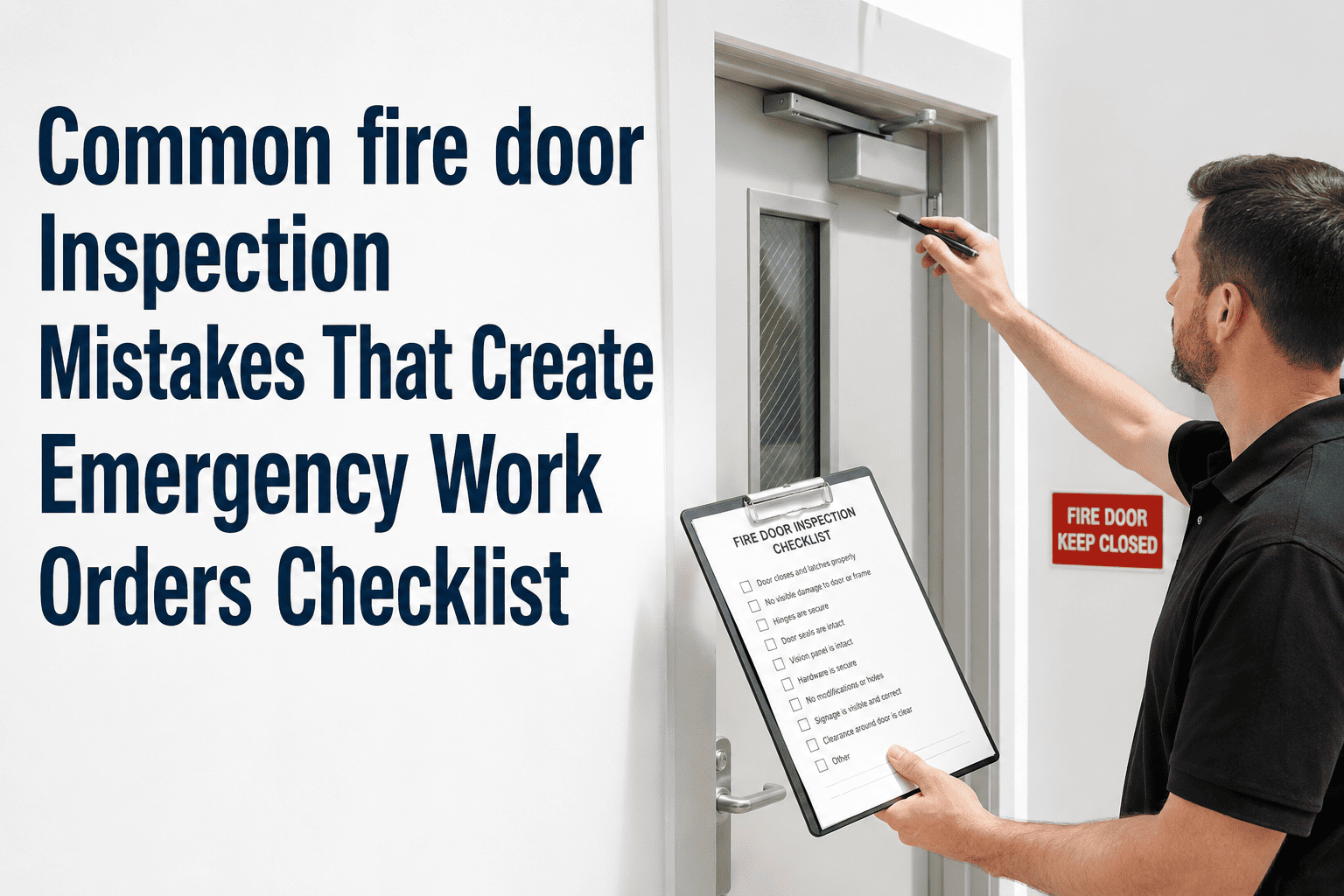
Fire Doors Blocked or Propped Open
Students and staff prop fire doors open for convenience, defeating compartmentalization that contains smoke and fire spread.
Fix: Monthly door inspection rounds documented with photos. Install approved magnetic hold-open devices connected to the fire alarm system. Train building staff on reporting.
X
No Impairment Documentation
Fire protection systems taken offline for maintenance or construction with no documented impairment procedure, fire watch, or notification to the fire department.
Fix: CMMS tracks system impairments with start time, affected areas, compensating measures, and restoration verification.
Book a demo to see impairment management.
Every Fire System. Every Inspection. Every Building. One Platform.
Oxmaint tracks fire alarms, sprinklers, suppression systems, extinguishers, emergency lighting, fire doors, and egress components across your entire campus—auto-scheduling every NFPA-required inspection, generating mobile checklists for technicians, creating deficiency work orders on failure, and producing audit-ready reports for fire marshals and insurers on demand.
Frequently Asked Questions
What NFPA codes govern campus fire protection inspection?
Campus fire protection falls under multiple NFPA codes: NFPA 72 (fire alarm systems), NFPA 25 (sprinkler and water-based systems), NFPA 10 (portable fire extinguishers), NFPA 101 (life safety and egress), NFPA 80 (fire doors), NFPA 105 (smoke door assemblies), NFPA 17A (kitchen hood suppression), NFPA 12/2001 (clean agent systems), and NFPA 110 (emergency power). Each code specifies distinct inspection frequencies and documentation requirements. Digital tracking is the only practical way to manage all codes simultaneously across multiple buildings.
Sign up free to use pre-built NFPA checklists.
How many fire protection inspections does a typical campus require annually?
A 30-building campus with typical fire protection systems generates approximately 2,400–3,600 individual inspections per year when all weekly, monthly, quarterly, semi-annual, and annual requirements are counted. This includes roughly 600 monthly extinguisher visuals, 360 monthly emergency light tests, 120 quarterly sprinkler checks, and dozens of annual specialized tests. Without digital scheduling and tracking, it is statistically inevitable that inspections will be missed.
Book a demo to see automated scheduling across all frequencies.
Can in-house staff perform fire inspections, or must contractors do it?
Many routine inspections can be performed by trained in-house staff: monthly extinguisher visuals, monthly emergency lighting tests, weekly sprinkler valve checks, and visual fire door inspections. However, certain tests require certified professionals: annual fire alarm testing (NICET-certified), sprinkler flow tests, fire pump performance tests, kitchen hood suppression service, clean agent system inspections, and fire extinguisher annual maintenance. The CMMS tracks which inspections are assigned to internal staff versus contracted specialists and manages both workflows in a single platform.
What happens when an inspection finds a deficiency?
The system automatically generates a corrective work order when any inspection item fails. Critical deficiencies—such as a non-functional fire alarm panel, closed sprinkler valve, or blocked exit—are flagged as emergency priority requiring same-day resolution. Non-critical deficiencies receive priority classification and due dates based on risk. All deficiencies are tracked through resolution with photo verification, creating a complete audit trail from identification through closure.
How does digital tracking help with fire marshal visits?
When the state fire marshal arrives, a campus with digital tracking can produce timestamped, photo-verified inspection records for every fire protection system in every building within minutes. This demonstrates systematic compliance and good faith—the two factors that most influence how fire marshals handle findings. Campuses with documented programs receive fewer citations and lower penalty amounts for minor findings.
Sign up free to build audit-ready fire compliance records.