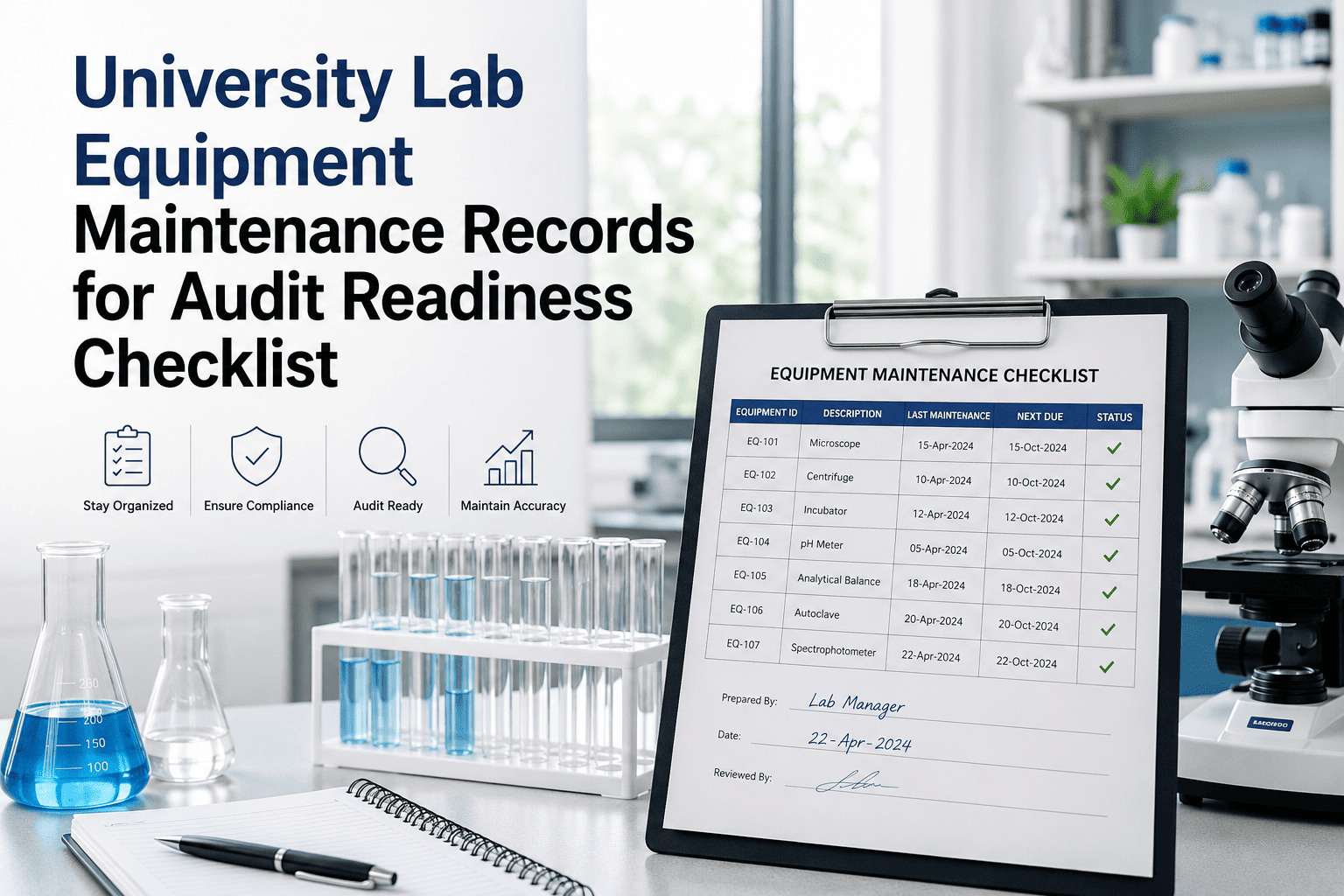
Biosafety Level 2 and BSL-3 laboratories at universities represent the highest-stakes maintenance environments on any campus — facilities where a single HVAC failure, HEPA leak, or pressure cascade reversal can expose researchers to pathogens including SARS-CoV-2, Mycobacterium tuberculosis, and select agents regulated by the CDC/APHIS Select Agent Program. Yet 54% of university BSL-3 facilities still rely on manual daily pressure readings recorded on clipboard logs, and 67% cannot produce a complete 24-month HEPA certification history for a specific biosafety cabinet within 30 minutes of an IBC or CDC/USDA inspection request. The regulatory framework is non-negotiable: the CDC/NIH Biosafety in Microbiological and Biomedical Laboratories (BMBL, 6th Edition) specifies directional airflow, HEPA filtration on exhaust, minimum air changes, room pressure differentials, and decontamination validation — all of which require continuous maintenance and documented proof of compliance. A BSL-3 containment breach traced to deferred maintenance does not result in a work order backlog discussion — it results in facility shutdown, federal investigation, and potential loss of select agent registration. Universities running these critical containment systems on Oxmaint's research facility CMMS report 100% pressure cascade documentation coverage and HEPA certification tracking that produces audit-ready reports in under 5 minutes. If your EHS or biosafety team is preparing for an IBC review or CDC/USDA inspection, this guide covers every maintenance domain that inspectors evaluate. Explore the platform with a free trial or book a demo.
BSL-2 and BSL-3 Lab Maintenance for Universities: Pressure, HEPA, and Decon Records
Directional airflow verification, HEPA filter certification tracking, pressure cascade documentation, decontamination validation logs, and CMMS-tracked biosafety compliance — the operational guide for university containment lab maintenance.
Your Next IBC Inspection Starts With Your Maintenance Records
See how Oxmaint tracks pressure cascade readings, HEPA certification schedules, decontamination validation, and BSC annual certifications in one audit-ready platform. 30 minutes, live screens, your containment requirements.
What Makes BSL-2 and BSL-3 Maintenance Different From Standard Lab Maintenance?
Standard university lab maintenance focuses on fume hood face velocities, eyewash stations, and general HVAC comfort. BSL-2 and BSL-3 maintenance operates in a fundamentally different regulatory and operational environment where every system serves a containment function. The BMBL (6th Edition) establishes that BSL-3 laboratories must maintain inward directional airflow at all times, exhaust air through HEPA filters before discharge to the atmosphere, maintain room pressure differentials of -0.03 inches WC minimum relative to adjacent corridors, and undergo verified decontamination before any maintenance activity that breaks containment. BSL-2 labs share many of these requirements at a reduced stringency level but still demand documented compliance with biosafety cabinet certification, directional airflow verification, and decontamination protocols. The maintenance team working in these spaces is not performing routine building upkeep — they are maintaining a containment envelope that protects researchers, the campus, and the surrounding community from exposure to hazardous biological agents. Every PM, every sensor calibration, and every filter change must be documented with the same rigor as the research protocols conducted inside. See how universities document this digitally — start a free trial or book a demo.
The Four Containment Maintenance Pillars for University BSL Labs
Each pillar has specific BMBL requirements, measurable parameters, and documentation standards that inspectors evaluate during IBC reviews, CDC/USDA select agent inspections, and NIH funded-research compliance audits.
BSL-3 labs must maintain inward directional airflow verified by room pressure differentials of -0.03 to -0.05 inches WC relative to corridors. BSL-2 labs require demonstrated directional airflow but may use visual indicators (smoke tubes) rather than continuous monitoring. PM requirements include daily or continuous pressure readings, monthly smoke visualization tests at entry doors, quarterly calibration of differential pressure sensors, and annual air balance verification by a certified testing and balancing (TAB) firm.
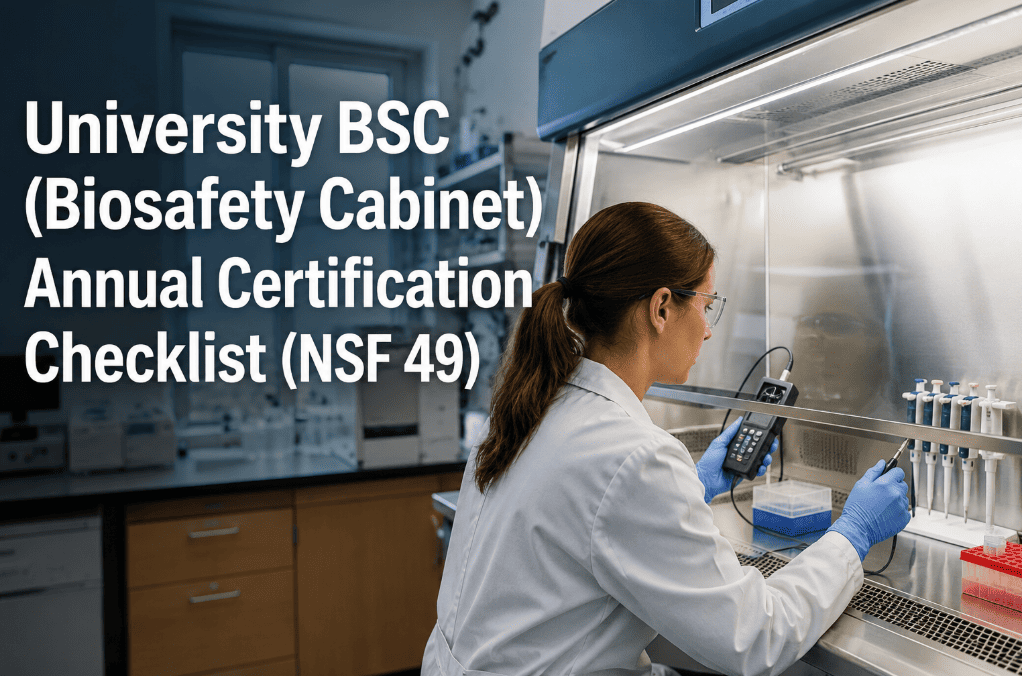
BSL-3 exhaust air must pass through HEPA filters (99.97% efficiency at 0.3 microns) before atmospheric discharge. Each HEPA filter requires annual DOP/PAO aerosol challenge testing to verify seal integrity, with certification documentation including filter ID, test date, challenge concentration, penetration percentage, and certifier credentials. BSL-2 biosafety cabinets require annual NSF/ANSI 49 certification with HEPA scan testing. PM schedules must include pre-filter replacement every 3-6 months, HEPA pressure drop monitoring monthly, and gasket inspection quarterly.
Before any maintenance activity that breaks the containment envelope — ductwork repair, HEPA replacement, plumbing work, or electrical access — the affected zone must be decontaminated using validated methods (formaldehyde gas, vaporized hydrogen peroxide, or chlorine dioxide). Each decontamination event requires documented chemical concentration, exposure time, temperature, biological indicator results, and clearance testing before maintenance entry. Autoclaves used for waste decontamination require weekly biological indicator validation and quarterly calibration.
BSL-3 labs require interlocked entry systems (airlock doors that prevent simultaneous opening), exhaust fan failure alarms, pressure loss alarms, and in many cases, supply air shutdown interlocks that activate when exhaust fails. PM includes monthly interlock function testing, quarterly alarm sensor calibration, semi-annual UPS and emergency power testing for critical exhaust fans, and annual commissioning verification of all safety interlocks.
BSL Maintenance Pain Points That Create Compliance Gaps
These are the operational failures that generate IBC findings, CDC/USDA inspection deficiencies, and — in worst cases — facility shutdowns. Each is preventable with systematic CMMS-tracked maintenance. Universities managing these risks can see how digital tracking eliminates each gap — start a free trial or book a demo.
Manual pressure readings stop when staff are not present. A CDC inspector reviewing 24 months of pressure logs finds systematic gaps every weekend, holiday, and university break period. Without continuous BMS-integrated logging, these gaps represent undocumented periods where containment cannot be verified retrospectively.
Annual HEPA DOP testing is scheduled but the certification vendor cancels or reschedules. Without automated PM tracking and expiration alerts, the reschedule falls through the cracks. Six months later, an inspector discovers that 3 of 8 exhaust HEPA filters are operating on expired certifications with no documented test results.
An emergency plumbing repair is performed in a BSL-3 lab after hours. The maintenance technician enters without confirmed decontamination clearance because the biosafety officer could not be reached. The repair is completed successfully, but the IBC review reveals no decontamination documentation for that entry — constituting a reportable containment breach.
A biosafety cabinet in a BSL-2 lab is used daily for work with Risk Group 2 agents. The annual NSF/ANSI 49 certification was due 4 months ago but the PM was not tracked in any system — it was on a researcher's calendar. An EHS walk-through identifies the expired certification and suspends all work in that cabinet until recertification is completed.
How Oxmaint Delivers BSL Containment Maintenance Compliance
Oxmaint connects every containment maintenance requirement — pressure monitoring, HEPA certification, decontamination validation, and interlock testing — into a single platform that produces audit-ready documentation instantly.
Oxmaint pulls differential pressure readings directly from BMS sensors into the room asset record — every 5 minutes, 24/7, including weekends and holidays. Excursions below the -0.03 inches WC threshold auto-generate corrective action work orders with biosafety officer notification. No more clipboard logs with weekend gaps.
Every HEPA filter in the asset registry carries an automated annual certification PM with 90-day, 60-day, and 30-day advance alerts. Certification vendor reports attach directly to the filter asset record with test date, challenge method, penetration results, and certifier credentials. Expiration dashboards show all HEPA assets by certification status — current, upcoming, and overdue — at a glance.
Maintenance work orders for BSL-3 zones require completed decontamination clearance before the work order can be marked "in progress." The workflow captures decontamination method, chemical concentration, exposure duration, biological indicator results, clearance authorization, and authorizing biosafety officer — all timestamped and permanently attached to the work order record.
Every BSC in the university inventory carries an automated annual NSF/ANSI 49 certification PM with advance alerts to both the facility team and the PI whose lab houses the cabinet. Certification reports attach to the specific BSC asset with downflow velocity, inflow velocity, HEPA scan results, and smoke pattern test documentation.
Monthly interlock function tests are tracked as PM work orders with pass/fail checklists for each interlock point: airlock door sequencing, exhaust failure alarm activation, supply air shutdown response, and emergency power transfer. Failed tests auto-generate corrective action work orders with escalation to the BSO and facility director.
Generate complete containment maintenance documentation packages filtered by lab, building, date range, or system type. Reports include pressure cascade summaries, HEPA certification status, decontamination logs, interlock test results, BSC certification records, and corrective action history — exportable in under 5 minutes for any inspection request.
Manual BSL Maintenance vs. CMMS-Tracked Containment Operations
- Pressure logs with 47% weekend and holiday gaps
- HEPA certifications tracked on spreadsheets by vendor
- Decontamination clearance via phone call, no documentation
- BSC certifications on PI calendars, not facility systems
- Interlock testing undocumented or inconsistently logged
- Inspection prep requires 80+ hours of manual assembly
- Continuous 24/7 pressure logging via BMS integration
- Automated HEPA certification PM with 90-day advance alerts
- Mandatory digital decon clearance before work order activation
- BSC certification tracked in asset registry with PI alerts
- Monthly interlock tests as PM work orders with pass/fail
- Audit-ready reports generated in under 5 minutes
BSL Lab Maintenance Compliance Metrics
Frequently Asked Questions
Can Oxmaint enforce decontamination clearance before a technician enters a BSL-3 lab?
How does the platform handle select agent facility maintenance documentation for CDC/USDA inspections?
Does Oxmaint integrate with Siemens or Johnson Controls BMS for pressure monitoring?
Can we track both BSL-2 and BSL-3 maintenance requirements on the same platform?
Containment Integrity Starts With Maintenance Documentation Integrity
Every pressure reading, HEPA certification, decontamination clearance, and interlock test in your BSL-2 and BSL-3 labs protects researchers and the community from exposure to hazardous biological agents. The maintenance records behind that containment envelope must be as airtight as the labs themselves. Oxmaint gives your EHS, biosafety, and facility teams a single audit-ready platform for every containment maintenance requirement. See it running on your labs in a 30-minute working demo.