A mid-size state university in Georgia experienced a catastrophic electrical failure on the first Monday of fall semester. A 480V main breaker in the central distribution building tripped at 9:14 AM, de-energizing the science complex, library, and student center simultaneously. The backup automatic transfer switch for the science complex failed to engage—the contact tips had corroded over three years without inspection—leaving two active chemistry labs without fume hood ventilation. The building was evacuated. The library's UPS batteries, installed seven years earlier with a five-year rated life, lasted eleven minutes instead of the rated thirty. Three servers hosting the course registration system went down hard, corrupting the database. Classes were cancelled across five buildings for two days. The breaker trip was caused by a loose bus bar connection that had been arcing intermittently for months—visible as heat discoloration on the panel cover that no one had documented because the university had no electrical inspection program. The bus bar repair cost $2,800. The transfer switch rebuild cost $18,500. The UPS battery replacement cost $12,000. The server recovery and database restoration cost $34,000. Total: $67,300—and the root cause was a connection that any infrared scan would have identified for under $500. Book a demo to see how digital electrical inspection tracking prevents cascading failures.
Campus electrical infrastructure is aging, expanding, and increasingly critical. Modern universities depend on uninterrupted power for research equipment, data centers, laboratory ventilation, security systems, and climate-controlled archives—loads that did not exist when most campus distribution systems were designed. A single loose connection, a corroded transfer switch contact, or an expired UPS battery can cascade through interconnected systems and shut down academic operations for days. This checklist covers every major campus electrical system, the specific inspection requirements and frequencies based on NFPA 70B and NFPA 70E standards, and how digital tracking ensures nothing is missed across dozens of buildings and hundreds of panels. Sign up free to start tracking electrical inspections digitally.
$67K
Single Failure Cost
from one undocumented loose bus bar connection at a state university
30%
Electrical Fires
of campus structure fires originate from electrical distribution failures
25-40
Avg. System Age (Years)
of campus electrical distribution infrastructure—well past design life
Main Switchgear & Distribution Checklist
Switchgear and distribution panels are the backbone of campus power. Failures here affect entire buildings or multiple buildings simultaneously. Every item below follows NFPA 70B recommended maintenance practices and should be completed annually at minimum, with infrared scanning performed semi-annually on critical feeders. Sign up free to digitize your switchgear inspection program.
Main Switchgear & Distribution — NFPA 70B Annual
Visual & Thermal Inspection
Circuit Breaker Testing
Bus & Connections
Protective Devices & Metering
Never miss a switchgear inspection deadline. Oxmaint auto-schedules annual switchgear inspections, semi-annual IR scans, and breaker exercising across every building—with mobile checklists, photo documentation, and deficiency work orders.
Campus transformers step voltage down from utility distribution (typically 12.47kV or 4.16kV) to building-level service (480V or 208V). Transformer failures are expensive, have long lead times for replacement, and can result in extended outages affecting multiple buildings. Annual inspections are essential; oil-filled units require additional testing.
Transformer Inspection — Annual & Periodic
Dry-Type Transformers
Oil-Filled Transformers
Pad-Mount & Vault Transformers
Medium Voltage Cables
Emergency Power & Transfer Switch Checklist
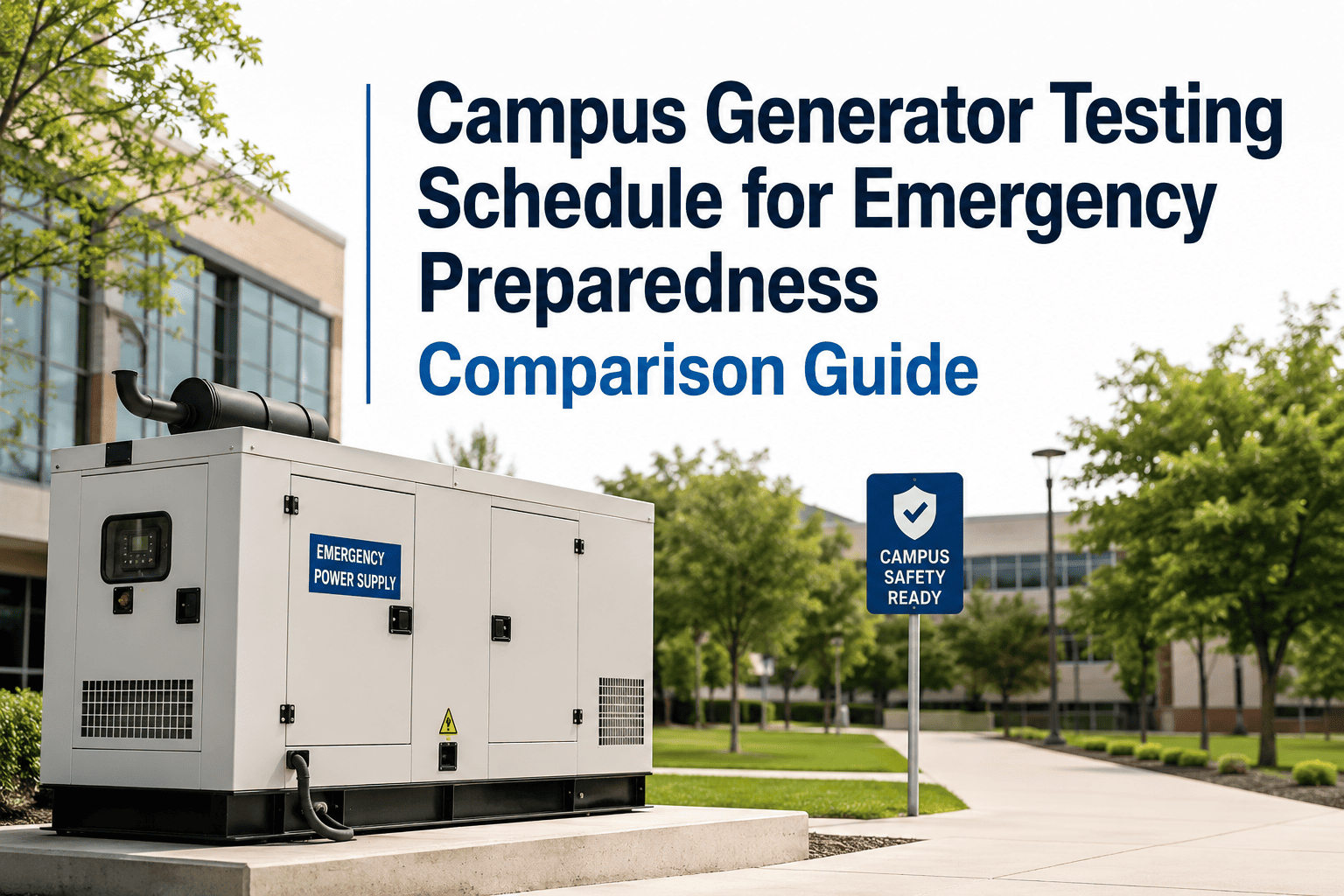
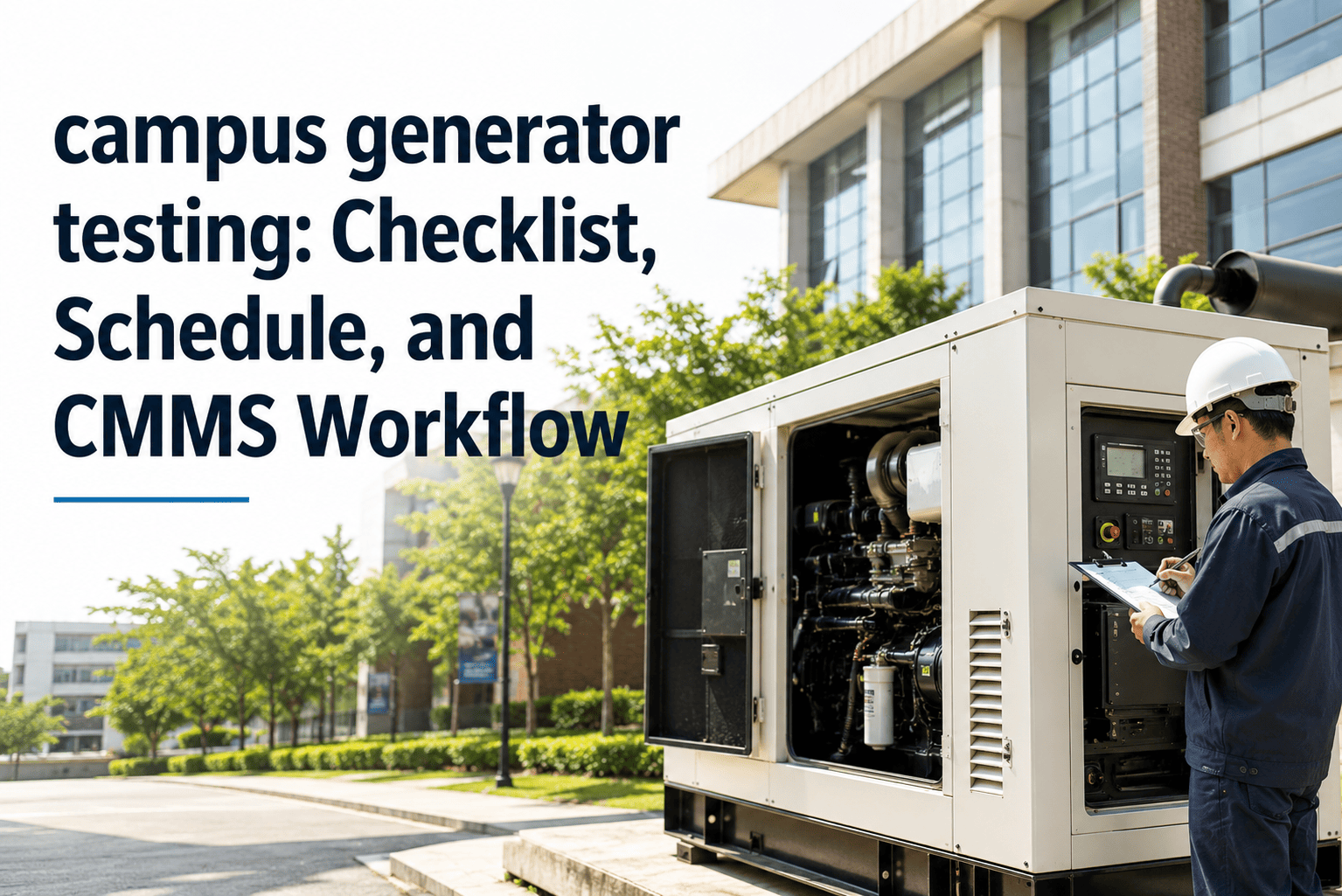
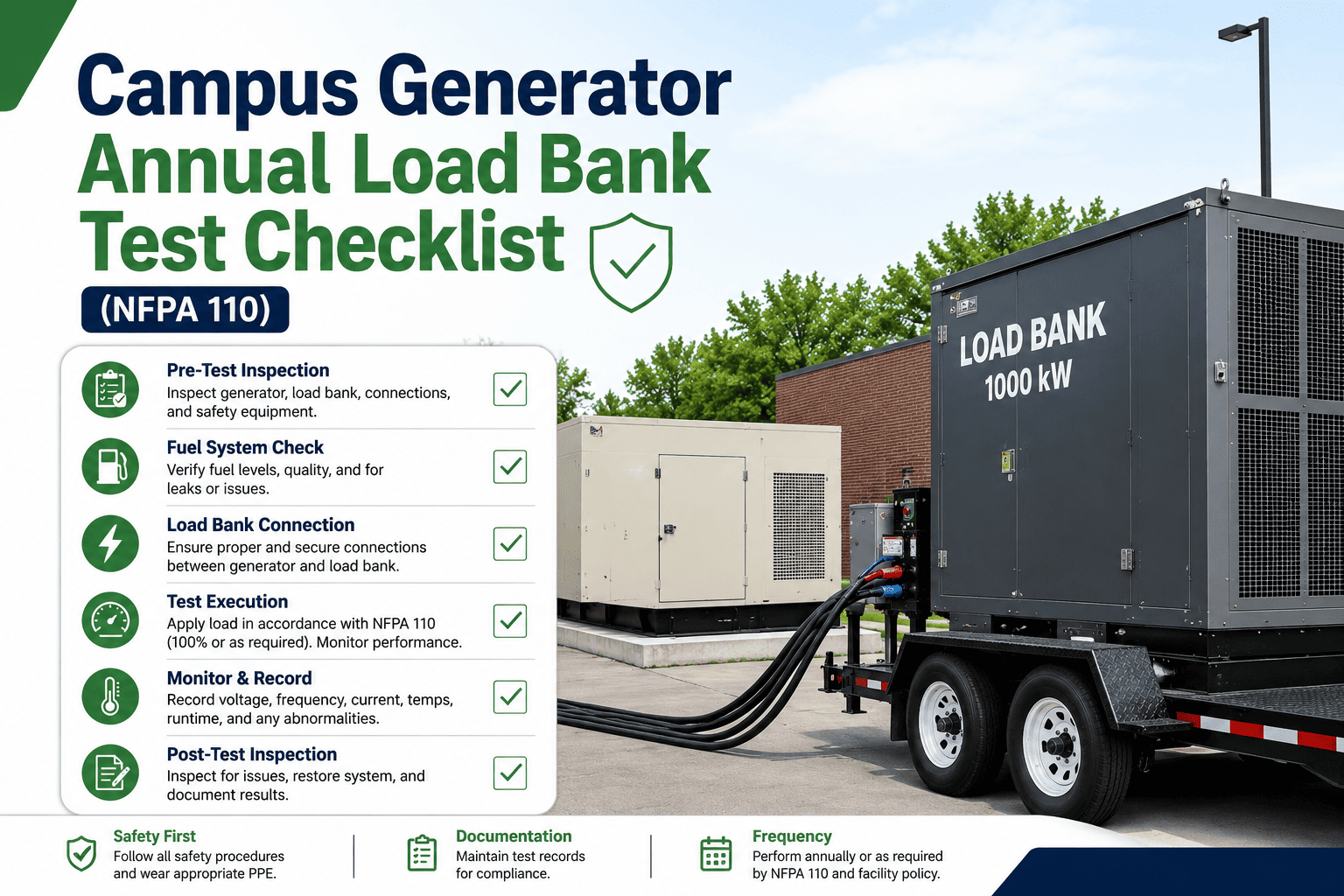
Emergency generators and automatic transfer switches protect life safety systems, research equipment, and data infrastructure. A transfer switch that fails to engage during a utility outage—as happened at the Georgia university—turns a minor power interruption into a multi-day crisis. NFPA 110 requires monthly testing and annual load bank testing for Level 1 systems. Book a demo to see how Oxmaint manages generator testing schedules.
Emergency Power Systems — NFPA 110
Generator — Monthly Test
Generator — Annual
Automatic Transfer Switch (ATS)
UPS & Battery Systems
Electrical Inspection Frequency Reference
Different electrical systems require different inspection intervals. Missing any frequency creates a gap that leads to undetected degradation, arc flash hazards, or catastrophic failure affecting entire campus operations.
Monthly
Generator run test (30 min under load), ATS transfer exercise, UPS alarm review, visual panel inspection, battery charger check.
Semi-Annual
Infrared thermography on critical feeders, UPS battery string testing, power quality analysis, ground fault system test.
Annual
Full switchgear inspection, breaker exercising and trip testing, transformer testing, load bank test, arc flash study verification.
3–5 Year
Medium voltage cable testing (hipot), transformer oil analysis (DGA), protective relay calibration, coordination study update.
5 Year
Complete arc flash hazard analysis update (NFPA 70E), full short circuit study, breaker contact resistance testing, grounding system study.
Track every electrical inspection frequency across every building. Oxmaint auto-schedules monthly generator tests, semi-annual IR scans, annual switchgear inspections, and multi-year cable testing—with escalation alerts when deadlines approach.
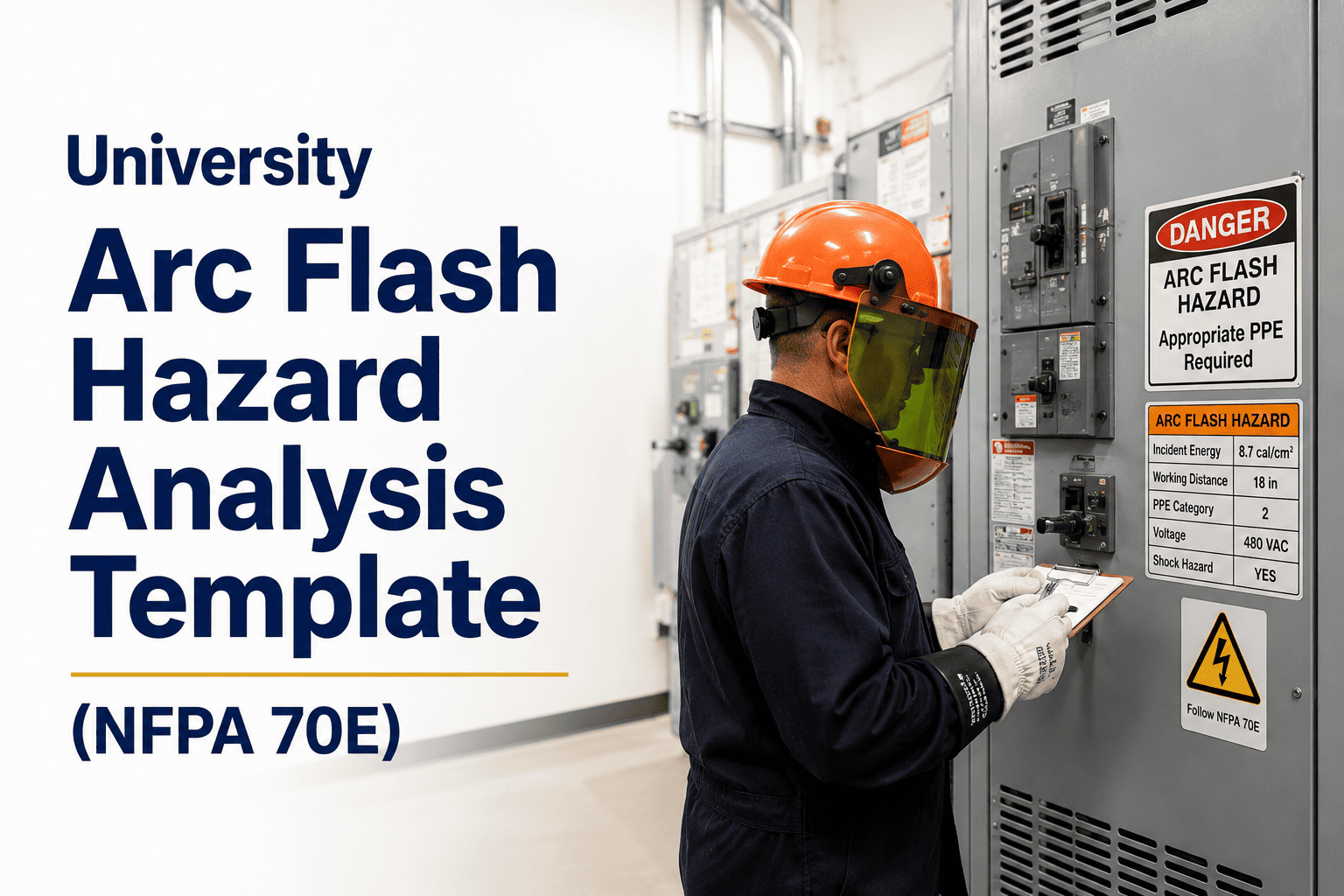
NFPA 70E requires employers to perform an arc flash hazard analysis and provide appropriate PPE for workers exposed to energized equipment. For campuses with aging infrastructure and frequent panel access by maintenance staff, arc flash compliance is both a safety imperative and a legal obligation.
NFPA 70E
Arc Flash Analysis
Complete arc flash hazard analysis for all panels, switchboards, and motor control centers. Update every 5 years or when modifications change available fault current. Label every panel with incident energy and required PPE category.
PPE Required
Personal Protection
Provide arc-rated PPE matching the incident energy at each work location. Verify PPE inventory, inspect for damage before each use, and document training for all qualified electrical workers on campus.
NFPA 70B
Preventive Maintenance
Implement the recommended electrical preventive maintenance program. NFPA 70B provides specific guidance on inspection frequencies, testing procedures, and acceptance criteria for every type of electrical equipment.
Documentation
Energized Work Permits
Document justification for any energized work. Maintain permits with hazard analysis, PPE requirements, and authorization signatures. Digital tracking creates auditable records for OSHA compliance.
Campus Electrical Reliability KPIs
Define these metrics at the start of each fiscal year. Track them monthly. Review them during capital planning. What gets measured in electrical infrastructure is what gets funded—and what prevents the next cascading outage.
100%
Inspection Completion
All scheduled electrical inspections completed on time
Zero
Unplanned Outages
No unscheduled power interruptions during occupied hours
<10 sec
ATS Transfer Time
Every transfer switch engages within NFPA 110 required window
100%
Arc Flash Labels
Every panel and switchboard labeled with current incident energy
<48 hrs
Deficiency Resolution
Average time from IR scan finding to corrective repair completion
99.9%
Power Availability
Campus-wide power uptime including planned maintenance windows
The $67,300 in damage at the Georgia university was not caused by a catastrophic equipment failure. It was caused by a loose connection that any annual infrared scan would have identified as a hot spot requiring a $200 repair. The most expensive electrical failures are always the ones that were preventable with routine inspections.
— Based on actual campus facilities incident investigation
Common Electrical Inspection Failures and How to Prevent Them
These are the deficiencies that campus facilities teams discover most frequently during deferred electrical inspections—and the systemic fixes that prevent them from becoming emergency outages.
X
Loose Bus Bar Connections
Thermal cycling causes bolted connections to loosen over time, creating high-resistance points that arc, overheat, and eventually cause breaker trips or fires—undetectable without infrared scanning.
Fix: Semi-annual infrared thermography on all main distribution equipment. Annual torque-check on accessible connections during scheduled outages. Document baseline readings for trending.
X
Failed Transfer Switch Contacts
ATS contacts corrode when transfer switches are never exercised beyond monthly generator starts. The switch appears functional during no-load tests but fails to carry load during an actual utility outage.
Fix: Monthly ATS exercise under load—not just generator start. Annual contact inspection with cleaning or replacement. Sign up free to schedule ATS testing automatically.
X
Expired UPS Batteries
UPS batteries degrade gradually—they pass monthly self-tests right up until the point where they cannot sustain rated runtime. By the time a UPS fails during an outage, the batteries may have been past end-of-life for years.
Fix: Replace batteries at manufacturer end-of-life date regardless of test results. Semi-annual impedance testing identifies weak cells. CMMS tracks battery install dates and replacement schedules.
X
Outdated Arc Flash Labels
Arc flash studies become invalid when electrical systems are modified—new loads, changed breaker settings, or utility fault current changes. Workers rely on outdated PPE categories that may not provide adequate protection.
Fix: Update arc flash analysis every 5 years per NFPA 70E or after any system modification. Track label status per panel in CMMS. Book a demo to see label tracking.
Every Panel. Every Transformer. Every Generator. One Platform.
Oxmaint tracks switchgear, transformers, generators, transfer switches, UPS systems, and distribution panels across your entire campus—auto-scheduling every NFPA-required inspection, generating mobile checklists, creating deficiency work orders on failure, and producing audit-ready reports for insurers and regulators on demand.
What standards govern campus electrical inspection programs?
Campus electrical inspection programs should reference multiple NFPA standards: NFPA 70B (Recommended Practice for Electrical Equipment Maintenance) provides the core inspection framework with frequencies and acceptance criteria. NFPA 70E (Standard for Electrical Safety in the Workplace) governs arc flash analysis, PPE requirements, and energized work permits. NFPA 110 (Standard for Emergency and Standby Power Systems) mandates generator and transfer switch testing requirements. The NEC (NFPA 70) defines installation requirements. Together, these standards form the compliance framework that campus electrical programs should follow. Sign up free to use pre-built NFPA electrical checklists.
How often should campus electrical systems be inspected?
Monthly: generator run tests, ATS transfer exercises, UPS alarm review, visual panel inspections. Semi-annually: infrared thermography on critical feeders, UPS battery string testing, power quality analysis. Annually: full switchgear inspection with breaker exercising, transformer testing, generator load bank test, arc flash label verification. Every 3–5 years: medium voltage cable testing, transformer dissolved gas analysis, protective relay calibration. Every 5 years: complete arc flash hazard analysis update and short circuit study. Book a demo to see automated scheduling.
Can in-house staff perform electrical inspections or do we need contractors?
Many routine inspections can be performed by qualified in-house electricians: monthly generator tests, visual panel inspections, infrared scanning (with training), UPS battery monitoring, and ATS exercising. However, specialized tasks require certified professionals: medium voltage cable testing, circuit breaker trip unit calibration, transformer oil sampling and dissolved gas analysis, arc flash hazard analysis, protective relay testing, and load bank testing. The CMMS distinguishes between internal and contractor tasks and manages both workflows in a single platform.
What is infrared thermography and why is it critical for campus electrical systems?
Infrared thermography uses thermal imaging cameras to detect abnormal heat signatures in electrical connections, breakers, transformers, and cables while energized under normal load. Hot spots indicate loose connections, overloaded circuits, failing components, or imbalanced phases—all of which are invisible to the naked eye but precede electrical failures by weeks or months. For campuses with aging infrastructure, IR scanning is the single most cost-effective inspection technique, typically identifying deficiencies that cost less than $500 to repair but would cause tens of thousands in damage if left undetected.
How does an arc flash hazard analysis protect campus maintenance workers?
An arc flash analysis calculates the potential incident energy at every point in the electrical system where workers may perform tasks on or near energized equipment. The results determine the arc flash boundary distance and the PPE category required at each work location. Without current analysis, workers may use inadequate protection—standard work clothing offers no arc flash protection, and the thermal energy from an arc flash event can cause fatal burns in milliseconds. NFPA 70E requires analysis every 5 years or after system modifications. Sign up free to track arc flash label status per panel.