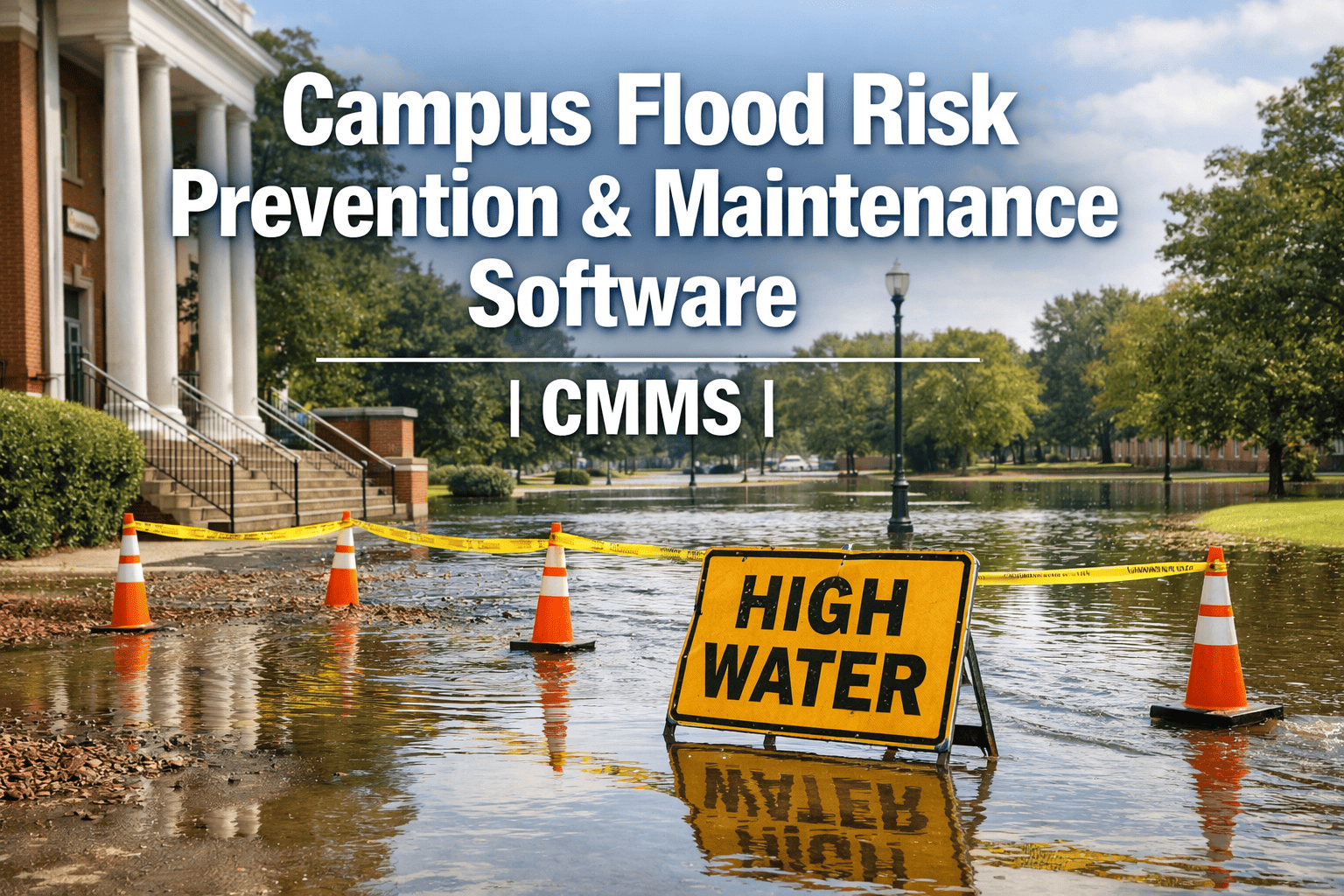
Campus flooding costs US universities an average of $2 million per incident — and the majority of those incidents are not caused by extreme weather events, but by failed or unmaintained drainage systems, blocked storm inlets, aging sump pumps, and deferred waterproofing inspections that facility teams knew about but never got ahead of. A single overnight storm can render dormitories uninhabitable, close laboratories with irreplaceable research equipment, and trigger months of mold remediation that disrupts academic operations. OxMaint CMMS integrates IoT flood sensors, automated PM scheduling, and real-time work order generation to give campus facility teams the system-level protection that prevents water damage before it starts — not after a building is already underwater.
Protect Your Campus From Flood Damage — Before the Next Storm
OxMaint connects flood sensors, PM schedules, and automated work orders into one campus-wide water risk management system.
Why Campus Flood Risk Management Cannot Be Reactive
Regulatory Compliance
EPA stormwater regulations, FEMA flood map requirements, and ADA-accessibility mandates require documented campus drainage maintenance. OxMaint generates audit-ready flood prevention records automatically.
Research & Asset Protection
Laboratory equipment, research archives, server rooms, and student housing contain irreplaceable assets. A single sump pump failure during a storm can cause multi-million dollar losses in hours.
Insurance & Liability
Documented flood prevention programs — PM records, sensor logs, and inspection histories — reduce insurance premiums by 8–18% and provide critical liability defense after water damage incidents.
Academic Continuity
Building closures from water damage disrupt class schedules, displace students, and generate emergency housing costs. Proactive flood prevention maintains the operational continuity universities depend on.
Campus Flood Risk Zones — Where to Focus First
Not all campus buildings carry equal flood risk. This risk matrix maps the highest-priority zones for sensor deployment and PM scheduling in a typical university campus environment.
| Campus Zone | Flood Risk | Primary Causes | Recommended Sensors | PM Interval |
|---|---|---|---|---|
| Basement Labs & Archives | ■ Critical | Sump failure, pipe burst, groundwater | IoT water + sump level sensors | Monthly inspection |
| Data Centers / Server Rooms | ■ Critical | HVAC condensate, overhead pipe, roof leak | Ceiling + floor spot sensors | Quarterly inspection |
| Dormitories (multi-story) | ■ High | Overflow, pipe failure, bathroom drain clog | Bathroom floor sensors per floor | Semester inspection |
| Underground Utility Tunnels | ■ High | Groundwater ingress, storm surges | Continuous level monitoring | Monthly inspection |
| Storm Drains & Inlets | ■ Elevated | Debris blockage, capacity overflow | Flow rate sensors at critical inlets | Pre-storm season PM |
| Rooftop Drains & Gutters | ■ Elevated | Debris buildup, membrane failure | Drain level sensors | Bi-annual inspection |
Campus Flood Prevention Maintenance Checklist
Use this checklist for systematic flood risk PM across all campus facilities. Track digitally with OxMaint for automated scheduling and permanent compliance records.
Warning Signs That Require Immediate Inspection
These indicators signal elevated flood risk and require urgent facility team response before the next weather event.
Standing Water on Roof
Ponding lasting over 48 hours signals drain blockage or membrane failure
Efflorescence on Walls
White salt deposits on concrete indicate chronic water infiltration through walls
Sump Pump Running Constantly
Continuous operation signals groundwater table rise or discharge line failure
Musty Odor in Basement
Persistent musty smell indicates active mold growth from undetected moisture
Slow Floor Drain Response
Drains backing up slowly indicate downstream blockage in storm system
Sensor Alert Gaps
Areas without water sensor coverage represent unmonitored flood risk zones
Staining on Ceiling Tiles
Water stains indicate active or past roof or pipe leak requiring investigation
Overflowing Catch Basins
Basins overflowing in light rain signal capacity reduction requiring urgent clearing
Stop Floods Before They Start
OxMaint connects sensors, PM schedules, and instant work orders into one campus flood prevention system.
How OxMaint Prevents Campus Flood Damage
OxMaint transforms campus flood prevention from a reactive emergency response into a proactive, sensor-driven protection system.
90-Second Sensor-to-Work-Order
IoT water sensors trigger automatic work orders the moment moisture is detected — sending alerts to on-call staff before water reaches critical assets.
Seasonal PM Scheduling
Pre-storm season PM tasks — drain clearing, sump testing, sensor battery checks — schedule automatically and notify technicians before risk windows open.
Risk Trend Reporting
Track which buildings trigger the most water alerts over time. Prioritize waterproofing capital spending on the buildings with the highest verified flood risk histories.
Insurance-Ready Documentation
Every sensor event, inspection finding, and repair is timestamped and stored. Generate complete flood prevention compliance reports for insurance carriers and auditors instantly.
Mobile Inspection Completion
Technicians complete flood risk inspections on mobile devices with photo documentation and digital signatures — no paper forms, no missed findings.
Campus-Wide Sensor Dashboard
Monitor every water sensor across your entire campus portfolio from one real-time dashboard — with building-level status, alert history, and sensor health tracking.
Frequently Asked Questions
OxMaint connects to LoRaWAN, Zigbee, and Wi-Fi water sensors from all major manufacturers. When a sensor detects moisture, OxMaint automatically generates a priority work order assigned to the nearest available technician — within 90 seconds of water contact.
Most campuses deploy 1–3 sensors per high-risk building zone (basements, server rooms, plant rooms) plus storm drain monitoring at critical inlets. A 50-building campus typically requires 80–150 sensors for comprehensive coverage.
Yes. OxMaint generates timestamped maintenance records, inspection histories, and sensor event logs that satisfy FEMA, EPA stormwater NPDES, and state environmental compliance documentation requirements for campus stormwater management programs.
OxMaint integrates with BACnet, Modbus, MQTT, and REST API connections to existing BMS platforms. Existing building automation data feeds directly into OxMaint work order generation without requiring new hardware installations at connected buildings.
The average OxMaint campus deployment costs $18,000–$45,000 annually including sensors and software. A single prevented major flood event — averaging $2M in repair and remediation costs — delivers a 12x or greater return on that investment.
Protect Your Campus. Start Today.
OxMaint is free to start — connect your first sensors in minutes.