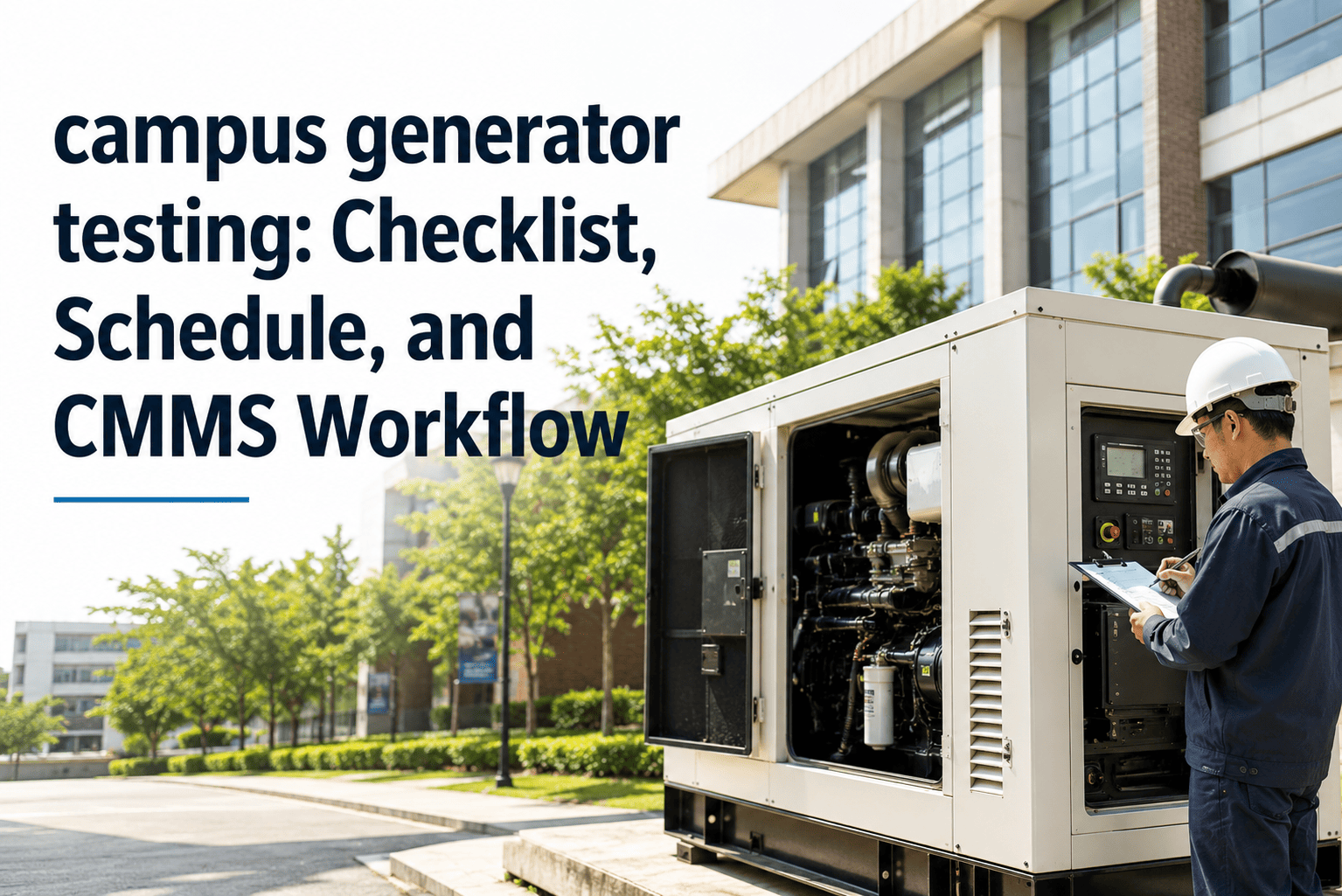
Campus Generator Annual Load Bank Test Checklist (NFPA 110)

By Stephen King on June 8, 2026

campus-generator-annual-load-bank-test-checklist-nfpa-110

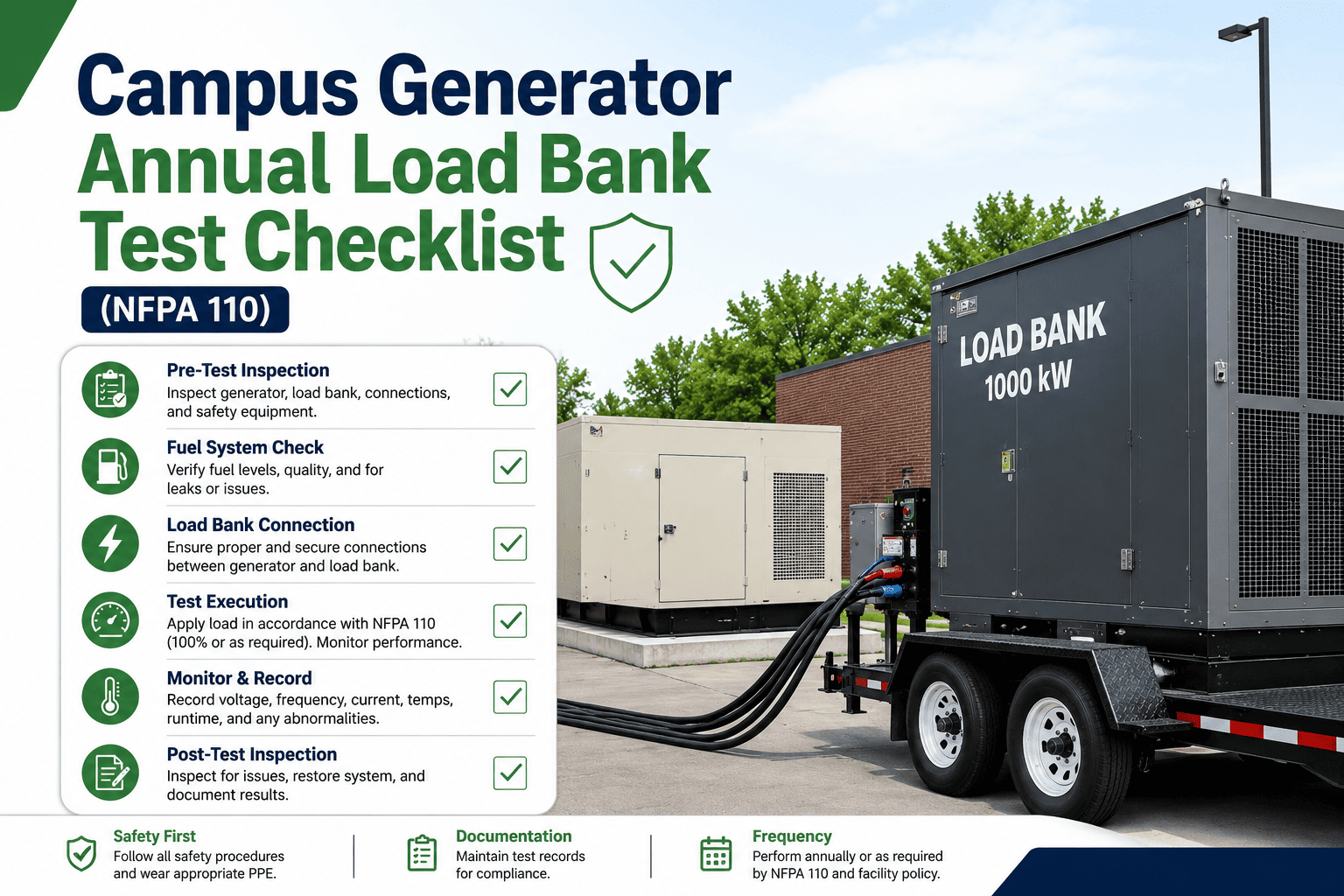
Campus generators are life-safety systems — not backup conveniences. NFPA 110 mandates an annual load bank test at 100% of nameplate rating for a minimum of 2 hours for any Level 1 emergency power supply system (EPSS). Yet most facilities teams enter the test day without a structured protocol, miss critical exception-item documentation, and have no system to track remediation before the Authority Having Jurisdiction (AHJ) inspection. A structured annual load bank test programme, with every parameter logged in OxMaint, gives your campus a verifiable NFPA 110 compliance record and a generator ready to carry full load when utility power fails to track every test parameter and exception item in one place, or to see how OxMaint manages generator compliance across multi-building campuses. From fuel consumption logs to exhaust temperature readings, every data point captured in Sign Up Free and surfaced at inspection in under two minutes. Whether you manage a single central plant or a distributed campus with 20+ generators to see load bank test records, exception tracking, and certificate storage built for facilities teams. All exception items from your annual test are tracked to resolution in never discovered open at the next AHJ inspection. Book a Demo to see NFPA 110 compliance tracking in OxMaint.

NFPA 110 Compliance — OxMaint CMMS
Log Every Load Step. Track Every Exception. Close Every Gap Before the AHJ Arrives.
OxMaint tracks load bank test parameters, exception items, fuel consumption, and certificate expiry for every campus generator — retrievable in under 2 minutes at inspection.
NFPA 110 Annual Load Bank Test — Planning Principles
Schedule the load bank test contractor by March for a May–June test window — load bank contractors serving university districts are committed by late spring. Coordinate with campus operations to confirm fuel tank levels (minimum 75% before test), cooling water availability, and utility notification requirements. Items marked Safety require resolution before the generator is returned to service. Items marked NFPA 110 are regulatory requirements with a documentation obligation. All test data, exception items, and certificates tracked in OxMaint.

1. Pre-Test Inspection

Pre-test inspection confirms the generator is in condition to accept full rated load before the load bank is connected. Defects found after the load bank is energised are harder to resolve and extend contractor time on site.

Day Before TestGenerator Pre-Test Walkdown

2. Load Application Protocol

NFPA 110 §8.4.2 requires a step-load application procedure. Applying full load instantaneously risks voltage and frequency excursions that trigger protective relays — invalidating the test and potentially damaging connected equipment.

Test Day — Load StepsStep Load Application

3. Running Parameter Logging

NFPA 110 requires parameters to be logged at defined intervals during the 2-hour full-load run. Logging intervals of no more than 30 minutes are standard; 15-minute intervals are recommended for detailed baseline data.
Every 15 MinutesParameter Log During 2-Hour Run

4. Transfer Switching and ATS Verification

During TestAutomatic Transfer Switch Test

5. Fuel System and Cooling Verification

During and After TestFuel and Cooling System

6. Exhaust System and Emissions

During Test at Full LoadExhaust and Emissions Checks

7. Exception Item Documentation

During and After TestDefect Classification and Logging

8. Post-Test Procedures and Certification

Immediately After 2-Hour RunPost-Load Test Procedures

9. Remediation Tracking and AHJ Readiness

Post-Test — Within 30 DaysException Item Resolution
Generator Compliance — OxMaint CMMS
Every Load Bank Test. Every Parameter. Every Exception. Tracked and Closed in OxMaint.
OxMaint gives campus facilities teams a single platform to schedule annual load bank tests, log running parameters, track exception items to resolution, and store all NFPA 110 certificates — accessible in under 2 minutes at AHJ inspection.

Frequently Asked Questions

NFPA 110 §8.4.2 requires Level 1 EPSS generators to be tested at 100% of nameplate rating for a minimum of 2 hours annually, using a load bank if the connected load is insufficient. A signed test report with all parameter logs must be retained for AHJ inspection.
At minimum: output voltage (all phases), frequency, load kW, coolant temperature, oil pressure, exhaust temperature, and ambient temperature inside the enclosure. Log at 15–30 minute intervals. OxMaint provides a pre-built parameter log template aligned to NFPA 110 requirements.
No. Any Category 1 defect — a condition that prevents reliable operation or presents an immediate safety risk — must be resolved before the generator is returned to emergency standby service. Category 2 and 3 items require a documented remediation schedule with assigned completion dates.
Book load bank contractors by March for a May–June test window. Load bank contractors serving university and healthcare districts are typically committed for summer by April. OxMaint generates contractor booking reminders 90 days before each generator's annual test due date.
OxMaint schedules annual load bank tests 90 days in advance, stores signed test reports against each generator asset, tracks all exception items to resolution, and provides a single-click export of the full NFPA 110 compliance package for AHJ inspection — across any number of campus generators.
Start Tracking — Free
NFPA 110 Generator Compliance Starts With One Organised Test Record. OxMaint Makes It Effortless.
From the first load step log to the AHJ inspection package — every annual load bank test managed, tracked, and closed in OxMaint. Free to start, scales to your full campus generator fleet.

Share This Story, Choose Your Platform!