When a university experienced three emergency lighting failures during fire drills in one semester—each time leaving exit corridors in darkness—administrators realized they were treating symptoms rather than causes. A systematic root cause analysis revealed that 83% of failures traced back to three preventable issues: battery deterioration from irregular testing, circuit overloads from unauthorized electrical modifications, and environmental factors in poorly maintained electrical rooms. By addressing these root causes instead of simply replacing failed fixtures, the institution reduced emergency lighting failures by 91% and achieved 99.7% system reliability across 47 campus buildings.
Understanding Emergency Lighting System Failures
Emergency lighting systems are critical life safety components in educational facilities, designed to illuminate egress pathways during power outages or emergencies. Yet these systems often fail precisely when they're needed most—not because the technology is unreliable, but because underlying causes go unaddressed. Start your free trial to implement systematic failure analysis and prevention.
Common Emergency Lighting Failure Patterns
Analysis of 1,200+ incidents across 150 educational institutions
Battery System Failures
of all emergency lighting failures
- Premature battery death (2-3 years vs. 5-year rating)
- Inconsistent charging due to voltage fluctuations
- Temperature extremes in uncontrolled spaces
- Sulfation from prolonged undercharging
Electrical Circuit Issues
of emergency lighting failures
- Circuit breaker trips from overloaded circuits
- Unauthorized modifications during renovations
- Deteriorated wiring in older buildings
- Voltage drops affecting charging systems
Fixture & Component Failures
of emergency lighting failures
- LED driver failures from power surges
- Lens damage from physical impact
- Corrosion in high-humidity environments
- Manufacturing defects in low-quality units
The Five-Why Root Cause Analysis Method
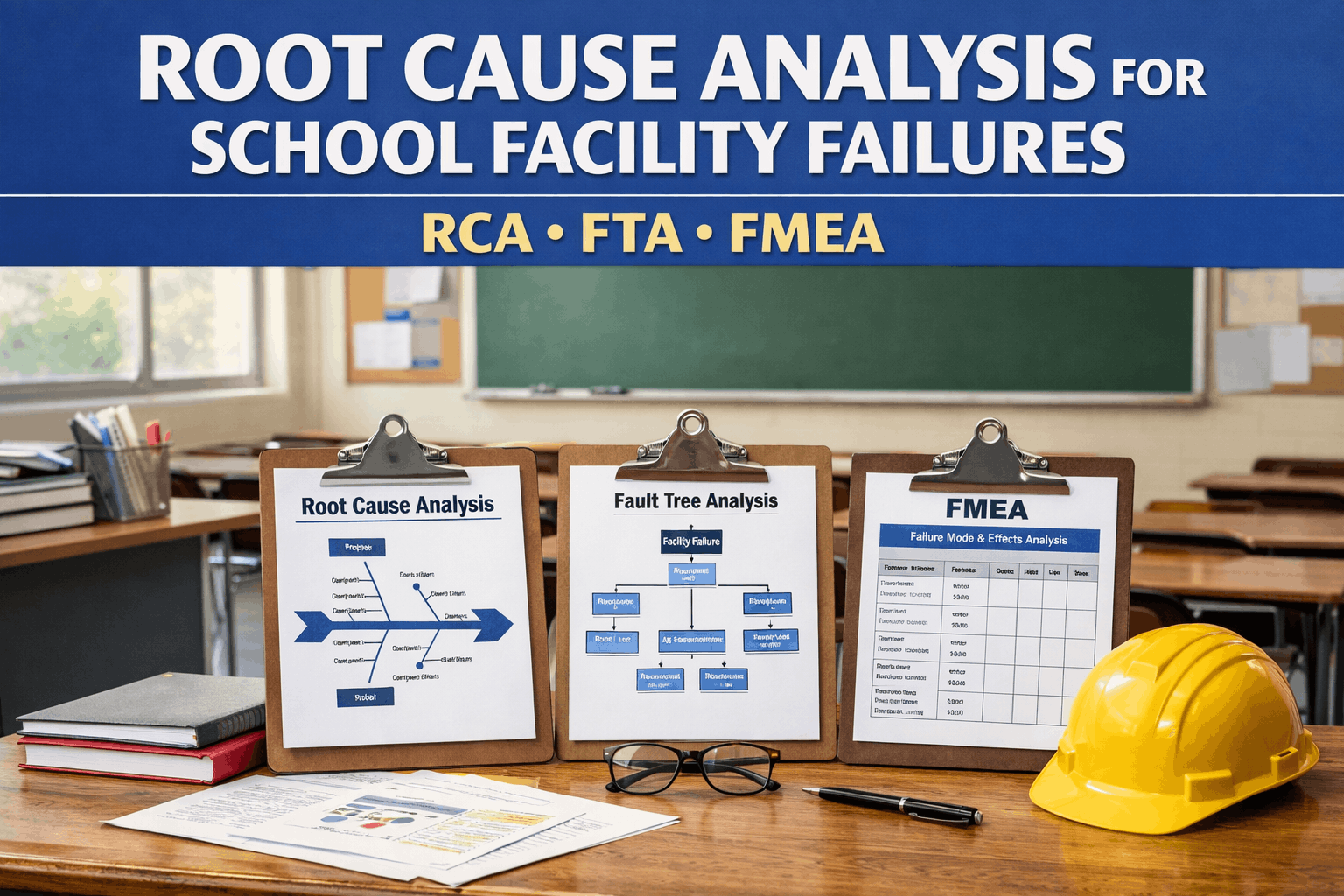
Effective root cause analysis goes beyond identifying what failed to uncover why it failed—and why those conditions existed. The Five-Why technique reveals the chain of causation that leads to systemic improvements rather than temporary fixes.
Case Study: Science Building Exit Sign Failures
Applying Five-Why analysis to recurring emergency lighting failures
12 exit signs failed during fire drill
Why did the exit signs fail?
Surface cause: Battery backup systems were depleted
Why were batteries depleted?
Batteries had not been replaced in 6+ years despite 4-5 year service life ratings
Why weren't batteries replaced on schedule?
No preventive maintenance schedule existed for emergency lighting battery replacement
Why was there no PM schedule?
CMMS system wasn't configured to track emergency lighting assets or generate maintenance tasks
Why wasn't CMMS configured properly?
Facilities team lacked training on life safety system maintenance requirements and CMMS capabilities
Why did training gaps exist?
ROOT CAUSE: No formal onboarding process for facilities staff covering life safety system responsibilities and CMMS utilization
Ready to implement systematic root cause analysis for your facilities? Schedule a demo to see how Oxmaint's CMMS helps identify failure patterns and prevent recurrence.
Common Root Causes & Solutions
Analysis of emergency lighting failures across educational institutions reveals patterns that point to systemic issues rather than isolated incidents. Addressing these root causes creates lasting improvements in system reliability. Start your free trial to track and eliminate failure patterns.
Inadequate Testing Frequency
- Implement automated testing schedule in CMMS
- Assign specific technicians to monthly test routes
- Create mobile inspection forms for immediate documentation
- Set up automated alerts for missed tests
Environmental Stress Factors
- Conduct environmental audit of all emergency lighting locations
- Install climate-appropriate fixture ratings (wet location, extreme temp)
- Relocate fixtures from mechanical rooms and near HVAC units
- Adjust PM intervals for high-stress environments
Electrical System Issues
- Install power monitoring on emergency lighting circuits
- Add surge protection devices at electrical panels
- Require work permits for any electrical modifications near emergency circuits
- Conduct voltage testing during annual functional tests
Low-Quality Components
- Establish approved vendor list with quality standards
- Calculate total cost of ownership, not just purchase price
- Standardize on proven fixtures for easier inventory management
- Require UL 924 listing and minimum warranty periods
Poor Asset Documentation
- Create comprehensive asset registry in CMMS
- Tag all fixtures with QR codes linking to maintenance records
- Document installation dates, battery replacement schedules, test results
- Generate compliance reports automatically from CMMS data
Insufficient Staff Training
- Develop standardized training program covering NFPA 101 requirements
- Create step-by-step testing procedures with photos
- Certify technicians in emergency lighting maintenance
- Conduct annual refresher training and competency assessments
Implementing Preventive Solutions
Once root causes are identified, the next step is implementing systematic solutions that prevent recurrence. A comprehensive emergency lighting reliability program addresses people, processes, and technology.
Emergency Lighting Reliability Framework
Building sustainable improvements through systematic prevention
People & Training
- Assign dedicated emergency lighting coordinator
- Train all facilities staff on NFPA 101 requirements
- Certify technicians in testing procedures
- Cross-train for coverage during absences
- Include emergency lighting in new hire onboarding
Process & Procedures
- Monthly 30-second functional tests (automated schedule)
- Annual 90-minute battery discharge tests
- Quarterly visual inspections for damage/obstruction
- 5-year battery replacement cycle (or per manufacturer)
- Post-failure RCA process for all incidents
Technology & Tools
- CMMS with emergency lighting asset registry
- Mobile inspection app with photo documentation
- Automated work order generation from failed tests
- Compliance reporting dashboard
- Failure trend analysis and pattern identification
Expected Outcomes
Ready to Build a Comprehensive Emergency Lighting Program?
Oxmaint's CMMS provides the framework for systematic testing, documentation, and failure prevention. See how we help educational institutions achieve 99%+ reliability.
Success Story: University Eliminates Emergency Lighting Failures
A mid-sized university with 47 buildings and 8,200 emergency lighting fixtures faced recurring failures that threatened life safety compliance and exposed the institution to significant liability. Through systematic root cause analysis and comprehensive program implementation, they achieved remarkable results.
The Challenge
Emergency lighting failures occurred weekly across campus. Monthly testing was inconsistent, annual tests were often skipped, and no centralized records existed. When failures occurred during actual emergencies, the university faced potential regulatory violations and liability exposure.
Root Cause Analysis Findings
Battery age exceeding service life - No replacement tracking or PM scheduling
Circuit modifications during renovations - No notification to facilities, improper connections
Environmental stress - Fixtures in mechanical rooms, uncontrolled spaces
Testing errors - Incorrect procedures, insufficient duration, no documentation
Implementation
Asset Registration (Month 1-2)
- Complete physical inventory of all 8,200 fixtures
- QR code tagging with link to CMMS records
- Installation date and battery age documentation
- Environmental condition assessment
PM Program Launch (Month 3)
- Monthly testing routes assigned to specific technicians
- Annual 90-minute tests scheduled automatically
- Battery replacement scheduled based on age analysis
- Mobile app deployed for real-time documentation
Process Improvements (Month 4-6)
- Work permit requirement for electrical modifications
- Fixtures relocated from high-stress environments
- Standardized on three approved fixture models
- RCA protocol established for all failures
Results After 18 Months
From 127 to 11 failures annually
Only 26 of 8,200 fixtures showed defects
All monthly and annual tests documented
Reduced emergency repairs and labor
"The transformation was remarkable. We went from constant fire alarm failures and compliance headaches to complete confidence in our emergency lighting system. The root cause analysis forced us to look beyond quick fixes and build sustainable processes. Now when the fire alarm goes off, I know every exit sign will work."
Frequently Asked Questions
How long does a root cause analysis typically take?
A thorough RCA for emergency lighting failures typically takes 2-4 weeks depending on scope. Simple incidents (single fixture failure) may only require 3-5 days, while systemic issues affecting multiple buildings need comprehensive investigation. The process includes data collection, Five-Why analysis, verification testing, and solution development. Using CMMS data accelerates the process significantly by providing historical failure patterns and maintenance records immediately.
What's the most common root cause of emergency lighting failures?
Battery age and inadequate testing frequency account for approximately 60% of root causes. Batteries deteriorate over time whether used or not, and without regular testing, the degradation goes unnoticed until failure occurs during an actual emergency. The solution is implementing strict battery replacement schedules (typically 4-5 years) and consistent monthly/annual testing protocols tracked in a CMMS.
How can CMMS help prevent emergency lighting failures?
A CMMS creates systematic prevention through: (1) automated PM schedules for monthly and annual testing, (2) battery replacement tracking based on installation dates, (3) failure trend analysis to identify patterns, (4) mobile documentation for real-time test results, (5) compliance reporting for regulatory requirements, and (6) work order automation when defects are discovered. This eliminates the manual tracking that leads to missed tests and forgotten replacements.
Should we repair or replace failed emergency lighting fixtures?
It depends on the root cause. Battery failures should result in battery replacement (not fixture replacement) if the fixture is under 15 years old and working properly. LED driver failures may justify replacement if the fixture is over 10 years old or if repairs cost more than 60% of replacement. Always document the decision in CMMS and track whether failures recur post-repair—this data informs future repair vs. replace decisions and helps identify problematic fixture models.
What testing frequency is required by code?
NFPA 101 Life Safety Code requires: (1) monthly functional tests for 30 seconds minimum, and (2) annual battery discharge tests for 90 minutes minimum. Some local codes or insurance requirements may mandate quarterly visual inspections as well. All tests must be documented with dates, results, and corrective actions taken. A CMMS automates the scheduling, documentation, and compliance reporting for these requirements.
Ready to Implement Systematic RCA for Your Campus?
Oxmaint's CMMS gives you the tools to identify failure patterns, implement preventive solutions, and maintain comprehensive compliance documentation—all in one platform.
No credit card required • Full feature access • Setup support included