Building a preventive maintenance program usually sounds like a hiring request — but the budget that funds it is already being spent, just in the wrong column. Districts pour money into emergency repairs that cost several times the planned version of the same job, and every deferred task compounds, with reactive work running roughly four dollars for every one dollar of upkeep delayed past year five. The path to a real PM program is not more headcount; it is redirecting reactive spend into scheduled work that a lean team can execute. This page shows the cost math and the four steps to get there. You can start a free trial of OxMaint to model your own numbers.
Cost Calculator · Preventive Maintenance · AI Predictive Maintenance
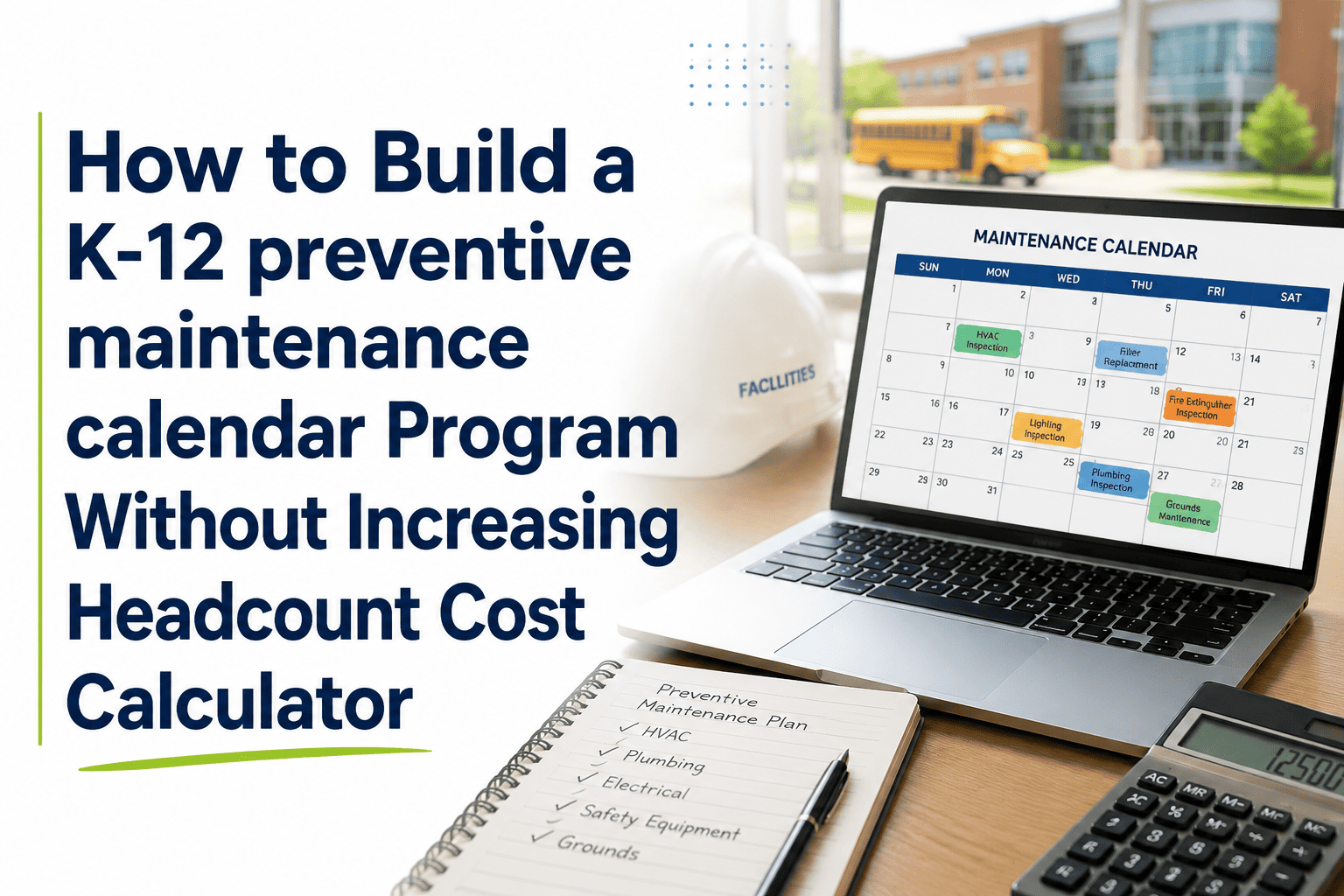
How to Build a K-12 Preventive Maintenance Program Without Increasing Headcount
The cost case for shifting reactive spend into scheduled work — and the four-step build that gets a district to high PM compliance with the team it already has.
4:1
Reactive cost for every $1 of upkeep deferred past year five
$18K
Emergency repairs avoided per compliance point, per 100,000 sq ft
95%+
PM compliance reachable with no added staff
The Cost Case — A Worked Example
These are illustrative figures for a mid-size district. Swap in your own event counts and rates and the conclusion rarely changes: the planned version of the same work costs a fraction of the emergency version.
Reactive today
Emergency events / year120
Cost per emergency call$850
Annual spend$102,000
Planned instead
Scheduled tasks / year120
Cost per planned task$180
Annual spend$21,600
Estimated annual savings, same work shifted to schedule
≈ $80,400
AI Predictive Maintenance · OxMaint
Fund your PM program from spend you already have.
OxMaint shows exactly where reactive dollars are going and redirects them into a scheduled plan your current team can run — no new hires, no new budget request.
Four Steps to a Program — Same Headcount
Each step removes a reason teams stay reactive. Run them in order and compliance climbs while the emergency column shrinks.
Step 1
Inventory every asset
Build one record per asset — age, condition, location, and history. You cannot schedule work against equipment you have not listed, and this is the foundation everything else rests on.
Step 2
Score risk and set frequency
Rank assets by failure risk so limited hours go to what matters. A high-risk chiller earns priority over a low-risk filter, even when the filter was due first.
Step 3
Auto-schedule around the calendar
Place disruptive work in breaks and off-hours, cluster tasks by site, and let the system reschedule around emergencies so displaced jobs are never lost.
Step 4
Track compliance and report it
Measure PM compliance and reactive ratio every week, and turn the trend into a board-ready report that justifies the program with avoided cost, not promises.
Where the Savings Come From
The redirected budget shows up in three places — and together they fund the program several times over.
4.8x
Avoided premium on emergency repairs versus planned work
15–25%
HVAC energy waste prevented by on-time filter and coil service
$18K
Emergency repairs avoided per compliance point, per 100,000 sq ft
Frequently Asked Questions
Can we really build a PM program without hiring?
Yes. The work shifts from reactive to scheduled rather than increasing in volume, and scheduling, routing, and risk-ranking remove the wasted time that made teams feel understaffed.
Start a free trial to model it.
Where does the money for PM actually come from?
From the reactive budget you already spend. Emergency repairs cost several times the planned version, so redirecting even a portion of them funds the preventive program and leaves room to spare.
How do I prove the savings to a school board?
Track reactive-versus-planned spend and PM compliance over time, then present the avoided cost. A backlog and emergency trend moving the right direction is the most persuasive budget argument there is.
What should we inventory first?
Start with the assets whose failure closes a building — HVAC, boilers, fire and life-safety systems. Capturing the highest-risk equipment first delivers the biggest reduction in emergencies fastest.
How long until the program pays for itself?
Most districts see reactive spend fall within the first year as compliance climbs, and the redirected emergency premium typically covers the program well before that.
Book a demo to map your timeline.
Build a PM Program · OxMaint
Start the program with the budget you're already spending.
OxMaint turns reactive spend into a scheduled, board-ready PM program your current team can run — higher compliance, lower cost, no new headcount.