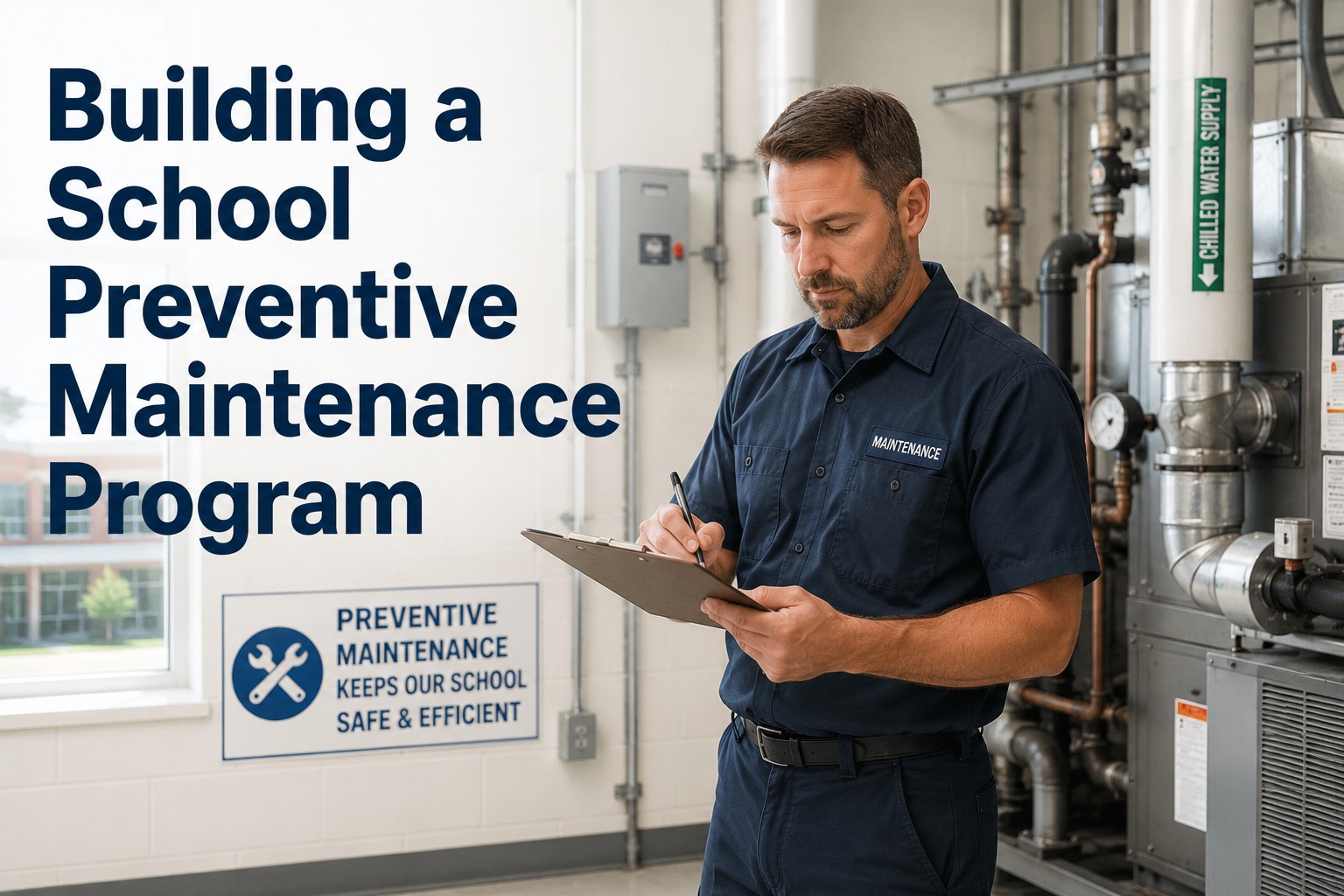
A campus preventive maintenance program is not just a checklist of recurring tasks. It is the operating system that keeps classrooms comfortable, labs compliant, residence halls safe, and campus assets from failing at the worst possible time. Without a structured PM program, facility teams spend 60–70% of their time reacting to urgent repairs, emergency work costs up to 4.8x more than planned maintenance, and critical assets lose years of useful life because service history is incomplete. A strong campus PM program connects asset records, PM schedules, mobile work orders, compliance documentation, and technician adoption into one repeatable process. OxMaint helps maintenance managers build this foundation quickly — starting with asset inventory, then automating schedules, tracking completion, and proving compliance with audit-ready records. If your campus is ready to move from reactive repairs to planned maintenance, start a free trial or book a demo and see how a campus PM program can be built in weeks, not months.
How-to Guide · Campus Preventive Maintenance
How to Build a Campus Preventive Maintenance Program
A step-by-step framework for campus maintenance managers covering asset inventory, PM scheduling, compliance documentation, technician adoption, and performance tracking across schools, colleges, and universities.
4.8x
Higher cost for emergency repairs compared with planned maintenance
30–50%
Extra operating cost from poorly maintained campus buildings
80%+
Target planned maintenance ratio for mature campus PM programs
60–90
Days to see measurable PM compliance improvement with CMMS
What Is a Campus Preventive Maintenance Program?
A campus preventive maintenance program is a structured system for inspecting, servicing, and documenting facility assets before failure occurs. It covers HVAC units, boilers, chillers, elevators, fire systems, roofs, pumps, electrical panels, plumbing systems, generators, lab equipment, and other assets that directly affect safety, comfort, compliance, and operating cost.
For a campus, PM is harder than it is in a single building. A university or school district may manage 20–100+ buildings, thousands of assets, multiple technician trades, seasonal occupancy changes, and strict inspection requirements. A successful PM program must therefore be asset-based, schedule-driven, mobile-friendly, and measurable. OxMaint gives teams a single source of truth for asset records, PM schedules, technician history, and compliance documentation so maintenance managers can control the program from one dashboard. Build your first PM structure with a free trial or book a demo to see the setup process.
The 6-Step Campus PM Program Framework
Most PM programs fail because they begin with schedules before assets are properly organized. Start with asset clarity, then build repeatable schedules, ownership, documentation, and reporting.
Step 01
Create a complete asset inventory
List every maintainable asset by campus, building, floor, room, system, and component. Prioritize high-cost assets first: HVAC, boilers, chillers, elevators, roofs, pumps, generators, and fire systems.
Step 02
Rank assets by risk and criticality
Score assets from 1–5 based on safety impact, downtime risk, replacement cost, age, and service history. Critical assets should receive PM coverage before low-risk fixtures.
Step 03
Build PM task templates
Create repeatable inspection and service checklists for each asset class. A rooftop unit may need filters, belts, coils, drain pans, vibration checks, and operating readings every 30–90 days.
Step 04
Automate PM schedules
Set PMs by calendar interval, runtime, inspection result, or condition score. Automated scheduling helps teams reach 80%+ planned work instead of relying on memory or spreadsheets.
Step 05
Assign ownership by trade and zone
Route PM work by technician skill, building zone, shift, and workload. This reduces travel time by 15–25% and makes accountability clear across large campuses.
Step 06
Measure compliance and improve monthly
Track PM completion rate, overdue tasks, failure trends, repeat repairs, asset condition, and labor hours. A mature program improves every 30 days because data shows where to adjust.
Common Campus PM Program Mistakes
A PM program can look complete on paper and still fail in the field. These six problems create the most common breakdowns in school and university maintenance planning.
Mistake 01
Starting with incomplete asset records
If 30% of assets are missing from the system, PM coverage will always be incomplete. Begin with the top 100–300 critical assets before expanding to lower-risk equipment.
Mistake 02
Using one schedule for every building
A 50-year-old science building and a 5-year-old administration building should not have the same PM intensity. Age, condition, usage, and risk should drive frequency.
Mistake 03
Ignoring seasonal campus patterns
Summer, winter break, move-in, exams, athletics, and events change building usage. Strong PM programs shift work into lower-occupancy windows to reduce disruption.
Mistake 04
Documenting PM after the fact
Paper notes entered days later lose detail. Mobile PM completion captures photos, readings, parts, labor time, and signatures while the technician is still at the asset.
Mistake 05
Tracking completion but not effectiveness
A 95% PM completion rate is not enough if failures continue. Track repeat repairs, downtime, asset condition, and cost per asset to verify PM quality.
Mistake 06
Not involving technicians early
Technicians know which PM tasks are realistic and which checklists are too vague. Programs with field input see adoption rates 30–40% higher than top-down rollouts.
How OxMaint Helps Build the Program
OxMaint connects the building blocks of a campus PM program into one workflow: asset records, recurring schedules, mobile execution, documentation, and reporting. Teams can start small and scale across the full campus portfolio.
01
Asset registry with campus hierarchy
Structure assets as portfolio, campus, building, system, asset, and component. This gives every PM task a precise location and equipment record.
02
PM templates by asset class
Standardize checklists for HVAC, roofs, fire systems, boilers, generators, pumps, elevators, plumbing, and electrical equipment.
03
Automated scheduling and triggers
Generate PM work orders by date, usage, runtime, inspection score, or asset condition. Overdue PMs can escalate automatically to supervisors.
04
Mobile technician execution
Technicians receive PMs on mobile with checklists, photos, asset history, parts, and digital closeout steps. This reduces admin time by 20–30%.
05
Compliance-ready documentation
Every completed PM includes timestamped records, notes, inspection results, digital signatures, and asset-linked history for faster audits.
06
Performance and condition reporting
Dashboards show PM compliance, overdue work, asset risk, repeated failures, labor allocation, and building-level maintenance trends.
The fastest path is to launch PM on your highest-risk assets first, then expand by building and trade. OxMaint supports that phased rollout without heavy implementation fees or long onboarding cycles. See your first 90-day rollout plan by choosing start a free trial or book a demo.
Reactive Maintenance vs. Campus PM Program
A preventive maintenance program changes more than task frequency. It changes how decisions are made, how technicians work, and how leadership sees facility risk.
| Area |
Reactive Campus Maintenance |
Structured PM Program with OxMaint |
| Asset Records |
Scattered across spreadsheets, paper files, and technician memory |
Centralized asset registry with condition, age, location, and history |
| PM Scheduling |
Manual calendar reminders and inconsistent follow-through |
Automated PM generation by time, runtime, condition, or inspection result |
| Technician Workflow |
Assignments delivered verbally or through email |
Mobile work orders with checklists, asset history, photos, and parts |
| Compliance |
Audit records assembled manually over days or weeks |
Timestamped PM records and inspection documentation ready to export |
| Budget Control |
Costs discovered after emergency invoices arrive |
Cost by asset, building, system, trade, and work type visible in dashboards |
| Asset Life |
Failures shorten equipment life and increase replacement pressure |
Routine PM extends useful life by 15–25% on well-maintained assets |
| Leadership Reporting |
Monthly summaries with limited operational detail |
Live PM compliance, backlog, asset risk, and performance reporting |
| Program Improvement |
No clear data to adjust schedules or workload |
Monthly review of failures, overdue PMs, labor hours, and condition trends |
ROI Metrics to Track in the First Year
A PM program should prove its value with numbers. Track these four metrics monthly to show whether your campus is moving from reactive maintenance to controlled, planned work.
80%+
Planned maintenance ratio
Target level where campus teams begin seeing fewer emergency repairs and better technician utilization.
90%+
PM completion rate
Shows whether scheduled work is actually being completed before assets fall behind.
20–35%
Lower reactive maintenance spend
Expected reduction when PM tasks reduce failures, repeat repairs, and emergency contractor calls.
15–25%
Longer asset useful life
Well-maintained equipment lasts longer, giving finance teams more time to plan replacements.
90-Day PM Program Launch Plan
Start focused. A campus PM program does not need every asset perfected on day one. The goal is to create momentum, prove value, and expand with better data.
Days 1–15
Inventory critical assets
Capture the top 100–300 assets by cost and risk. Include location, age, manufacturer, model, condition, and known service issues.
Days 16–30
Create PM templates
Build checklists for HVAC, roofs, fire systems, pumps, boilers, generators, and electrical systems. Keep each checklist short and field-tested.
Days 31–60
Launch automated schedules
Set recurring PMs by asset class and assign work by trade and building zone. Target 70%+ PM completion by day 60.
Days 61–90
Review and optimize
Measure overdue PMs, repeat failures, labor hours, and technician feedback. Adjust schedules and expand to the next asset group.
Frequently Asked Questions
What assets should a campus preventive maintenance program include first?
Start with the assets that create the highest safety, comfort, compliance, and cost risk: HVAC units, boilers, chillers, elevators, roofs, pumps, generators, fire safety systems, electrical panels, and plumbing systems. These usually represent 60–80% of maintenance risk and should be covered before lower-priority fixtures.
How often should campus PM schedules be reviewed?
Review PM schedules every 30 days during rollout and at least quarterly after stabilization. Use completion rates, repeat failures, asset condition changes, technician feedback, and seasonal campus usage to adjust frequency. A schedule that never changes is usually not optimized.
How does OxMaint help with compliance documentation?
OxMaint stores every PM task, inspection, checklist, technician note, photo, timestamp, and digital signature against the related asset. This creates a searchable compliance record for fire safety, HVAC, electrical, environmental, housing, and internal audit requirements. Reports can be exported without assembling paper records manually.
How do we get technicians to adopt a new PM program?
Start by involving technicians in checklist design. Keep PM tasks practical, mobile-friendly, and specific. Roll out to one building zone or asset class first, measure completion, collect feedback, and improve before expanding. OxMaint’s mobile work orders reduce paperwork, which usually improves adoption within the first 2–4 weeks.
Build a PM Program Your Campus Team Will Actually Use
A strong preventive maintenance program gives your campus fewer emergencies, better asset records, cleaner compliance documentation, and clearer budget decisions. OxMaint helps maintenance managers launch with the assets that matter most, automate PM schedules, support mobile technicians, and track performance from day one.