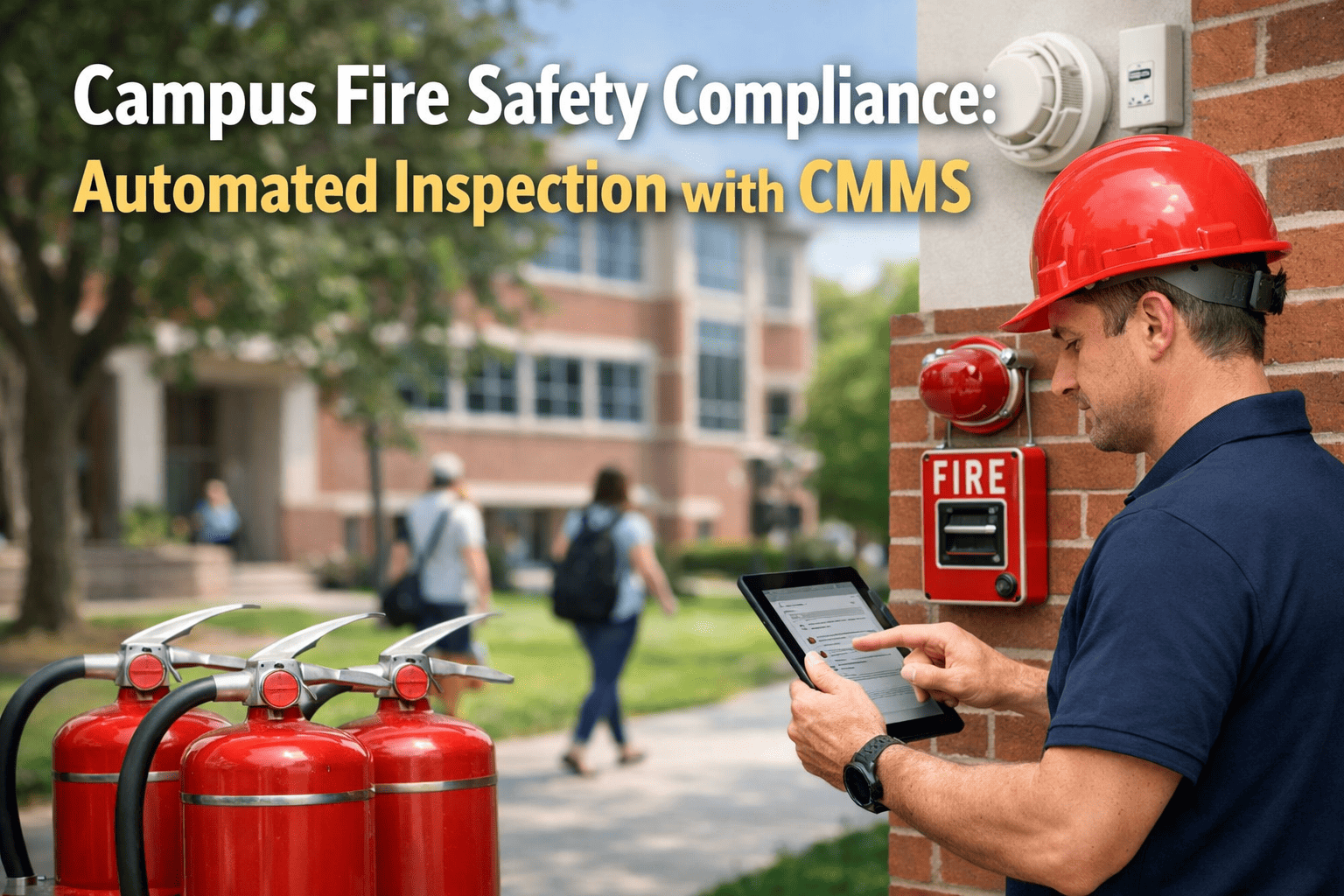
Most school fire safety inspections are not failed because of physical hazards — they are failed because of missing documentation. The sprinkler system works. The exit signs are lit. The extinguishers were serviced. But when the inspector asks for the maintenance log, the quarterly test records, the last deficiency correction notice, and the technician sign-off for the third-floor pull stations, the facilities manager spends 45 minutes searching through binders and email threads — and still comes up short. Fire marshals in every US state and most international jurisdictions operate on a straightforward principle: if it is not documented, it did not happen. A school with a genuinely compliant fire safety program that cannot produce its records on demand receives the same citation as a school with no program at all. The solution is not doing more maintenance — most schools already do the maintenance. The solution is building documentation into the workflow so that every test, every inspection, every corrective action generates an audit-ready record automatically, without any extra administrative step after the work is done. Start a free trial for 30 days to see how Oxmaint captures fire safety documentation automatically from maintenance workflows, or book a demo with a compliance specialist.
School Compliance · Fire Safety · Inspection-Ready Documentation Guide
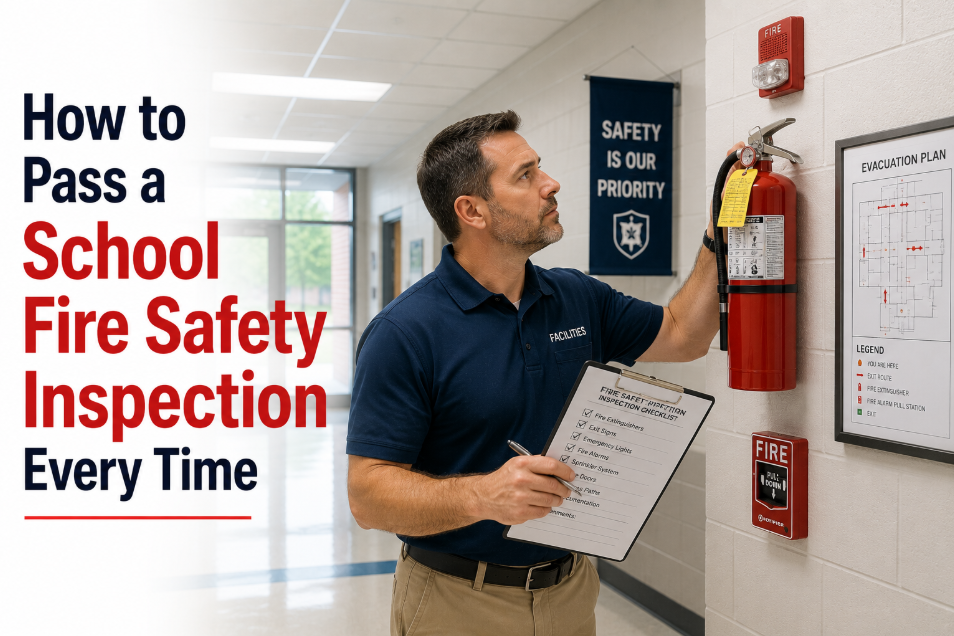
How to Pass a School Fire Safety Inspection Every Time
Build a fire safety maintenance and documentation program that generates inspection-ready records automatically — so every audit is a confirmation, not a search party
Generate Fire Safety Records Automatically — Not on Inspection Day
Oxmaint captures NFPA-aligned fire safety inspection records as a natural output of daily maintenance operations. Every test, every servicing, every deficiency correction generates a timestamped, digitally signed record stored against the asset — retrievable in seconds when an inspector arrives. Start a free trial or book a demo to see the fire compliance documentation workflow.
78%
Of fire safety citations at schools trace to documentation gaps — not physical hazards or missing equipment
$15K+
Average penalty per serious fire code violation — plus mandatory reinspection fees and corrective action deadlines
4x
Faster inspection response when fire safety records are digital vs paper binders — critical when inspectors arrive unannounced
100%
Of fire safety documentation requirements met when CMMS captures records at point of work with digital signature
What Fire Safety Inspectors Actually Look For in Schools
Understanding what inspectors check — and what documentation they require — is the foundation of an inspection-ready program. These six systems generate the most citations at K-12 and university facilities.
NFPA 72
Fire Alarm Systems
Annual inspection of all detection and notification devices
Quarterly testing of initiating devices in high-occupancy areas
Semi-annual testing of smoke detectors in HVAC systems
Signed records: inspector name, date, device tested, result
Most cited for: Missing quarterly test records and unsigned annual reports
NFPA 13 / 25
Sprinkler Systems
Annual inspection of all sprinkler heads and control valves
Weekly inspection of water supply control valves (must be open)
5-year internal pipe inspection and obstruction assessment
Flow test records for main drain and inspector test connection
Most cited for: Weekly valve checks not documented and 5-year test overdue
NFPA 10
Portable Fire Extinguishers
Monthly visual inspection with tag or log entry for each unit
Annual service by certified technician — pressure, pin, seal
6-year maintenance (stored pressure) and hydrostatic test schedules
Location map showing all extinguisher positions in each building
Most cited for: Missing monthly inspection tags and outdated annual service stickers
NFPA 101
Emergency Egress & Exit Lighting
Monthly 30-second functional test of all emergency lighting units
Annual 90-minute duration test with written pass/fail result
Exit sign illumination verification at monthly testing intervals
Documentation of all failed tests and corrective actions taken
Most cited for: Annual 90-minute test not on record and failed units not corrected
IFC / Local Code
Means of Egress
Door hardware inspection — panic hardware, self-closing mechanisms
Clear exit path verification — no storage blocking corridor width
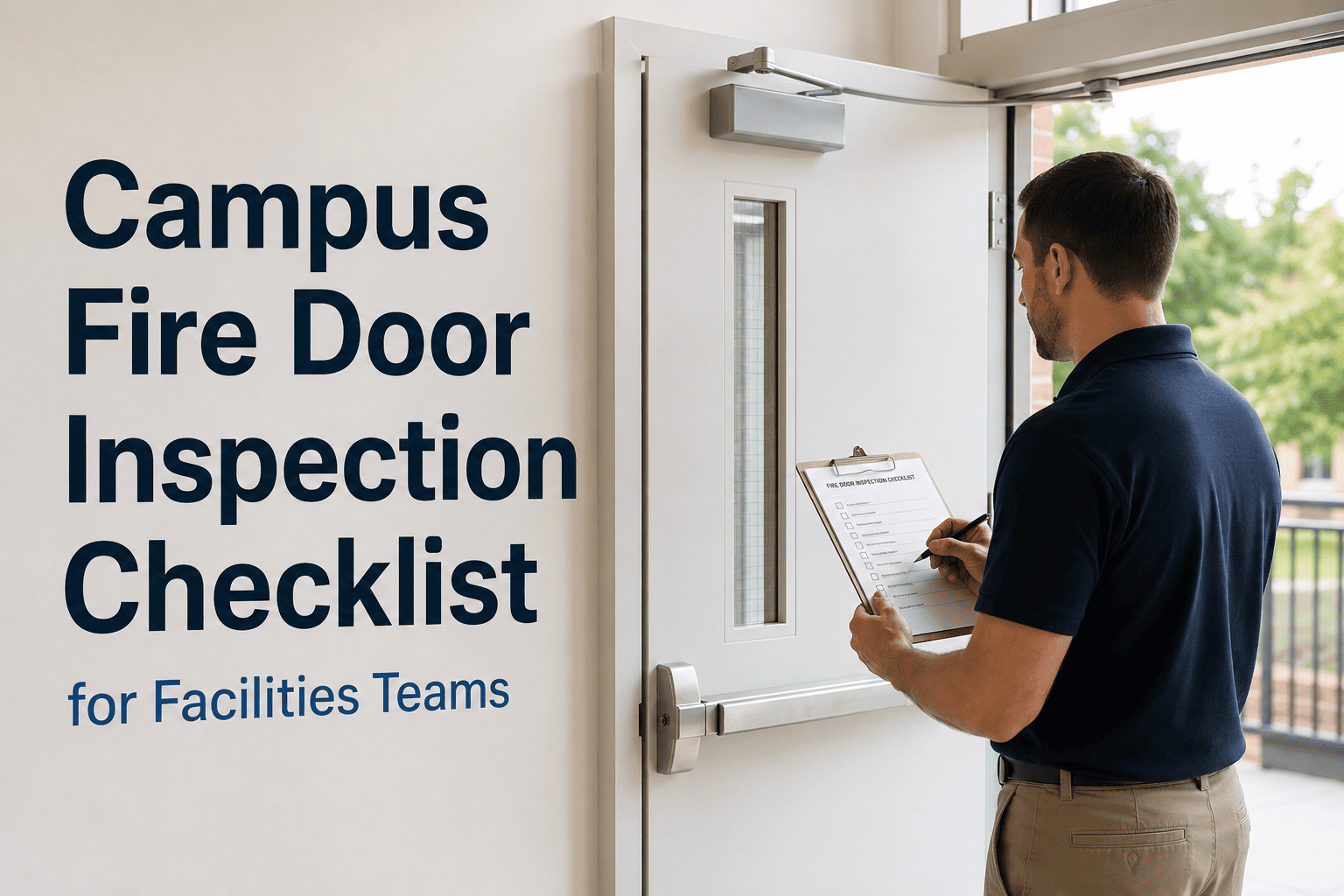
Fire door integrity inspection — seals, frames, automatic closers
Stairwell pressurization system test where applicable
Most cited for: Blocked corridors in storage-heavy buildings and broken door closers
NFPA 96
Kitchen Hood & Suppression Systems
Semi-annual inspection of commercial cooking suppression systems
Grease duct cleaning on frequency tied to cooking volume
Ansul or equivalent system service tag with technician certification
Records of grease trap cleaning tied to suppression system inspection
Most cited for: Grease duct cleaning overdue and suppression system service tag expired
The 5-Step Framework for Inspection-Ready Fire Safety Programs
Passing every fire safety inspection requires shifting from reactive preparation to continuous documentation. These five steps convert a reactive approach into a program that is always inspection-ready. Start a free trial to implement this framework in Oxmaint, or book a demo to walk through the setup for your school or campus.
Step 01
Build a Complete Fire Safety Asset Inventory
Every fire safety system and device in every building must be in your asset registry before it can be scheduled for inspection. This means every pull station, every sprinkler head group, every extinguisher, every exit sign, every emergency light unit, and every kitchen suppression system — individually registered with location, installation date, last service date, and applicable inspection interval. Without this foundation, intervals cannot be scheduled and compliance cannot be tracked per device.
Oxmaint: Import existing asset lists or build using the mobile field registration workflow — photograph, locate, and register every device from a mobile device during a single building walkthrough.
Step 02
Configure NFPA-Aligned PM Schedules for Every System
Map every applicable NFPA testing interval to an automated PM trigger in your maintenance system. Monthly extinguisher visual checks. Quarterly alarm device tests. Semi-annual suppression system inspections. Annual comprehensive alarm and sprinkler inspections. Each trigger generates a work order automatically at the required interval — no manual scheduling required, and no intervals missed because someone forgot to check the calendar.
Oxmaint: PM templates pre-configured for NFPA 10, 13, 25, 72, 96, and 101 intervals. Apply templates to your registered assets and the schedule runs automatically from day one.
Step 03
Enforce Complete Documentation at Point of Work
Inspection forms must be non-skippable. Every field required by NFPA standards — device identifier, test result, technician name, date and time, deficiency noted — must be mandatory before the work order can close. If the technician cannot skip documentation fields, the records are always complete. Paper forms and optional digital fields both allow gaps. Mandatory mobile checklists do not.
Oxmaint: Configurable mandatory fields on every fire safety inspection form. Work orders cannot be marked complete until all required fields contain valid data and a digital signature is captured.
Step 04
Close the Deficiency Loop With Corrective Work Orders
The most dangerous documentation gap in fire safety programs is not the missing inspection record — it is the deficiency that was noted but never corrected, or corrected but never documented. Every deficiency found during inspection must automatically generate a corrective work order with a deadline tied to code requirements. And the corrective work order must close with its own documentation — confirming the deficiency was resolved before the next inspection cycle.
Oxmaint: Inspection findings above a severity threshold auto-generate corrective work orders. The deficiency-to-correction chain is preserved in the asset record — showing both the finding and the resolution for any auditor who requests it.
Step 05
Run a Pre-Inspection Compliance Audit Monthly
Do not wait for the fire marshal to find your gaps. Run a monthly internal compliance check — review which inspections are overdue, which deficiencies are open, and which records from the last 12 months are incomplete. A 30-minute monthly review of your fire safety compliance dashboard surfaces every gap while there is still time to close it before an inspection. Schools that review proactively report clean inspections; those that do not discover gaps during the inspection itself.
Oxmaint: Compliance dashboard shows overdue fire safety PMs, open deficiency corrective actions, and incomplete inspection records — filterable by building and system type. Monthly review takes under 20 minutes.
Paper Fire Safety Records vs Oxmaint Digital Documentation
Common Fire Safety Citation Triggers and How to Eliminate Them
CITATION TRIGGER
Missing Monthly Extinguisher Inspection Tags
Monthly visual inspections are required under NFPA 10 — but paper tags fall off, get wet, or are never replaced after the annual service visit. Inspectors check every unit. One missing tag equals one citation.
Fix: Mobile PM work orders for monthly extinguisher rounds. Digital record created per unit — no physical tag required for documentation compliance.
CITATION TRIGGER
Quarterly Alarm Test Records Absent
NFPA 72 requires quarterly testing of initiating devices in high-occupancy areas like cafeterias, gymnasiums, and auditoriums. Schools commonly perform annual tests only — missing the quarterly requirement for high-occupancy spaces entirely.
Fix: Configure separate PM schedules for high-occupancy areas at quarterly frequency. System identifies which spaces require quarterly vs annual testing based on occupancy classification.
CITATION TRIGGER
Emergency Lighting 90-Minute Annual Test Not on Record
Monthly 30-second tests are commonly documented. The annual 90-minute duration test — required under NFPA 101 — is frequently performed but never documented, or skipped because it requires building coordination for a 90-minute outage simulation.
Fix: Annual 90-minute test scheduled as a mandatory PM with coordination notes pre-attached. Completion requires recording pass/fail result per unit with technician signature.
CITATION TRIGGER
Corrective Actions From Prior Inspection Not Closed
Inspectors check the prior inspection report before beginning a new one. If a deficiency from the last inspection has no documented corrective action or the corrective action is incomplete, it escalates from a standard citation to a repeat violation — with significantly higher penalties.
Fix: Every deficiency automatically creates a corrective work order with a completion deadline. Prior inspection corrective actions appear in the pre-inspection compliance review with open/closed status visible.
78%
Citations Are Documentation
of school fire safety citations are documentation failures — not missing equipment or physical violations
3 min
Record Retrieval Time
to pull full 12-month fire safety records for any building when documentation is digital and structured
64%
Citation Risk Reduction
reduction in fire safety citation risk when facilities use digital inspection records vs paper-based documentation
Zero
Surprise Audit Gaps
compliance gaps visible in dashboard before every inspection — no discoveries by fire marshal
Frequently Asked Questions
How long must schools keep fire safety inspection records on file?
Retention requirements vary by standard and jurisdiction. NFPA 72 requires fire alarm inspection records to be retained until the next inspection — but most fire marshals expect to see at least the last 12 months of records. NFPA 25 sprinkler records should be kept for the life of the system or at minimum 3 years. NFPA 10 extinguisher records should be maintained for at least 1 year. Many state fire codes add additional retention requirements on top of NFPA minimums. The safest practice is to retain all fire safety documentation indefinitely when using digital systems — storage cost is negligible, and records going back 5+ years are frequently requested during insurance claims and serious incident investigations. Oxmaint stores all records permanently with no archiving requirement.
Can a digital signature satisfy NFPA documentation requirements for fire safety inspections?
Yes — NFPA standards specify that inspection records must identify the individual who performed the inspection, the date it was performed, and the result. They do not require handwritten signatures. Digital signatures that are linked to a verified user account, timestamped, and stored in an immutable record meet this requirement in all US jurisdictions and most international ones. Oxmaint's digital signatures are user-account-linked, timestamped, and cannot be altered after capture — meeting the same evidentiary standard as a wet signature for NFPA inspection documentation purposes. Several state fire authorities have confirmed digital documentation is fully acceptable when the underlying system maintains record integrity.
What happens when a fire safety deficiency is found during a school inspection?
When an inspector identifies a deficiency, they typically issue a citation notice with a correction deadline — usually 30, 60, or 90 days depending on severity. The school must correct the deficiency, document the corrective action taken, and in many jurisdictions notify the fire authority of completion either by self-certification or by scheduling a reinspection. The most critical element is documentation of the corrective action — inspectors at reinspection look for evidence that the deficiency was addressed, not just the inspector's word that it was. In Oxmaint, deficiencies noted during inspections auto-generate corrective work orders with deadlines. When the corrective work order closes, the record links back to the original deficiency — creating a complete deficiency-to-resolution trail for reinspection documentation.
How does Oxmaint handle fire safety documentation for schools with multiple buildings?
Oxmaint organizes fire safety assets within a building hierarchy — each fire safety device is registered under its specific building and floor location. PM schedules, inspection records, and deficiency corrective actions are all stored against the specific asset location. When an inspector arrives at Building C, the facilities manager can pull all fire safety inspection records for Building C only — sorted by system type and date — in under 3 minutes from a mobile device. Portfolio-level reporting shows aggregate compliance status across all buildings simultaneously, so facilities directors can see at a glance which buildings have overdue inspections or open deficiencies before dispatching inspection teams or preparing for fire authority visits.
School Fire Safety Compliance · Oxmaint Documentation Platform
Build a Fire Safety Program That Passes Every Inspection — Automatically
Oxmaint schedules every NFPA-required fire safety inspection automatically, captures complete digital records at the point of work, closes deficiency corrective action loops, and gives facilities managers a compliance dashboard that shows every gap before an inspector finds it. No paper binders. No documentation scrambles. No citations from records that exist but cannot be found.