A school cafeteria serves hundreds of meals every single day — and every fryer, refrigerator, oven, and dishwasher in that kitchen is one failed component away from a health code violation, a service disruption, or a costly emergency repair. Traditional maintenance tracking leaves cafeteria equipment invisible until something breaks. OxMaint's AI predictive maintenance tools bring every piece of kitchen equipment onto a single dashboard where your team can see health scores, service history, and upcoming failure risks before they become problems. For food service facilities managers ready to stop reacting and start predicting, book a demo or start a free trial to see the dashboard built for school cafeterias.
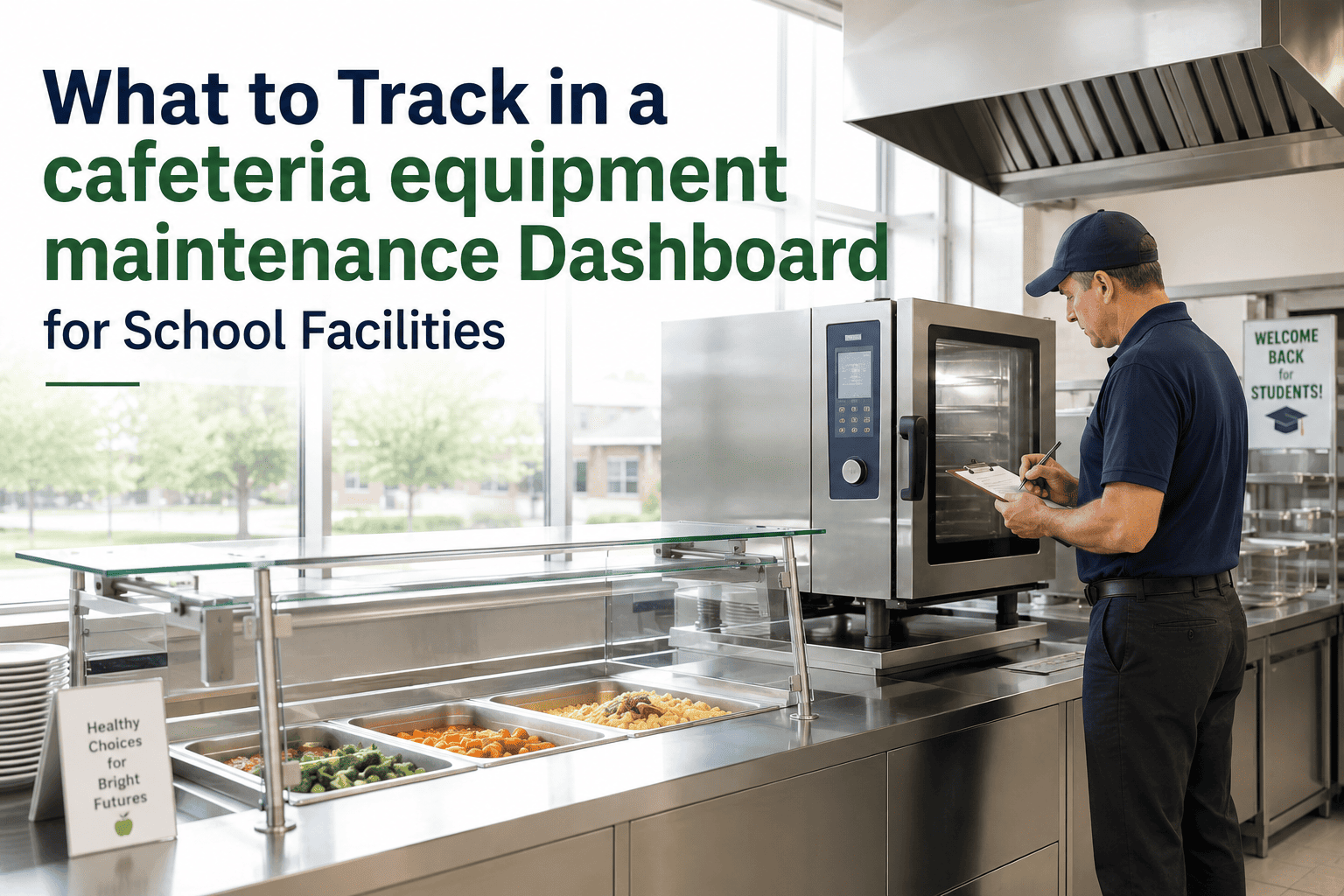
What to Track in a Cafeteria Equipment Maintenance Dashboard for School Facilities
From walk-in coolers to commercial dishwashers — the data points that keep school cafeteria equipment running, inspections passing, and meals on time.
What Happens When Cafeteria Equipment Goes Untracked
School food service equipment runs harder than most commercial kitchens — multiple service periods daily, limited cleaning downtime, and high stakes if something fails during a meal service. Without a maintenance dashboard, facilities teams fly blind: they do not know when the last service happened, what the temperature trend in the walk-in cooler has been, or which fryer is three weeks past its filter change. The result is health code citations, food waste from warm coolers, and reactive repair bills that eat the facilities budget.
The Cafeteria Equipment Metrics That Belong on Your Dashboard
How OxMaint AI Predicts Cafeteria Equipment Failures Before They Happen
Traditional dashboards show you what happened. OxMaint's AI predictive maintenance layer shows you what is about to happen — giving your team days or weeks of lead time before a cafeteria equipment failure disrupts a meal service or triggers a health inspection finding.
Give Your Cafeteria Team a Dashboard That Sees Failures Coming
OxMaint's AI predictive maintenance tools track every metric above, analyze trends, and alert your team before a walk-in cooler, fryer, or dishwasher creates a health code violation or a missed meal service.
Frequently Asked Questions
What types of cafeteria equipment can OxMaint track?
OxMaint tracks any cafeteria asset — walk-in coolers, reach-in refrigerators, commercial ovens, fryers, steamers, dishwashers, prep equipment, and exhaust hoods. Assets are customizable with equipment-specific PM templates. Start a free trial to explore the template library.
How does OxMaint's AI predictive maintenance work for school cafeterias?
OxMaint analyzes inspection history, temperature trends, corrective action frequency, and PM completion rates to generate a health score and failure probability for each asset. When a trend indicates an impending failure, the system automatically creates a preventive work order with lead time to act. Book a demo to see a live example.
Can OxMaint help with health department inspections?
Yes. OxMaint exports a complete service history for any piece of equipment — with inspection dates, technician signatures, temperature logs, and corrective actions — in under 5 minutes. Health inspectors receive documented evidence of a consistent PM program, not a stack of paper forms.
Can food service staff without maintenance training use OxMaint?
Yes. OxMaint's mobile app is designed for field users of all technical levels. Cafeteria staff can complete daily or weekly visual inspections using guided forms with photo capture — no technical background required. Findings route automatically to the maintenance team.
How do I get OxMaint set up for my school's cafeteria equipment?
Most school food service programs are fully live on OxMaint within 3 to 4 weeks. The process covers asset import, PM template setup, and mobile training. Book a demo to scope your setup and see food service-specific templates.
Stop Losing Meals and Budgets to Preventable Equipment Failures
OxMaint's cafeteria equipment dashboard tracks temperature trends, service history, and compliance risk across every asset — and its AI predictive maintenance layer alerts your team before a fryer, cooler, or dishwasher disrupts a meal service or fails a health inspection.