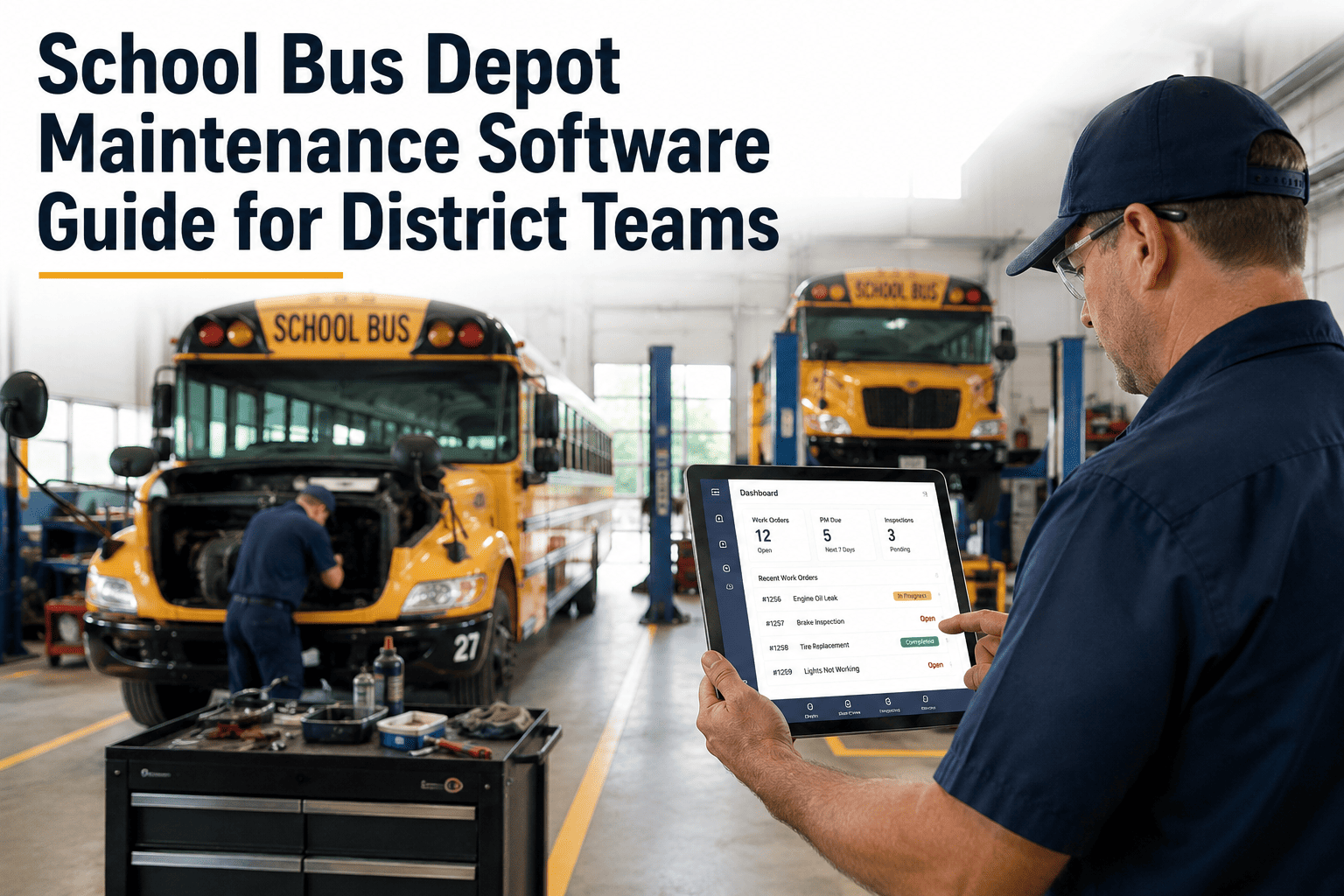
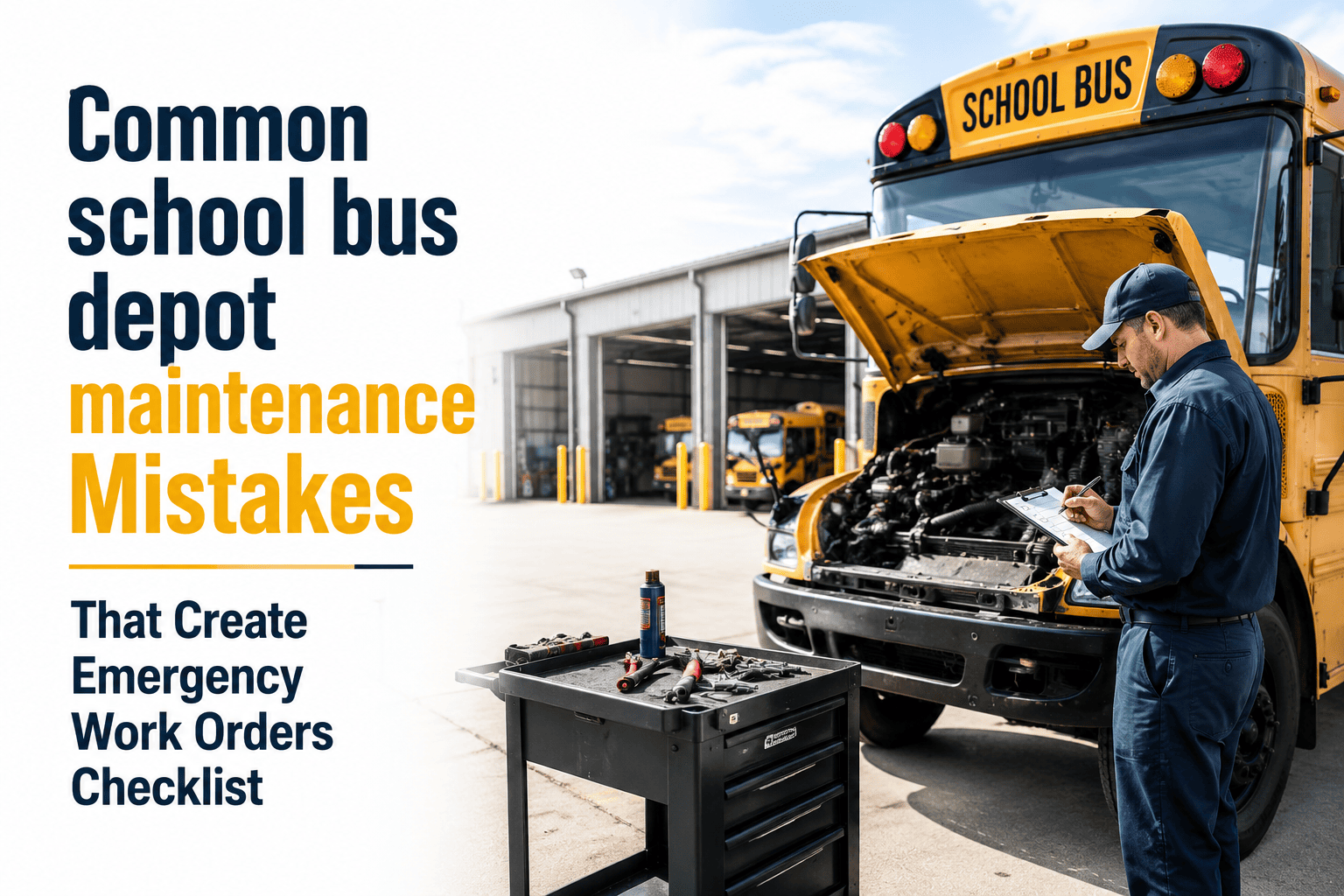
School district transportation departments are running some of the most demanding maintenance operations in public education — large fleets, mandatory safety compliance windows, and zero tolerance for vehicles that miss routes. Yet the majority of bus depot maintenance teams are still managing service records in binders, tracking parts in spreadsheets, and relying on drivers to self-report mechanical issues. The result is predictable: reactive repairs that cost three to five times more than planned maintenance, compliance documentation that takes days to produce for audits, and technicians spending 25% of their time on admin rather than wrenches. This guide covers how district transportation teams are replacing that chaos with purpose-built depot maintenance software that handles work orders, PM scheduling, parts tracking, and DOT compliance from a single platform. If your district is ready to move on from spreadsheets, sign up for Oxmaint free and connect your bus fleet in under an hour, or book a session with our transportation maintenance specialists.
District Transportation Guide
School Bus Depot Maintenance Software Guide for District Teams
Everything district transportation directors need to know about choosing, implementing, and getting ROI from bus depot maintenance software — before your next DOT audit.
3–5x
Cost of reactive vs. planned bus repairs
28%
Of technician time lost to paperwork and coordination
62%
Fewer compliance gaps with digital maintenance tracking
What District Bus Depot Maintenance Software Must Do
General CMMS tools built for commercial fleets or industrial facilities don't fit school bus depot operations. The regulatory environment, the budget constraints, and the operational rhythms of a district transportation department require specific capabilities. Here is what to look for — and what Oxmaint delivers for district teams.
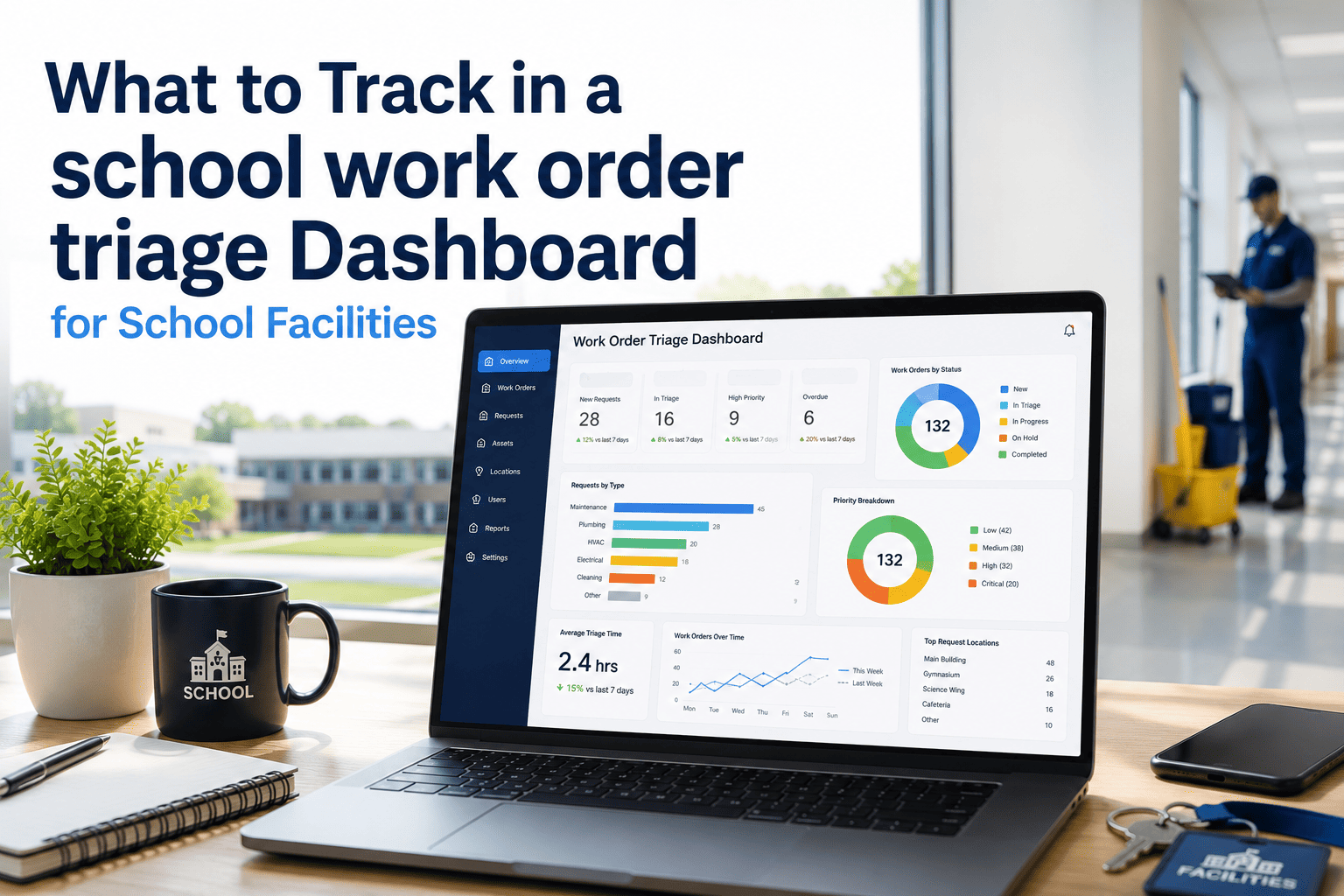
Work Orders
Mobile-first work order management
Technicians create, update, and close work orders from the bus bay floor on their phone. No paper traveler, no back-office data entry, no end-of-day catch-up. QR scan a bus, pull up its full service history, and log the current job in under a minute.
Compliance
DOT and state compliance tracking
Annual inspections, brake checks, and state-mandated safety certifications are scheduled automatically and tied to individual vehicle records. Certificates attach directly to the bus file. Audit-ready reports generate in minutes, not days.
Preventive Maintenance
Mileage and calendar-based PM triggers
PM tasks trigger on odometer milestones (3,000-mile oil changes, 12,000-mile brake inspections) or calendar intervals (monthly coolant checks, annual emissions). Oxmaint reads mileage updates from driver logs and auto-schedules the next PM task before the vehicle goes out of window.
Parts
Parts inventory and reorder alerts
Track parts stock by bin location, set minimum quantities for high-velocity items like filters and brake pads, and receive reorder alerts before you run out mid-repair. Parts used on work orders are deducted from inventory automatically, keeping your stock count accurate.
Reporting
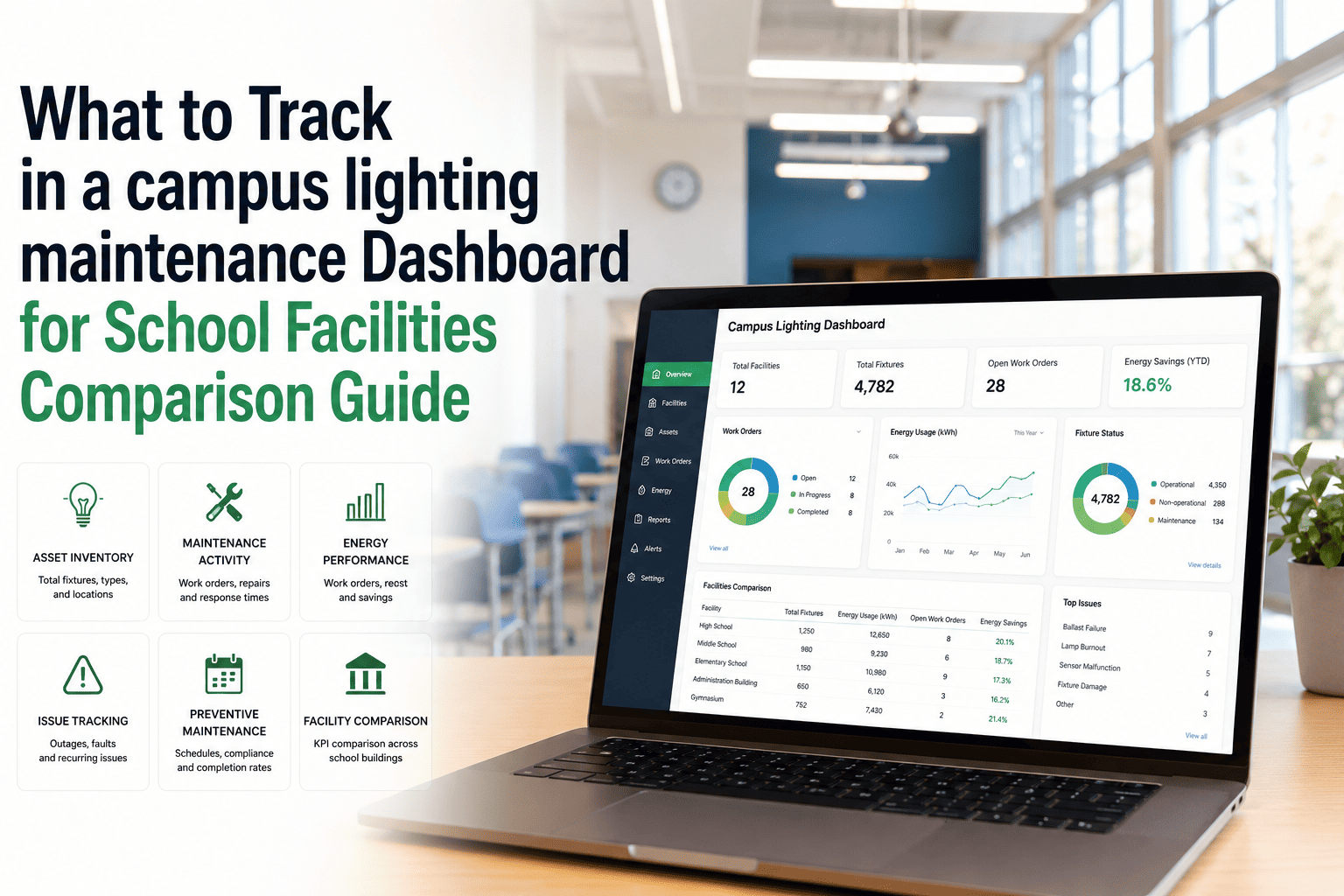
Fleet-level maintenance dashboards
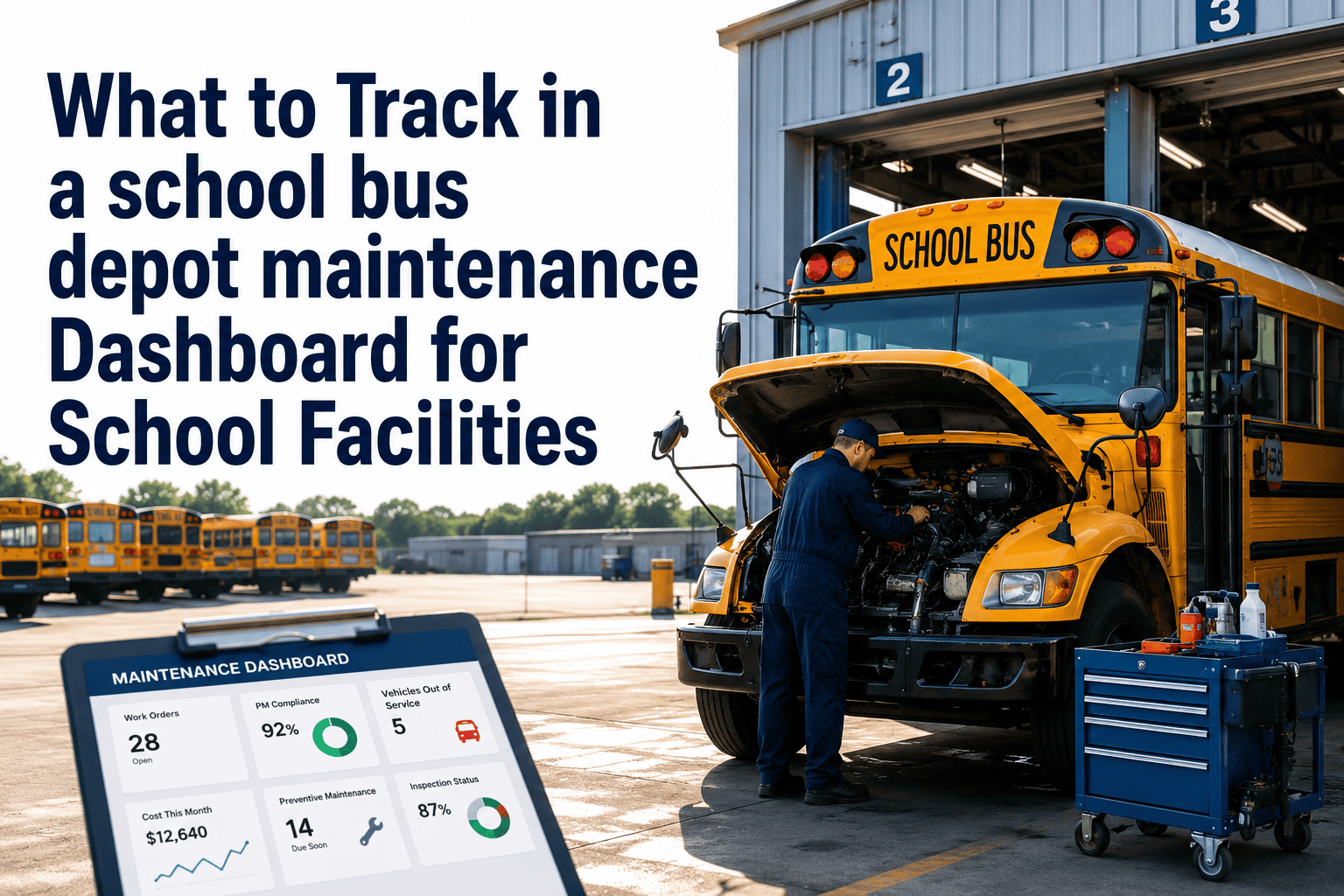
See every bus in the fleet at once — which have open work orders, which are behind on PM, which have logged the most breakdown hours this semester. Spot the worst performers before they become the reason a route is late on a Monday morning.
Driver Reporting
Driver defect reporting integration
Drivers submit pre-trip and post-trip defect reports via mobile. Issues route directly to the work order queue with vehicle ID, report time, and defect description. Nothing falls through the gap between the bus yard and the shop.
Oxmaint is purpose-built for district transportation maintenance teams. Work orders, PM scheduling, DOT compliance, parts inventory, and fleet reporting — all in one system, accessible from the bus bay on mobile.
Spreadsheets vs. Depot Maintenance Software: Real Operational Difference
Most district transportation directors know spreadsheets aren't working. The question is what the concrete operational difference looks like when you switch. Here is the scenario-by-scenario comparison.
| Scenario |
With Spreadsheets |
With Oxmaint |
| DOT audit requested next week |
2–3 days locating records across binders and files, manually compiling |
20-minute report export — all records tied to vehicle by VIN |
| Bus #47 misses a route — driver reports brake noise |
Verbal report to supervisor, supervisor calls shop, technician writes paper job card |
Driver submits defect via mobile, work order opens automatically, tech sees it instantly |
| Fleet director asks: which buses are behind on annual inspection? |
Manual cross-reference of inspection log vs. fleet list — 30–60 min |
Dashboard filter shows overdue inspections by vehicle in under 10 seconds |
| Brake pad stock runs out mid-repair |
Discovered when tech opens parts bin — emergency purchase order, repair delayed |
Reorder alert fired 5 days ago — parts on shelf before stock ran out |
| New technician joins the team |
Weeks of shadow training — institutional knowledge lives in people's heads |
Full vehicle history, PM procedures, and parts lists accessible day one in the app |
Where District Teams See ROI in the First 90 Days
Transportation directors implementing depot maintenance software consistently report the same three ROI sources in the first quarter — before any AI predictive maintenance features even kick in.
1
Compliance time savings
Audit preparation drops from 2–3 days to under an hour. That time savings alone adds up to 50+ hours per year for a department managing 40+ vehicles. Directors report using that recaptured time on fleet planning rather than paperwork retrieval.
2
Reactive repair reduction
PM completion rates increase when technicians have mobile access to scheduled tasks. Higher PM completion means fewer missed service windows, which directly reduces the category of costly emergency repairs caused by overlooked maintenance — typically the most expensive repairs in any fleet.
3
Parts cost control
Accurate inventory tracking reduces both stockouts (which trigger emergency purchases at higher prices) and overstock (which ties up budget in parts that sit for months). Districts managing 60+ buses typically see parts spend stabilize within 60 days of going live with proper inventory tracking.
Frequently Asked Questions
How does Oxmaint handle mileage-based PM triggers for school buses?
Drivers or dispatchers log current mileage when submitting trip reports or defect checks. Oxmaint compares that mileage against the PM trigger thresholds set for each vehicle and auto-generates a PM work order when the threshold is reached. You can set buffer windows (e.g., alert at 200 miles before due) to schedule before the deadline.
Sign up free to configure your PM thresholds.
Can we track compliance separately for state inspection vs. federal DOT requirements?
Yes. Oxmaint allows multiple compliance inspection types per vehicle, each with their own schedule, documentation requirements, and certification expiry tracking. State annual safety inspection, federal DOT periodic inspection, and district-mandated checks each get their own compliance calendar entries with separate alert windows and document slots.
What does implementation look like for a 50-bus district depot?
Most districts complete onboarding in two weeks: week one covers vehicle import, PM template configuration, and technician mobile setup. Week two covers compliance schedule migration and driver defect reporting activation. Oxmaint's team provides guided onboarding for district accounts.
Book a session to walk through the implementation timeline for your depot.
Do drivers need to install an app to submit defect reports?
Drivers can submit defect reports via the Oxmaint mobile app or through a mobile-optimized web form accessed by QR code on the bus — no app download required for basic defect reporting. The QR code approach is particularly popular with drivers who prefer not to install another app on their personal device.
How does the system handle seasonal demand — like end-of-year fleet servicing before summer?
Oxmaint lets you create seasonal PM campaigns — batch-scheduling an end-of-year or start-of-year service for the entire fleet simultaneously, with staggered scheduling to avoid overwhelming the shop. Work orders are distributed across your technician team based on workload capacity.
Try it free to build your first seasonal campaign.
Stop Managing Your Bus Fleet on Spreadsheets
Oxmaint gives district transportation teams mobile work orders, mileage-based PM triggers, DOT compliance tracking, and fleet dashboards — all in one system that your technicians will actually use, starting day one.