![university-custodial-workloading-appa-levels-issa-612-cmms-mobile[1]](./manage-post-2k26/uploads/university-custodial-workloading-appa-levels-issa-612-cmms-mobile[1].png)
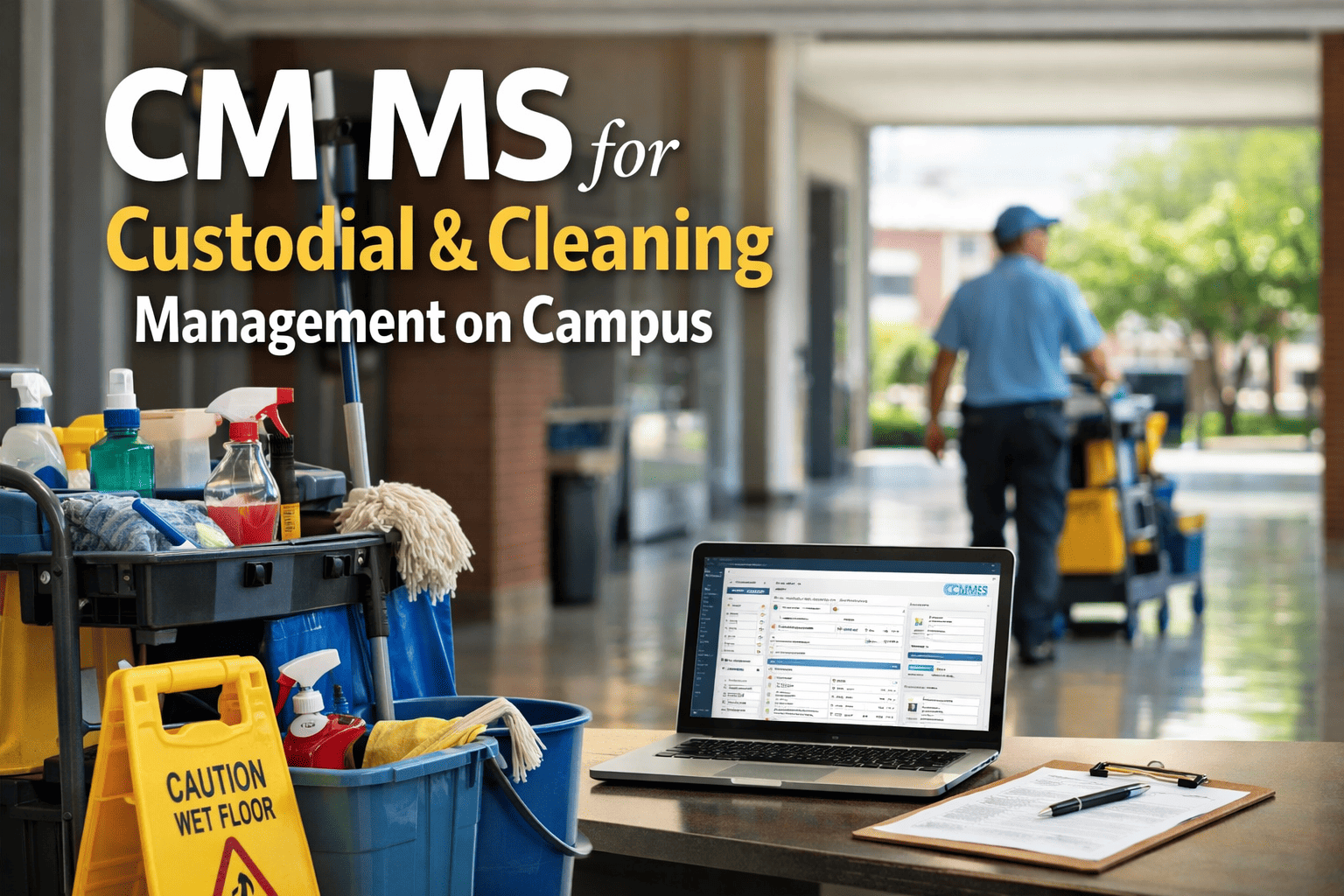
University custodial programs are under budget pressure that is unlike almost any other facilities function on campus — they are visible to every student, faculty member, visitor, and accreditation reviewer, yet they are among the first line items targeted when state funding tightens or endowment returns fall short. The institutions that manage this pressure successfully are not the ones that cut bodies and hope no one notices — they are the ones that use structured workloading methodologies to define exactly what level of cleanliness each space receives, what time that standard requires, how many staff are needed to deliver it consistently, and what the operational evidence looks like when an administrator, auditor, or labor arbitration board asks for documentation. APPA's custodial staffing guidelines and the ISSA 612 cleaning times database provide the two most widely accepted frameworks for university custodial workloading in North America — and when those frameworks are connected to a CMMS that manages mobile route assignments, digital task completion records, and productivity reporting, the result is a custodial program that can defend its staffing model with data rather than institutional memory. The challenge most universities face is that APPA benchmarking is done once every few years during a budget cycle, ISSA cleaning times are stored in a spreadsheet that one person manages, and daily route assignments are communicated on paper or via text message with no systematic record of what was cleaned, when, by whom, and to what documented standard. Oxmaint gives university custodial managers mobile route delivery, digital task completion capture, supervisor audit workflows, and productivity dashboards — replacing the clipboard and text-message coordination system that makes custodial programs invisible to institutional leadership. If your department needs to defend its staffing model or demonstrate service delivery evidence at the next budget review, start a free trial or book a demo to see how mobile route management and productivity reporting work for a campus of your size.
University Custodial Workloading: APPA Levels, ISSA 612, and CMMS Mobile Routes
APPA staffing benchmarks and ISSA 612 cleaning times define what custodial service costs and what it delivers. CMMS mobile routes make that framework operational — replacing clipboard coordination with digital task records, productivity dashboards, and audit-ready service evidence.
Custodial Programs Without Data Are Budget Targets. Programs With Data Are Budget-Defensible.
When a VP of Finance asks why custodial costs $4.2 million annually, the answer cannot be "because that is what it has always cost." The answer must include square footage cleaned, APPA service level assigned by building, ISSA-calculated time per task, total productive hours budgeted, and documented service delivery evidence by date and location. Oxmaint gives custodial managers that data — automatically, from mobile routes. Start a free trial or book a demo to see the productivity reporting dashboard built for university custodial operations.
APPA Custodial Appearance Levels: What Each Level Means in Practice
APPA's five custodial appearance levels are the most widely cited benchmarking framework in North American higher education facilities. Each level defines a specific standard of cleanliness with descriptive criteria that can be observed and measured — making them the foundation for workload calculation, staffing justification, and service level agreement documentation.
All surfaces spotless and bright. No dust, streaks, stains, or odors. Immediate response to any spill or soil. Reserved for operating rooms, clean rooms, and highest-visibility administration spaces. Carries the highest labor cost per square foot.
Surfaces generally clean with some dust, minor smudges, or fingerprints acceptable in low-traffic areas. No soil accumulation or odors. Appropriate for standard classrooms, faculty offices, and administrative areas. The APPA benchmark target for most academic buildings.
Dust and smudges visible. Some staining acceptable on carpets. Fixtures clean but not polished. Floors swept but not detailed. Appropriate for storage areas, back-of-house, and utility corridors. Below the standard most universities publicly commit to for occupied academic space.
Noticeable accumulation of soil, staining, and dust. Fixtures dirty with soap scum and water spots. Odors possible. This level indicates understaffing or route overloading in occupied academic space — a documented service failure, not an intentional service level.
How ISSA 612 Cleaning Times Power the Workloading Calculation
ISSA 612 — "Cleaning Times" — is a database of time standards for 800+ individual cleaning tasks, measured in minutes per 1,000 square feet or minutes per unit. Where APPA defines what cleanliness should look like, ISSA 612 defines how long it takes to achieve it. Together, they produce a workloading calculation that translates square footage and space type into required custodial hours — the foundation of a defensible staffing model.
| Task | Space Type | ISSA Time | Frequency |
|---|---|---|---|
| Vacuum carpet | Classroom | 5.2 min / 1,000 sf | Daily |
| Mop hard floor | Corridor | 7.8 min / 1,000 sf | Daily |
| Clean restroom | Gang restroom | 3.4 min / fixture | Daily |
| Empty trash | Office | 1.1 min / receptacle | Daily |
| Dust horizontal surfaces | Office | 4.6 min / 1,000 sf | Weekly |
| Strip and wax floor | Corridor | 34.0 min / 1,000 sf | Semi-annual |
| High dust | Classroom | 6.2 min / 1,000 sf | Monthly |
| Clean glass entrance | Lobby | 8.5 min / door unit | Daily |
Where University Custodial Programs Lose Control of Productivity and Evidence
APPA and ISSA frameworks exist in almost every university facilities department — the problem is that they live in planning documents and spreadsheets, disconnected from the daily operational reality of route delivery. The gap between the workloading plan and the service evidence is where budget credibility, staff accountability, and service quality all erode.
Daily route assignments are printed or texted to staff. When tasks are completed, nothing is recorded. When a restroom complaint arrives at 2pm, there is no record of whether it was cleaned at 7am or skipped entirely. The ISSA workloading plan says 3.4 minutes per fixture — but whether those minutes were spent is undocumented.
When a custodian calls out sick, their route is either absorbed by a colleague, partially covered, or left uncovered — and in all three cases, the record looks identical: nothing. Without a CMMS showing which tasks were reassigned, which were deprioritized, and which buildings received reduced coverage, the impact of absenteeism on service level is invisible until complaints accumulate.
APPA levels are assigned during workloading — but never verified during operations. A building assigned Level 2 service may be receiving Level 3 service due to route overloading, task skipping, or poor supervisor coverage ratio. The discrepancy surfaces only when a dean complains about a dirty building, not through systematic service quality monitoring.
When the budget office requests productivity metrics — cost per square foot, tasks completed per FTE, service level compliance rate — the custodial manager has no system-generated data to provide. The ISSA workloading plan shows theoretical productivity, not actual productivity. Budget negotiations happen on theoretical numbers, which undermines credibility when actual costs differ.
How Oxmaint Connects APPA Workloading to Mobile Route Delivery
Oxmaint translates the APPA and ISSA workloading plan from a spreadsheet into a live operational system — delivering daily routes to staff mobile devices, capturing task completion records in real time, enabling supervisor audits against APPA standards, and generating the productivity reporting that makes custodial budgets defensible. Teams ready to operationalize their workloading framework can start a free trial or book a demo to see the route management and productivity dashboard in a live environment.
Daily routes configured from the ISSA workloading plan deliver to staff smartphones as ordered task lists — building, floor, space, task, and frequency. Staff tap to confirm completion. Routes respect building priority and APPA level assignment. No paper distribution, no text message coordination, no route ambiguity.
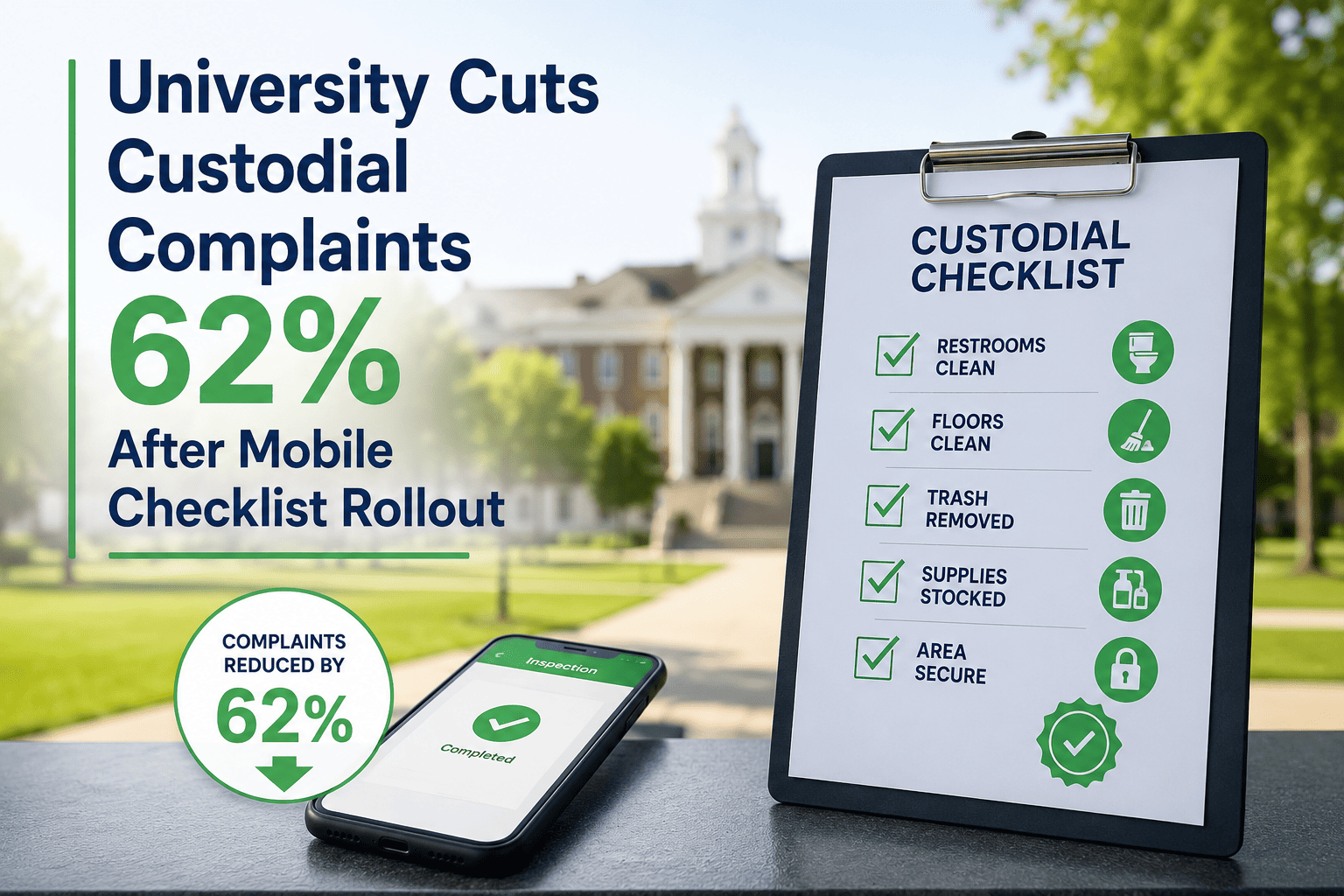
Every task completion is timestamped, location-stamped, and linked to the custodian who completed it. When a restroom complaint arrives, the supervisor opens the location record and sees exactly when it was last serviced, by whom, and what the standard completion checklist captured — resolving disputes in under 60 seconds with documented evidence.
Supervisors conduct scheduled quality audits using Oxmaint's mobile inspection checklist configured to APPA appearance level criteria — rating each space against the assigned service level, attaching photos of deficiencies, and generating an audit score. Audit results tie to the space record and trend over time — making service level compliance visible and measurable.
When a custodian is absent, Oxmaint's route management module shows the supervisor which tasks are unassigned, which buildings are highest APPA priority, and who has available capacity. Reassignment decisions are documented — creating a record of which buildings received modified coverage and which tasks were deprioritized. No invisible coverage gaps.
Oxmaint generates weekly and monthly productivity reports comparing actual completed tasks against the ISSA-planned workload — by individual custodian, by building, by shift, and by department. These reports replace the theoretical staffing model with actual performance data — giving budget presentations the evidence base they need to be credible.
Spill reports, restroom complaints, and special cleaning requests from faculty and staff convert to custodial work orders in Oxmaint — assigned by building and priority, tracked to completion, and distinguished from routine route tasks in productivity reporting. Reactive vs. planned service split is visible in every productivity report.
Clipboard-Based Custodial Operations vs. Oxmaint CMMS-Managed Routes
What University Custodial Programs Measure After Implementing Mobile Routes
Timestamped task records resolve complaints in under 60 seconds — supervisors know exactly when a space was serviced before calling back the requester
Structured mobile routes eliminate dead time from route uncertainty, storeroom trips without lists, and supervisor coordination interruptions — measurable in actual completion data
Mobile audit tools catch service deficiencies within 24 hours of occurrence — before they accumulate into the visible soil levels that generate dean and provost complaints
12 months of actual productivity data — tasks completed, FTE utilization, APPA audit scores — replaces theoretical ISSA calculations in budget defense presentations
Frequently Asked Questions
How is Oxmaint's custodial route module different from a task management app?+
Can Oxmaint handle both union and non-union custodial workloading in the same platform?+
How does Oxmaint handle special event and move-in/move-out custodial surge requirements?+
Can the APPA audit data from Oxmaint be used in APPA self-assessment and benchmarking submissions?+
Turn Your Workloading Plan Into a Live Operational System
APPA levels and ISSA 612 cleaning times tell you what custodial service should cost and what it should deliver. Oxmaint mobile routes make it operational — with timestamped task records, APPA audit scores, absenteeism coverage documentation, and productivity reporting that gives your budget presentations the evidence base they deserve. No implementation project. Mobile routes active in week one. First APPA audit data captured in the first supervisor shift.