A public university with over 18,000 students was receiving more than 1,400 service requests per month through its facilities help desk — roughly 35% of which were duplicates, status inquiries on existing tickets, or questions already answered in maintenance FAQs. The administrative burden on facilities coordinators was unsustainable. After deploying Oxmaint's requester self-service portal — surfacing existing open tickets and knowledge resources before new submission — the university reduced total incoming request volume by 36% within one semester. Teams looking to replicate this can Sign Up Free and activate the requester portal in their Oxmaint environment today.
See how Oxmaint's self-service portal reduces service request volume and gives requesters real-time visibility into their tickets.
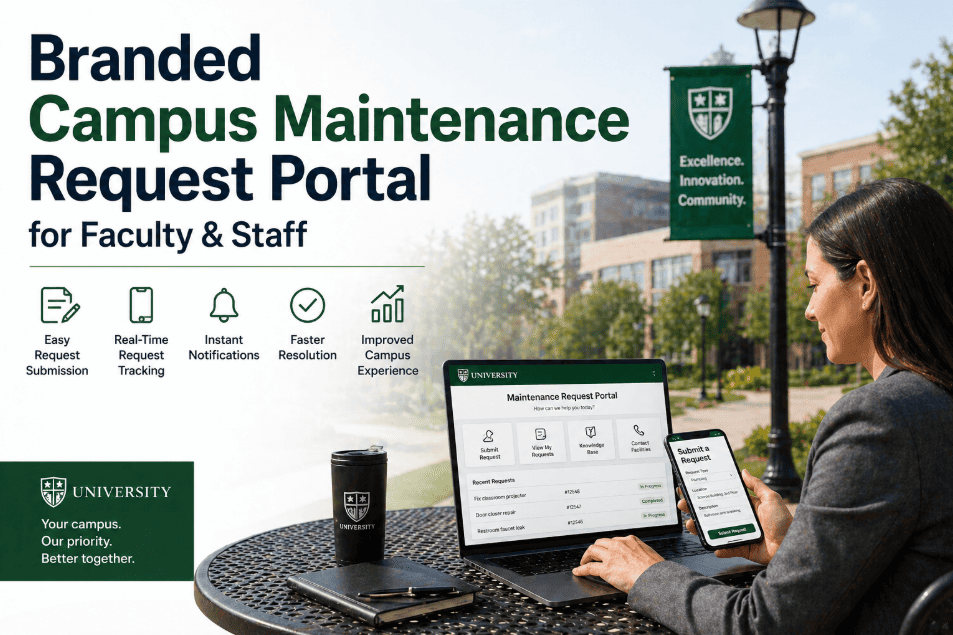
Give students, faculty, and staff a faster way to submit and track maintenance requests while reducing duplicate tickets and unnecessary follow-up calls. Oxmaint's self-service portal provides real-time visibility, automated request routing, and instant access to helpful resources—helping facilities teams work more efficiently and deliver a better service experience across campus.
The Challenge
01
High Duplicate Ticket Volume
Students and staff submitted new requests without checking whether an identical issue was already open. Coordinators spent hours each day closing duplicates and sending status replies.
02
No Visibility for Requesters
Once a request was submitted, requesters had no way to track status without emailing or calling the facilities desk directly — generating a second wave of inbound volume.
03
03
Coordinator Overload
Facilities coordinators were spending up to 2.5 hours per day triaging, deduplicating, and routing requests — time that could have been spent on operational oversight and scheduling.
04
No Pre-Submission Deflection
The intake form had no mechanism to surface known issues, scheduled maintenance, or existing open tickets before a new submission was completed — every request entered the queue regardless of context.
The Solution
The university deployed Oxmaint's request management module with its requester-facing self-service portal enabled. The portal surfaces existing open tickets matching the requester's location and issue category before the submission form appears — allowing requesters to track a known issue instead of filing a duplicate. A searchable FAQ layer surfaces scheduled maintenance notices and resolved issue documentation. Facilities managers curious about this configuration can Book a Demo to walk through the portal setup and intake logic in detail.
Pre-Submission Ticket Surfacing
Before the submission form loads, the portal queries open work orders by building, floor, and issue category. Requesters see matching active tickets and can subscribe to updates instead of creating a new entry.
Real-Time Request Tracking
Requesters receive a unique tracking link on submission and can view status, assigned technician, and estimated resolution time without contacting the facilities desk.
Maintenance FAQ Integration
Common reported issues — HVAC settings, light outages, restroom supplies — are mapped to FAQ responses that display automatically, resolving a portion of requests before submission is attempted.
Smart Intake Routing
Requests that do proceed to submission are automatically categorized by Oxmaint's intake engine and routed to the correct team and priority queue, eliminating manual coordinator triage.
Implementation Approach
Phase 1
Weeks 1–2
Portal Configuration & FAQ Build
Oxmaint requester portal activated and branded. Top 40 recurring issue categories mapped to FAQ responses. Building and floor taxonomy configured for pre-submission ticket matching.
Phase 2
Weeks 3–4
Rollout & Requester Communication
Portal URL distributed campus-wide via facilities communications. QR codes placed at high-traffic request locations. Old email intake redirected to portal landing page.
Phase 3
Weeks 5–16
Monitoring & Optimization
Coordinator team reviewed weekly portal analytics. FAQ library expanded based on deflection failure reports. Duplicate rate and coordinator triage time tracked monthly.
Results — One Semester Post-Deployment
36%
Request Volume Reduction
Achieved within one semester
2.1 hrs
Daily Coordinator Time Recovered
From eliminated triage and duplication work
68%
Drop in Duplicate Tickets
Via pre-submission existing ticket surfacing
91%
Requester Satisfaction Score
Post-portal survey across student and staff requesters
22%
FAQ Deflection Rate
Requests resolved before portal submission
4 wks
Time to Full Deployment
From configuration to campus-wide rollout
Key Business Impact
Coordinator Capacity Released
With 2+ hours of daily triage time recovered, coordinators shifted focus to scheduling oversight, vendor coordination, and compliance documentation — higher-value work that directly supports campus operations.
Faster Resolution Perception
Requesters with real-time tracking reported feeling more confident in facilities responsiveness — even without any change in actual resolution time. Transparency drove satisfaction improvement.
Cleaner Work Order Queue
Technicians received work orders with cleaner data — correct location, accurate issue description, no duplicate assignments. Average time to first response on valid requests dropped by 28%.
Scalable Intake Infrastructure
The portal now handles summer conference season and new semester volume spikes without additional coordinator staffing — a structural improvement with compounding annual value.
Facilities teams managing high request volumes across campus can Sign Up Free and activate Oxmaint's requester portal without any additional infrastructure. Universities with complex multi-building intake workflows are encouraged to Book a Demo to review how intake routing rules and FAQ mapping are configured for campus-specific scenarios.
Reduce service request volume, eliminate duplicate tickets, and give requesters real-time visibility — all from one Oxmaint portal.
Frequently Asked Questions
How does Oxmaint's self-service portal reduce duplicate service requests?
Before the submission form loads, the portal checks for open work orders matching the requester's building and issue type. Requesters can subscribe to an existing ticket instead of creating a new one — eliminating duplicates at the source.
Can requesters track the status of their submitted requests without calling the facilities desk?
Yes. Each submission generates a unique tracking link. Requesters see real-time status, assigned technician, and estimated completion — no phone calls or emails required.
How long does it take to configure and deploy the Oxmaint requester portal?
Most universities complete portal configuration, FAQ mapping, and campus rollout within 3–4 weeks. No custom development is required — the portal uses Oxmaint's standard configuration interface.
Does Oxmaint integrate with existing facilities intake systems like email or help desk tools?
Yes. Oxmaint supports email-to-ticket intake and can redirect legacy email workflows to the portal. The platform also integrates with common university IT and facilities systems via API.
What types of FAQs and responses can be mapped in the portal?
Any recurring issue category can be mapped — HVAC complaints, lighting, plumbing, elevator issues, scheduled maintenance windows, and seasonal outage notices. FAQ content is managed directly in the Oxmaint admin panel without IT support.
Start reducing service request volume today. No credit card required. See results within your first semester.