At 7:42 AM on a Monday, a broken HVAC unit in the library forces 230 students into alternate study spaces. The work order sits in an email inbox for 3 hours before assignment. The technician arrives without the replacement part. A second trip scheduled for Thursday. Total resolution time: 4 days. Student complaints: 47. Meanwhile, your maintenance backlog shows 183 open work orders, but nobody can tell you which are critical, which are waiting on parts, or which have been stalled for weeks.
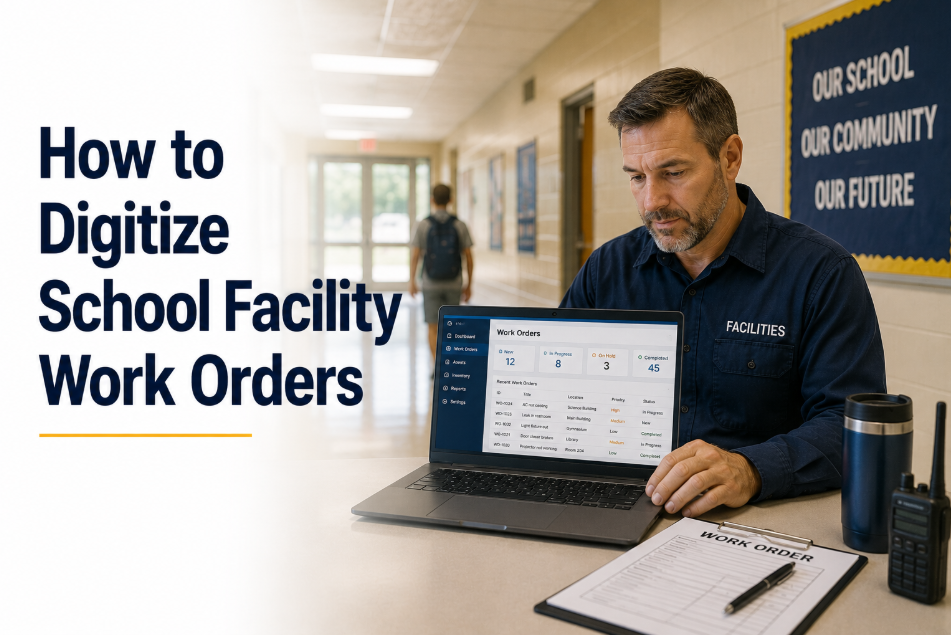
Work order management represents the operational backbone of campus facilities—yet most educational institutions run on fragmented systems: email requests, paper forms, spreadsheet tracking, and verbal assignments. The result: 40-60% longer resolution times, zero accountability, and maintenance teams spending more time tracking work orders than actually completing them.
This workflow template provides campus maintenance teams with a structured work order management system—turning reactive chaos into predictable, measurable maintenance execution that keeps facilities running and students focused on learning. Schedule a personalized workflow consultation to see how your campus can implement these best practices in 12 weeks or less.
Transform your campus maintenance workflow with Oxmaint CMMS—automated work order routing, mobile technician access, and real-time visibility that delivers measurable improvements in response times and accountability. Start your free 14-day trial with complete access to all features, or book a 30-minute demo to see the platform customized for your campus needs.
The Campus Work Order Challenge
Educational facilities face unique maintenance challenges that make structured work order workflows essential. Multiple buildings with diverse systems, limited technician staff, budget constraints, and the need to minimize disruption during academic hours create complexity that email-based systems simply cannot handle.
Diagnosing issues, performing repairs, testing systems, completing maintenance tasks
Clarifying work requests, scheduling access, updating stakeholders, documenting completion
Searching for work order details, duplicate trips for parts, unclear priorities, lost requests
Standard Work Order Workflow Template
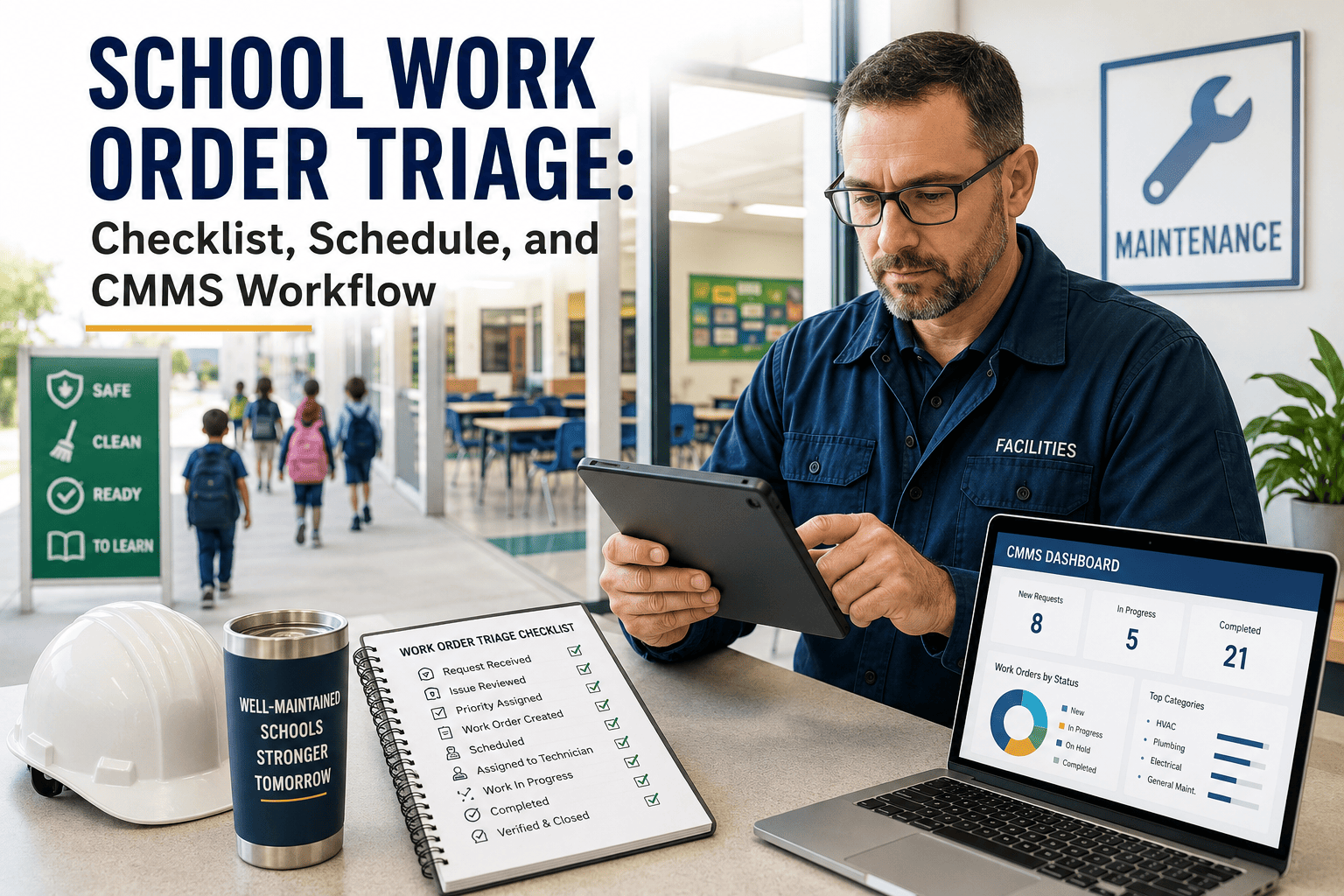
A structured workflow eliminates ambiguity and ensures every work order follows a predictable path from submission to completion. This template provides campus maintenance teams with clear stages, responsibilities, and decision points. Want to see this workflow configured for your specific campus setup? Schedule a live walkthrough where we'll map your current process and show you the automated alternative.
Faculty, staff, or students submit requests via web portal, mobile app, or automated detection systems
System assigns priority level based on location, issue type, and impact on operations
Work order routed to appropriate technician based on skills, location, and current workload
System verifies parts availability; if unavailable, triggers procurement and updates status
Technician completes work, documents actions, captures photos, records time and materials
Requester confirms resolution; system archives work order with complete history for compliance
Priority Classification Framework
Effective work order management requires clear priority definitions that balance safety, operational impact, and resource allocation. This framework helps campus teams make consistent triage decisions.
| Priority | Response Time | Examples | Assignment |
|---|---|---|---|
| Emergency | Immediate | Safety hazards, gas leaks, electrical failures, flooding, no heat in winter | On-call technician dispatched immediately |
| Urgent | 2-4 hours | HVAC failures affecting occupied spaces, elevator outages, major plumbing issues | Priority queue, same-day response |
| High Priority | 24 hours | Classroom equipment failures, minor HVAC issues, access control problems | Next available technician slot |
| Standard | 3-5 days | Preventive maintenance, minor repairs, cosmetic issues, routine inspections | Scheduled during regular workflow |
| Low Priority | As scheduled | Improvement projects, aesthetic upgrades, deferred maintenance planning | Planned maintenance windows |
Implement Automated Work Order Workflows
See how Oxmaint CMMS automatically triages requests, assigns technicians, and tracks completion—eliminating manual coordination and improving response times. During your personalized demo, we'll configure priority rules specific to your campus operations and show you real-time dashboards that give complete visibility into your maintenance backlog.
Work Order Lifecycle Stages
Each work order progresses through defined stages that provide visibility into status and enable proactive management. Understanding these stages helps maintenance teams identify bottlenecks and optimize throughput.
Key Performance Metrics
Track these KPIs to measure work order workflow effectiveness and identify improvement opportunities. Oxmaint CMMS provides real-time dashboards with automated alerts when metrics fall below targets.
Workflow Automation Opportunities
Modern CMMS platforms eliminate manual work order management tasks through intelligent automation. These capabilities transform maintenance operations from administrative burden to strategic advantage. Ready to see these features in action? Sign up for a free trial—no credit card required—and configure your first automated workflow in under 10 minutes with our guided setup wizard.
Implementation ROI: 25,000-Student Campus
This ROI model demonstrates the financial and operational impact of implementing structured work order workflows for a mid-sized university campus with 12 maintenance technicians and 45 buildings. Want to see the numbers for your specific campus size and staff? Schedule a customized ROI analysis session where we'll calculate your exact savings potential based on your current work order volume, technician count, and operational metrics.
Time Savings
Response Improvement
Parts Optimization
Total Annual Value
| Metric | Before CMMS | After Implementation | Improvement |
|---|---|---|---|
| Avg Resolution Time | 4.2 days | 1.8 days | -57% |
| On-Time Completion | 68% | 94% | +26 pts |
| Work Orders Per Technician/Day | 3.2 | 4.2 | +31% |
| First-Time Fix Rate | 73% | 87% | +14 pts |
| Admin Time (hours/week) | 22 hours | 6 hours | -73% |
Get a customized ROI analysis for your campus size and maintenance operation. Schedule a 30-minute consultation with our education facilities specialists—we'll review your current work order metrics, calculate your potential savings, and show you exactly how implementation would work for your specific environment.
Implementation Roadmap
Successful work order workflow implementation requires phased rollout that balances quick wins with long-term process improvement. This 12-week roadmap provides a proven path to operational excellence.
Foundation Setup
Pilot Launch
Campus-Wide Rollout
Optimization & Refinement
Best Practices for Campus Work Order Management
"Most campus maintenance teams struggle not because they lack skilled technicians, but because they lack structured workflows. When work orders arrive via email, voicemail, and walk-ups—all tracked in different places—you're constantly playing catch-up. A proper CMMS with automated routing and mobile access transforms operations: technicians spend 60% more time actually fixing things instead of coordinating, and response times drop by half. The technology exists; it's just about making the commitment to implement it properly."
The Bottom Line
Work order management represents the operational backbone of campus facilities. A structured workflow template—implemented through modern CMMS technology—transforms maintenance from reactive chaos into predictable, measurable operations. For a mid-sized campus, the math is clear: $134,000 in annual value through time savings, faster response, and improved efficiency. The question isn't whether to implement structured workflows, but how quickly you can deploy them.
Transform Your Campus Work Order Management
See exactly how Oxmaint CMMS streamlines work order workflows with automated routing, mobile access, and real-time visibility. Start with a free 14-day trial—no credit card required, complete access to all features, plus expert onboarding support to help you configure workflows for your campus. Or schedule a personalized 30-minute demo where we'll show you the platform customized for your specific maintenance operation.
No credit card required • 14-day trial • Education specialist support includedFrequently Asked Questions
How do we get faculty and staff to use a new work order system?
Make submission easier than the old way. A mobile-friendly web portal with simple forms takes 30 seconds to complete—faster than writing an email. Include automatic confirmation messages so requesters know their issue was received. The key is eliminating friction, not adding it. Want to see the exact portal your faculty would use? Sign up for a free trial and we'll set up a branded portal for your institution during onboarding.
What's the right priority classification system for campus maintenance?
Use 4-5 tiers: Emergency (immediate), Urgent (2-4 hours), High (24 hours), Standard (3-5 days), and Low (scheduled). Define each tier with specific examples relevant to your campus. The system should make 80% of priority decisions automatically based on issue type and location.
How do we handle work orders that require external contractors?
Create a separate workflow branch for contractor work that includes approval requirements, vendor selection, and invoice tracking. The CMMS should manage the entire lifecycle—from initial assessment through vendor assignment to final payment approval—in one system. During your demo, we can show you exactly how contractor workflows integrate with internal work orders. Schedule a walkthrough to see this in action.
What ROI can we expect from implementing structured work order workflows?
Most campuses see 15-20% productivity improvement within 90 days from reduced coordination time and better technician utilization. Combined with faster response times and improved documentation, typical ROI is $100,000-$150,000 annually for a mid-sized campus—with 4-6 month payback periods. Schedule a customized ROI analysis to see the exact savings potential for your campus size and work order volume.
How long does implementation take?
Full campus deployment typically takes 12 weeks: 3 weeks for setup and configuration, 3 weeks for pilot testing in select buildings, 3 weeks for campus-wide rollout, and 3 weeks for optimization. Many campuses see measurable improvements during the pilot phase itself. Our implementation team provides guided setup, training resources, and ongoing support throughout the process.