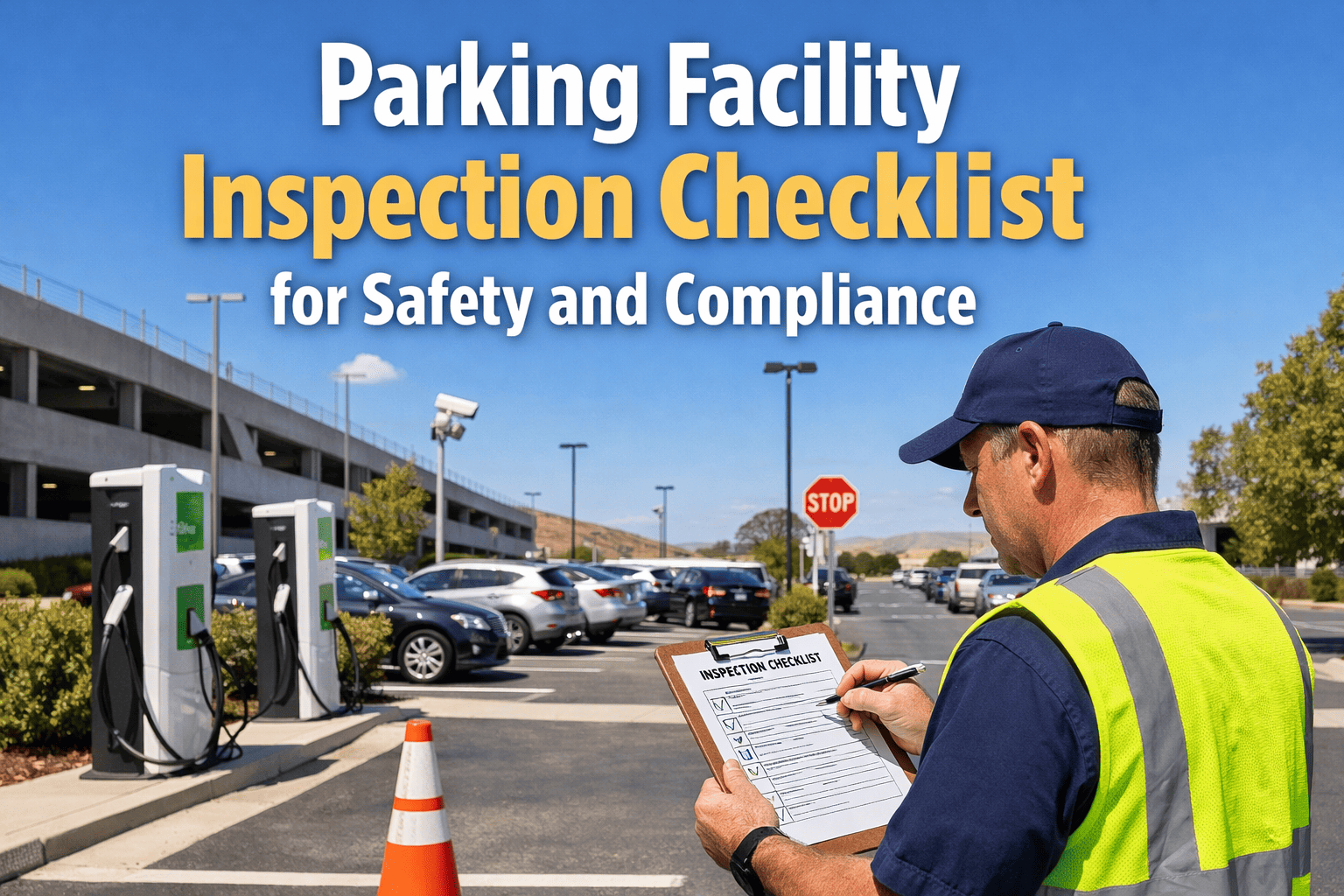
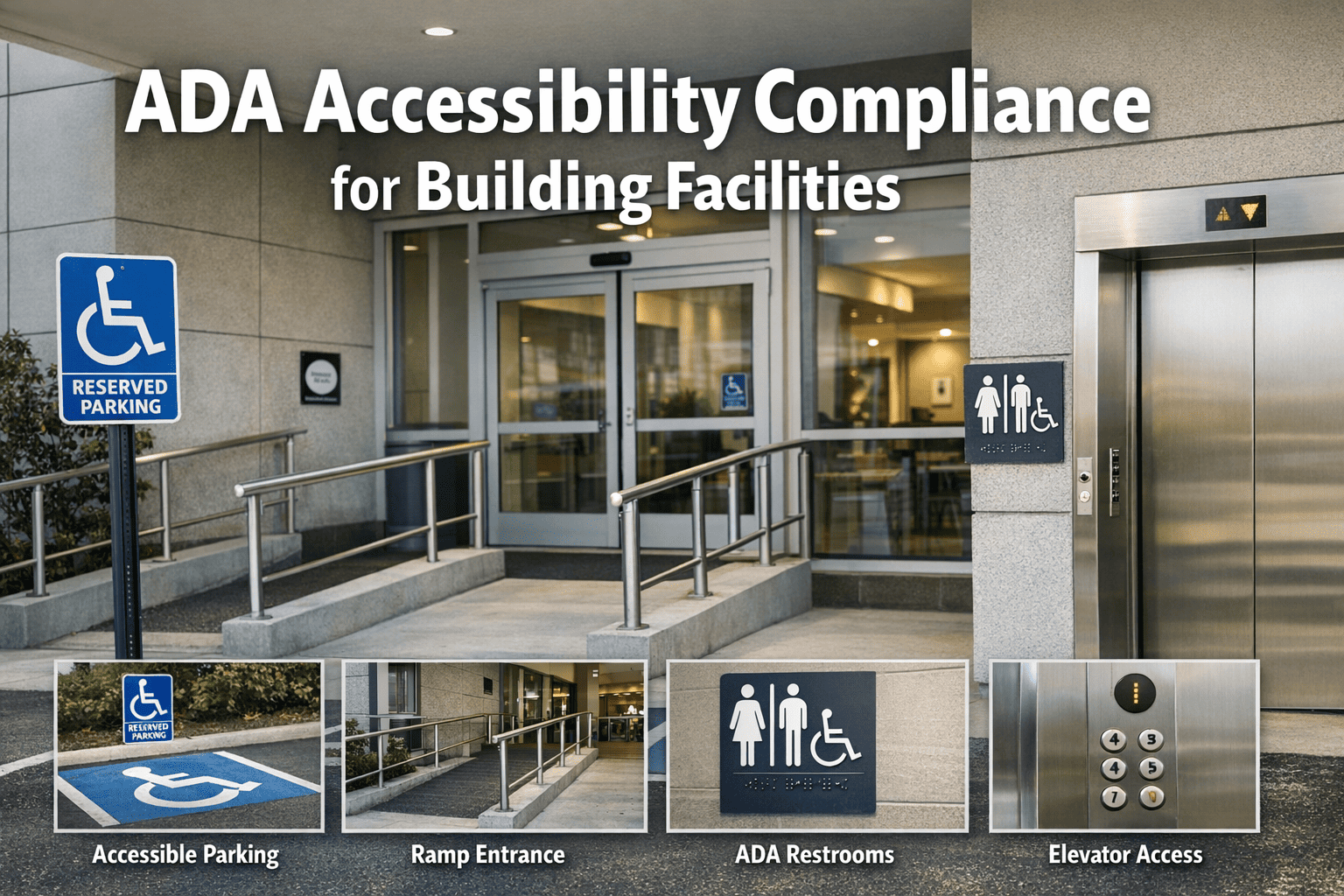
ADA Accessibility Compliance Checklist for Building Facilities
By Lewis Abbott on April 10, 2026
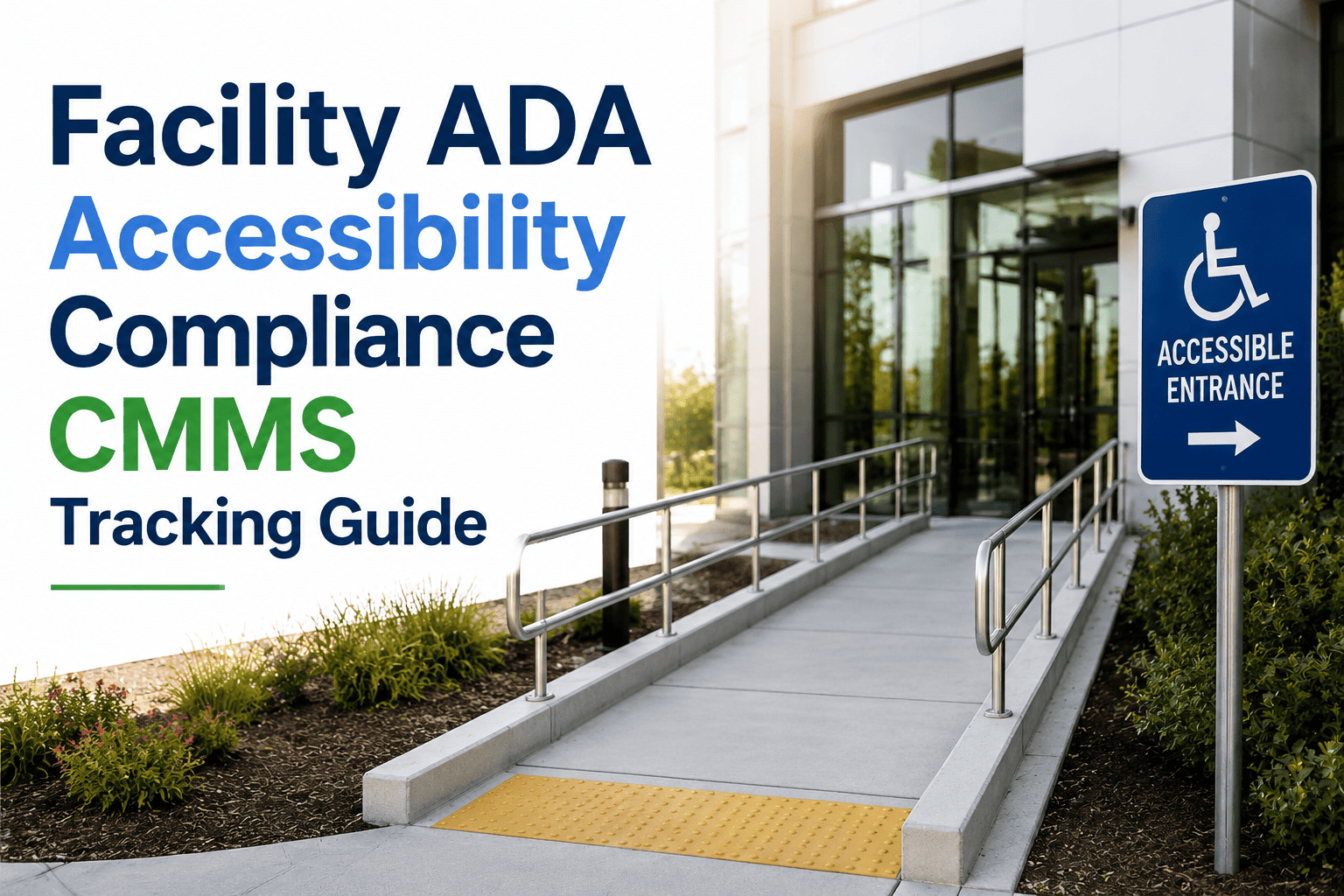
OxMaint helps facility managers track, document, and maintain ADA accessibility compliance across every area of their building — from parking lots to restrooms to emergency communication systems. This guide covers the critical checkpoints across all major facility zones, what inspectors look for, and how digital compliance tracking prevents costly violations before they happen. ADA compliance is not a one-time audit — it is an ongoing maintenance obligation that requires systematic inspection, documentation, and corrective action across your entire facility. Use this article as your field reference for building accessibility reviews and annual compliance planning.
Safety & Compliance · Accessibility Audit
ADA Accessibility Compliance for Building Facilities
A complete inspection reference covering parking, entrances, corridors, restrooms, signage, elevators, and communication systems for inclusive building design.
First-time ADA violation fines reach $75,000 for a single complaint. Repeat violations go up to $150,000. Beyond fines, facilities face litigation, reputational damage, and mandatory retrofits under court order. Proactive compliance tracking costs a fraction of reactive remediation.
$75K
First-time violation fine
$150K
Repeat violation maximum
7
Core facility zones to inspect
26%
US adults living with a disability
Zone 1
Parking & Accessible Route
Requirements at a Glance
Parking Count
Required Accessible Spaces
Van-Accessible
1 – 25
1
1
26 – 50
2
1
51 – 75
3
1
76 – 100
4
1
101 – 150
5
2
151 – 200
6
2
Inspection Checklist
Accessible spaces are 8 ft wide + 5 ft access aisle (van spaces: 8 ft + 8 ft aisle)
Spaces located on shortest accessible route to entrance
Surface slope does not exceed 1:48 in any direction
ISA signage posted at each space, minimum 60 inches above ground
Curb cuts present at all route transitions from lot to walkway
Zone 2
Entrances & Doors
32″
Minimum clear door width (36″ preferred)
5 lbf
Maximum door opening force (interior)
60″ × 60″
Minimum maneuvering clearance at pull side
5 sec
Minimum automatic door hold-open time
At least 60% of public entrances are accessible
Hardware operable with closed fist — no twisting or grasping required
Threshold height does not exceed ½ inch (beveled if ¼–½ inch)
Signage at inaccessible entrances directs users to nearest accessible entrance
Level landing (1:48 max slope) on both sides of each door
Track Every Zone with OxMaint Compliance Tools
Assign inspections, log findings, attach photos, and auto-generate ADA compliance reports for every facility area.
Car minimum 51″ deep × 68″ wide for front entry / rear exit
Audible and visual floor indicators at each landing
Braille and raised numbers on both jambs at 60-inch centerline
C
Communication Systems
Visual fire alarms in all common areas, restrooms, and sleeping rooms
TTY or equivalent at all public pay phones and service desks
Assistive listening systems in assembly areas seating 50+
Emergency two-way systems at all areas of refuge in multi-story buildings
“Most ADA violations I see during facility audits are not intentional — they are documentation failures. A door handle was replaced with a non-compliant knob during routine maintenance. A restroom grab bar was removed for a repair and never reinstalled to spec. The facilities that stay compliant are the ones that embed ADA checks into every work order for affected areas, not just annual audits.”
MR
Marcus Reid
Certified Accessibility Consultant · 18 years in facility compliance auditing · ADAC Certified
Frequently Asked Questions
ADA Compliance Questions Facility Teams Ask Most
ADA inspections are most commonly triggered by a complaint filed with the Department of Justice or a lawsuit. Inspections also occur when a facility undergoes renovation — alterations to primary function areas require the accessible path leading to that area to be updated. OxMaint's compliance module tracks which zones were altered and flags the associated accessibility requirements automatically, so renovation teams are never caught off-guard by post-project violations.
ADA applies to both. New construction must be fully compliant. Existing buildings are required to remove barriers where it is “readily achievable” — meaning achievable without much difficulty or expense. Title III places this obligation on all places of public accommodation, regardless of building age. The readily achievable standard is evaluated relative to the organization's overall financial resources, so larger organizations face a higher compliance bar for existing facilities.
Best practice is a full facility audit annually plus a targeted inspection any time a covered area is altered, repaired, or repurposed. High-traffic areas such as restrooms, entrances, and parking should be inspected quarterly. Book a demo to see how OxMaint automates recurring ADA inspection schedules, assigns them to the right team members, and generates documentation for legal defensibility without manual tracking.
Facilities should maintain a Transition Plan or Barrier Removal Plan, dated inspection records with findings and corrective actions, photographic evidence of compliant conditions, and records of completed remediation work with sign-off dates. OxMaint generates audit-ready compliance reports directly from inspection data, linking each finding to its corrective work order and closure photo. This documentation package is what legal counsel needs if a complaint is filed against your facility.
Automate ADA Compliance Tracking Across Your Entire Facility
OxMaint's compliance module schedules recurring ADA inspections, logs findings with photos, assigns corrective work orders, and produces audit-ready reports — all in one platform.