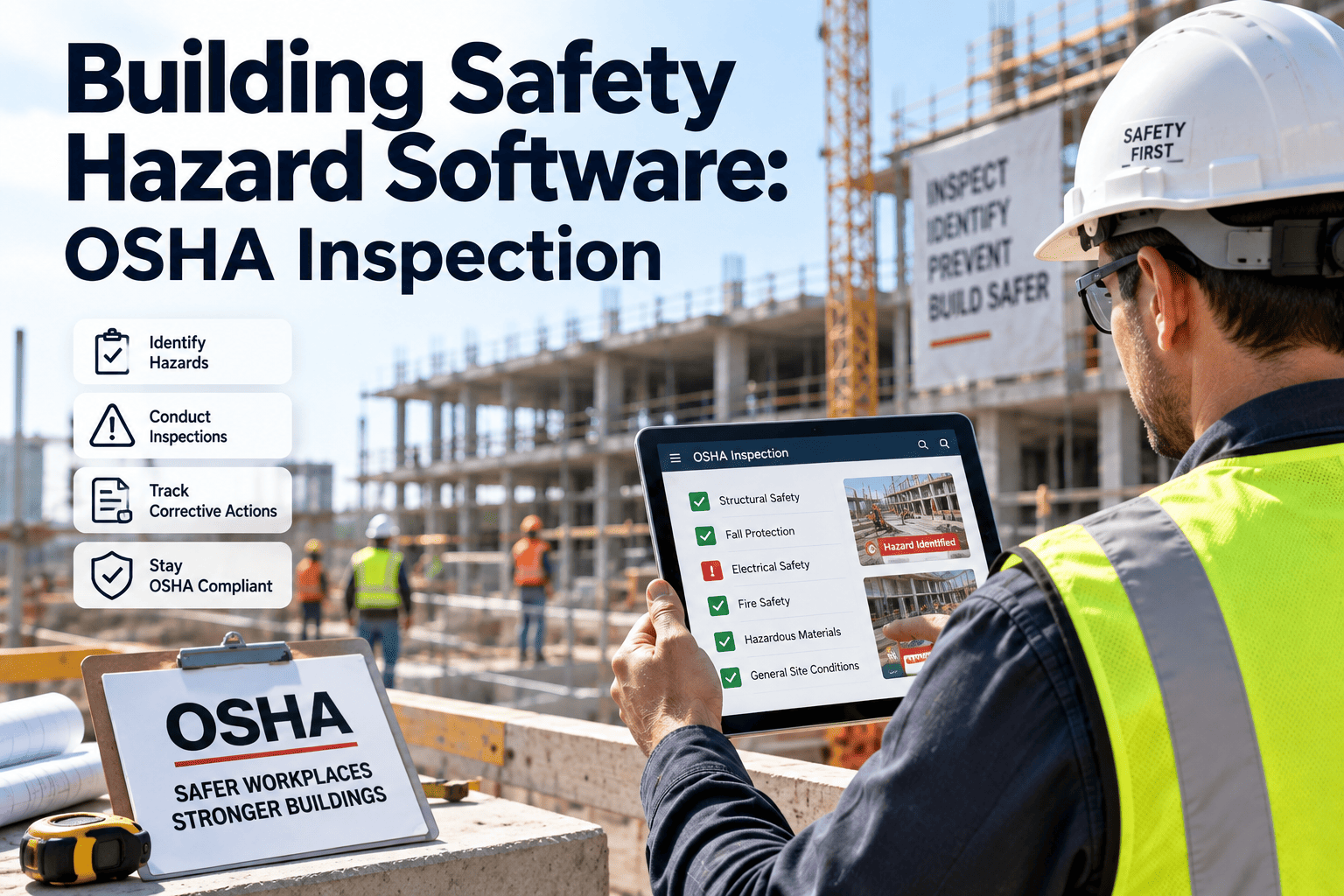
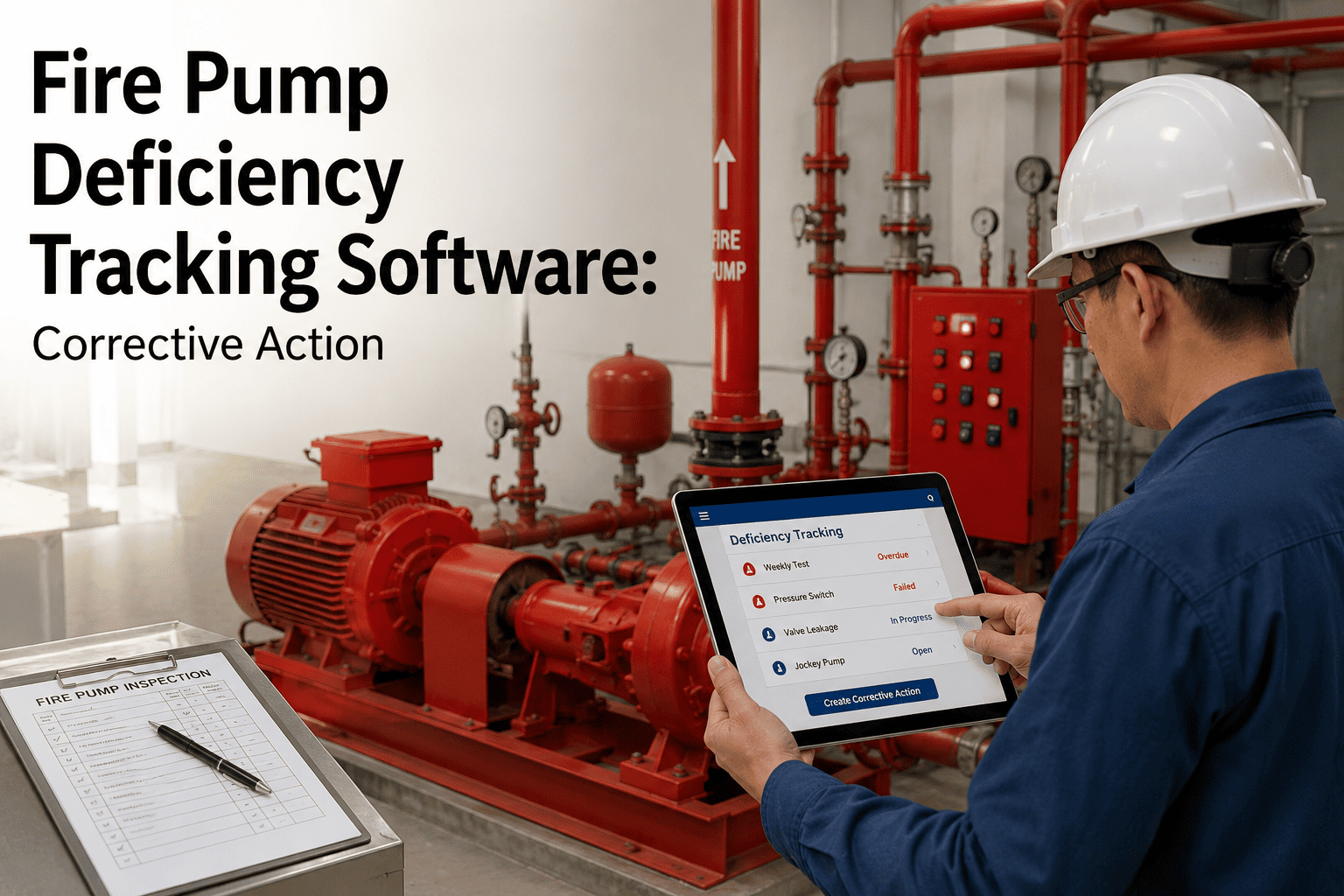
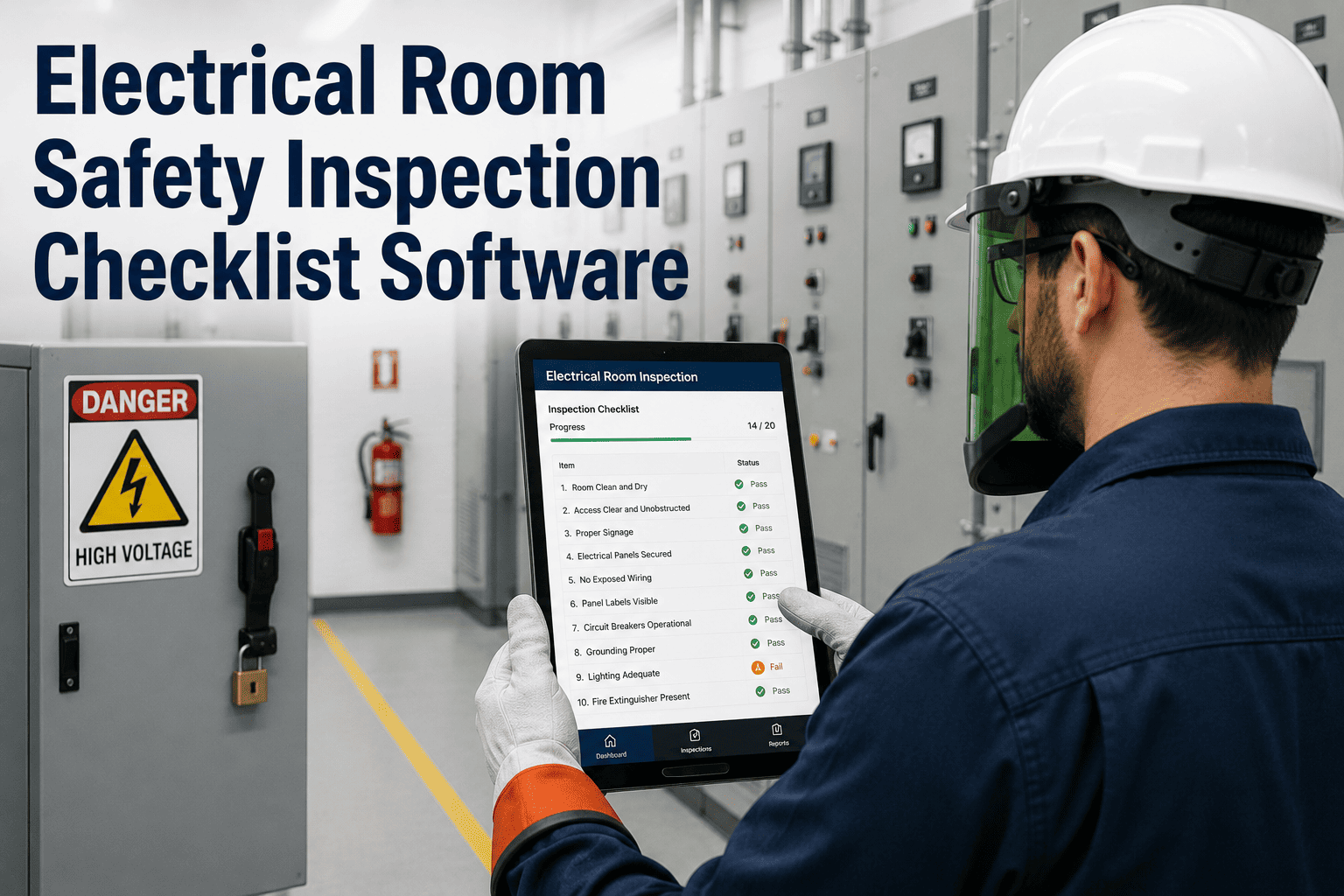
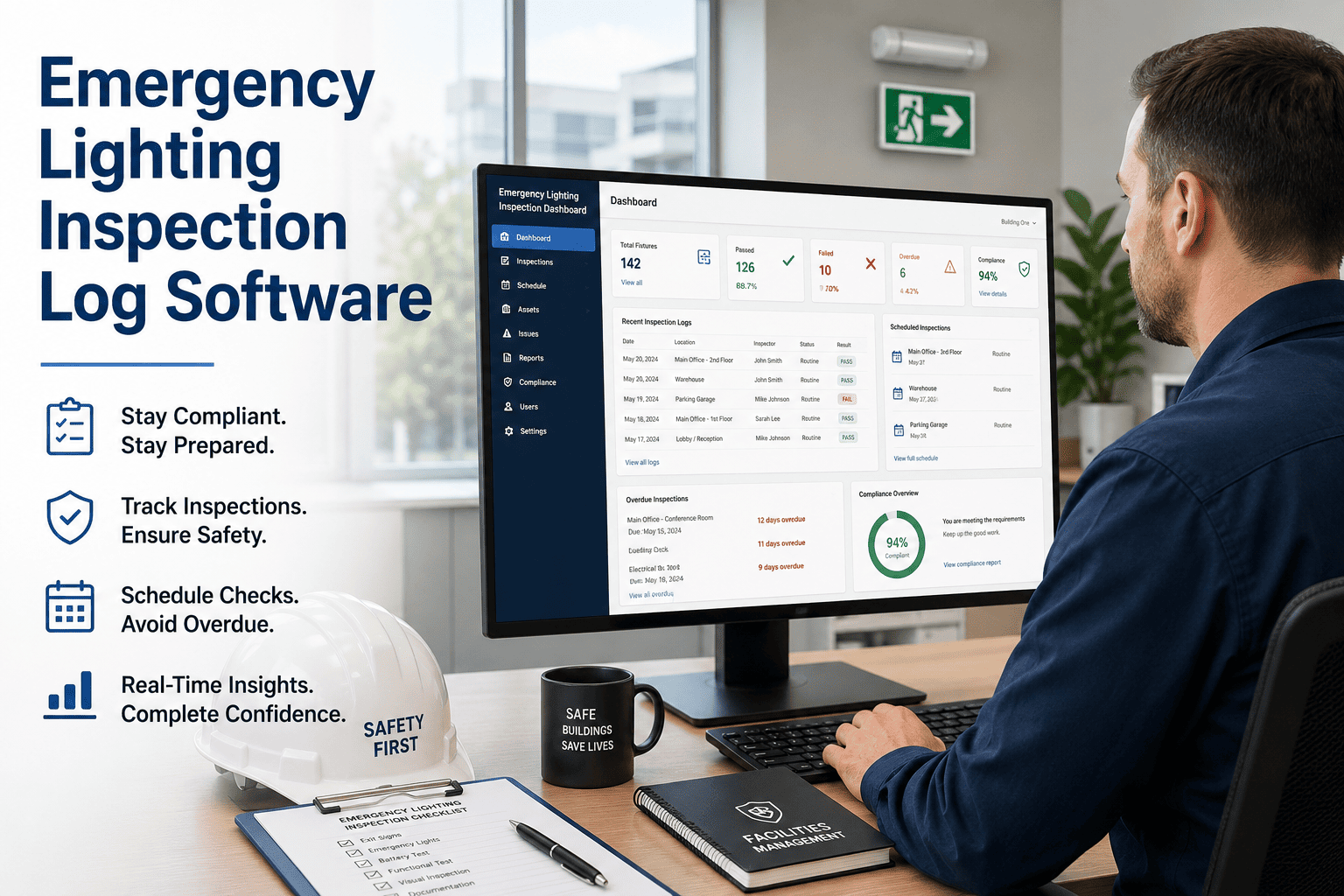
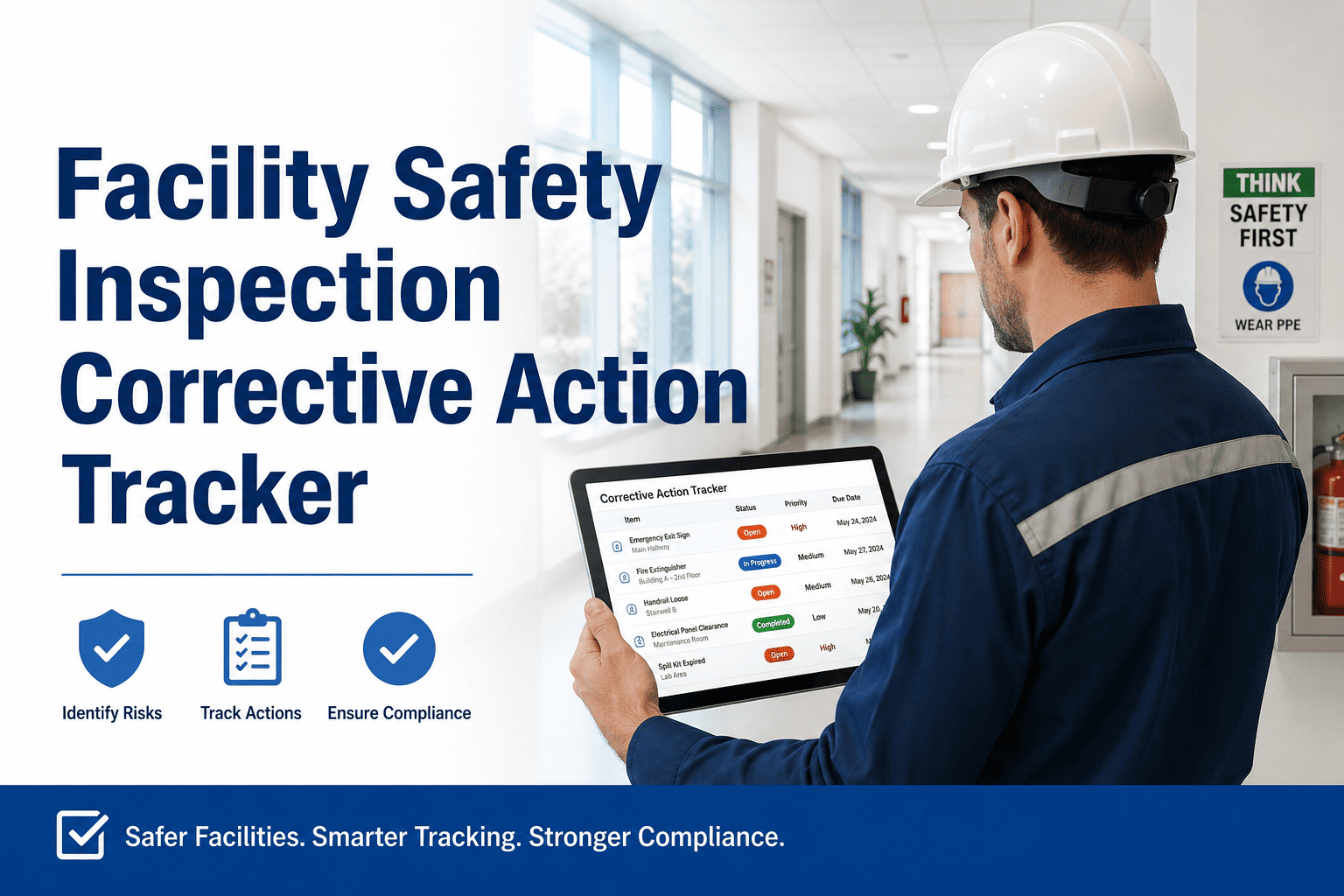
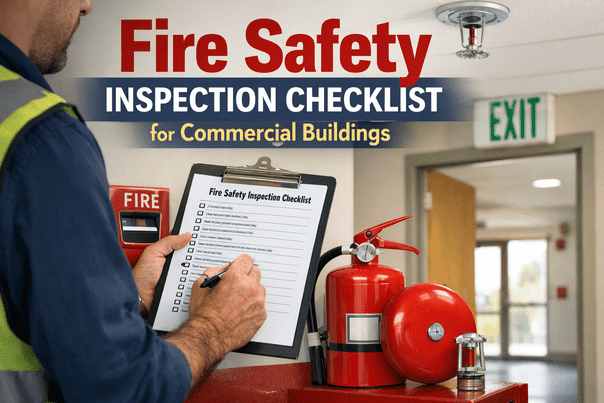
OSHA issued over 23,537 citations in fiscal year 2025 alone — and the top violations including fall protection, lockout/tagout, and eye & face protection are exactly the hazards that a structured digital safety audit catches before an inspector does. Every citation on that list represents a building where someone conducted a visual walkthrough, saw something unsafe, wrote it on a clipboard, and filed a form that nobody followed up on. The paper audit does not create accountability — it creates paperwork. OxMaint's digital inspection system converts every safety finding into a tracked corrective action with an assigned owner, a due date, and an escalation path — so findings get fixed, not filed. This checklist covers every major safety audit category for commercial and industrial facilities, structured for digital execution with CMMS-connected corrective action tracking.
Checklist · Inspection Management · Safety & Compliance
Building Safety Audit with Digital Inspection System
A complete building safety audit framework — fire systems, exits, emergency lighting, electrical, elevators, housekeeping, and corrective action tracking — built for digital execution and CMMS integration.
OSHA FY2025 Top Violations — Facility-Relevant
#2
Hazard Communication
2,546
#4
Lockout / Tagout
2,177
#7
Eye & Face Protection
1,665
$16,550 per serious violation · $165,514 per willful/repeat — 2025 OSHA penalty rates
Category 1 — Fire Safety Systems
Fire Safety Inspection — 12 Points
Fire system deficiencies are the highest-consequence safety audit finding in commercial facilities. Every failed item below generates an immediate corrective action in OxMaint with a 30-day mandatory closure window for code compliance.
Fire sprinkler heads — verify all are unobstructed, undamaged, and not painted over
Painted or obstructed sprinkler heads are NFPA 25 violations. Any obstruction within 18 inches of a sprinkler head triggers a corrective action.
Critical — Corrective action required within 7 days
Fire extinguisher inspection tags — confirm all extinguishers have current annual inspection tag
OSHA 1910.157 requires annual inspection by a certified technician. Log expiration dates in OxMaint for automated renewal alerts.
Critical — Non-compliant extinguishers must be replaced or serviced immediately
Fire alarm pull stations — visually accessible, unobstructed, and clearly marked
Pull stations must be accessible within 5 feet of exit doors and at intervals not exceeding 200 feet per IBC requirements.
Smoke detector function test — confirm all detectors respond to test within required response time
Document test date, tester, and result in OxMaint. Annual full test by licensed contractor required; monthly visual inspection by facility staff.
Fire door condition — self-closing mechanism functional, no wedges or props holding doors open
Propped fire doors are one of the most commonly cited life safety deficiencies. Flag any door held open by any means other than a code-compliant hold-open device.
Sprinkler control valve status — all valves confirmed open, sealed, or electrically supervised
Closed sprinkler control valves are the leading cause of fire deaths in sprinkler-protected buildings. Verify position and supervision status at every audit.
Fire suppression system service record — last service within required interval per NFPA 25
Document service date, provider, and next service due in OxMaint asset record. Auto-generate service work order 60 days before expiry.
Category 2 — Egress & Emergency Exits
Exit & Egress Inspection — 10 Points
All exit doors — unlocked from inside without a key or special knowledge during occupancy hours
Locked exit doors during occupancy are among the most serious life safety violations. This is an immediate corrective action — do not close the audit until confirmed compliant.
Critical — Immediate corrective action required
Exit signage — illuminated, unobstructed, and visible from any point in the egress path
OSHA 1910.37 requires exit signs to be illuminated at all times. Test battery backup for signs with emergency illumination. Replace any sign with failed illumination immediately.
Critical — Replace failed signs before closing this finding
Exit pathway clearance — minimum 28-inch clear width maintained throughout egress path
IBC requires minimum 28-inch egress path width. Storage, equipment, or furnishings in exit corridors must be removed. Photograph obstruction location for OxMaint corrective action record.
Stairwell doors — latching and self-closing function confirmed; floor identification signage posted
Stairwell floor identification signs are required at each level. Check that door frame labels show floor number visible from the stairwell side.
Emergency assembly point — posted on egress maps, accessible, unobstructed at exterior
Assembly point must be marked, communicated to occupants, and positioned at least 50 feet from the building. Confirm the path to the assembly point is unobstructed.
Ramp and stair handrails — graspable, continuous, secure at both sides where required
Loose or missing handrails are an OSHA 1910.23 violation. Test for play or movement by applying lateral and vertical force. Document any movement for corrective action.
Categories 3–6
Emergency Lighting, Electrical, Elevators & Housekeeping
Emergency Lighting
Monthly 30-second test — all units illuminate on activation; results logged in CMMS
Annual 90-minute duration test — confirm battery sustains full illumination for 90 minutes
Coverage verification — all exit paths have minimum 1 footcandle at floor level during test
Exit sign emergency illumination — battery backup operational; lamp or LED functional
Transfer time — emergency power activates within 10 seconds of normal power loss
Electrical Panels & Hazards
Panel clearance — minimum 36 inches clear in front of all electrical panels (OSHA 1910.303)
Panel covers — all breaker positions filled; no open knockouts in panel enclosures
Extension cords — no permanent use of extension cords or power strips as fixed wiring
GFCIs — ground fault protection present at all wet locations; test and document monthly
Lockout/Tagout stations — LOTO kit present, complete, and accessible at all energy sources
Elevators & Lifts
Current inspection certificate — posted in elevator cab; not expired
Emergency phone — functional call confirmed; connects to monitored station
Cab lighting — all fixtures operational; emergency lighting functional on test
Door operation — reopens within 2 seconds of obstruction during closing
Service log — last maintenance recorded; next service date within required interval
Housekeeping & Slip/Trip
Aisle markings — clearly visible, not worn; aisle width maintained throughout
Slip hazard control — wet floor signs present; spill response materials accessible
Loading dock areas — edge markings visible; dock plates secured when in use
Outdoor walkways — no ice, debris, or damaged surfaces creating trip hazards
Storage practices — no materials stored within 18 inches of sprinkler heads
Run Every Finding as a Tracked Corrective Action — Not a Paper Form
OxMaint converts every failed audit item into a corrective action with an assigned owner, due date, and escalation path. Findings do not get filed — they get fixed. OSHA-ready audit trails generate automatically for every completed inspection.
Digital vs. Paper
Why Paper Safety Audits Fail — And What Digital Does Differently
| Audit Dimension |
Paper / Clipboard |
OxMaint Digital System |
| Finding accountability |
Form filed; no follow-up system |
Auto-generates corrective action with assignee |
| Corrective action closure |
Manually tracked or forgotten |
SLA countdown with escalation alerts |
| Audit frequency compliance |
Depends on staff remembering |
CMMS-scheduled work orders, never missed |
| Evidence for OSHA audit |
Paper records, often incomplete |
Timestamped digital records with photos |
| Multi-site visibility |
None — reports in separate folders |
Portfolio-level compliance dashboard |
| Repeat finding detection |
No pattern analysis possible |
Recurring deficiency trends flagged automatically |
Expert Review
The Problem is Not Finding Deficiencies — It is Closing Them
"
Every facility I have audited has conducted safety inspections. The deficiency is almost never in finding problems — trained safety managers are good at identifying hazards on a walkthrough. The deficiency is almost always in what happens next. Paper findings go into a report that goes into a folder that nobody opens until the next audit, when the same findings appear again. The facilities that actually improve their safety compliance scores year over year are the ones where every finding automatically becomes a work order in their CMMS — with an owner, a deadline, and a supervisor notification when it is overdue. That single operational change — from paper observation to digital corrective action — is worth more than any safety programme I have ever designed.
Environmental Health & Safety Director
20+ years multi-site EHS management across commercial real estate, manufacturing, and healthcare facility portfolios
FAQs
Building Safety Audits & Digital Inspections — Common Questions
How often should a building safety audit be conducted?
Most commercial facility standards require at minimum a quarterly comprehensive safety audit, with monthly inspections of specific high-risk categories including fire extinguishers, emergency lighting, and exit signage. High-risk industrial facilities and healthcare environments typically conduct monthly full audits. The NFPA 25 requires sprinkler system inspections on specific intervals — weekly for water level gauges, monthly for control valve position, annually for full system inspection. OxMaint's inspection management module schedules each audit category on its own interval, generating work orders automatically so no required inspection frequency is missed.
Configure your audit schedule in OxMaint — free trial available.
What documentation does OSHA require from facility safety audits?
OSHA does not mandate a specific safety audit format for most general industry facilities, but does require documentation of specific inspection activities including fire extinguisher inspections (1910.157), emergency exit inspections (1910.37), and powered industrial truck inspections (1910.178). The critical documentation requirement is corrective action tracking — OSHA inspectors specifically look for evidence that identified hazards were resolved, not just identified. Findings that appear repeatedly across multiple audits without documented corrective action are strong indicators of willful violation, which carries fines up to $165,514 per occurrence. OxMaint's digital audit system generates timestamped records of every inspection, finding, corrective action assignment, and closure that satisfy this documentation requirement.
Book a demo to see OxMaint's OSHA-ready audit reporting.
How does digital inspection software improve safety audit corrective action closure rates?
Paper audit systems produce findings without inherent accountability mechanisms — a finding written on a form has no automatic follow-up, no owner, and no escalation path when it remains unresolved. Digital inspection systems like OxMaint convert every failed audit item into a corrective action work order the moment it is logged, with an assigned technician, a due date based on severity classification, and automatic supervisor escalation when the work order is overdue. Research on safety management systems consistently shows corrective action closure rates of 40–60% with paper systems rising to 85–95% with digital tracked workflows — because the accountability mechanism is structural, not dependent on individual follow-through. The result is measurably fewer repeat findings, which is the primary driver of reduced OSHA citation rates over time.
Can OxMaint's inspection system work across multiple building locations?
Multi-site inspection management is one of OxMaint's core capabilities. Each building in your portfolio has its own asset registry, inspection schedule, and corrective action queue — while the portfolio management dashboard provides a consolidated view of compliance status, open findings, and overdue corrective actions across all sites simultaneously. Site-specific audit schedules can differ (a laboratory requires more frequent inspections than an office building), and findings at each site remain in that building's record while rolling up to portfolio KPI reporting. Role-based access controls ensure site managers see their facility, regional managers see their cluster, and EHS directors see everything.
Start your free OxMaint trial and configure your first building safety audit today.
Run Every Finding as a Tracked Corrective Action — Not a Paper Form