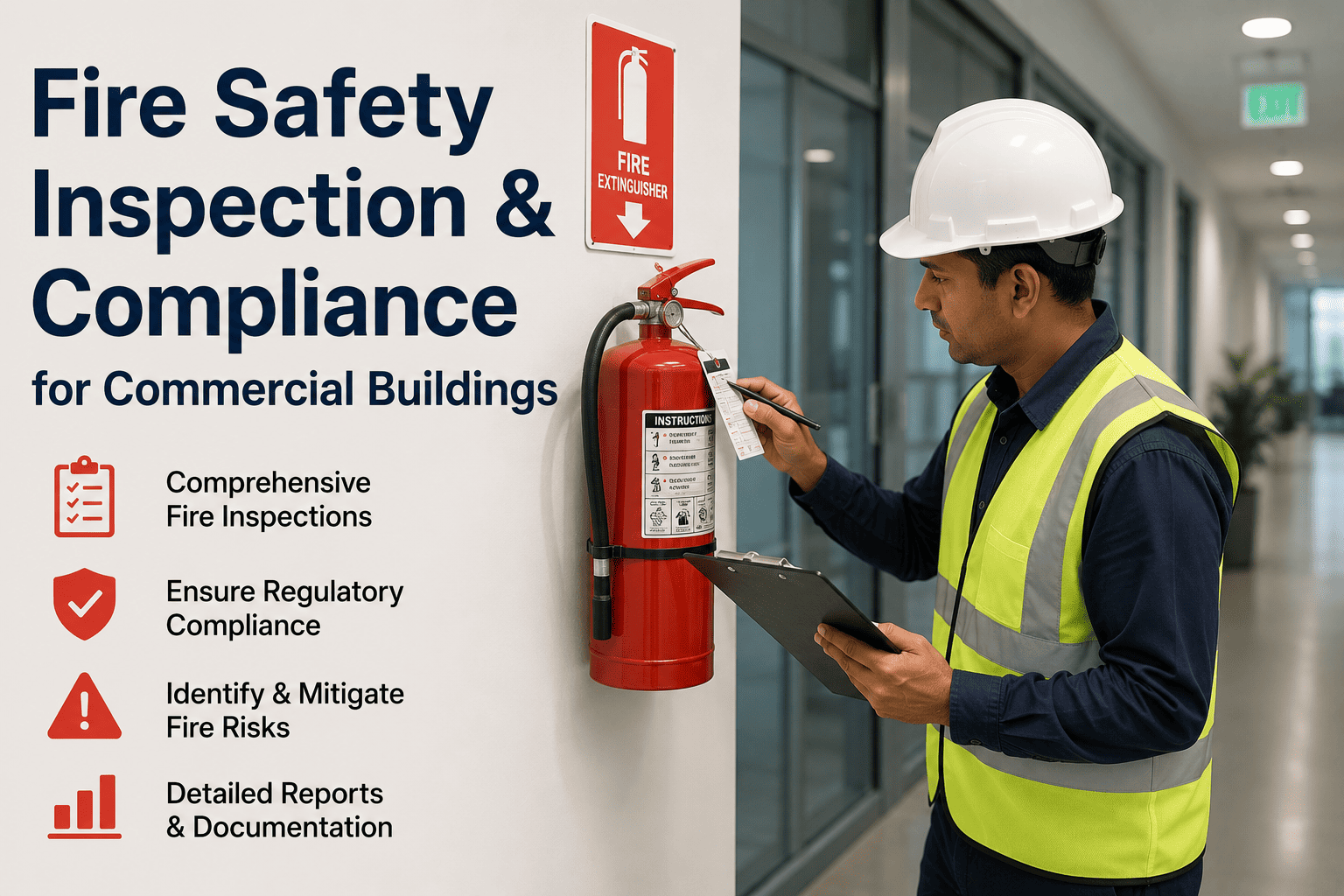
A single failed fire inspection in a commercial building triggers a cascade that most facility managers underestimate — compliance notices, mandatory re-inspection fees, potential occupancy restrictions, and insurance liability exposure that can exceed the cost of the violation itself by an order of magnitude. The U.S. fire protection services market reached $47.3 billion in 2024, driven by increasingly stringent NFPA code enforcement in commercial occupancies. OxMaint's Compliance Tracking platform helps commercial building teams schedule, document, and audit every fire safety inspection required under NFPA 1, NFPA 72, NFPA 25, and local fire codes — so the next inspector visit is a formality, not a fire drill.
Fire Safety Inspection & Compliance for Commercial Buildings
Every commercial building has the same five fire protection systems — and each one carries mandatory inspection intervals that most facility teams track manually, incompletely, or not at all.
The 5 Fire Protection Systems Every Commercial Building Must Maintain
NFPA Inspection Frequency Master Reference
| System Component | NFPA Standard | Monthly | Quarterly | Semi-Annual | Annual | 5-Year |
|---|---|---|---|---|---|---|
| Smoke Detectors | NFPA 72 | Visual | — | — | Full test | — |
| FACP / Control Panel | NFPA 72 | Visual | — | — | Full test | — |
| Wet-Pipe Sprinklers | NFPA 25 | — | Gauges/alarms | — | Full inspection | Internal inspection |
| Dry-Pipe Valve | NFPA 25 | — | Gauges/alarms | — | Full trip test | Internal inspection |
| Fire Extinguishers | NFPA 10 | Visual | — | — | Maintenance | — |
| Smoke Control Systems | NFPA 92 / IBC | — | — | Functional test | Full test | — |
| Fire Doors (rated assemblies) | NFPA 80 | — | — | — | Inspection + test | — |
| Emergency Lighting / Exit Signs | NFPA 101 / IBC | Visual | — | 30-sec test | 90-min test | — |
Stop Tracking Fire Inspections in Spreadsheets
OxMaint auto-schedules every NFPA inspection interval, alerts before deadlines, and generates audit-ready compliance records from each completed inspection — no manual calendar management required.
The 6 Most Common Fire Inspection Violations — and Their Root Causes
Expert Review
The facilities I see failing inspections are not the ones with bad fire protection systems — they are the ones with good systems and broken documentation practices. A sprinkler system that was fully tested last year is a liability if the technician who performed the test used paper forms that no one can locate. NFPA 25 does not just require the test — it requires a written record identifying the system, the date, the inspector, the scope of inspection, and any deficiencies found and corrected. A CMMS that generates this record automatically at work order closure, with inspector sign-off and photos attached, turns compliance from a documentation project into a maintenance byproduct. That shift is what separates facilities that pass on first inspection from those that don't.
Frequently Asked Questions
What records does NFPA 25 require facilities to retain after sprinkler inspection?
NFPA 25 Section 4.3 requires written records to be maintained at the facility and made available to the AHJ on request. Records must identify the property, the system, the date of inspection or test, the name and affiliation of the inspector, the frequency and scope of the inspection, and the specific findings — including deficiencies observed and corrective actions taken with completion dates. Records must be retained for a period covering at least the previous two inspection cycles — meaning for 5-year inspections, 10 years of records are required. OxMaint's compliance module generates and stores NFPA 25-compliant inspection records at work order closure. Learn more about OxMaint compliance tracking.
How does OxMaint handle multi-interval fire inspection scheduling (monthly, quarterly, annual, 5-year)?
OxMaint supports inspection schedules at any recurrence interval simultaneously for the same asset. A fire sprinkler system can have four active PM schedules running concurrently: monthly gauge checks, quarterly alarm valve inspections, annual full inspection, and 5-year internal inspection — all tracked independently with separate checklists, assigned technicians, and completion documentation. Alerts fire before each deadline, and the compliance dashboard shows the status of all intervals at a glance. Book a demo to see multi-interval scheduling configured for your system types.
What is required for NFPA 80 fire door compliance in a commercial building?
NFPA 80 requires annual inspection of all fire-rated door assemblies, including doors, frames, hardware, and glazing. The inspection must verify that the door closes fully from any open position without manual assistance, latches positively without manipulation, is free from visible damage affecting fire resistance, and that all hardware (hinges, closers, coordinators, hold-opens, smoke seals) functions correctly. Results must be documented for each door with a unique identifier, the inspector's name and qualifications, deficiencies noted, and corrective action status. Inspectors without documentation for individual doors — not just a general building statement — will cite the deficiency.
Are there fire inspection requirements specific to high-rise commercial buildings?
Yes. High-rise buildings (typically defined as over 75 feet floor-to-occupied-floor under IBC) carry additional fire safety requirements beyond standard NFPA codes. These typically include dedicated Fire Command Centers that must be tested annually, voice evacuation systems with enhanced testing protocols under NFPA 72 Chapter 24, stairwell pressurization systems requiring semi-annual functional testing, and elevator recall systems that must be tested in coordination with local fire departments. Many jurisdictions also require high-rise buildings to maintain a current Fire Safety and Evacuation Plan on file with the AHJ — updated whenever occupancy or building systems change significantly.
Every Missed Fire Inspection Is a Liability Event Waiting to Happen
OxMaint schedules, tracks, and documents every NFPA-required fire safety inspection across your entire building portfolio — with automatic alerts before deadlines and audit-ready records generated at completion.


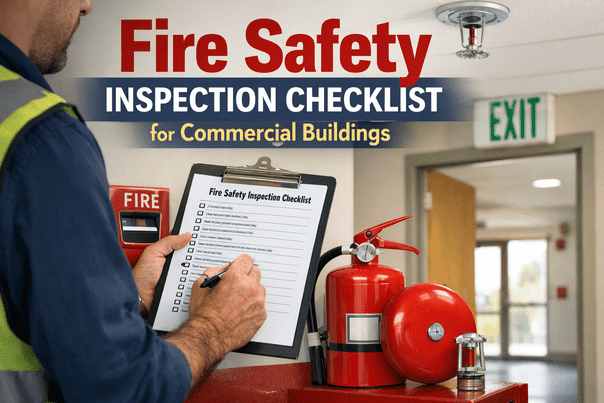


.jpeg)