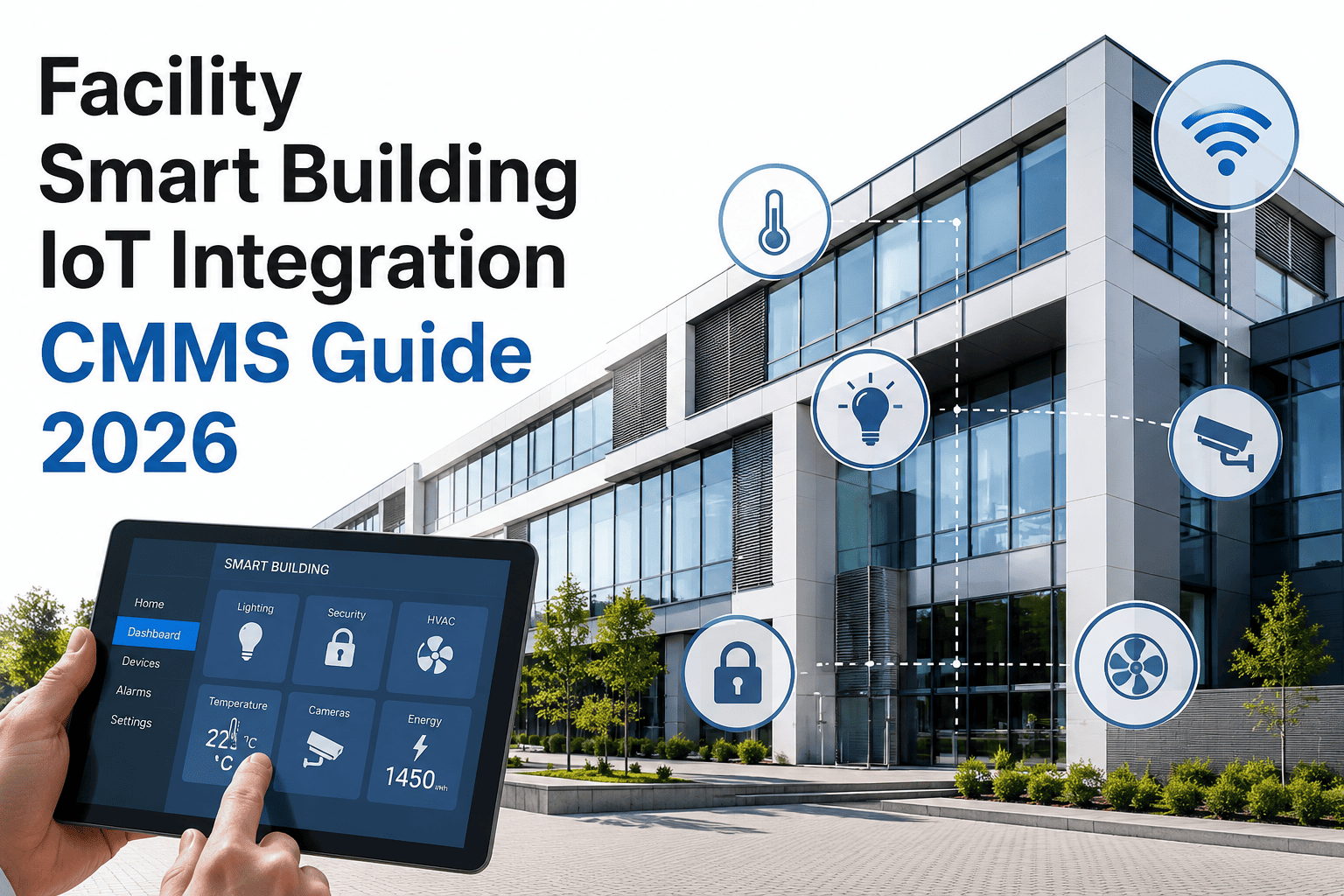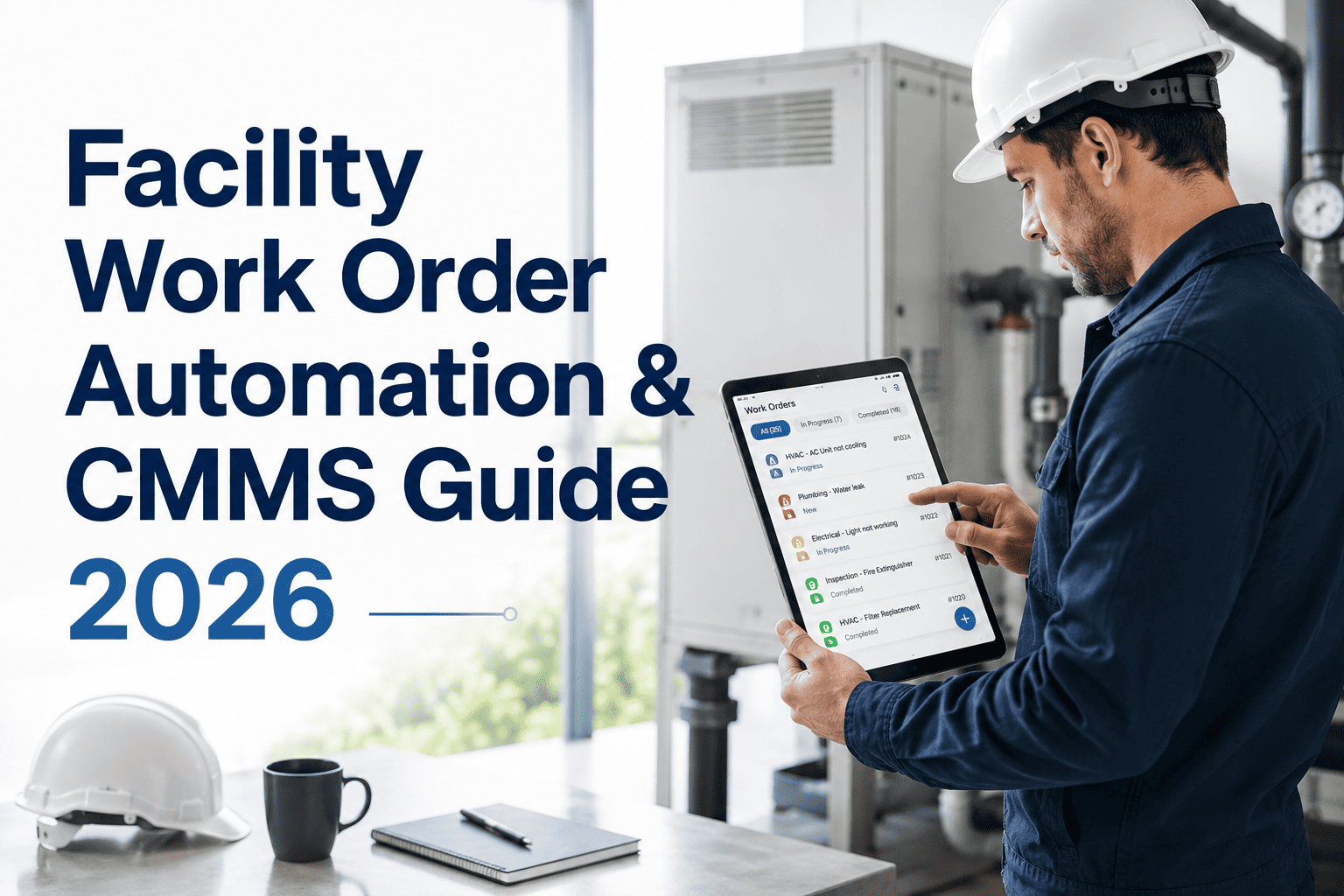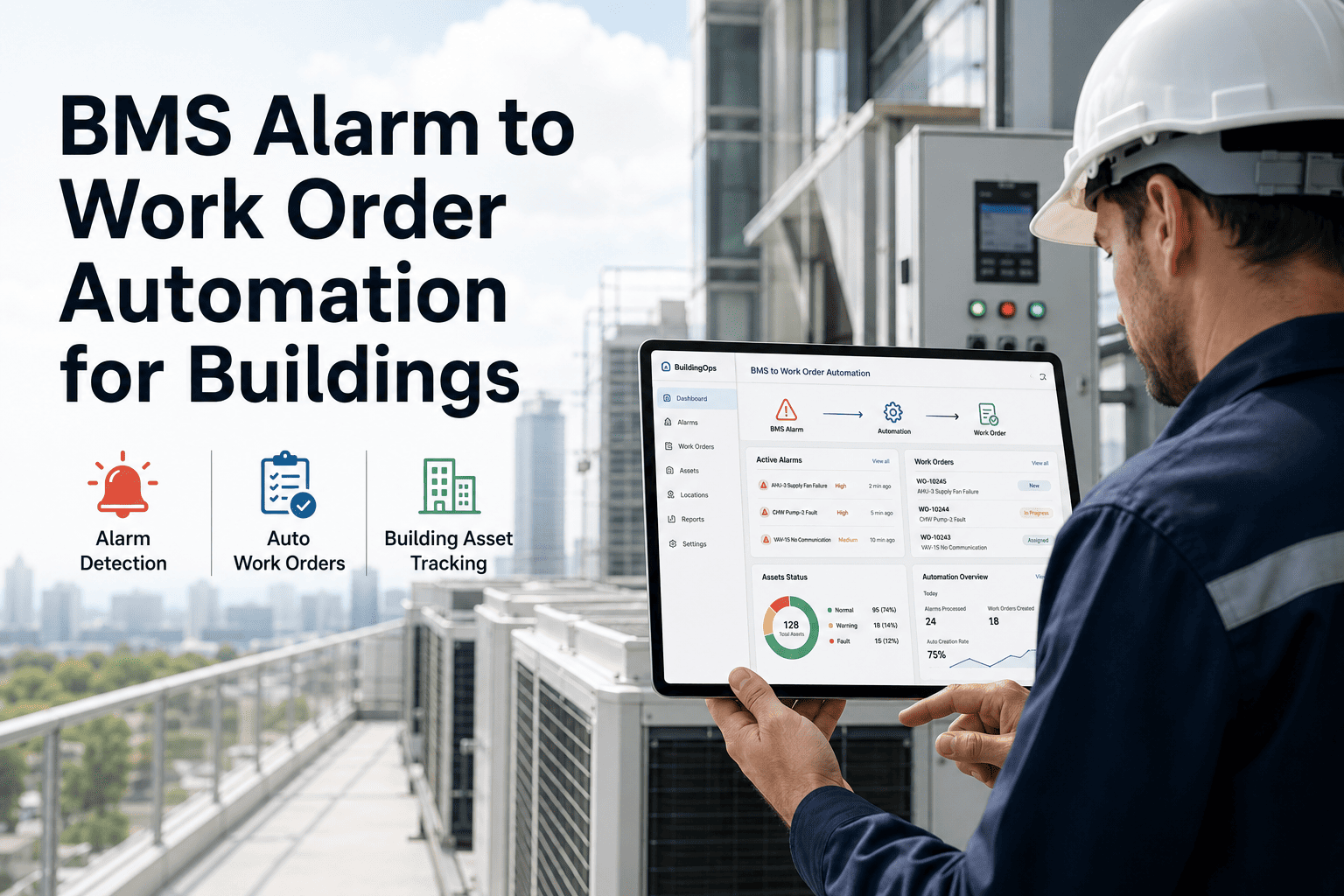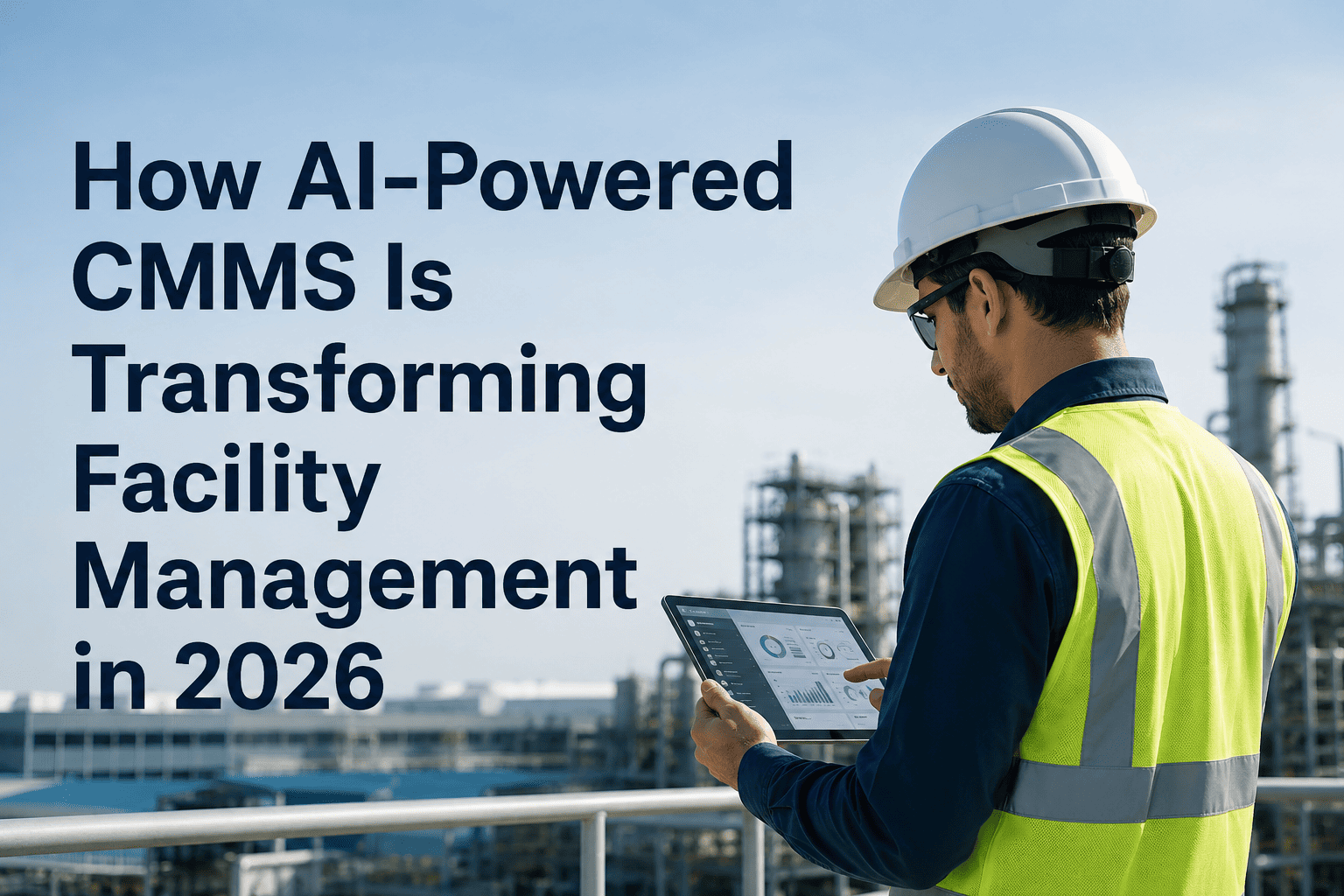
Facility management has quietly become one of the highest-leverage applications for AI in commercial real estate. While headlines focus on AI in finance and healthcare, building operators are cutting maintenance costs by 25–35%, reducing unplanned downtime by 82%, and extending asset life by two to four years — using AI-powered CMMS platforms already available in 2026. The shift is not theoretical. It is happening in office towers, hospital campuses, retail chains, and data centers where legacy reactive programs are being replaced by systems that predict failures before they happen, auto-generate work orders at the optimal intervention window, and track every compliance obligation without manual reporting. OxMaint's AI-powered CMMS is at the center of this transformation — connecting sensor data, work order history, and machine learning models to deliver facility intelligence that was impossible five years ago.
What Makes a CMMS "AI-Powered" in 2026
Not every CMMS that claims AI delivers it. The difference between a traditional CMMS with a chatbot and a genuinely AI-powered platform comes down to three functional capabilities that change how facilities are actually operated.
AI CMMS in Action: Real Use Cases by Building Type
| Building Type | AI Feature Used | Problem Solved | Measured Outcome |
|---|---|---|---|
| Class A Office Tower | Chiller predictive failure detection | Compressor bearing failure detected 5 weeks early | $38,000 repair cost avoided — $2,200 planned replacement |
| Healthcare Campus | Auto work order + SLA compliance tracking | Critical equipment PM compliance below 70% | PM compliance reached 94% within 6 months — zero missed critical PMs |
| Retail Portfolio (18 sites) | Energy deviation monitoring per asset | RTU energy waste undetected across portfolio | $84,000 annual energy savings from RTU optimization across 18 locations |
| Data Center | Redundant cooling predictive monitoring | CRAC unit degradation undetected until failure | 3 cooling failures prevented in 12 months — estimated $420,000 downtime avoided |
| Mixed-Use Development | Multi-asset AI health scoring | Reactive work ratio at 44% — budget overruns quarterly | Reactive ratio dropped to 16% in 9 months — $210,000 annual maintenance savings |
See AI-Powered CMMS Working on Your Facility Data
OxMaint connects to your existing BMS sensors and work order history — and starts generating predictions within 30 days. Book a demo to see live failure prediction, auto work orders, and real-time KPI tracking for your building type.
Traditional CMMS vs AI-Powered CMMS: Full Comparison
| Capability | Traditional CMMS | AI-Powered CMMS (OxMaint) |
|---|---|---|
| Failure Detection | After failure — reactive response | 2–8 weeks before failure — predictive alert |
| Work Order Creation | Manual — facility manager creates each WO | Automatic — sensor event or schedule triggers WO |
| PM Scheduling | Fixed calendar intervals regardless of condition | Condition-based — asset health drives timing |
| KPI Reporting | Monthly export — last month's performance only | Live dashboard — current and trending |
| Energy Monitoring | Building-level utility bills — monthly | Per-asset energy deviation — real-time alerts |
| Technician Dispatch | Manager assigns manually based on availability | AI matches skills, location, and workload automatically |
| Compliance Tracking | Manual audit preparation — days of work | Continuous tracking — one-click export |
| Multi-Site Visibility | Separate reports per building — no comparison | Portfolio dashboard — ranked by KPI performance |
How Fast Can AI CMMS Be Deployed?
Expert Review
The question facility directors ask most in 2026 is not whether AI in facility management delivers ROI — the data on that is settled at 5–10x investment within 12–18 months. The question is what is preventing deployment today. In my experience with over 60 portfolio-scale implementations, the answer is almost always data readiness: incomplete asset registers, unstructured work order history, or fragmented BMS connectivity. The platforms that are succeeding are the ones that build AI readiness as a byproduct of normal maintenance operations — every work order closed in OxMaint, for example, creates a structured, timestamped data record that simultaneously completes the compliance log and trains the next prediction cycle. Facilities that start with that foundation reach reliable AI prediction accuracy within 30–60 days, not 12 months. The competitive advantage in commercial real estate over the next five years will increasingly belong to operators whose maintenance programs generate reliable AI-ready data as a natural output of daily operations.
Your Facility Is Already Generating the Data. OxMaint Turns It Into Intelligence.
Every sensor reading, every work order, every PM completion is raw material for an AI model that predicts failures, optimizes schedules, and surfaces savings. Start free and have your first AI predictions within 30 days.
Frequently Asked Questions
What is an AI-powered CMMS and how does it differ from a traditional one?
An AI-powered CMMS adds three capabilities that traditional systems lack: predictive failure detection using machine learning models trained on asset-class-specific failure patterns, autonomous work order generation triggered by sensor events rather than manual input, and continuous KPI intelligence that tracks performance trends in real time rather than compiling historical reports. Traditional CMMS platforms are excellent record-keeping systems — they store work orders and PM schedules accurately. AI-powered CMMS platforms use those records plus live sensor data to make decisions: when to intervene on a degrading asset, which work orders to prioritize, and where energy is being wasted at the individual equipment level. OxMaint's platform delivers all three capabilities from a single integrated system.
How long does it take for AI CMMS to start delivering measurable results?
Most facilities see measurable results in three distinct phases: within the first 30 days, PM compliance and work order completion rates improve simply because mobile task delivery eliminates the scheduling gaps that cause most missed PMs. Between 30 and 90 days, the AI baseline calibration period produces first-generation predictive alerts — early-warning notifications on the assets with the most sensor coverage. Full predictive programme maturity, where AI failure predictions achieve 85–93% accuracy, typically occurs between 90 and 180 days depending on the volume of historical work order data available for model calibration. Book a demo to get a timeline estimate specific to your portfolio size and current data quality.
Does AI-powered CMMS require replacing existing BMS or building automation systems?
No. OxMaint integrates with existing BAS infrastructure via BACnet, Modbus, MQTT, and REST API — reading from existing data streams without replacing any control hardware. Facilities with Siemens Desigo, Johnson Controls Metasys, Honeywell Niagara, or Tridium systems connect without hardware replacement. OxMaint adds the AI analytics and work order automation layer on top of existing infrastructure. New IoT sensors can be added incrementally where additional sensor coverage unlocks higher-value predictions, but the platform starts delivering value from existing BMS data on day one of integration.
What is the typical cost reduction from switching to an AI-powered CMMS?
Industry data from McKinsey (2025) and U.S. DOE sources shows a consistent range of 25–35% total facility maintenance cost reduction for portfolios that complete the transition from reactive to AI-driven predictive programs. The four primary value drivers are: avoided emergency repair costs (3–5x cost differential vs planned), energy savings from early detection of equipment degradation (5–20% of HVAC energy spend), extended asset life reducing CapEx replacement frequency, and labor efficiency gains from first-time fix rate improvement and elimination of reactive overtime. A single avoided chiller compressor failure — typically $18,000–$45,000 — often exceeds the annual cost of the OxMaint platform for a mid-size portfolio.