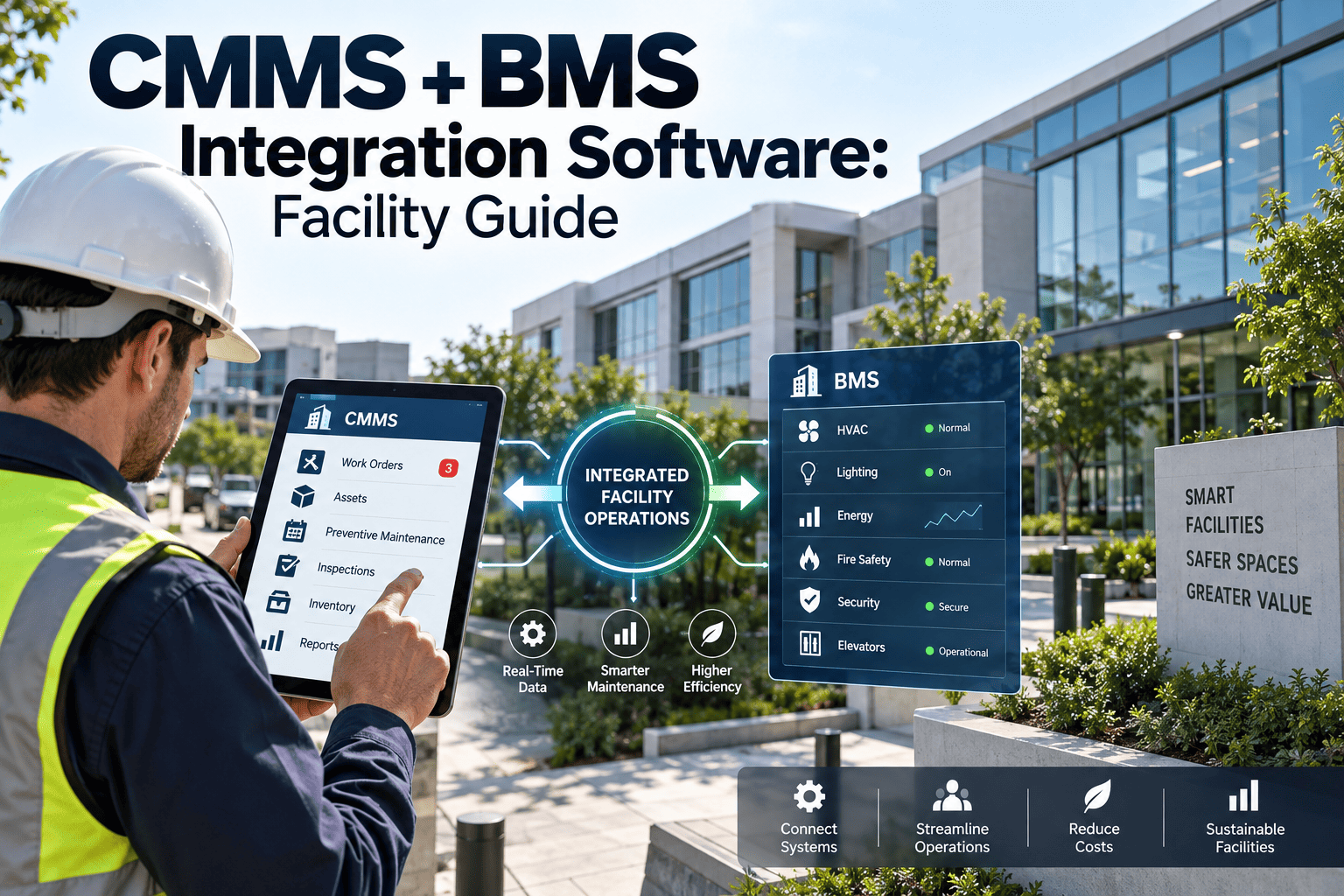
A single commercial building can throw thousands of BMS alarms in a month — chiller approach temperature drifts, AHU discharge deviations, transformer power quality flags — and most of them just sit in an operator dashboard until someone happens to notice. Facility teams running hospitals, campuses, hotels, industrial plants, and multi-tenant office portfolios lose real hours between the moment a sensor detects trouble and the moment a technician actually gets dispatched to fix it. That gap is where equipment fails early, energy gets wasted, and compliance records go missing. Oxmaint's CMMS and BMS integration software closes this gap by turning every building automation alert into a structured, assigned work order the moment it fires, and facility teams can start a free trial to see it running across their own portfolio.
Every Building System Your BMS Watches — And What Oxmaint Does With That Data
A building management system already monitors far more than HVAC. The real problem most facility teams face isn't a shortage of data — it's that none of it turns into action unless someone is actively reading a screen. Oxmaint's integration layer listens across every connected system below and converts a deviation into an assigned, tracked work order automatically, without waiting for a human to catch it first.
Chillers, Boilers & Air Handling
Chillers, boilers, AHUs, VAV boxes, and cooling towers stream run hours, discharge temperatures, and approach temperature drift. Oxmaint flags degradation weeks before failure and dispatches preventive work before the unit trips offline.
Switchgear & Power Quality
Switchgear, transformers, and power quality meters report load, voltage, and phase imbalance continuously. Deviations trigger inspection work orders before a breaker trips or a transformer overheats during peak demand.
Fire & Life Safety Systems
Smoke detection, sprinkler monitoring, stairwell pressurisation, and fire damper position feed directly into compliance-tracked work orders, keeping every inspection cycle documented and audit-ready.
Domestic Water & Drainage
Domestic hot water systems, sump pumps, and water treatment equipment report run-time anomalies and pressure drops, catching pump wear and slow leaks before they become tenant complaints.
Elevators & Escalators
Vibration, motor temperature, and cycle count data identify bearing wear and control faults early, cutting the emergency callouts that disrupt building operations and tenant experience.
Access Control Hardware
Door position sensors, badge reader faults, and lock cycle data surface hardware failures before they become a security gap, routed straight to the facilities team for repair.
How An Alarm Becomes A Closed Work Order — In Five Steps
Every BMS alarm that reaches Oxmaint moves through the same sequence, whether it originates from a chiller in a hospital plant room or a fire damper on a university campus. Here is exactly what happens between the sensor firing and the technician closing the ticket.
Alarm Capture
Oxmaint reads BACnet/IP, Modbus TCP, MQTT, and REST feeds directly from your existing BMS controllers — Siemens Desigo, JCI Metasys, Honeywell, Schneider EcoStruxure, or others — with no forklift hardware replacement required.
Noise Filtering
Raw alarms are de-duplicated and filtered against baseline thresholds so technicians see the deviations that actually matter, not every nuisance trip a sensor logs across a single day.
Root-Cause Matching
Deviations are matched against known equipment signatures — a chiller approach temperature drift, a transformer load imbalance — identifying the likely asset and failure mode before a human even looks at it.
Auto Work Order Dispatch
A fully populated work order is created with asset ID, fault description, priority level, parts likely needed, and the nearest certified technician assigned automatically.
BMS-Confirmed Closure
Once a technician completes the repair, the system checks the live BMS reading to confirm the parameter has returned to normal range before the work order is allowed to close.
Live Facility Feed — What A Closed Loop Actually Looks Like
This is the kind of activity Oxmaint generates on a typical mixed-use portfolio during a single shift — alarms captured, correlated, and turned into dispatched work before anyone has to go looking for the problem.
Every Alarm Sitting In A Queue Is Downtime Waiting To Happen.
Connect your existing BMS to Oxmaint and every sensor deviation becomes a tracked, assigned, verified work order — no rip-and-replace, no new hardware, no waiting for someone to check a dashboard.
BMS Alarm → Root Cause → Auto Work Order Map
The real value of integration isn't just catching the alarm — it's knowing which asset caused it and which crew should be dispatched. This is how Oxmaint maps the most common BMS alarm patterns to root cause and action across a typical facility.
| BMS Alarm | Likely Root Cause | Building System | Auto Work Order |
|---|---|---|---|
| Chiller approach temperature drift | Condenser fouling or refrigerant charge loss | Central chiller plant | Chiller inspection PM |
| AHU discharge temperature deviation | Damper or actuator fault | Air handling unit | Actuator service order |
| Transformer power quality flag | Load imbalance or loose connection | Electrical switchgear | Switchgear inspection |
| Sump pump run-time anomaly | Impeller or seal wear | Plumbing / drainage | Pump replacement check |
| Fire damper position fault | Actuator or linkage failure | Fire & life safety | Damper actuator repair |
| Elevator vibration alarm | Motor bearing wear | Elevator / escalator system | Bearing inspection order |
ROI — What Integration Is Actually Worth On A Mixed-Use Portfolio
These figures reflect what facility teams commonly report after connecting an existing BMS to a structured maintenance platform instead of leaving alarms to sit in a dashboard queue. The savings come from three places at once: fewer emergency callouts, lower energy waste from condition-based scheduling instead of fixed intervals, and fewer compliance gaps that turn into penalties during an audit.
The facilities teams that get real value out of BMS integration are the ones that stop treating it as an alarm dashboard and start treating it as a maintenance decision engine. Catching the alert is the easy part — every BMS already does that. The transformation happens when a transformer load imbalance automatically becomes a switchgear inspection work order, assigned to the right technician, before anyone has manually reviewed the trend. That is the difference between a building that reports problems and a building that prevents them.
Frequently Asked Questions
Stop Reading Alarms. Start Closing Them Automatically.
Every minute a BMS alert sits unread is a minute your equipment keeps degrading. Connect your building systems to Oxmaint and turn detection into prevention — for HVAC, electrical, fire safety, plumbing, elevators, and every other system your BMS already watches.