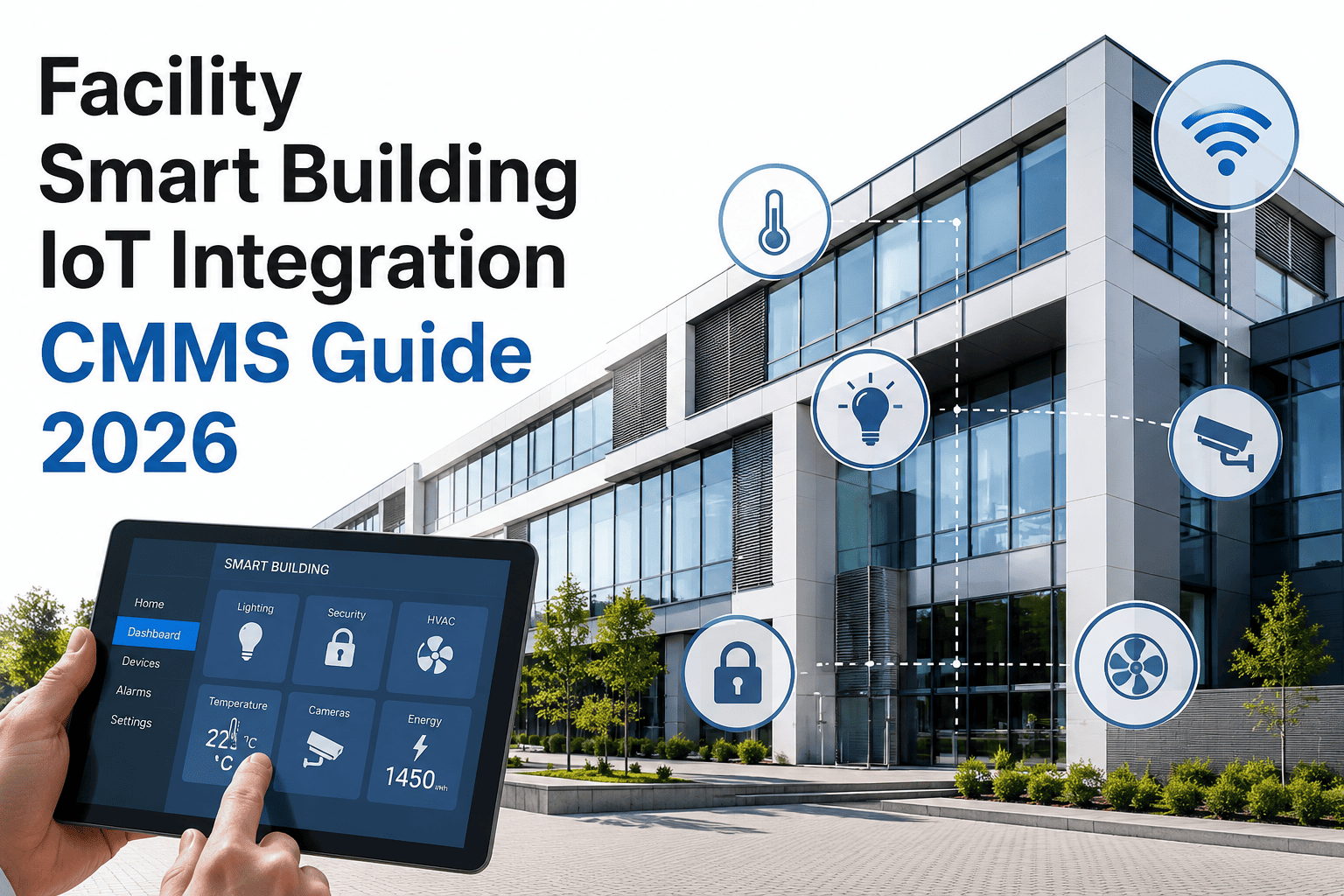
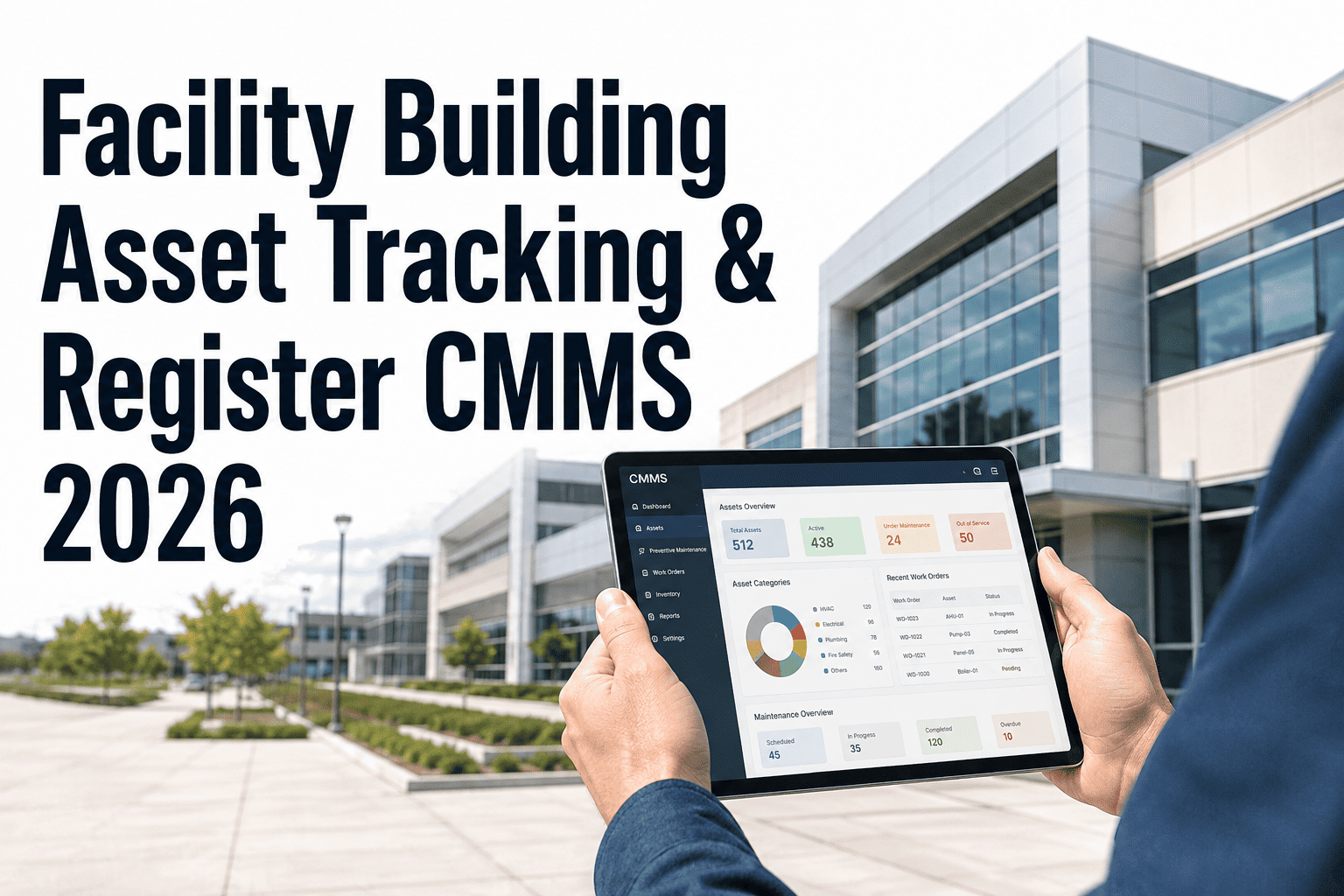
Enterprise buildings generate thousands of maintenance signals every day—HVAC drift, lighting faults, elevator vibration, water pressure anomalies—and most facility teams still chase them with spreadsheets, radio calls, and gut instinct. AI-powered facility management software changes the equation entirely: it ingests sensor streams, correlates patterns across building systems, auto-generates prioritized work orders, and gives operations leaders a single command center for every asset under their roof. If your portfolio spans multiple buildings, start your free Oxmaint account and see how a unified platform replaces the patchwork.
Why Legacy Facility Management Falls Short in 2026
Traditional building management systems were designed for monitoring, not for managing maintenance workflows. They tell you a chiller is running hot—but they do not create the work order, assign the technician, track the parts, or log the resolution. That gap between detection and action is where enterprise buildings bleed money: deferred maintenance compounds into equipment failure, tenant complaints escalate into lease non-renewals, and compliance gaps turn into audit findings. Modern AI-driven platforms like Oxmaint close that gap by converting every building signal into a trackable maintenance action.
This shift is not incremental—it is structural. AI does not just speed up existing processes; it eliminates the manual triage layer entirely, routing sensor anomalies straight to the right technician with the right parts information before occupants even notice a problem.
Core Capabilities of AI Facility Management Software
Enterprise-grade platforms go far beyond digital work orders. Here are the six capability areas that separate AI-native facility management from legacy tools—and each one feeds directly into a smarter, leaner operation. Sign up for Oxmaint to access all six from day one.
Machine learning models analyze vibration, temperature, and runtime data from HVAC units, elevators, and pumps to forecast failures 2-4 weeks before they occur. Work orders generate automatically with recommended parts and labor estimates.
Automated routing assigns work orders based on technician skill, location, certification, and current workload. Priority scoring ensures critical building systems get attention first, while routine tasks queue intelligently without manual dispatch.
Every piece of equipment—from rooftop chillers to basement sump pumps—lives in a single asset registry with full lifecycle data: install date, warranty status, maintenance history, sensor feeds, and replacement cost. Portfolio-wide visibility replaces building-by-building silos.
Automated scheduling for fire safety inspections, elevator certifications, air quality testing, and ADA compliance checks. Every completed task logs timestamped evidence—photos, sensor readings, technician sign-off—ready for auditors without scrambling.
AI correlates occupancy patterns, weather forecasts, and equipment performance to dynamically adjust HVAC schedules and lighting zones. Anomaly detection catches energy waste—a damper stuck open, a chiller short-cycling—before it shows up on the utility bill.
Occupant request portals feed directly into the maintenance queue with AI-powered categorization and priority scoring. Tenants get real-time status updates. Facility managers get satisfaction metrics linked to response times and resolution quality.
How AI Transforms Building Operations: Step by Step
The power of AI facility management is not in any single feature—it is in the closed loop from sensor signal to completed work order to enriched asset intelligence. Here is how that loop works inside Oxmaint.
IoT sensors, BMS feeds, and smart meter data stream into the platform continuously. Temperature, humidity, vibration, energy consumption, occupancy counts, and air quality readings arrive in real time and map to specific assets and zones.
Machine learning models compare incoming data against historical baselines and cross-reference patterns across building systems. A temperature spike in one zone correlated with increased chiller runtime and a humidity anomaly in the adjacent zone signals a refrigerant issue—not just a thermostat problem.
When anomalies exceed configured thresholds, the platform creates work orders automatically—tagged with asset ID, location, sensor evidence, severity classification, and recommended corrective actions. No manual triage required.
Work orders route to the best-matched technician based on skill set, proximity, and workload. Mobile access gives field teams all context—asset history, diagrams, parts availability—at the point of work. Completion data feeds back into the AI model.
Every resolved work order enriches the asset record and sharpens the predictive model. After months of data, Oxmaint surfaces trends: this AHU bearing fails every 14 months, that elevator door motor degrades faster in summer. Maintenance shifts from reactive to truly predictive.
Legacy BMS vs. AI-Powered Facility Management
Building management systems monitor conditions. AI facility management platforms manage outcomes. The difference defines whether your team spends its day firefighting or optimizing. Book a consultation to see the shift in action.
Built for Enterprise Scale
Managing a single building is complex. Managing a portfolio of 10, 50, or 200 buildings across regions requires a platform designed for enterprise operations from the ground up. Create your Oxmaint account to see how portfolio-wide visibility works in practice.
A single command center showing asset health, open work orders, compliance status, and energy performance across every building in your portfolio. Drill down from portfolio to building to floor to individual asset in seconds.
Property managers see their buildings. Regional directors see their region. C-suite sees the entire portfolio. Technicians see only their assigned work. Every role gets exactly the data and actions they need—nothing more, nothing less.
Open APIs connect Oxmaint to existing BMS platforms (Honeywell, Siemens, Johnson Controls), ERP systems, accounting software, and IoT sensor networks. Data flows in both directions—no rip-and-replace required.
Technicians receive, execute, and close work orders from their phone or tablet. Offline mode ensures functionality in basements and mechanical rooms with poor connectivity. Photos, notes, and completion data sync automatically when connection resumes.
Transform Your Building Operations with AI-Powered Maintenance
Oxmaint gives enterprise facility teams a single platform to manage every asset, automate every workflow, and predict every failure—across every building in your portfolio. Stop reacting. Start optimizing.