The facility management industry is undergoing its most significant transformation since the introduction of computerized maintenance. AI, autonomous systems, and smart building networks are compressing decades of reactive maintenance culture into a narrow window of forced modernization. The organizations that adapt in 2025–2026 will operate at a cost and reliability advantage that is structurally difficult for laggards to close.
This is not a distant future. OxMaint's AI Copilot is already automating fault detection, work order generation, maintenance scheduling, and cross-facility performance benchmarking — delivering capabilities that were enterprise-only custom builds three years ago to facility teams of any size.
Five Forces Reshaping Facility Management in 2026
Understanding which technology forces are already accelerating — versus which are still emerging — determines where facility managers should invest attention and budget right now.
AI Copilots Replacing Manual Decision-Making
AI assistants now handle fault triage, priority scoring, technician dispatch, and maintenance window scheduling with accuracy that exceeds human decision-making under time pressure. OxMaint's AI Copilot processes sensor telemetry, historical failure patterns, and real-time workload data simultaneously — giving maintenance managers decisions in seconds, not hours.
IoT Sensor Networks as Infrastructure Standard
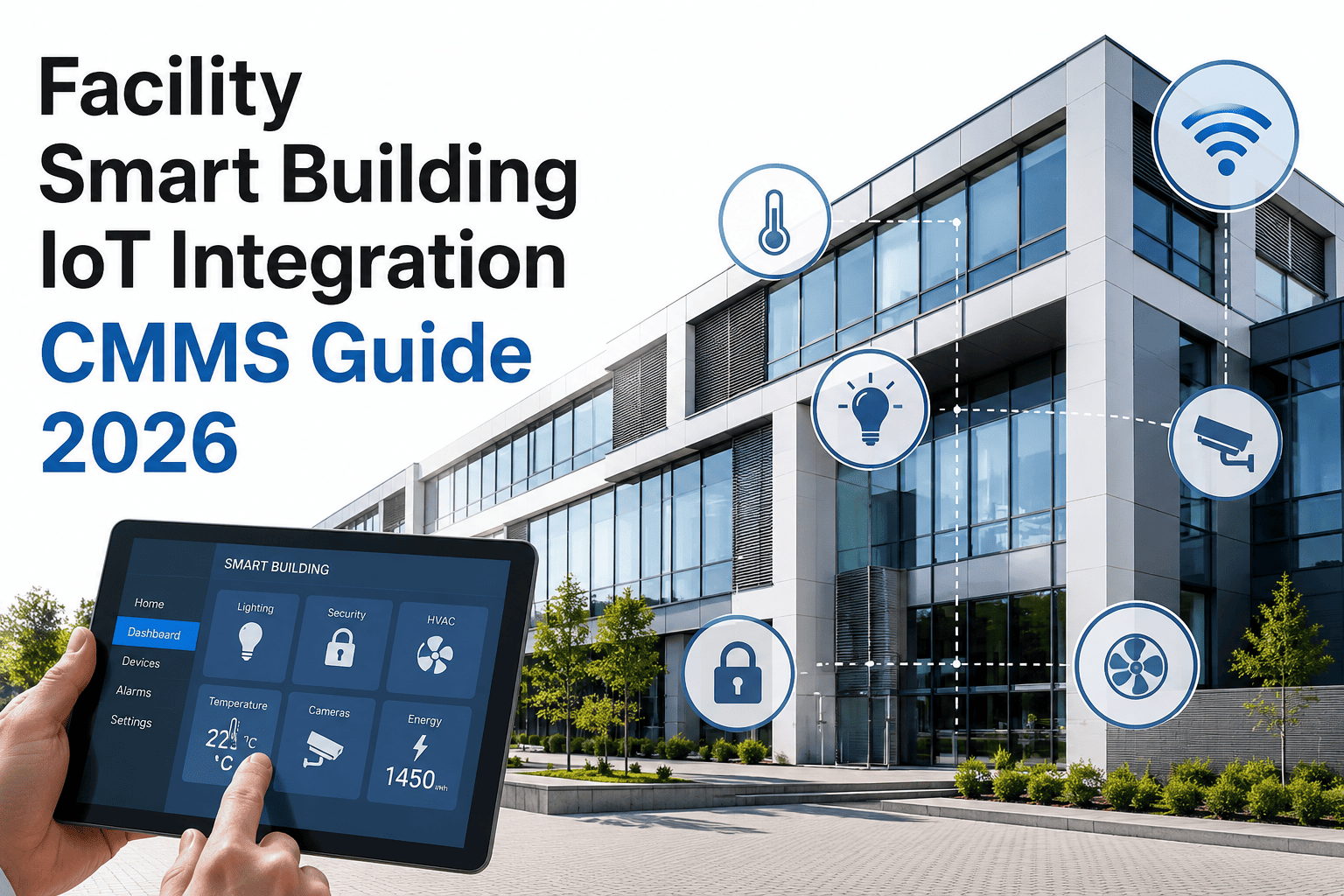
By 2026, IoT sensor costs have dropped 82% from 2018 levels. Full vibration, temperature, humidity, and current monitoring of mechanical and electrical systems is now economically viable for mid-tier facilities. The data these sensors generate is worthless without AI to process it — creating a natural demand for platforms like OxMaint that integrate sensor ingestion with actionable workflows.
Digital Twin Integration for Real-Time Simulation
Digital twins — virtual replicas of physical facilities — allow facility managers to simulate failure scenarios, test maintenance schedules, and model energy optimization strategies before implementing them in the physical environment. Integration with CMMS platforms enables real-time synchronization between the digital model and physical asset states.
Autonomous Maintenance Robots and Drones
Inspection robots capable of traversing complex environments and drones performing thermal imaging of rooftop systems are moving from pilot programs to standard deployment. In 2026, leading facilities are using autonomous inspection systems for high-voltage substations, large-format HVAC plant, and confined-space inspections that previously required specialized human access.
Sustainability Metrics Embedded in Maintenance Logic
ESG reporting requirements are forcing facility managers to treat energy consumption and carbon output as operational KPIs, not just compliance metrics. Modern CMMS platforms now embed carbon tracking, energy benchmarking, and sustainability scoring directly into maintenance workflows — linking every equipment intervention to its energy and environmental impact.
OxMaint's AI Copilot is available today — not in 2027. Start your facility's transformation now.
The AI Copilot in Action — OxMaint 2026 Capabilities
OxMaint's AI Copilot doesn't just surface data — it takes action. Here's what the platform does autonomously, requiring human approval only at defined escalation thresholds.
Autonomous Fault Detection
Monitors 200+ sensor parameters simultaneously. Flags deviations within 90 seconds of threshold breach. Classifies fault type, severity, and probable root cause before alerting any human.
200+ parameters monitored continuouslyPredictive Schedule Optimization
Adjusts maintenance schedules in real time based on asset condition, technician availability, energy pricing, and operational impact. Replaces fixed calendar PM with dynamic condition-based intervals.
34% fewer unnecessary PM interventionsIntelligent Technician Dispatch
Matches work orders to available technicians based on skill profile, location, certification, and current workload. Travel time and task complexity are factored into assignment — eliminating inefficient manual dispatch.
52% reduction in dispatch timeAI-Driven Parts Forecasting
Predicts spare parts demand based on predictive failure models, PM schedules, and historical consumption data. Prevents stockouts for critical items while eliminating 28% of slow-moving inventory waste.
28% reduction in inventory carrying costAutomated Compliance Reporting
Generates regulatory compliance reports, audit trails, and certification records automatically from completed work orders — without any manual data entry. Report formats adapt to applicable standards per jurisdiction.
98% audit-ready compliance rateEnergy Optimization Insights
Correlates asset performance data with energy consumption to identify inefficient operation patterns. Recommends equipment tuning, replacement timing, and operational adjustments that reduce energy waste.
31% average energy cost reductionTechnology Adoption Timeline — Where the Industry Is Now
Not all facility management technology is equally mature. This adoption map shows which technologies are production-ready today versus emerging in the near term.
Smart Building Economics — The ROI Case
Smart building technology is no longer an aspirational investment — the financial returns are measurable and consistent across facility types. The comparison below reflects documented outcomes from facilities transitioning to AI-enabled operations.
"The 2026 facility management landscape is defined by a widening gap between AI-enabled operators and those still managing on reactive instinct. The math is unforgiving: AI-enabled facilities are running at 42% lower total maintenance cost, 84% higher technician utilization, and near-zero unplanned downtime. The transition window is closing — teams that don't adopt AI-assisted CMMS in the next 18 months are building structural cost disadvantages that will take years to close."
The Future of Facility Management Is Operational Today
OxMaint's AI Copilot, predictive maintenance engine, and multi-site dashboard give your facility team the intelligence infrastructure to compete in 2026 and beyond.
Frequently Asked Questions
Is AI-powered facility management only viable for large enterprises in 2026?
+
No — the cost barrier that previously restricted AI facility management to large enterprises has largely disappeared. Cloud-native platforms like OxMaint deliver AI Copilot capabilities on a per-user subscription model accessible to facilities with as few as 3 technicians. The core technologies — predictive analytics, automated scheduling, and mobile CMMS — are fully functional at small and mid-market scale. Organizations managing 10,000 sq ft benefit as much as those managing 10 million.
How does OxMaint's AI Copilot differ from basic automation rules in traditional CMMS?
+
Traditional CMMS automation operates on static if-then rules: "if X days since last PM, create work order." OxMaint's AI Copilot uses machine learning models trained on failure patterns, sensor telemetry, and operational context to make dynamic decisions. It adjusts maintenance intervals based on actual asset condition, predicts failures before threshold triggers, and optimizes dispatch based on real-time workload — capabilities that rule-based automation cannot replicate.
What does a smart building integration with OxMaint actually involve?
+
OxMaint integrates with BMS, SCADA, and IoT platforms via standard protocols including BACnet, Modbus, MQTT, and REST APIs. The integration surfaces sensor data, occupancy information, and energy metrics directly into the CMMS workflow — enabling AI-driven maintenance scheduling that responds to real building conditions rather than calendar dates. Most integrations are configured within 2–4 weeks without requiring changes to existing building infrastructure.
How does predictive maintenance AI improve ESG and sustainability reporting?
+
OxMaint tracks energy consumption by asset and links maintenance interventions to measurable energy performance changes. This creates an auditable data trail showing the carbon and energy impact of maintenance decisions — essential for Scope 1 and Scope 2 emissions reporting under GHG Protocol and TCFD frameworks. Facilities using OxMaint's energy optimization insights report 18–31% average reductions in HVAC and lighting energy cost within the first year.
What's the realistic first-year ROI for a mid-sized facility adopting OxMaint's AI Copilot?
+
Based on documented outcomes from OxMaint customers, mid-sized facilities (50,000–500,000 sq ft) typically achieve 5–8x first-year ROI, with primary savings coming from reduced emergency repair costs (avg 41% reduction), lower energy consumption (18–31% reduction), and eliminated compliance penalties. The combination of technician efficiency gains and reduced reactive maintenance spending typically delivers payback within 4–6 months of full deployment.