Facility teams across the USA, UK, Canada, and Europe are losing an average of $260,000 per hour to unplanned equipment downtime. In 2026, that number is no longer acceptable when AI predictive maintenance can detect failures 14 to 28 days before they happen. This guide covers exactly how AI-driven CMMS platforms like Oxmaint are transforming facility management operations from reactive firefighting to precision-scheduled, data-driven maintenance. Book a demo to see how Oxmaint's AI predictive maintenance works for your facility portfolio.
30-50%
Reduction in unplanned downtime with AI predictive maintenance deployment
$260K
Average cost per hour of unplanned facility downtime across commercial operations
10:1-30:1
ROI documented by early adopters within 12 to 18 months of AI maintenance deployment
65%
Of maintenance teams plan to use AI by end of 2026, but only 32% have implemented it yet
Stop Paying for Failures You Could Have Predicted
Oxmaint's AI predictive maintenance is live in 14 days. No IT project. No infrastructure overhaul. Just fewer breakdowns and a maintenance team focused on planned work, not emergencies.
What Is AI Predictive Maintenance for Facility Management?
Core Definition
AI predictive maintenance uses IoT sensors, machine learning models, and live operational data to detect equipment degradation patterns weeks before failure. Instead of servicing assets on a fixed calendar or waiting for breakdown, your CMMS triggers a work order precisely when sensor data shows the asset needs attention. The result: no surprise failures, no emergency repair premiums, and maintenance labour directed at assets that actually need it.
01
Continuous Sensor Monitoring
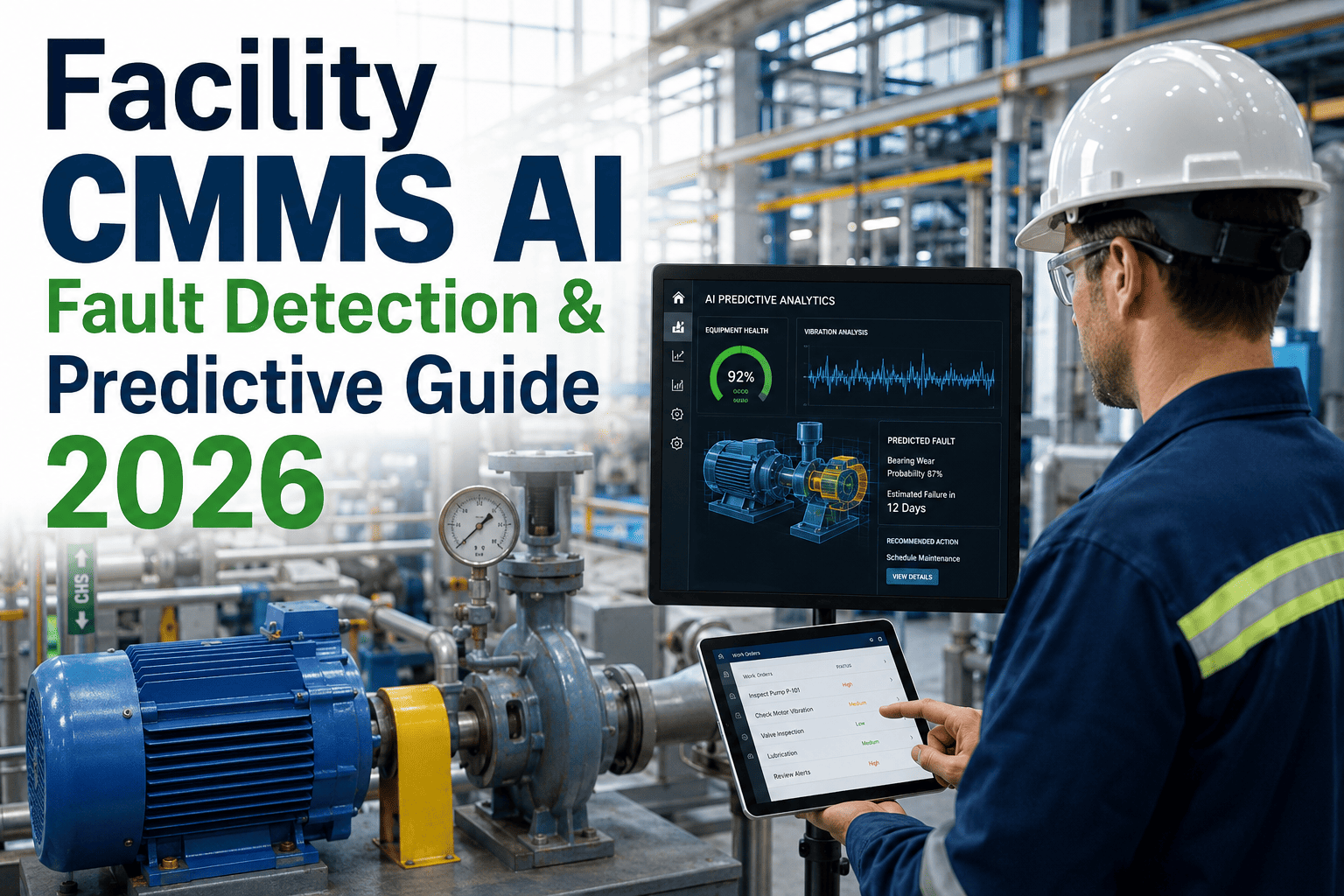
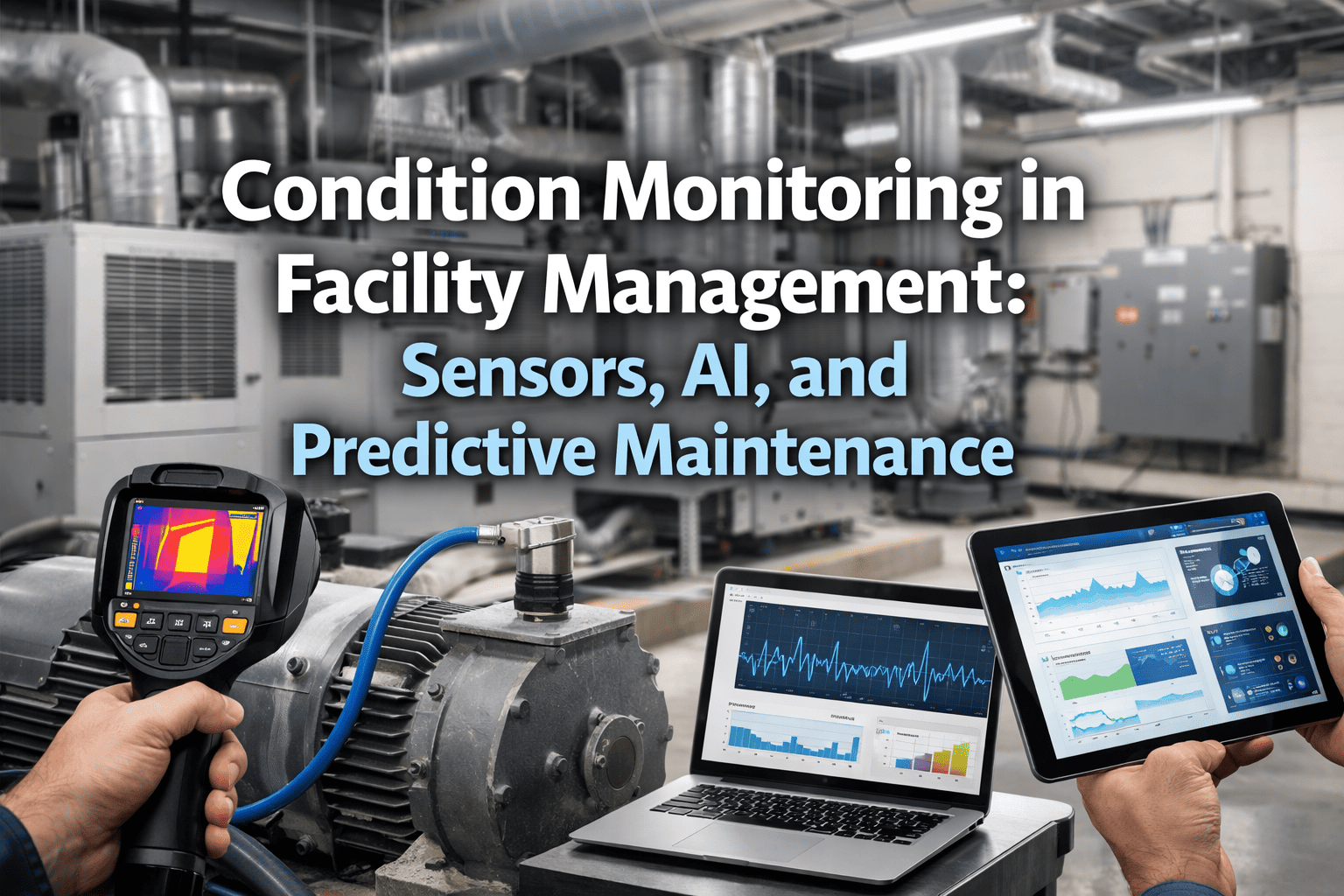
Vibration, temperature, current draw, pressure, and humidity sensors stream live data from HVAC systems, pumps, chillers, elevators, and electrical panels directly into your CMMS dashboard 24 hours a day.
02
Machine Learning Anomaly Detection
Pre-trained ML models establish normal operating baselines per asset. When sensor readings deviate from baseline patterns, the AI flags the anomaly and calculates estimated time to failure using historical failure data.
03
Automatic Work Order Generation
When an anomaly threshold is crossed, Oxmaint automatically generates a prioritized work order, assigns it to the right technician, and schedules the intervention before the failure window. Zero manual triage required.
04
Asset Health Scoring
Every asset receives a live health score updated in real time. Facility managers and portfolio directors see at a glance which assets are healthy, which need attention, and which are approaching critical failure risk.
The Real Cost Problem Facility Managers Face in 2026
Reactive Maintenance Costs 4.8x More
Emergency repairs carry a 4.8x cost premium over planned maintenance. A bearing replacement that costs $400 as planned work becomes a $1,900 emergency call-out. Multiply that across 50 critical assets and the annual overspend is significant.
4.8x cost premium on reactive repairs
Aging Building Infrastructure
31% of maintenance managers report downtime costs increased in 2025 despite stable breakdown frequency. Aging HVAC, electrical, and plumbing systems fail in increasingly expensive ways as components degrade past their design life.
31% report rising downtime costs in 2025
Zero Visibility Until Failure
Building management systems record anomaly data constantly. Without AI analysis, nobody is watching those signals. A chiller bearing showing vibration anomalies for 34 days fails with zero warning to the team managing the building.
73% of facilities have no predictive capability
Siloed Data Across Properties
Multi-site facility portfolios have maintenance data split across spreadsheets, standalone BMS platforms, and paper job cards. Portfolio-level risk visibility is impossible without connecting asset data into one platform.
Multi-site teams log into 8+ separate systems
Fixed PM Schedules Miss Real Condition
Time-based preventive maintenance services assets regardless of actual condition. Healthy assets get serviced unnecessarily while genuinely degrading equipment waits for the next calendar trigger. Both outcomes waste budget.
25-30% of PM tasks are performed unnecessarily
CapEx Decisions Based on Guesswork
Without asset health data, capital planning is reactive. Boards and investors are presented with replacement requests based on age estimates, not condition evidence. AI health scoring transforms this into a data-driven CapEx case.
40% of CRE firms lack data-backed CapEx models
How Oxmaint AI Predictive Maintenance Works for Facility Teams
Step 1
Days 1-7
Asset Registry and Sensor Mapping
Every HVAC unit, chiller, AHU, pump, elevator, generator, and electrical panel registered in Oxmaint's asset hierarchy. IoT sensors mapped to assets, BAS integration connected via BACnet/IP or REST API. No infrastructure replacement required.
Result: Complete asset registry with live sensor data feeding into Oxmaint from day one
Step 2
Days 7-14
AI Model Activation and Baseline Setting
Pre-trained ML models for chillers, AHUs, cooling towers, pumps, and electrical systems activate immediately. Models establish normal operating baselines per asset using live sensor data. No custom model development or waiting period required.
Result: Anomaly detection live across critical assets within 14 days of deployment
Step 3
Day 14 onward
Automated Work Order Generation and Prioritization
When sensor deviation crosses a threshold, Oxmaint auto-generates a prioritized work order, assigns it by technician skill and availability, and routes it to the right person on mobile. Your team responds to AI-generated insight, not symptoms.
Result: Maintenance team shifts from reactive response to planned intervention workflow
Step 4
Ongoing
Portfolio Dashboard and CapEx Intelligence
Facility directors and asset managers see all property risk scores, predictive work order queues, and AI-detected anomalies from one dashboard. Asset health trend data feeds Oxmaint's 5-10 year CapEx forecasting model with real condition evidence.
Result: Investor-grade CapEx reports backed by live asset condition data, not age estimates
Reactive vs Predictive Maintenance: Real Cost Comparison
| Maintenance Area | Reactive Maintenance | AI Predictive (Oxmaint) |
|---|---|---|
| HVAC chiller bearing failure | Emergency replacement $18,000-$65,000 plus 6-18 hrs downtime | Planned bearing swap $400-$800, detected 14-28 days early |
| AHU belt failure | After-hours emergency call $1,400-$3,800 plus zone disruption | Scheduled belt replacement $80-$240, 7-14 days advance warning |
| VFD thermal failure | Full VFD replacement $3,400-$18,000 | Root cause intervention $200-$600, detected 14-21 days early |
| Pump bearing seizure | Unplanned shutdown, emergency labour, cascade damage risk | Scheduled replacement, 7-14 days detection lead, zero disruption |
| Annual maintenance spend | Full reactive budget with 4.8x premium on every emergency event | 18-25% lower than preventive; up to 40% lower than reactive baseline |
| CapEx planning accuracy | Asset age estimates and gut feel presented to the board | Live health score data generates audit-ready CapEx forecast |
| Technician time allocation | 60-70% of time consumed by reactive emergency response | Technicians focused on planned work with AI-generated task queues |
| Compliance and audit readiness | Paper records, manual assembly, hours of pre-audit preparation | Digital records, auto-generated audit reports, always inspection-ready |
Oxmaint AI Features Built for Facility Management Teams
Condition Monitoring
Real-Time Asset Health Scoring
Every critical asset receives a live health score updated from sensor data. Facility managers see at-a-glance which assets need attention across all sites from one dashboard view.
AI Work Orders
Auto-Generated Predictive Work Orders
When anomaly thresholds are crossed, Oxmaint creates, assigns, and prioritizes work orders automatically. Technicians receive mobile notifications with full asset history and recommended actions.
IoT Integration
BAS and Sensor Integration
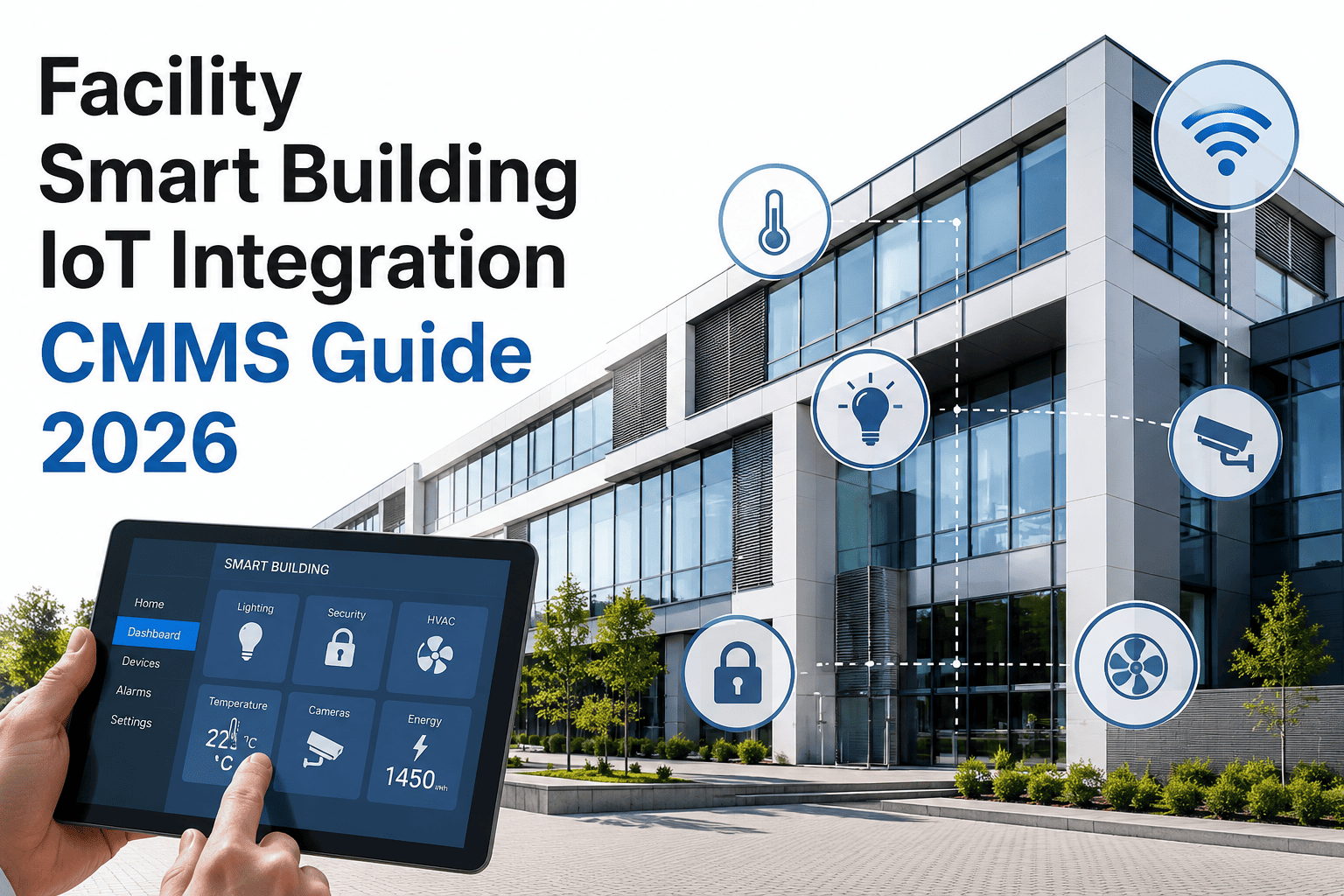
Native integration with Siemens Desigo, Honeywell EBI, Johnson Controls Metasys, and Schneider EcoStruxure via BACnet/IP or REST API. No new hardware required for connected buildings.
Portfolio View
Multi-Site Facility Dashboard
Directors of Facilities and Asset Managers see AI-detected anomalies, condition scores, and predictive work queues across all properties from one login. No more logging into eight separate systems.
CapEx Planning
5-10 Year CapEx Forecasting
AI health score trends feed Oxmaint's rolling CapEx model. Replacement decisions are supported by condition evidence, not age estimates. Investor-grade reports generated automatically from live asset data.
Compliance
Audit-Ready Documentation
Every inspection, work order, and sensor event time-stamped and stored with digital signatures. OSHA, EPA, fire safety, and building code audit packages exportable in under 2 hours from Oxmaint.
Mobile First
Field Technician Mobile App
Technicians access AI-generated work orders, asset history, and inspection forms on mobile. Works offline and syncs when connected. QR-scan asset access at the equipment, not from the office.
Inventory
Predictive Spare Parts Management
AI maintenance predictions inform spare parts inventory. Parts are ordered before the need becomes urgent, eliminating the lead time gap that turns a minor intervention into a major downtime event.
AI Predictive Maintenance ROI by Facility Type
Commercial Office
38%
Maintenance cost reduction
HVAC and elevator predictive monitoring across multi-tenant portfolios. Tenant disruption incidents reduced by 45%. Emergency call-out spend eliminated within 6 months.
Healthcare Facilities
50%
Reduction in unplanned downtime
Critical HVAC and electrical system monitoring with compliance documentation. Zero unplanned outages in monitored areas within 90 days of Oxmaint deployment.
Industrial Facilities
40%
Lower costs vs. reactive maintenance
Pump, compressor, and conveyor monitoring with OEE integration. Production-linked maintenance triggers replace calendar-based PM schedules across all lines.
Government Buildings
6-12 mo
Full payback timeline
Compliance-driven maintenance documentation with OSHA and building code audit exports. Portfolio dashboards connecting multiple sites for centralized oversight and budget control.
Regional Compliance Coverage: USA, UK, Canada, Europe
| Region | Key Compliance Frameworks | Facility Management Focus Areas | Oxmaint Coverage |
|---|---|---|---|
| USA | OSHA 29 CFR, EPA building standards, ASHRAE 90.1, NFPA fire codes, ADA compliance | OSHA documentation, fire safety inspections, energy efficiency compliance, aging infrastructure management | OSHA-aligned audit exports, digital fire inspection forms, energy monitoring dashboards, preventive PM scheduling for aging systems |
| United Kingdom | HSE Building Safety Act 2022, COSHH, PUWER 1998, LOLER 1998, CDM 2015, NHS PLACE standards | Building Safety Act compliance, NHS facility standards, equipment inspection registers, contractor management | UK-aligned inspection templates, PUWER and LOLER scheduling, NHS PLACE inspection support, contractor safety tracking |
| Canada | CSA Z1000, provincial OHS Acts (OHSA Ontario, WSIA BC), National Building Code, ASHRAE compliance | Provincial OHS documentation, high-value asset maintenance ROI given elevated labor costs, multi-province portfolio management | CSA Z1000-aligned records, provincial OHS documentation, multi-province portfolio dashboard, CapEx forecasting for high-labor markets |
| Europe (EU/Germany) | BetrSichV, EU Directive 2019/1152, DIN EN ISO 45001, ISO 14001, GDPR data compliance for facility records | BetrSichV machine safety inspections, ISO 45001 hazard management, energy directive compliance, smart building regulations | BetrSichV inspection scheduling, ISO 45001 CAPA management, multilingual mobile forms, GDPR-compliant data handling for facility records |
Results: What Facilities Achieve After Oxmaint Deployment
Zero
Unplanned HVAC outages in the first 90 days post-deployment at a 24-building commercial portfolio, versus 11 in the prior quarter
$340K
In avoided emergency repair costs in year one at a mid-size industrial facility after switching from reactive maintenance to Oxmaint AI monitoring
2 hrs
Time to assemble a full compliance audit documentation package from Oxmaint, versus 3 weeks of manual record gathering with the prior system
45%
Reduction in unplanned downtime events within 12 months of AI predictive maintenance activation across a multi-site facility portfolio
40%
Extension in average asset lifespan at facilities using Oxmaint condition-based maintenance versus fixed-schedule PM programs
14 days
Time to full AI predictive monitoring deployment with pre-trained models across HVAC, electrical, and plumbing systems, no IT project required
25%
Lower annual maintenance costs compared to preventive-only programs, with up to 40% savings versus fully reactive maintenance baselines
Your Facility's AI Predictive Maintenance ROI Starts on Day 1
Most facilities identify their first significant saving within 30 to 60 days of Oxmaint deployment, typically from early anomaly detection on HVAC and electrical systems already approaching failure. The first prevented emergency repair usually covers months of platform cost.
Frequently Asked Questions
How quickly does AI predictive maintenance deploy at a facility without an IT project?
Oxmaint deploys pre-trained AI models across your critical assets in 14 to 21 days. No IT infrastructure change required, existing BAS sensors are used, and the platform connects via API without touching your current systems. Start free or book a demo to review the deployment timeline for your facility size.
What is the measurable ROI of AI predictive maintenance for a facility manager?
Documented outcomes include 30 to 50% reduction in unplanned downtime, 18 to 25% lower maintenance costs, and 10:1 to 30:1 ROI within 12 to 18 months. The first prevented major failure typically pays back multiple months of platform cost. Book a demo to receive an ROI model built from your facility's actual maintenance spend data.
Can Oxmaint work alongside our existing BMS or CMMS without replacing them?
Yes. Oxmaint integrates with Siemens Desigo, Honeywell EBI, Johnson Controls Metasys, and Schneider EcoStruxure via BACnet/IP or REST API. The most common deployment adds AI prediction and CMMS workflow on top of existing BAS infrastructure without any hardware changes. Start free to test integration with your current systems.
How does AI predictive maintenance support compliance and audit documentation?
Every sensor event, work order, inspection, and technician action is time-stamped and stored with digital signatures in Oxmaint. Audit packages for OSHA, HSE, or provincial OHS inspections are exportable in under 2 hours from any time period. Book a demo to see compliance documentation configured for your jurisdiction in Oxmaint.
Does AI predictive maintenance work for multi-site facility portfolios?
Oxmaint is built for multi-site portfolio management. Directors of Facilities and Asset Managers see AI anomaly alerts, condition scores, and predictive work queues across all properties from a single dashboard without logging into separate systems. Sign up free or book a demo to see the portfolio dashboard configured for your property count.
What assets does Oxmaint AI predictive maintenance cover in a typical facility?
Pre-trained models cover HVAC chillers, AHUs, cooling towers, pumps, elevators, generators, electrical panels, boilers, and conveyor systems. Models activate immediately without custom training, then improve continuously as asset-specific data accumulates. Book a demo to see which of your specific assets are covered by Oxmaint's pre-built models.
Ready to Move from Reactive to Predictive Facility Maintenance?
Facility teams across the USA, UK, Canada, and Europe are deploying Oxmaint AI predictive maintenance in 14 days with no IT project, no infrastructure replacement, and measurable ROI from the first prevented failure. Your next emergency repair can be the last one.
AI Asset Health Scoring
Auto Work Order Generation
Multi-Site Portfolio Dashboard
5-10 Year CapEx Forecasting