Facility management in 2026 demands more than scheduled walkthroughs and reactive repairs. Buildings have become complex ecosystems of HVAC systems, electrical infrastructure, plumbing networks, and security apparatus — each generating failure modes that traditional inspection methods miss entirely. Quadruped robots, aerial drones, and autonomous mobile platforms now patrol these environments continuously, capturing thermal signatures, vibration patterns, and environmental data that human inspectors could never collect at scale. The facilities achieving the lowest maintenance costs and highest uptime share one critical advantage: they connect robotic inspection systems directly to their CMMS, transforming raw sensor data into prioritised work orders within minutes of detection. Start with Oxmaint to see how robotic patrol data integrates with maintenance execution workflows.
Robots Inspect. CMMS Decides. Technicians Execute.
Why Traditional Facility Inspections Fail Modern Buildings
Commercial and industrial facilities have grown exponentially more complex while inspection methodologies have remained largely unchanged. The gap between what buildings need and what manual programmes deliver widens every year. Here is what the data reveals about conventional facility inspection limitations.
Coverage Blind Spots
Human inspectors cover 12-18% of building systems per round. Mechanical rooms, roof equipment, and crawl spaces receive quarterly visits at best — exactly where 67% of catastrophic failures originate.
Response Lag
Average time from defect observation to CMMS work order: 6-12 hours. For overnight or weekend findings, delays stretch to 24+ hours — long enough for minor issues to cascade into emergencies.
Subjective Assessments
Condition ratings vary 35-50% between inspectors evaluating identical equipment. What one technician flags as critical another dismisses as normal wear — inconsistency that masks developing failures.
Annual cost of unplanned facility downtime across commercial real estate, healthcare, and manufacturing sectors — the majority attributed to equipment failures detectable through routine sensor-based inspection.
The Smart Facility Stack: How Robots and CMMS Work Together
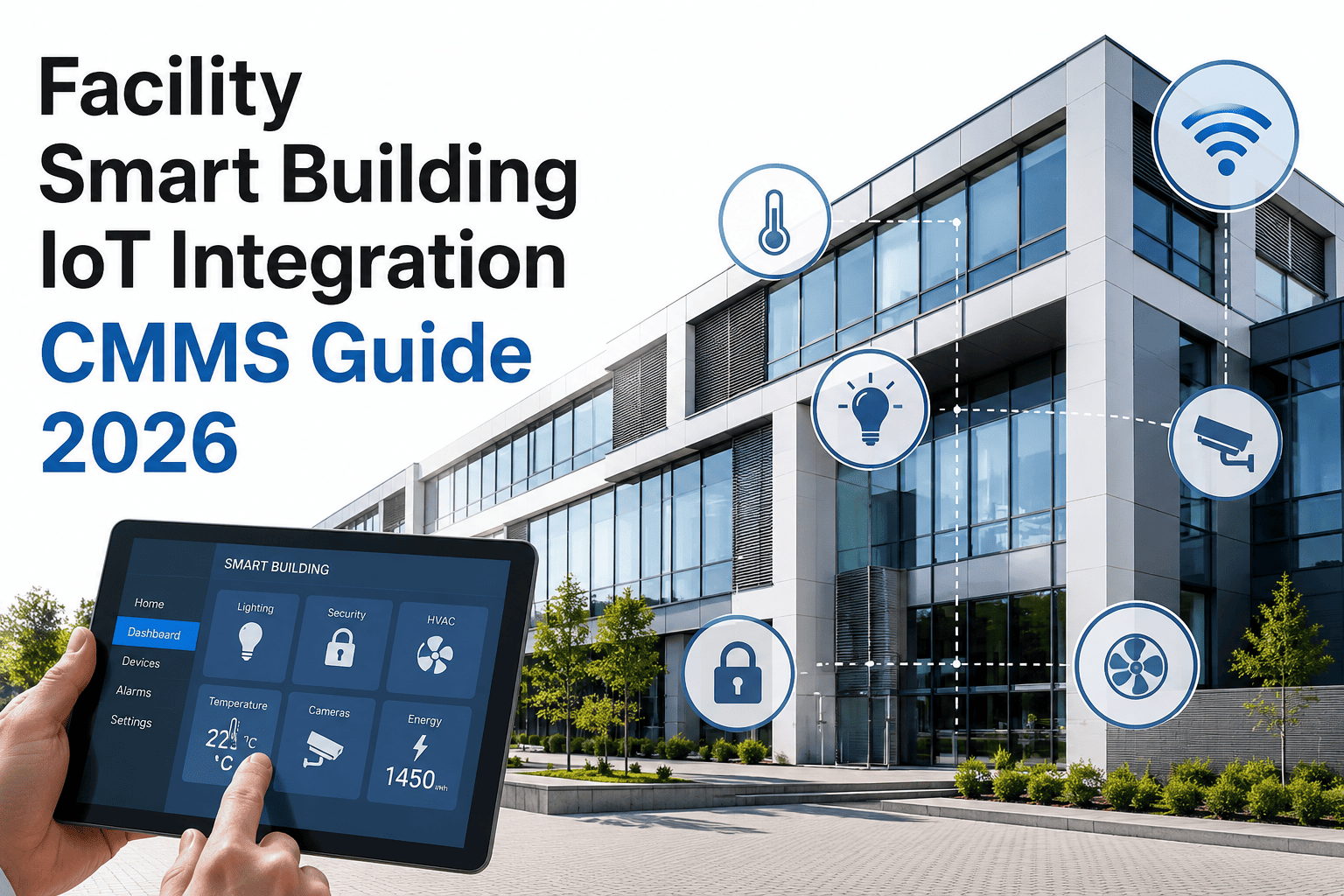
Effective facility management in 2026 requires three integrated layers: mobile inspection platforms that access every corner of your building, fixed sensors that monitor critical assets continuously, and a CMMS that transforms all incoming data into actionable maintenance decisions. When these layers connect through standardised APIs, facilities achieve inspection coverage and response speeds impossible with human-only programmes. Create your Oxmaint account to explore the full integration architecture.
Robotic Inspection Layer
Sensor Payload Layer
CMMS Integration Layer
Every Robot Patrol Creates a Maintenance Decision. Not a PDF Report.
Oxmaint receives robotic inspection findings via REST API and automatically generates prioritised work orders with thermal images, vibration spectra, and location coordinates — closing the loop from detection to repair in minutes.
Facility Zones and Patrol Strategies
Different areas of a facility present unique access challenges, hazard profiles, and asset criticality levels. Effective robotic inspection programmes tailor platform selection, sensor loadout, and patrol frequency to each zone's specific requirements.
Mechanical Rooms
High-density checkpoint areas containing HVAC equipment, boilers, chillers, and pumps. Quadruped robots navigate around piping and equipment. Thermal and vibration data feed directly into Oxmaint asset records for trend analysis.
Electrical Infrastructure
Substations, switchgear rooms, and distribution panels require thermal scanning for loose connections and overloaded circuits. Robots maintain safe standoff distances while capturing radiometric images that reveal developing failures invisible to visual inspection.
Rooftop Equipment
Aerial drones eliminate fall hazards while capturing comprehensive rooftop data. Thermal imaging reveals HVAC inefficiencies and moisture intrusion. Visual AI detects membrane damage, ponding water, and equipment degradation.
Common Areas and Circulation
Wheeled AMRs patrol lobbies, corridors, and public spaces during off-hours. Visual AI identifies safety hazards, maintenance needs, and cleanliness issues. Findings route to appropriate teams automatically through Oxmaint's work order system.
Six Principles for High-Value Robotic Inspection Programmes
The difference between a robotic inspection programme that transforms facility operations and one that generates unused data comes down to design decisions made before the first patrol runs. These principles, refined through deployments across commercial, industrial, and healthcare facilities, form the foundation of programmes that deliver measurable results.
Prioritise by Business Impact
Not all assets warrant equal inspection frequency. Rank checkpoints by the operational and financial consequence of each asset's failure. Critical HVAC serving data halls gets 4x daily visits; storage area lighting gets monthly.
Match Platform to Environment
Quadrupeds for stairs and obstacles. Drones for heights and exteriors. Wheeled robots for flat floors. Forcing the wrong platform into an environment degrades data quality and increases maintenance burden.
Integrate Before You Automate
Connect robot data streams to your CMMS before expanding patrol coverage. A single zone generating automatic work orders delivers more value than facility-wide patrols producing PDF reports that sit in email inboxes.
Baseline Before You Alert
Run 2-4 weeks of data collection before activating automatic alerts. This establishes normal operating ranges for each asset and prevents false positives from overwhelming maintenance teams during initial deployment.
Design for Connectivity Gaps
Building structures create RF dead zones. Configure robots to buffer data locally when connectivity drops. Oxmaint syncs automatically when links restore — ensuring no inspection data is lost during communication interruptions.
Position Charging for Coverage
Place docking stations at zone boundaries in protected alcoves. Size battery capacity for full patrol plus 25% reserve for obstacle navigation. Multiple charging locations enable continuous 24/7 coverage without patrol gaps.
Traditional vs. Robotic CMMS-Integrated Inspection
The operational differences between manual inspection programmes and robotic systems integrated with CMMS platforms extend far beyond automation. Every aspect of how defects are found, documented, communicated, and resolved changes fundamentally.
Implementation Roadmap
Successful robotics-CMMS integration follows a phased deployment — starting focused, proving value fast, and expanding based on documented results. Book a consultation to get a roadmap customised for your facility portfolio.
Assessment and Asset Mapping
Identify pilot zone with highest-impact assets. Register equipment in Oxmaint with inspection parameters. Map patrol routes and checkpoint locations. Configure sensor thresholds based on manufacturer specs and historical data.
Integration and Testing
Connect robot data pipeline to Oxmaint REST API. Configure work order automation rules. Test alert routing with known defect conditions. Validate data integrity from sensor capture through work order creation.
Supervised Pilot Operations
Execute monitored patrols in pilot zone. Compare findings against manual baseline inspections. Tune thresholds to eliminate false positives. Train maintenance team on CMMS workflow changes and mobile dispatch.
Autonomous Expansion
Launch 24/7 unattended patrols in pilot zone. Document results and calculate verified savings. Expand routes to additional zones based on data. Deploy additional robot platforms as coverage requirements grow.
Platform Selection for Facility Applications
Different facility types and inspection requirements demand different robotic platforms. Matching capabilities to environment ensures optimal data quality and operational efficiency.
Transform Your Facility Operations in 2026
Your robotic platforms capture thermal scans, vibration data, and environmental readings. Oxmaint turns every reading into an asset history entry, a trend line, or a prioritised work order — automatically. No manual data entry. No report reviews. No missed defects. One platform connecting robotic inspection to maintenance execution.