Best Cleaning Robots for Facility Management CMMS Integration Guide 2026
By shreen on February 17, 2026
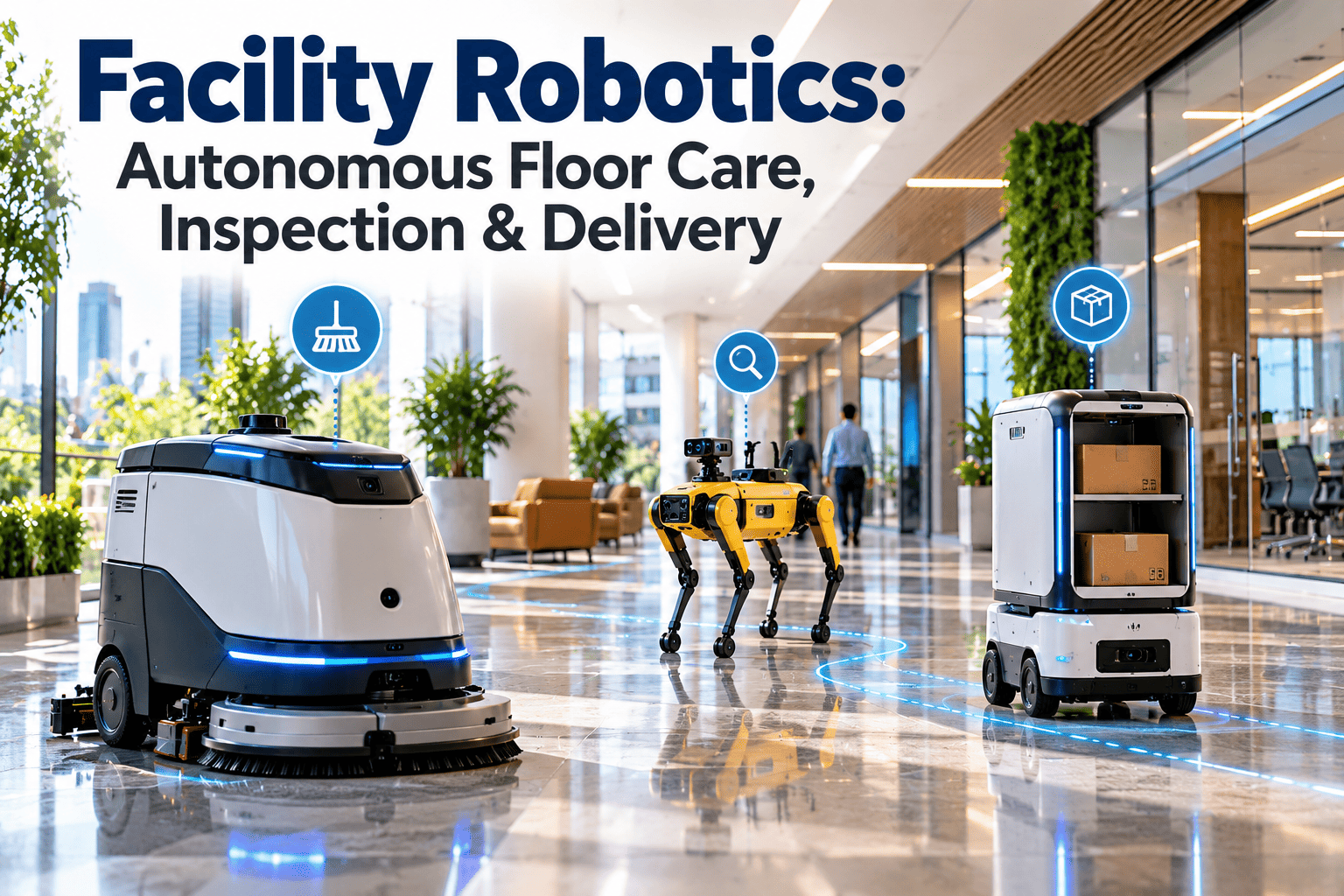
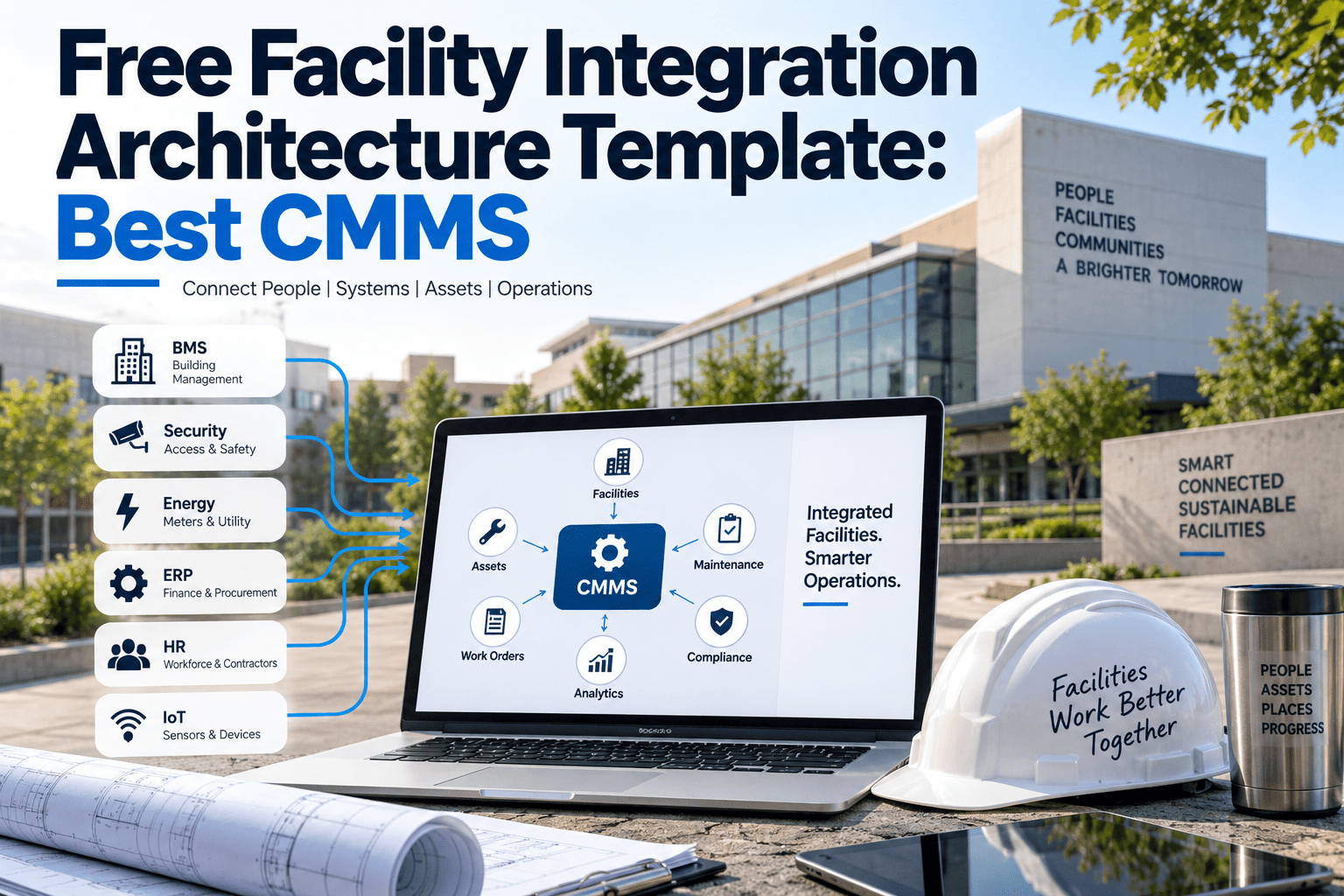
Every facility manager knows the zones that never get cleaned properly — the warehouse aisles after midnight when janitorial staff has gone home, the loading dock corners where dust accumulates for weeks, the restroom floors during peak occupancy hours when manual cleaning would disrupt operations. These are exactly the places where cleanliness standards slip and where tenant complaints originate. Autonomous cleaning robots are purpose-built for this mismatch. They scrub concrete floors, vacuum commercial carpets, and disinfect high-touch surfaces around the clock, all while capturing coverage data that proves compliance to auditors and building owners. When those cleaning logs feed directly into a CMMS like Oxmaint, every patrol becomes a documented maintenance event — coverage maps auto-populate service histories, consumable alerts generate work orders, and your facilities team acts on data instead of guessing when filters need replacement. Schedule a consultation to explore how Oxmaint connects robotic cleaning data to your facility maintenance workflows.
The Facility Cleaning Problem No One Talks About
Commercial and industrial facilities run cleaning operations that directly impact tenant satisfaction, regulatory compliance, and operating costs, yet their programs often rely on the same mop-and-bucket methods used decades ago. The result is a widening gap between the cleanliness standards facilities need and the consistency they actually deliver. Here is what the numbers reveal about the current state of facility cleaning operations.
$1.2B
Annual cost of slip-and-fall incidents in commercial facilities attributed to inadequate floor cleaning and maintenance
200%
Average annual turnover rate for janitorial staff positions across commercial cleaning operations
35%
Of scheduled cleaning tasks go undocumented or unverified in facilities using paper-based tracking systems
Autonomous cleaning robots eliminate these constraints. They patrol facility zones during off-hours, capture sensor-grade coverage data at every pass, and push findings to your CMMS in real time — no transcription, no missed areas, no staff turnover disrupting service quality. Sign up for Oxmaint to see how robotic cleaning data integrates with asset management workflows.
Want to close the gap between cleaning and verification? Oxmaint links every robot patrol to your facility records so consumable alerts trigger work orders automatically.
Top Cleaning Robot Categories for Facility Management
Effective robotic cleaning starts with matching the right robot type to your facility's floor surfaces, traffic patterns, and compliance requirements. Each robot category demands a tailored deployment strategy with specific maintenance schedules, consumable tracking, and coverage verification. Below is how leading facility managers structure their robotic cleaning programs.
Industrial-grade scrubbers combine water dispensing, brush agitation, and wet vacuum recovery in a single pass. Units navigate around shelving, equipment, and obstacles while generating GPS-tagged coverage maps. Key maintenance: brush/pad replacement every 50-100 hours, squeegee blade inspection weekly, solution tank sanitization daily.
Heavy-duty vacuums engineered for commercial carpet tiles and area rugs. Unlike consumer units, commercial robots feature larger debris bins, fleet management integration, and air quality compliance documentation. Key maintenance: HEPA filter replacement every 200-300 hours, brush roller cleaning weekly, dustbin sensor calibration monthly.
C
UV-C Disinfection Robots
Healthcare facilitiesFood processingCleanrooms & labs10-20 min per room
Ultraviolet germicidal irradiation robots eliminate pathogens on high-touch surfaces, operating rooms, and food prep areas. Units autonomously navigate while emitting UV-C light proven to inactivate bacteria and viruses. Key maintenance: UV bulb replacement at 1,500-3,000 hours, intensity verification monthly, safety system testing weekly.
Matching Maintenance Tasks to Robot Types
A cleaning robot is only as reliable as its maintenance program. The right task-to-schedule pairing ensures every robot maintains peak performance while your CMMS tracks consumable life, schedules replacements, and documents compliance automatically.
Robot Maintenance Task Matrix
Robot Type
Maintenance Task
Frequency
CMMS Action Triggered
Floor Scrubber
Brush/Pad Replacement
Every 50-100 operating hours
Parts requisition auto-generated; PM work order assigned to technician
Floor Scrubber
Squeegee Blade Inspection
Weekly
Visual inspection checklist; defect triggers replacement order
Floor Scrubber
Solution Tank Sanitization
Daily
Logged to asset history; bacterial growth prevention documented
Vacuum Robot
HEPA Filter Replacement
Every 200-300 operating hours
Air quality compliance entry; filter cost tracked per robot
Vacuum Robot
Brush Roller Cleaning
Weekly
Motor strain prevention logged; debris removal verified
Human safety compliance documented; motion sensor verified
All Types
Battery Load Testing
Monthly
Capacity trend tracked; conditioning scheduled when below 80%
Every maintenance task is timestamped, linked to the specific robot asset ID in Oxmaint, and creates an auditable service trail with zero manual data entry.
See how maintenance data flows into your asset records in real time. Walk through the full robot-to-work-order pipeline with our team.
Capturing cleaning data is the easy part. The real competitive advantage comes from what happens in the seconds after a robot finishes a patrol — how that data reaches the right people, in the right format, with the right urgency. Here is the five-stage pipeline that turns a robotic cleaning cycle into closed-loop maintenance action inside Oxmaint.
1
Robot Completes Cleaning Zone
The autonomous cleaner navigates the pre-programmed route using LiDAR-based SLAM positioning. It covers every accessible floor area, logs coverage percentage, and returns to its docking station — ensuring repeatable cleaning patterns across every shift.
2
Operational Data Capture
Coverage maps, operating hours, brush wear metrics, battery consumption, and error codes are logged by the robot's onboard processor. The system validates data quality and flags anomalies before transmission to the CMMS.
3
API Push to Oxmaint
Validated readings stream to Oxmaint's API endpoint via facility Wi-Fi. Each data packet includes robot asset ID, zone coordinates, timestamp, cleaning duration, and consumable status. Data appears in the robot's service history within seconds.
4
Threshold Comparison & Alerting
Oxmaint compares incoming values against robot-specific baselines and configurable thresholds. A brush at 85% wear triggers a different response than one at 95%. Severity classification drives priority, notification routing, and response deadlines.
5
Auto-Generated Work Order with Parts
Threshold breaches create work orders pre-loaded with required parts, replacement procedures, and cost estimates. The order routes to the assigned technician based on robot location, skill requirements, and shift availability — ready to execute.
Six Principles for High-Performance Robot Fleet Management
Fleet management for cleaning robots is not simply tracking battery levels on a dashboard. The difference between a program that maximizes uptime and one that constantly fights breakdowns comes down to how thoughtfully the maintenance strategy was engineered. These six principles, refined through real-world deployments, form the foundation of high-value robotic cleaning programs.
01
Track Consumables by Operating Hours, Not Calendar
Brushes, filters, and squeegees wear based on use intensity, not time elapsed. Configure Oxmaint to trigger replacements at operating hour thresholds — a robot running 8 hours daily needs consumables 4x faster than one running 2 hours.
02
Map Zones by Surface Type and Soil Load
Different floor surfaces and traffic patterns create different wear profiles. A warehouse robot scrubbing greasy concrete wears brushes 3x faster than one cleaning office tile. Assign zone-specific maintenance multipliers in your CMMS.
03
Schedule Cleaning During Low-Occupancy Windows
Maximize robot productivity by scheduling primary cleaning cycles during nights, weekends, and holidays. Daytime operation works for spot cleaning but creates obstacle avoidance overhead that reduces coverage efficiency by 20-30%.
04
Maintain Parts Inventory at Zone Boundaries
Stock replacement brushes, filters, and squeegees near robot docking stations. When Oxmaint generates a consumable alert, technicians execute the swap in minutes rather than waiting for central warehouse retrieval.
05
Build Battery Conditioning into PM Schedules
Lithium batteries degrade predictably. Monthly capacity tests identify cells trending toward failure before they strand robots mid-shift. Oxmaint tracks battery health curves and schedules conditioning cycles automatically when capacity drops below 80%.
06
Document Coverage for Compliance Reporting
Healthcare and food processing facilities require cleaning verification logs. Robot coverage maps provide audit-ready documentation that paper logs cannot match — timestamped, GPS-tagged, and automatically archived in Oxmaint.
Turn Every Robot Patrol into a Documented Service Event
Oxmaint connects your cleaning robot fleet directly to maintenance workflows. Coverage data, consumable wear, and battery health auto-populate equipment histories and generate priority work orders — so your facilities team acts on sensor intelligence, not guesswork.
The argument for robotic cleaning is not theoretical. It shows up in the data: the coverage consistency achieved, the response times measured, and the compliance gaps eliminated. Here is a side-by-side look at what changes when you replace manual janitorial programs with autonomous cleaning robots integrated into your CMMS.
Manual Cleaning vs. Robot + CMMS Operations
Cleaning Aspect
Manual Janitorial
Robot + Oxmaint
Coverage Verification
Paper logs with no proof of actual cleaning
GPS-tagged coverage maps archived automatically
Off-Hours Coverage
Limited to staffed shifts; gaps on weekends/holidays
24/7 autonomous operation on programmable schedules
Quality Consistency
Varies by individual worker effort and attention
Repeatable 99%+ coverage on every cleaning cycle
Staff Turnover Impact
200%+ turnover disrupts service quality constantly
Immune to turnover, sick days, and no-shows
Maintenance Tracking
Equipment serviced when it fails or looks dirty
Predictive alerts based on operating hours and wear
35%
of cleaning tasks go undocumented or unverified
100%
of cleaning cycles documented with coverage proof
From Pilot to Full Coverage: A Phased Deployment Plan
Facilities that succeed with robotic cleaning follow a phased rollout — starting narrow, proving value fast, and expanding based on data. Trying to cover an entire campus on day one creates complexity without delivering early wins. Here is the deployment sequence that works. Book a demo to get a phased plan customized for your facility layout.
Implementation Roadmap
Weeks 1-2
Facility Assessment & Zone Mapping
Survey floor surfaces, obstacles, and traffic patternsRegister robot assets in Oxmaint with maintenance parametersIdentify pilot zone with measurable cleaning baseline
Weeks 3-4
Route Programming & API Configuration
Program cleaning routes, schedules, and docking locationsConnect robot data pipeline to Oxmaint APIConfigure consumable alerts and auto-work-order rules
Weeks 5-6
Supervised Pilot Operations
Execute monitored cleaning cycles in the pilot zoneValidate coverage maps against manual spot checksTune alert thresholds to eliminate false positives
Week 7+
Autonomous Expansion
Launch 24/7 unattended cleaning in the pilot zoneExpand routes to additional zones based on ROI dataAdd robots to fleet as coverage requirements grow
Measured Impact After Deployment
When autonomous cleaning robots and CMMS integration work together, the improvements are not incremental — they are structural shifts in how facilities operations run. The following figures reflect documented outcomes from facilities that have completed at least six months of robotic cleaning operations.
Performance After 6+ Months of Robotic CMMS Operations
65%Reduction in labor costs through staff reallocation to higher-value tasks
95%+Robot fleet uptime with CMMS-driven preventive maintenance
100%Cleaning cycle documentation for compliance and audit readiness
12-18moTypical payback period for autonomous cleaning robot investment
Calculate your facility's potential ROI. Create a free Oxmaint account and our reliability engineers will model the impact for your specific building portfolio.
Selecting the Right Cleaning Robot for Your Facility
Not every cleaning robot is built for the demands of commercial and industrial environments. Selecting the right platform means matching floor surface compatibility, coverage capacity, and integration capabilities to your facility's unique requirements. Schedule a consultation to discuss which robot platforms pair best with Oxmaint for your operational needs.
Robot Selection Criteria for Commercial Facilities
Specification
Minimum Requirement
Why It Matters
Coverage per Charge
15,000+ sq ft (scrubbers)
Undersized batteries require mid-shift recharging that creates coverage gaps during peak cleaning windows
Navigation Technology
LiDAR + camera fusion
Pure camera systems fail in low-light conditions; pure LiDAR misses glass walls and reflective surfaces
Obstacle Handling
Dynamic avoidance + recovery
Robots must navigate around unexpected obstacles and resume routes automatically without human intervention
Tank Capacity
Matched to coverage area
Undersized solution tanks require refills that interrupt cleaning cycles and reduce productivity
Fleet Management
Multi-robot coordination
Large facilities require 3-5+ robots working coordinated routes without overlap or collision
API Integration
REST API with JSON export
Oxmaint requires structured data packets with asset IDs, timestamps, and operational metrics
Cleaning robots are only as reliable as their maintenance program. A floor scrubber with worn brushes delivers worse results than no scrubber at all — it just spreads dirty water around. Connecting our robot fleet to a CMMS wasn't optional, it was essential. Now brush replacements happen before cleaning quality degrades, and our robots maintain 95%+ uptime across 200,000 square feet.
— Facilities Director, Regional Medical Center
Transform Your Facility Cleaning Operations Today
Your cleaning robots capture coverage data, consumable wear, and battery health. Oxmaint turns every reading into an asset history entry, a trend line, or a prioritized work order — automatically. No paper forms. No missed maintenance. No undocumented cleaning cycles. One platform connecting robotic cleaning to maintenance outcomes.
Which cleaning robot brands does Oxmaint integrate with?
Oxmaint integrates with any robot platform that supports REST API data export, including Tennant, Nilfisk, ICE Robotics, Avidbots, Brain Corp-powered units, Whiz by SoftBank, and LG CLOi robots. For UV disinfection, we integrate with Xenex, UVD Robots, and Tru-D. The integration is data-agnostic — as long as the robot can push structured JSON packets containing asset IDs, timestamps, and operational metrics, Oxmaint processes and routes the data automatically. Sign up for Oxmaint to explore API documentation for your specific robot platform.
Can cleaning robots operate safely alongside facility occupants?
Yes — commercial cleaning robots are designed for safe operation in occupied spaces. They move at walking speed (typically 1-2 mph), feature multiple redundant safety sensors, and stop immediately when people or obstacles are detected. However, many facilities maximize robot productivity by scheduling primary cleaning cycles during low-occupancy periods (nights, weekends) while using daytime operation for spot cleaning and high-traffic area maintenance only.
What is the typical ROI timeline for autonomous cleaning robots?
Most facilities achieve positive ROI within 12-18 months of deployment. A single autonomous floor scrubber can replace 2-3 FTE cleaning staff positions when operating during off-hours. At average janitorial costs of $35,000-$45,000 per FTE (loaded), a robot fleet covering 100,000 sq ft generates $70,000-$135,000 in annual labor reallocation savings. Additional value comes from improved cleaning consistency, reduced slip-and-fall liability, and compliance documentation automation. Sign up for Oxmaint to track robot fleet ROI with built-in cost analytics.
How does Oxmaint handle multi-site cleaning robot fleet management?
Oxmaint provides centralized fleet management across unlimited facilities. Each site maintains its own robot inventory, maintenance schedules, and parts stock while rolling up to portfolio-level dashboards for operations leadership. Cross-site analytics identify best-performing facilities, optimize spare parts distribution, and standardize maintenance procedures. Book a demo to see multi-site fleet management capabilities for enterprise facility portfolios.
How quickly can a facility deploy its first robotic cleaning program?
A focused pilot covering one or two priority zones typically reaches supervised operation within 4-5 weeks and autonomous operation by week 7. The most common pilot zones are warehouse floors (high square footage, low obstacle density) or office common areas (visible impact, easy measurement). Full facility coverage usually completes within 3-4 months of pilot start. Schedule a consultation to get a deployment timeline tailored to your facility.