Asset Management Software for Facility Equipment

By shreen on March 14, 2026

asset-management-software-for-facility-equipment-(1)

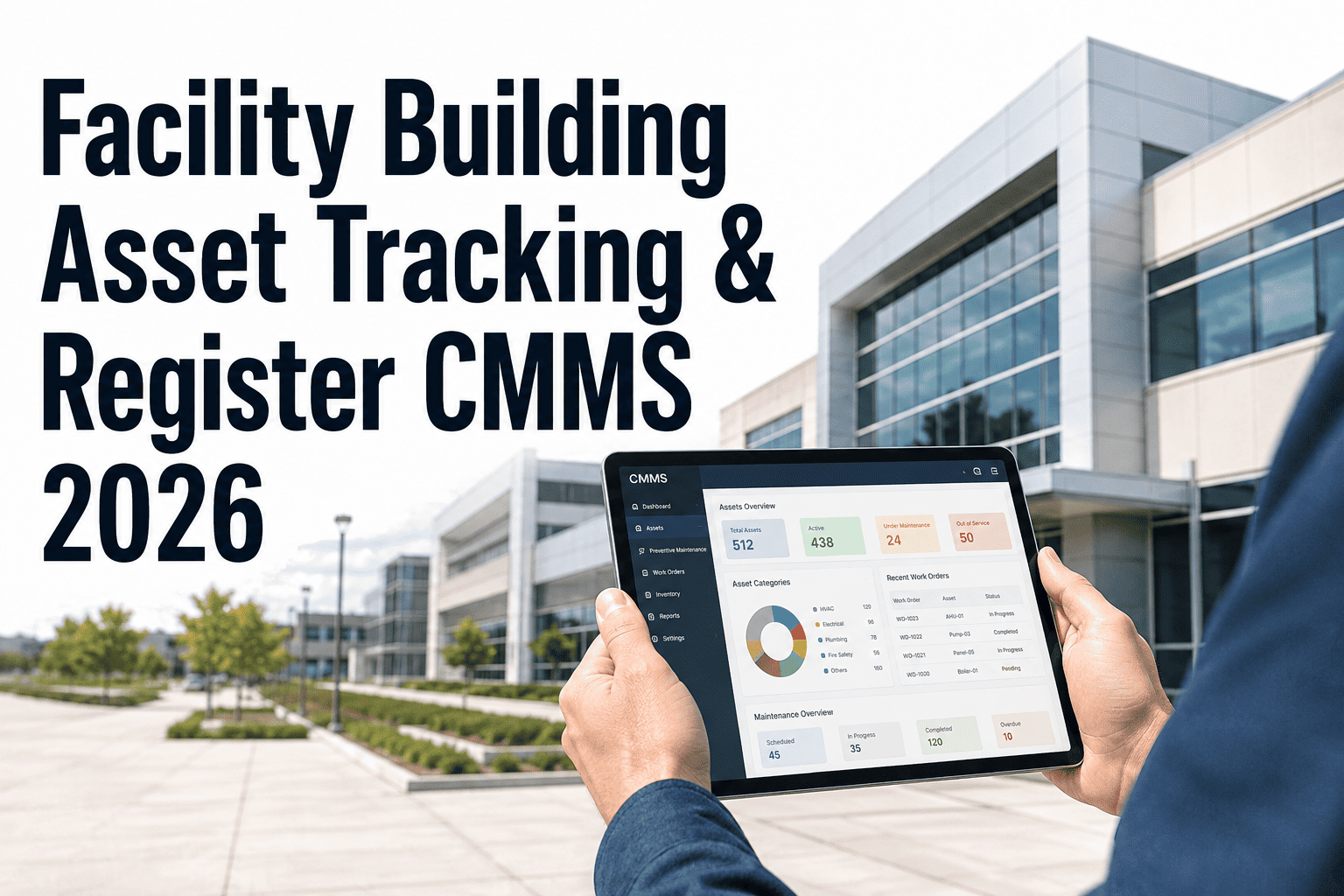
A 600,000 sq ft commercial campus was losing $340,000 annually to untracked equipment failures — HVAC compressors running past service intervals, fire suppression panels missing inspections, and elevator components replaced reactively at 3x the cost of planned replacements. Within six months of deploying Oxmaint's asset management platform, the facility team cataloged 4,200 assets, reduced emergency repair spend by 47%, and achieved 99.2% regulatory inspection compliance. Every asset now carries a digital lifecycle record — from commissioning through maintenance history to projected replacement date — accessible to any technician on any device.

47%
Reduction in Emergency Repair Costs
4,200+
Assets Tracked Per Facility
99.2%
Inspection Compliance Rate
2.3x
Longer Average Equipment Lifespan

Why Spreadsheet-Based Asset Tracking Costs Facilities More Than They Realize

Most facility teams start with spreadsheets — a shared Excel file listing equipment names, locations, and last-service dates. It works until the HVAC contractor asks for a unit's full maintenance history and nobody can find it, until the insurance auditor needs proof of annual fire damper inspections across 14 floors, or until a chiller fails six months early because the runtime threshold was buried in a cell nobody checked. Spreadsheets don't send alerts, don't connect to work orders, and don't survive staff turnover. Facilities that continue relying on manual asset registers accept hidden costs that a purpose-built CMMS platform eliminates — book a demo to see how.


No Lifecycle Visibility
Spreadsheets track what exists today but never answer when an asset was installed, how many times it has been serviced, what parts were replaced, or when it should be retired. Replacement decisions happen by gut feel instead of data.

Disconnected Work Orders
Maintenance work gets done but never ties back to the asset record. A pump gets rebuilt three times in two years, and the spreadsheet still shows last service date from the original entry because nobody updates it.

Compliance Documentation Gaps
Regulatory inspections require timestamped proof of service for specific equipment — fire systems, backflow preventers, elevators. Spreadsheets lack the audit trail structure that inspectors demand.

Zero Depreciation Tracking
Capital planning requires knowing current asset value, remaining useful life, and projected replacement costs. Spreadsheets capture none of this automatically — forcing finance teams to rebuild estimates from scratch every budget cycle.
Key Insight
$0.18 vs $3.40
Preventive maintenance costs an average of $0.18 per square foot annually when driven by accurate asset data. Reactive maintenance on the same equipment costs $3.40 per square foot — nearly 19x more. The difference comes entirely from knowing what you have, when it needs service, and catching failures before they cascade.

Core Asset Management Capabilities for Facility Equipment

Effective facility asset management goes beyond a list of equipment. It connects every asset to its maintenance schedule, service history, warranty status, compliance requirements, and financial record. Facilities using Oxmaint — sign up free to start building your asset register manage these processes through a single platform that every stakeholder — technicians, managers, auditors, and finance — accesses in real time.

Oxmaint Asset Hub
REG
Asset Registry and Hierarchy

Every piece of facility equipment — from rooftop AHUs down to individual VAV boxes — organized in a parent-child hierarchy that mirrors your building systems. Each asset record captures manufacturer data, model numbers, serial numbers, installation dates, location codes, and criticality ratings. QR code labels link physical equipment to digital records instantly.

Multi-level hierarchy mapping — building, floor, system, subsystem, component levels with drag-and-drop organization
QR and barcode scanning — field technicians scan equipment labels to pull up full asset records, submit work requests, and log readings
Custom attribute fields — track refrigerant types, belt sizes, filter specifications, voltage ratings, and any equipment-specific data your team needs
Identifies orphaned assets missing from preventive maintenance schedules
Flags duplicate records and inconsistent naming across locations
LCM
Lifecycle and Depreciation Tracking

Every asset carries a financial profile — original purchase cost, installation expense, current book value, depreciation method, and projected replacement date. Capital planning teams see at a glance which assets approach end-of-life, which carry the highest maintenance-cost-to-value ratios, and where replacement budgets need to focus for the next 1, 3, and 5 years.

Automated depreciation calculations — straight-line, declining balance, and units-of-production methods applied per asset class
Replacement forecasting — projected replacement year and cost based on condition scores, maintenance frequency, and industry benchmarks
Total cost of ownership reports — purchase price plus cumulative maintenance, energy, and downtime costs per asset over its entire service life
Surfaces assets where repair costs exceed 50% of replacement value
Identifies equipment past expected useful life still in active service
WOL
Work Order Linkage

Every work order — preventive, corrective, or emergency — links directly to the asset it services. Over time, this builds an unbroken service history showing every inspection, repair, part replacement, and cost entry. When a technician opens an asset record, they see the full story: what was done, when, by whom, and what it cost.

Automatic history aggregation — closed work orders, parts consumed, labor hours, and contractor invoices roll up to the asset profile automatically
Failure pattern recognition — recurring work orders on the same asset trigger alerts for root cause investigation or replacement evaluation
Warranty claim support — service records linked to active warranties flag eligible claims before coverage expires
Highlights repeat failure assets requiring capital replacement review
Catches expiring warranties before uncovered failures occur
CMP
Compliance and Inspection Scheduling

Fire systems, elevators, backflow preventers, kitchen hoods, emergency generators — every facility carries equipment with mandatory inspection intervals set by local codes, insurance carriers, or federal regulations. Asset management software ties inspection schedules directly to each asset, auto-generates work orders before due dates, and stores inspection certificates in the asset record for instant auditor retrieval.

Code-driven scheduling — inspection frequencies pre-configured for NFPA, ASME, ADA, and local jurisdiction requirements per equipment type
Certificate and document storage — inspection reports, test results, and compliance certificates attached directly to the asset with expiration tracking
Audit-ready reporting — generate compliance status reports by building, system, or regulation with one click for insurance and regulatory inspections
Prevents missed inspection deadlines that trigger regulatory fines
Identifies assets operating without current compliance documentation
Stop managing facility assets in disconnected spreadsheets. Oxmaint gives your team a single source of truth for every piece of equipment — from installation through retirement.

Spreadsheet Tracking vs. Dedicated Asset Management Software

Spreadsheet-Based Tracking
Static data entry — asset information updated only when someone remembers to open the file and type changes manually
No work order connection — maintenance records live in separate systems with no link to the asset they service
Version control nightmares — multiple copies with conflicting data across departments and locations
No automated alerts — missed inspections discovered only during audits or after equipment failures
Oxmaint Asset Management
+
Real-time updates — asset records update automatically as work orders close, readings log, and inspections complete
+
Integrated maintenance history — every service action, part replacement, and cost entry linked to the specific asset
+
Single source of truth — one live database accessible to technicians, managers, and auditors from any device
+
Proactive compliance alerts — automated notifications before inspection deadlines, warranty expirations, and PM due dates

How Facility Teams Use Oxmaint for Asset Management

Asset management software is only valuable when the facility team actually uses it. Oxmaint is designed around the workflows facility managers, technicians, and operations directors follow daily — not around features they will never touch. Here is how each role benefits from a centralized asset platform — sign up free to get started.

Technicians

Mobile-First Asset Access

Technicians scan a QR code on any equipment to instantly pull up its maintenance history, active work orders, attached manuals, and parts inventory. No more walking back to a desktop to look up model numbers or calling the office to check warranty status. Field updates sync immediately — readings logged, photos attached, and task statuses updated in real time.

Facility Managers

Portfolio-Wide Visibility

Dashboard views show asset health scores, upcoming PM schedules, overdue inspections, and budget utilization across every building in the portfolio. Drill into any system — HVAC, plumbing, electrical, fire life safety — to see which assets drive the most work orders, consume the most parts budget, or approach end-of-life. Generate board-ready capital planning reports without touching a spreadsheet.

Operations Directors

Data-Driven Capital Decisions

Replace the annual guessing game of capital planning with hard data. Oxmaint surfaces which assets cost more to maintain than they are worth, which systems face clustered end-of-life timelines, and where deferred maintenance creates compounding risk. Every capital request comes backed by maintenance history, failure frequency, and total cost of ownership — making budget approvals faster and more defensible.

Platform Capabilities That Power Facility Asset Management


Preventive Maintenance Scheduling

Calendar-based and meter-based PM triggers generate work orders automatically. Runtime hours, calendar intervals, or condition thresholds — each asset follows the schedule that matches its failure profile.

Auto-Generated PMsRuntime Tracking

Parts and Inventory Management

Link spare parts to the assets that consume them. Automatic reorder alerts trigger when stock drops below minimum thresholds. Technicians see part availability before starting a work order — eliminating wasted trips and partial completions.

Min/Max AlertsParts-to-Asset Linking

Mobile Work Execution

Technicians receive, execute, and close work orders from their phones. Photo documentation, digital signatures, meter readings, and checklist completion — all captured in the field and synced to the asset record instantly.

Offline ModePhoto Attachments

Reporting and Analytics Dashboard

Pre-built and custom reports cover asset uptime, maintenance costs per asset, PM completion rates, mean time between failures, and compliance status. Export to PDF or schedule automated delivery to stakeholders weekly or monthly.

Custom ReportsScheduled Delivery
We went from managing 3,200 assets across four buildings in disconnected spreadsheets to having every equipment record, maintenance history, and inspection certificate in one searchable platform. Our insurance auditor pulled up five years of fire suppression inspection records in under two minutes — that used to take us a full day to compile.
— Director of Facilities, Multi-Building Commercial Campus

Take Control of Every Facility Asset — From Commissioning to Retirement

Oxmaint gives your facility team the asset visibility, maintenance automation, and compliance documentation they need to extend equipment life, reduce emergency repairs, and make data-driven capital decisions.
Frequently Asked Questions

01
What types of facility equipment can be tracked in Oxmaint?
Oxmaint handles every category of facility equipment — HVAC systems, plumbing and piping, electrical distribution, fire life safety, elevators and escalators, kitchen equipment, building envelope components, and specialty systems. Each asset type supports custom fields for the attributes that matter to your maintenance workflows. Sign up free to start building your asset register.
02
How long does it take to set up an asset register for a large facility?
Most facilities with 1,000–5,000 assets complete initial setup within 2–4 weeks. Oxmaint supports bulk CSV imports, so existing spreadsheet data transfers directly. QR code label printing and assignment typically takes an additional 1–2 weeks for field tagging. The platform is usable from day one — you do not need to complete the full register before starting work order management.
03
Can Oxmaint handle multi-site facility portfolios?
Yes. Portfolio managers oversee all sites from a single dashboard with the ability to drill into individual buildings, floors, or systems. Role-based access ensures site-level technicians see only their assigned locations while regional managers get cross-site visibility. Book a demo to see multi-site management in action.
04
Does the platform support regulatory compliance tracking?
Oxmaint includes pre-configured inspection schedules for common regulatory requirements — NFPA fire system testing, ASME boiler and pressure vessel inspections, elevator code compliance, and backflow preventer certifications. The platform stores inspection certificates, auto-generates upcoming inspection work orders, and produces compliance status reports for auditors on demand.
05
How does asset data connect to capital planning and budgeting?
Every asset in Oxmaint carries financial data — purchase cost, depreciation schedule, cumulative maintenance spend, and projected replacement cost. Capital planning reports aggregate this data across your portfolio to show which assets need replacement in the next 1, 3, or 5 years, total projected capital requirements, and maintenance-cost-to-value ratios that justify replacement requests. Sign up free to explore capital planning features.

Share This Story, Choose Your Platform!