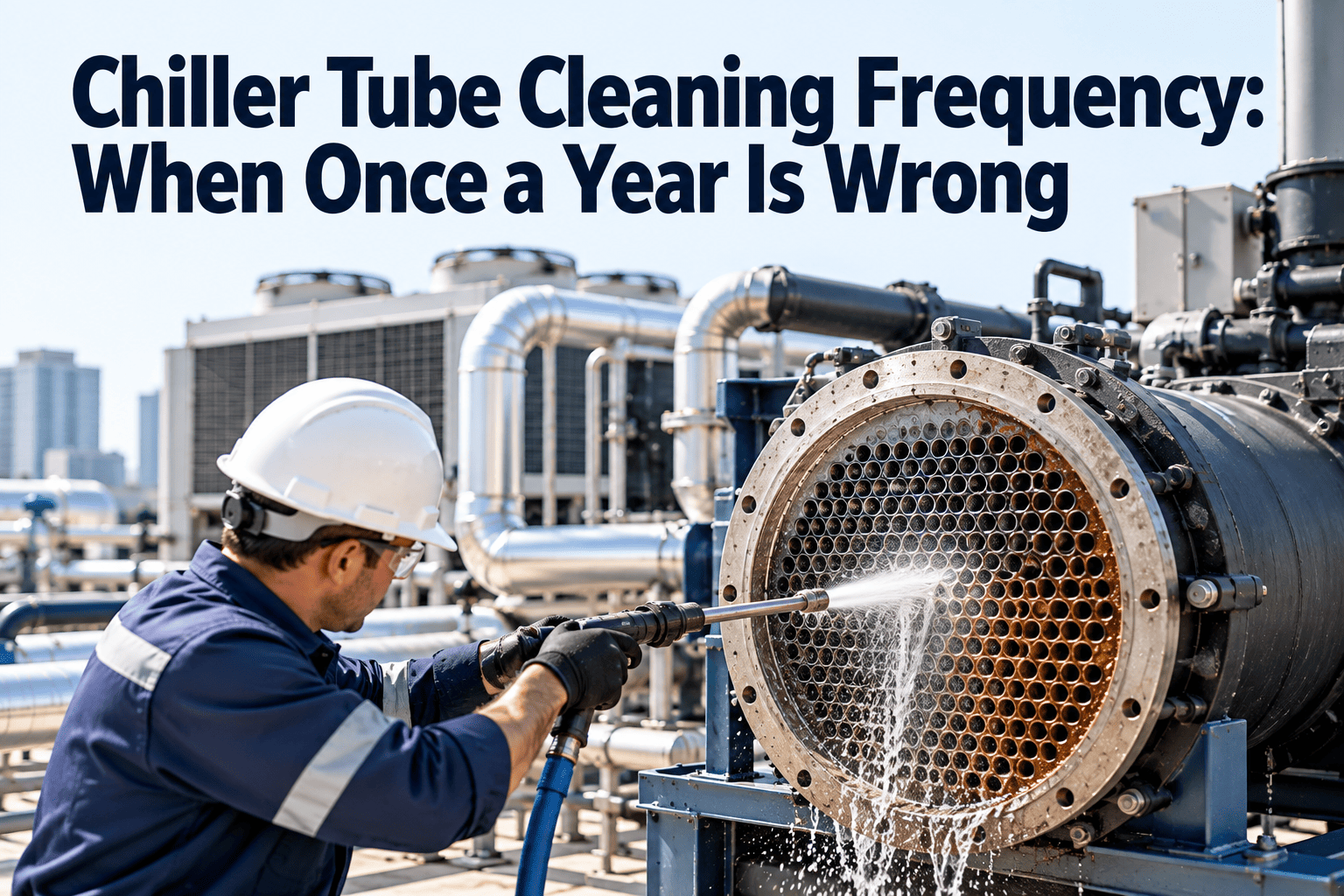
Many commercial buildings clean chiller tubes once a year, usually in the shoulder season, because that is what the schedule has always said. The habit is convenient, but fouling does not follow the calendar. A plant on hard, untreated makeup water can foul in months, while a lightly loaded chiller with good water treatment may stay clean well past twelve. This guide covers the load, water quality, and approach temperature signals that set a real cleaning interval, and how chiller maintenance software keeps those signals tied to work orders.
Chiller Tube Cleaning Frequency: When Once a Year Is Wrong
Annual cleaning is a rule of thumb, not a rule. Let approach temperature, water quality, and load decide when tubes actually need attention.
Why a Fixed Annual Interval Fails
Fixed annual cleaning
- Cleans tubes that are still efficient
- Misses fouling that builds mid-season
- Ignores run hours and load profile
- No link to energy cost or capacity loss
Condition-informed cleaning
- Cleans when measured performance drifts
- Catches fast-fouling plants early
- Adjusts to run hours and weather
- Justified by trend data and cost
What fouling actually costs
A fouled condenser tube adds thermal resistance. The compressor works against a higher condensing pressure to reject the same heat, so kW per ton rises and, at the limit, the chiller trips on high head pressure during peak load.
The Approach Temperature Signal
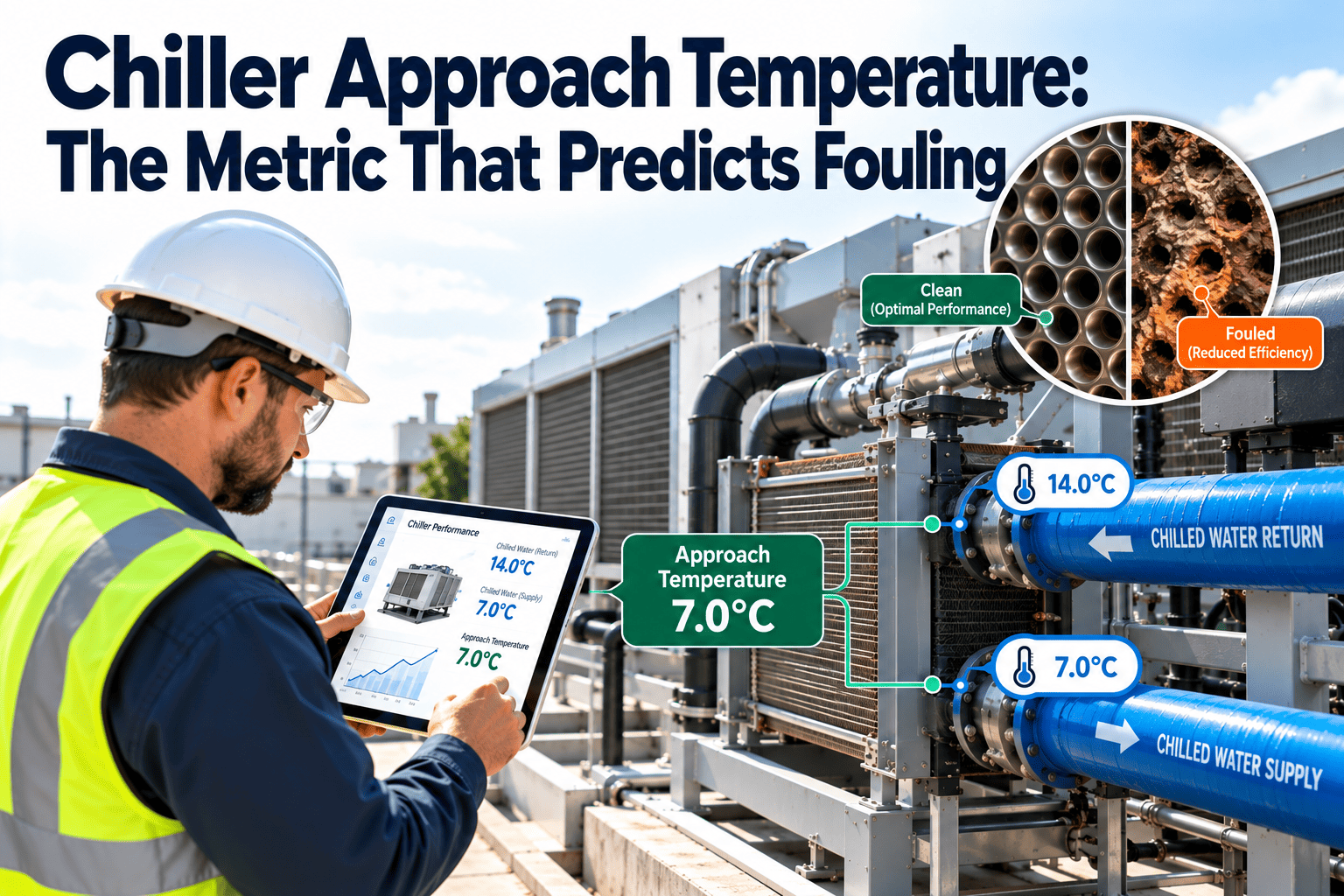
Condenser approach is the difference between the refrigerant saturation temperature and the leaving condenser water temperature. It is the most direct indicator of tube condition.
Compare like with like
Approach changes with load, so compare readings at similar load points against the clean baseline recorded after the last cleaning. Many operators set an action threshold a few degrees above baseline; confirm the figure with your chiller manufacturer.
Evaporator side
The same logic applies to evaporator approach. Closed chilled water loops usually foul slowly, so a rising evaporator approach more often points to refrigerant, oil, or flow problems than to dirty tubes.
Signals That Set Real Frequency
| Signal | What It Suggests | Typical Response |
|---|---|---|
| Rising condenser approach at steady load | Scale or biofilm on tube surface | Inspect and schedule cleaning |
| Higher kW per ton at same load | Head pressure penalty from fouling | Compare to baseline, plan cleaning |
| Rising condenser pressure drop | Debris or scale restricting flow | Check strainers, then tubes |
| Cooling tower makeup conductivity climbing | Cycles of concentration too high | Review blowdown and treatment |
| Biological test results out of range | Biofilm risk, insulating deposit | Adjust biocide, inspect tubes |
| Chiller trips on high head pressure | Advanced fouling or low flow | Clean promptly, investigate cause |
Water Quality: The Root Cause Behind the Interval
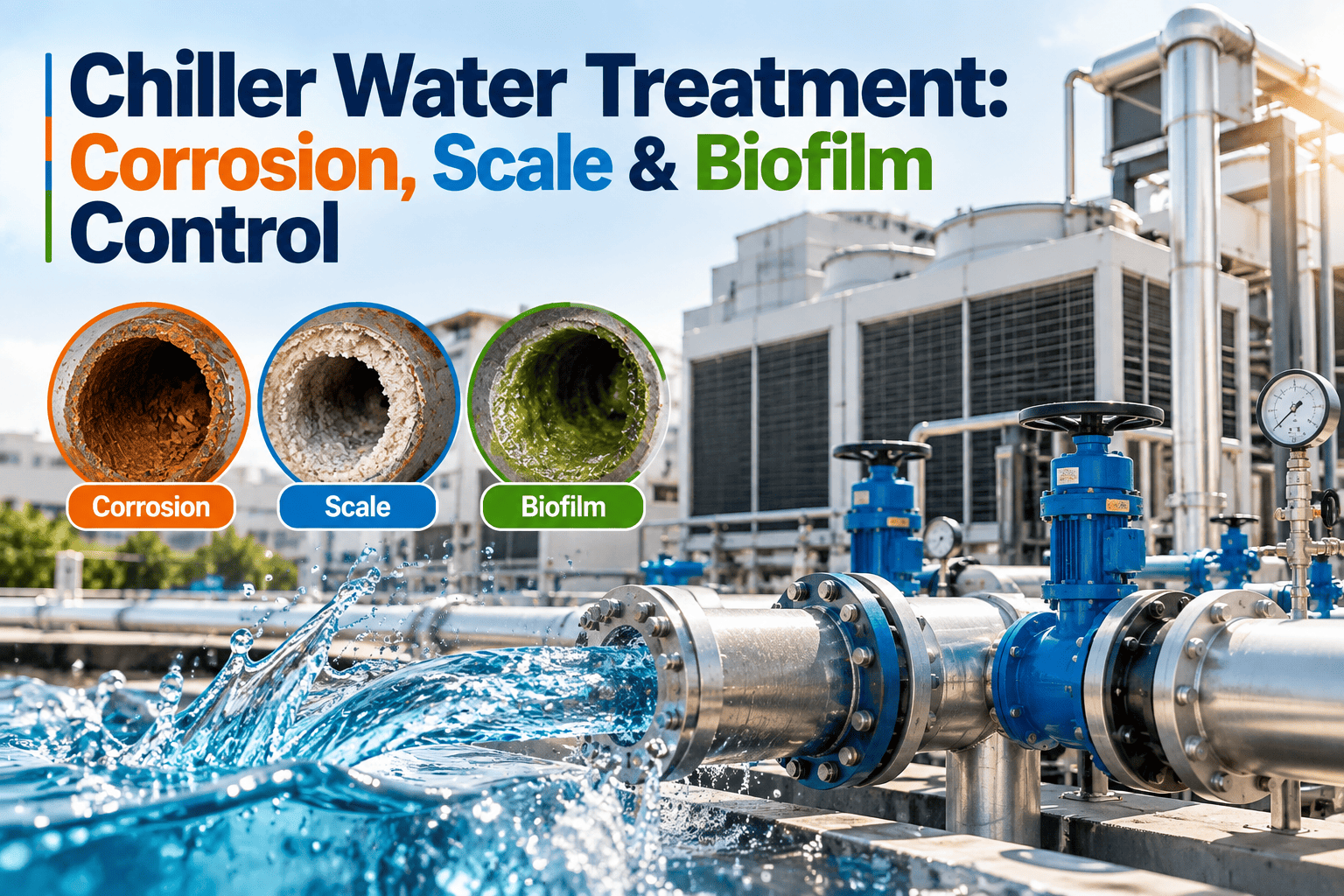
Scale
Hardness and alkalinity deposit on hot tube surfaces, especially at high cycles of concentration.
Biological growth
Bacteria and algae form biofilm that insulates tubes and feeds corrosion.
Corrosion products
Iron oxides and debris settle in tubes and lower velocity, worsening deposition.
Treatment is cleaning frequency
Industry guidance from bodies such as the Cooling Technology Institute and ASHRAE treats water treatment and cleaning as one system. Good treatment stretches intervals; poor treatment shortens them, whatever the schedule says.
Clean When the Data Says So
Log approach, pressure, and water readings, then trigger cleaning work orders from the numbers. Build your first chiller performance trend today.
A Decision Path for Cleaning Timing
Record the clean baseline
After every cleaning, log approach, pressures, flows, and kW at known loads.
Trend on a fixed routine
Take daily or weekly readings on operator rounds or from the building automation system.
Apply the action threshold
When approach at comparable load exceeds the limit, open a cleaning work order.
Choose the method
Soft deposits usually respond to brush cleaning; hard scale may need chemical descaling.
Verify and reset
Confirm approach returned to baseline. If not, look for eddy current damage or flow issues.
Mechanical vs Chemical Cleaning
| Method | Best For | Considerations |
|---|---|---|
| Brush or rod cleaning | Soft scale, sludge, biofilm | Needs head removal and shutdown; check tube wall condition |
| Chemical descaling | Hard mineral scale | Must suit tube metallurgy; neutralize and dispose properly |
| Automatic tube cleaning system | Continuous, chronic fouling | Capital cost; needs ball or brush capture maintenance |
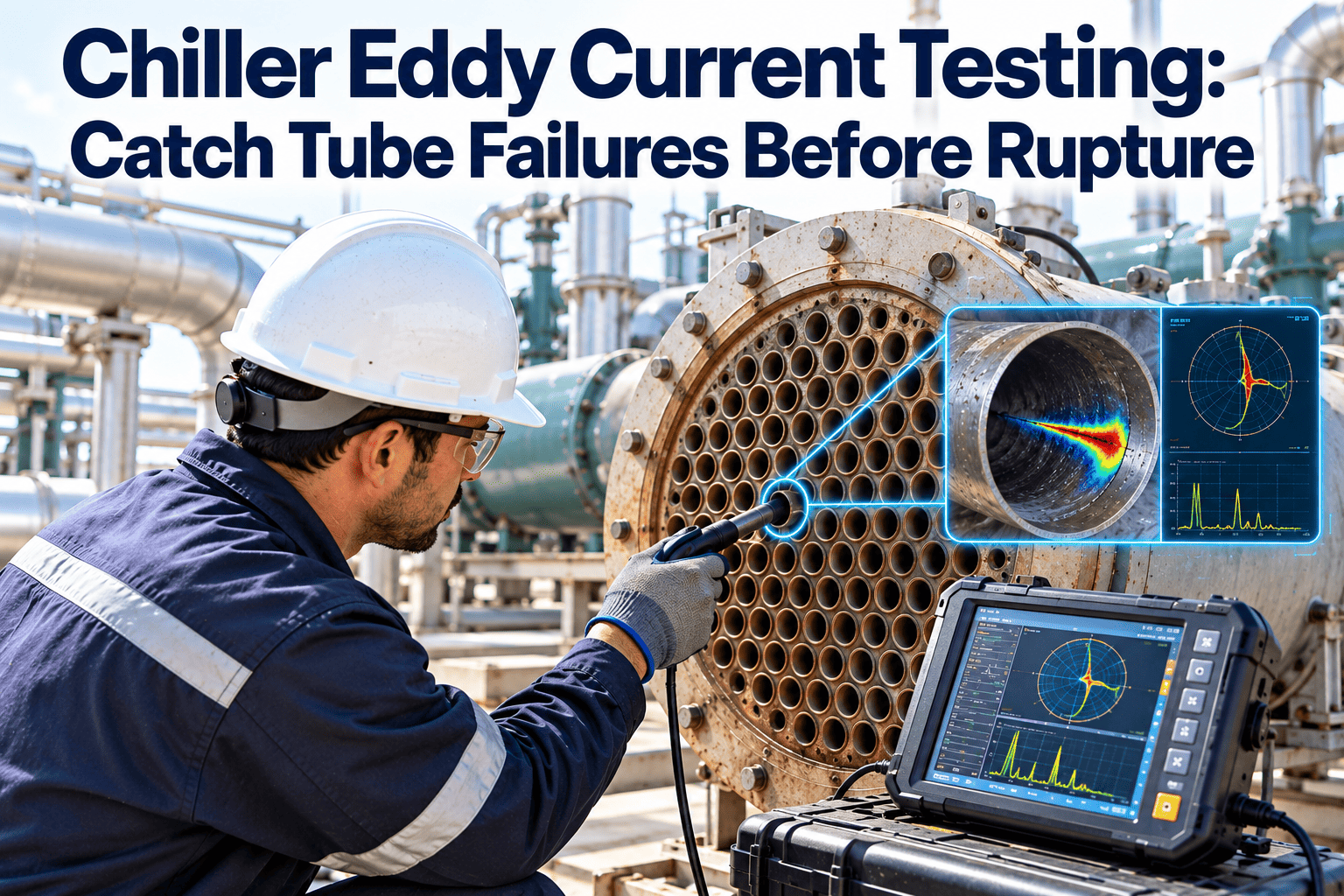
| Eddy current inspection | Tube wall loss and pitting | Often paired with major cleaning outages |
KPIs to Track Around Cleaning
How Oxmaint Supports Chiller Cleaning Programs
Frequently Asked Questions
How often should chiller tubes be cleaned?
What approach rise means I should clean?
Does clean-looking water mean clean tubes?
Can readings trigger work orders automatically?
Can I see a chiller setup first?
Replace the Rule of Thumb With Evidence
Track approach, tie it to work orders, and clean chiller tubes on the schedule your plant actually needs.