Computer Vision Facility Inspection for Safety Hazards

By James Smith on May 27, 2026

computer-vision-facility-inspection-for-safety-hazards

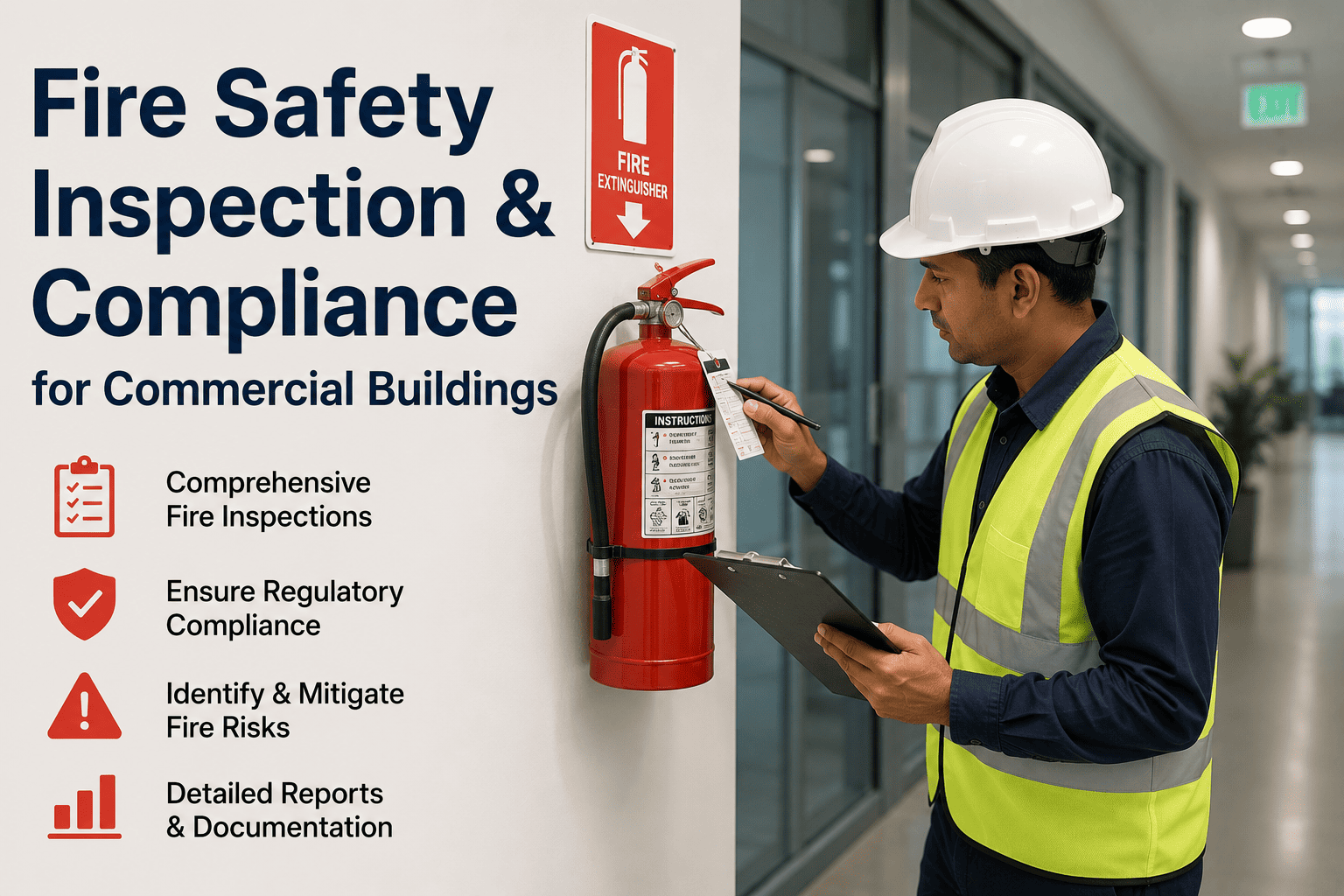
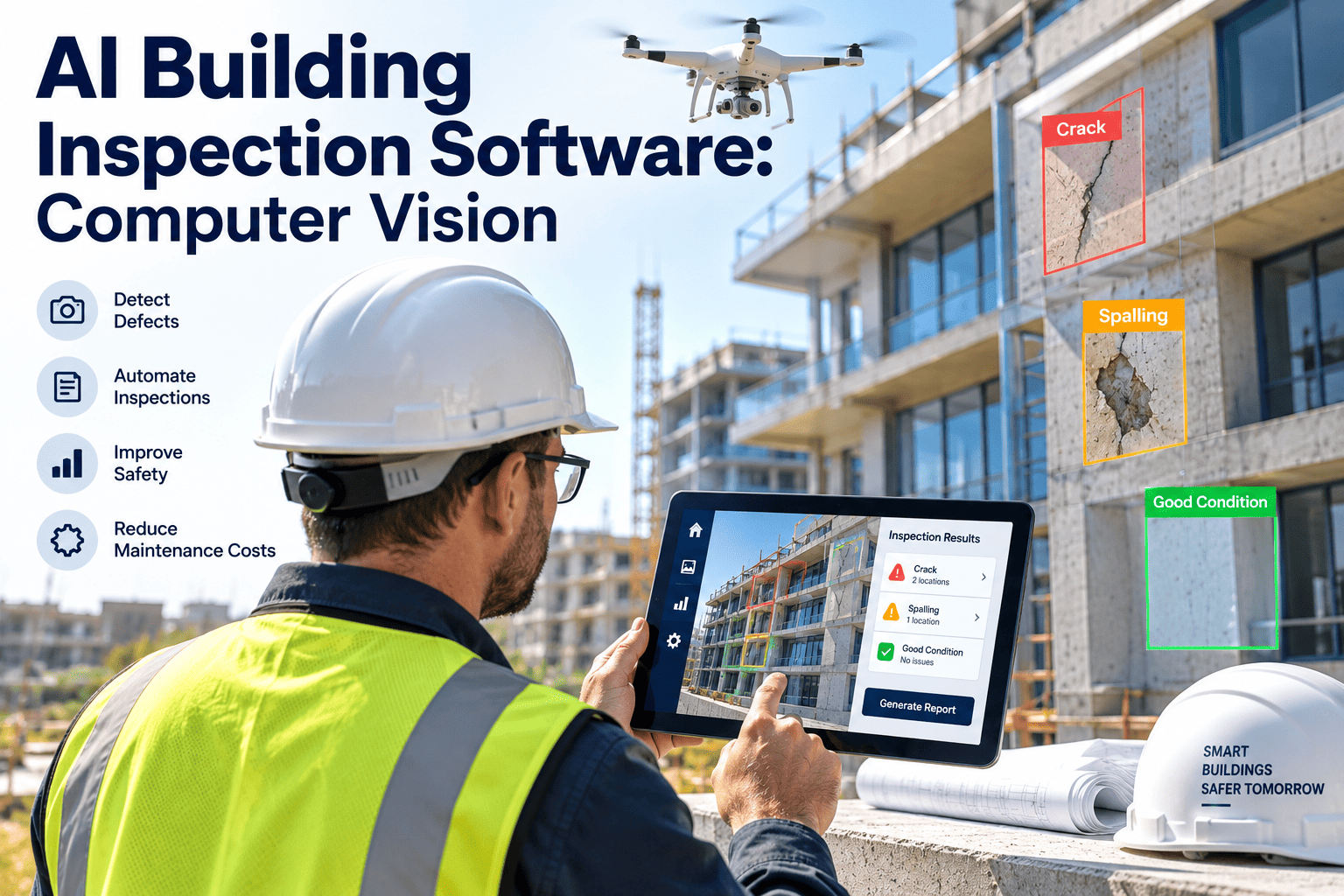
Every facility inspection programme has a blind spot: the 23 hours between walk-rounds. A blocked emergency exit that was clear at 8 AM may be obstructed by 10 AM and remain that way until the next scheduled inspection. A pipe leak visible as moisture on a wall section goes undetected for 3 days because no technician happened to walk past it. A PPE violation in a restricted area lasts the entire duration of the task and is never reported. Computer vision changes the time horizon of facility inspection from periodic to continuous — analysing camera feeds from existing CCTV infrastructure to detect leaks, corrosion, blocked exits, PPE gaps, and unsafe conditions in real time, 24/7, without adding a single human to the inspection programme. OSHA-cited research shows effective safety programmes return $4–$6 for every $1 invested. AI-powered monitoring has documented up to 98% reductions in near-miss incidents within six months of deployment. Book a demo to see OxMaint's AI Vision Inspection for facility safety — or start free today.

Article · AI Vision Inspection · Facility Safety · Smart Technology

Computer Vision Facility Inspection for Safety Hazards

AI that watches every corner of your facility, every hour — detecting leaks, blocked exits, corrosion, PPE gaps, and unsafe conditions before they become incidents, injuries, or citations.

80%Incident reduction — M&S after CV deployment (Protex AI 2024)
92%Mean average precision for PPE and proximity hazard detection
$4–$6Returned per $1 invested — OSHA-cited safety programme ROI

OxMaint AI Vision — Live Detection Feed Today · 14:32
!
Blocked Emergency Exit — Zone B, Door 4
Pallet stack obstructing exit clearance zone. Detected 14:28. WO-4891 auto-raised · P1 · Assigned: M. Torres
Critical
PPE Non-Compliance — Forklift Bay, Bay 3
Operator without hi-vis vest. 3rd observation this week. Auto-alert sent to supervisor. Pattern flagged.
High
~
Moisture Anomaly — Pipe Chase, Section C3
Surface discolouration pattern consistent with slow leak. First detected 13:10. Inspection WO-4892 created.
Moderate
Aisle Clearance Restored — Zone D
Previously flagged obstruction removed. WO-4887 closed. Aisle confirmed clear.
Resolved

6 Hazard Types AI Vision Detects That Human Inspection Misses

01
Blocked Emergency Exits
AI monitors the clearance zone in front of every emergency exit continuously. A pallet, trolley, or equipment left within the required 28-inch clearance zone triggers an alert within seconds — not discovered at the next walk-round or, worse, during an evacuation.
OSHA 1910.36 — exit routes must be free from obstructions at all times
02
PPE Non-Compliance
AI detects missing hard hats, hi-vis vests, safety glasses, and face shields in real time across all monitored zones. Non-compliance triggers an immediate alert to the zone supervisor — not a retrospective review of incident reports. Repeat patterns per individual or per zone are flagged for systemic intervention.
OSHA 1910.132 — PPE must be worn in designated areas; employer must enforce
03
Leak and Moisture Detection
AI detects surface discolouration, pooling liquid, and moisture pattern changes that are invisible in low-resolution camera feeds but clearly distinguishable to a model trained on thousands of leak signatures. A slow pipe leak detected at moisture appearance rather than at ceiling collapse is a $3,000 repair instead of a $90,000 remediation.
Links to: OSHA 1910.22 (slip hazards), building insurance compliance, and maintenance asset protection
04
Corrosion and Structural Degradation
AI identifies early-stage corrosion on structural steel, pipe supports, racking uprights, and HVAC components — before the degradation reaches the threshold where human inspectors notice it visually. Thermal camera integration amplifies detection of subsurface corrosion that surface inspection alone cannot find.
Links to: OSHA 1910.23 (scaffolds and racking), building code inspection requirements, and asset lifecycle planning
05
Aisle and Egress Obstruction
AI monitors aisle widths and egress paths against their designated clear-width requirement. Any object, vehicle, or material reducing an aisle below its required minimum generates an alert. This is particularly valuable in high-throughput facilities where aisle conditions change continuously throughout the shift and cannot be monitored by a stationary inspector.
OSHA 1910.22(b) — minimum 28-inch aisle width required; must be maintained at all times
06
Unsafe Equipment Operation
AI detects forklift speeding, pedestrian proximity violations, unauthorised zone entry, and equipment operating without required pre-shift checks. In facilities where pedestrian-vehicle interaction is the leading injury mechanism, AI monitoring provides continuous enforcement of exclusion zones that physical barriers alone cannot achieve.
OSHA 1910.178 — powered industrial trucks; pedestrian safety controls required

Your Facility's Safety Condition Changes Every Hour. Your Inspection Programme Shouldn't Change Only Once a Week.

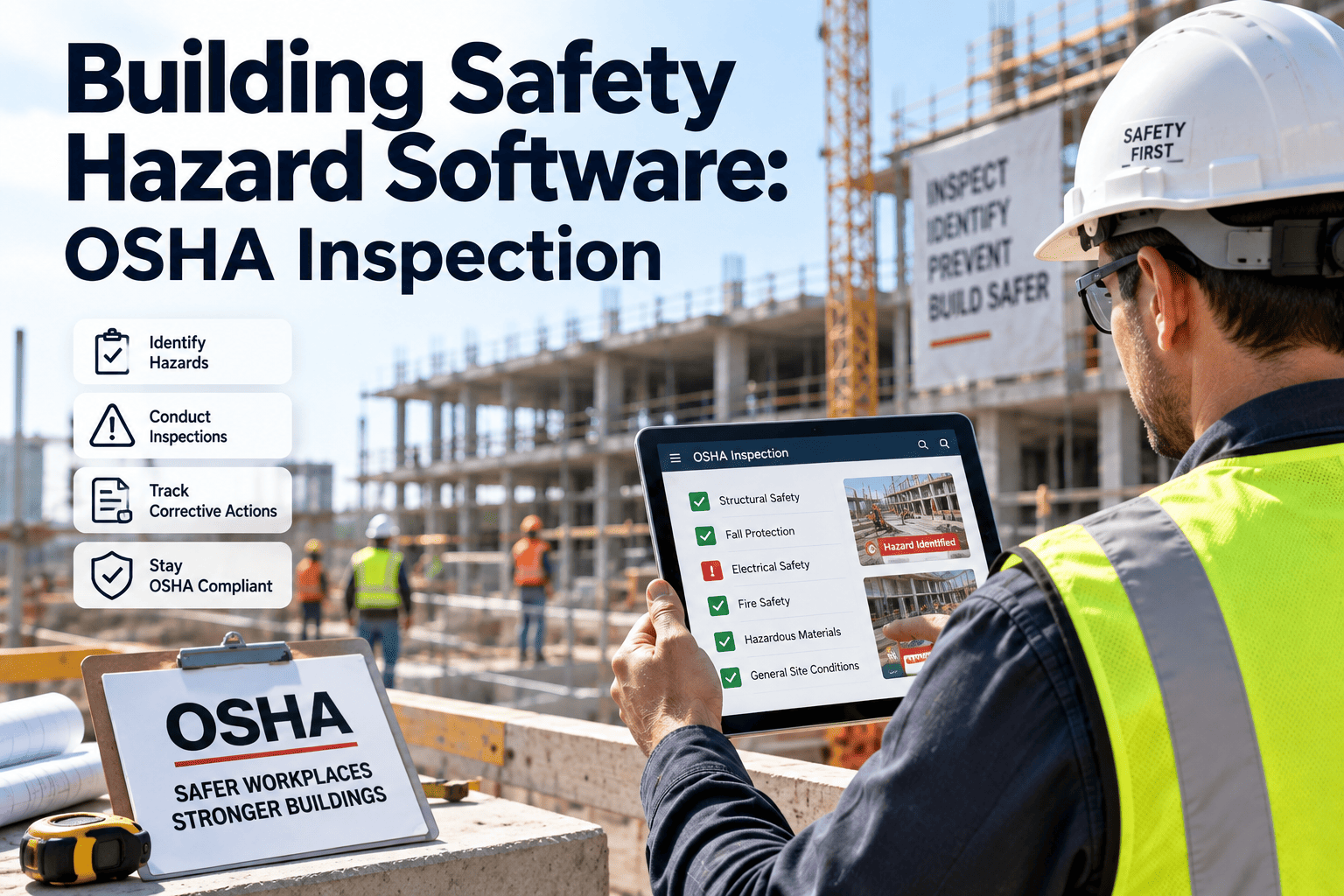
OxMaint AI Vision monitors your existing camera feeds for the six hazard types above, raises work orders automatically when conditions are detected, tracks resolution times, and produces the compliance evidence chain that OSHA inspections require.

How AI Vision Connects to Work Orders — The Detection-to-Resolution Chain


Detection
AI model analyses camera frame. Confidence threshold met for hazard classification. Timestamp, location, camera ID, and hazard type logged.


Alert
Mobile push notification to zone supervisor with snapshot image. For P1 hazards (blocked exit, injury risk), alert escalates to facility manager simultaneously.


Work Order Created
OxMaint auto-generates a work order with: hazard type, location, camera snapshot, priority, and suggested corrective action. Assigned to the right crew for the hazard type.


Resolution Verified
AI vision confirms the hazard is resolved before the work order can be closed. Camera re-checks the location post-action. No manual close-out without visual confirmation of cleared condition.


Compliance Record
Complete event record: detection timestamp, alert delivery, work order creation, technician response time, resolution confirmation, and total time to resolve — searchable by hazard type, location, or date for OSHA inspection requests.

Expert Review

"The fundamental limitation of any inspection programme based on human walk-rounds is time coverage. A facility manager conducting two inspection rounds per day covers their site for perhaps 90 minutes out of every 24 hours. That means 93.75% of the operational day is uninspected. Computer vision monitoring does not replace the walk-round — it covers the 22.5 hours between them. The statistics from early deployments are compelling enough that the technology has moved from experimental to operational standard in leading EHS programmes: 80% incident reductions, 98% near-miss reduction within six months, $4–$6 ROI per dollar invested. What is equally important but less publicised is the compliance value. When an OSHA inspector asks for evidence that your exit routes were unobstructed at 2 PM on a Tuesday three months ago, a facility with AI vision monitoring can produce a timestamped, camera-captured record proving the condition. A facility relying on walk-rounds cannot. That difference is the gap between a management suggestion and a citation — and in some cases, the gap between a citation and a penalty that triggers a full programme audit."
Dr. Sandra Osei-Mensah, PhD, CCPE, CFIOSH
Certified Professional Ergonomist · Chartered Fellow, Institution of Occupational Safety and Health · 18 years industrial safety management and AI-powered inspection programme design · Specialist in computer vision deployment for OSHA-regulated facility environments

Frequently Asked Questions

Does OxMaint AI Vision require replacing existing CCTV infrastructure?
No — OxMaint AI Vision is designed to work with existing camera infrastructure. The AI model processes feeds from standard IP cameras already installed in your facility without requiring hardware replacement. For facilities without camera coverage in specific hazard zones, new cameras can be added to extend coverage — but the integration approach prioritises using what is already installed before recommending new hardware. Minimum camera resolution requirements apply for specific detection tasks (PPE and corrosion detection require higher resolution than blocked exit monitoring), and OxMaint conducts a camera adequacy assessment during onboarding to identify any gaps. Book a demo to see how OxMaint integrates with your current camera system.
What is the typical detection accuracy for AI facility hazard monitoring?
Detection accuracy varies by hazard type and environmental conditions. Industry benchmarks from 2025 deployments show 92% mean average precision for PPE and proximity hazard detection; blocked exit and aisle obstruction detection typically achieves 94–97% accuracy in standard lighting conditions because these are high-contrast, well-defined spatial anomalies. Leak and moisture detection requires training on facility-specific surface textures and ambient lighting conditions — accuracy improves substantially over the first 30–60 days as the model calibrates to your specific environment. False positive rates are managed through confidence thresholds and two-stage alert logic, ensuring that alerts which reach supervisors represent confirmed detections rather than ambiguous frames.
How does AI vision inspection satisfy OSHA documentation requirements?
AI vision inspection satisfies OSHA documentation requirements in two ways simultaneously: prospective compliance — continuous monitoring detects and resolves hazards before they generate citations, reducing citation exposure; and retrospective evidence — every detected condition, alert, work order, and resolution is a timestamped digital record that proves the facility was monitoring, detecting, and correcting hazards in real time. For specific OSHA standards (1910.36 exit routes, 1910.22 aisle clearance, 1910.178 forklift safety, 1910.132 PPE), the AI vision record provides evidence of continuous compliance monitoring that manual inspection programmes structurally cannot produce. The OxMaint compliance report for AI vision generates an exportable record of all detections, response times, and resolutions by OSHA standard for any inspection period. Start free to configure OxMaint AI Vision for your facility.
What is the ROI calculation for AI vision facility safety inspection?
ROI calculation for AI vision safety inspection has three components: incident cost avoidance — the average direct cost of a non-fatal workplace injury is $42,000 (NSC 2024); a facility with 5 injury incidents per year that reduces incidents by 40% with AI vision saves $84,000 annually in direct injury costs alone; OSHA penalty avoidance — serious OSHA citations average $15,625 per violation in 2025; a facility that receives 3 citations per year and eliminates them saves $46,875 in penalties plus the remediation and audit overhead; and inspection efficiency — replacing 2 daily walk-round hours with continuous AI monitoring frees roughly 700 person-hours per year for higher-value maintenance activities. At a typical EHS coordinator fully-loaded cost of $80/hour, that is $56,000 in capacity recovered.
AI VISION INSPECTION · OXMAINT · FACILITY SAFETY

93.75% of Your Operational Day Is Currently Uninspected. AI Vision Changes That.

OxMaint AI Vision monitors your existing camera feeds for blocked exits, PPE gaps, leaks, corrosion, aisle obstructions, and unsafe equipment operation — 24/7, with automatic work order creation, visual resolution confirmation, and the timestamped compliance record that OSHA inspections require.
Share This Story, Choose Your Platform!