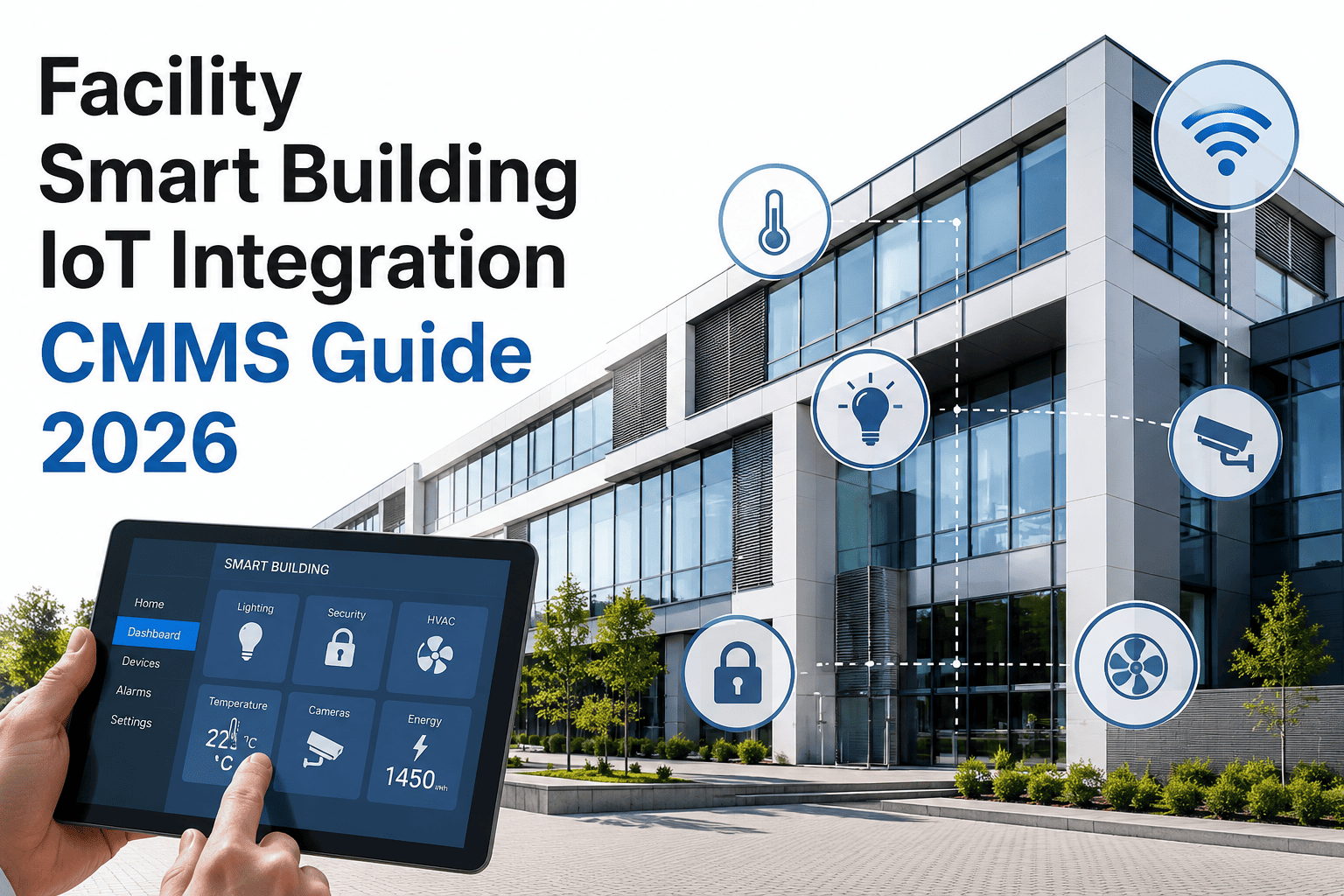
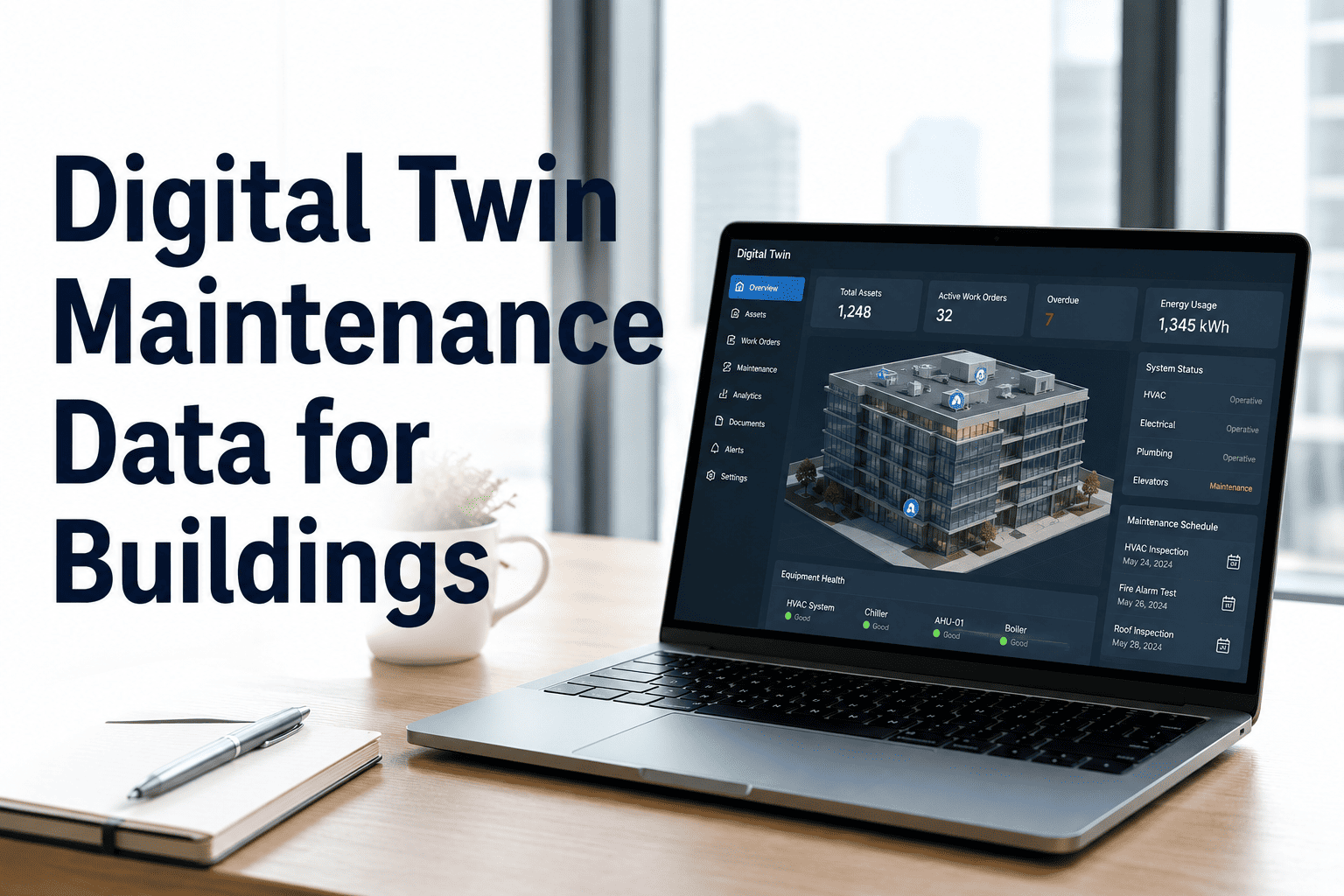
A building digital twin is a live, data-connected virtual model of your facility — not a static BIM file, not a floor plan PDF, but a continuously updated representation of how your building actually operates right now. When a chiller degrades, the digital twin reflects it. When a maintenance team completes a repair, the twin records it. When energy consumption in one zone spikes, the twin flags it. OxMaint's Cloud CMMS Platform serves as the maintenance intelligence layer that connects the digital twin's live data streams to the work orders, asset records, and energy reports that facility teams use every day. This article breaks down the real facility management use cases where digital twins are delivering measurable outcomes — and what it takes to make them work.
Digital Twin Building Facility Management Use Case
Maintenance planning, energy modeling, asset tracking, space utilization, and predictive analytics — the six use cases where building digital twins are creating measurable facility management value.
What a Building Digital Twin Actually Means
The term "digital twin" is used loosely in the built environment market. For facility management purposes, a useful digital twin has three components — and all three are required to generate operational value. Knowing which layer you currently have helps identify what to add next.
Predictive failure modeling, energy optimization recommendations, maintenance interval adjustment, and scenario simulation. This is where the twin generates forward-looking insights — not just a record of what happened, but predictions of what will happen and recommendations for what to do about it. OxMaint AI Copilot operates at this layer.
Real-time equipment sensor readings, energy meters, occupancy sensors, and maintenance event records that continuously update the twin's state. Without live data, the twin is a snapshot, not a mirror. OxMaint's IoT integration connects this data layer to CMMS workflows automatically.
The spatial and asset model — floor plans, equipment locations, system schematics, and the asset registry that defines what exists in the building. This is the foundation layer that most facilities already have in some form, even if only as CAD files or a CMMS asset list.
6 Facility Management Use Cases Where Digital Twins Deliver ROI
Digital twin value in facility management is use-case specific. These six applications have documented, measurable outcomes at commercial and institutional building scale.
The digital twin monitors each asset's real-time condition against its historical performance baseline. When degradation patterns emerge — vibration amplitude trending up on a pump, approach temperature rising on a chiller, energy draw increasing on a compressor — the twin identifies the failure trajectory and the CMMS schedules the repair before the failure point is reached.
The twin models energy consumption at the zone, system, and asset level — comparing actual consumption against the performance that the building should be achieving given current weather, occupancy, and equipment condition. Deviations flag both maintenance-linked inefficiencies and operational scheduling opportunities.
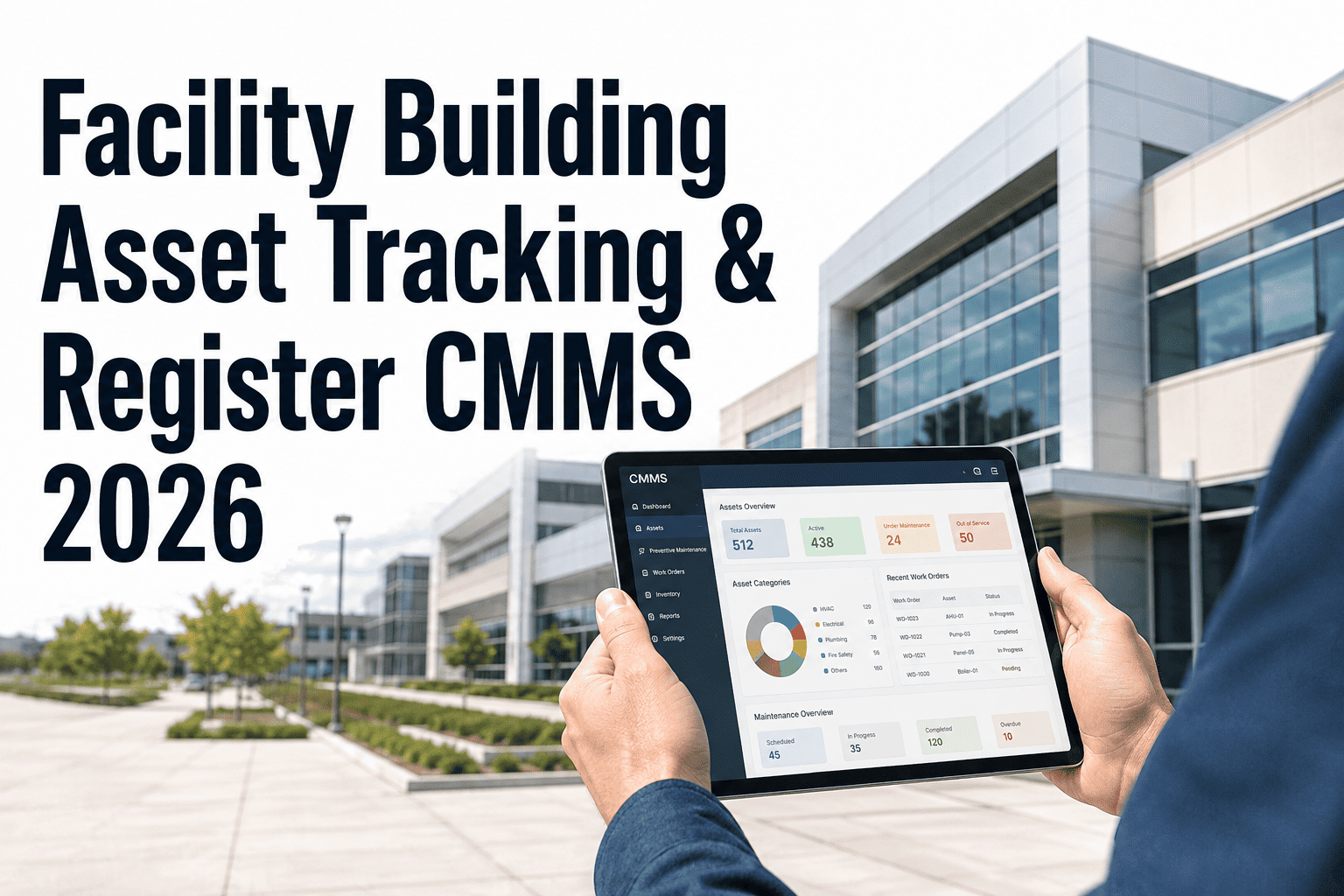
Every maintenance event, repair cost, and performance reading is logged against each asset in the twin's record. Over time, the cumulative cost per asset, failure frequency, and performance degradation rate create a data-driven capital replacement model — replacing the gut-feel "this equipment is old, let's replace it" with a financially justified retirement schedule.
Occupancy sensor data feeds into the twin to map actual space utilization against allocated space — revealing floors, zones, and rooms that are chronically underutilized. This data drives HVAC scheduling adjustments (conditioning spaces only when occupied), informs lease planning decisions, and supports post-pandemic right-sizing decisions.
Before scheduling a major maintenance intervention — chiller plant shutdown, roof replacement, electrical infrastructure work — facility managers can simulate the impact on building systems, tenant comfort, and energy consumption using the twin's current state model. This replaces reactive scheduling with evidence-based timing decisions.
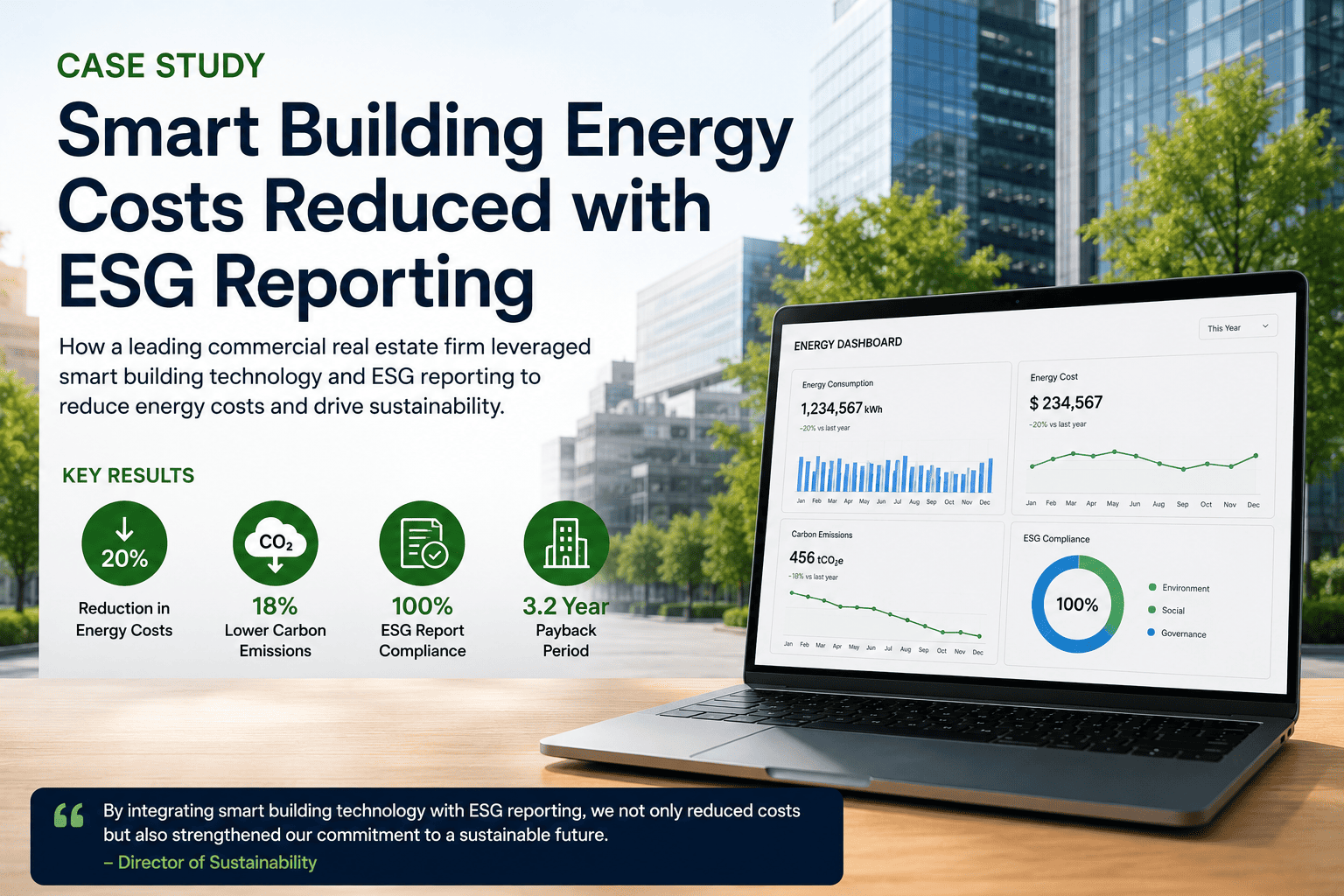
The twin's continuous record of energy consumption, equipment operation, and maintenance activities provides the asset-level data required for Scope 1 and Scope 2 emissions reporting, ISO 50001 energy management system documentation, and ENERGY STAR certification data submissions — all generated from live operational data rather than manual compilation.
OxMaint connects to BIM platforms, IoT sensor networks, and BAS systems to serve as the CMMS intelligence layer of your building digital twin — converting live asset data into maintenance work orders, energy reports, and AI-powered maintenance recommendations automatically.
Digital Twin Maturity Model for Facilities
Most facilities are not starting from zero — they have some combination of BIM files, a CMMS, IoT sensors, and BAS data already in place. This maturity model maps where common starting points sit and what the path to full digital twin capability looks like.
| Maturity Level | Typical Facility Profile | Current Capabilities | Next Step to Advance | OxMaint Role |
|---|---|---|---|---|
| Level 1 | Paper or basic CMMS, no sensors | Asset list, manual work orders | Deploy smart meters and CMMS work order tracking | Core CMMS and energy meter integration |
| Level 2 | CMMS with BAS integration | Energy monitoring, alarm management | Add condition-monitoring IoT sensors on critical assets | IoT sensor integration and anomaly detection |
| Level 3 | IoT-connected CMMS with data analytics | Predictive alerts, energy reporting | Connect BIM model — add spatial context to asset records | AI Copilot, ESG reporting, predictive maintenance |
| Level 4 | Full digital twin — live BIM + IoT + AI | All 6 use cases active simultaneously | Expand to scenario simulation and autonomous scheduling | Full platform integration — CMMS, IoT, ESG, AI decision support |
Expert Review
The practical barrier to digital twin adoption in facility management has historically been the assumption that you need a full BIM model and a large IT implementation budget before you can start. That assumption is no longer valid. The most impactful digital twin capabilities for facility teams — predictive maintenance, energy anomaly detection, asset lifecycle tracking — do not require a geometric 3D model. They require live data from equipment sensors, a CMMS that stores asset history, and AI that connects the two. Most facilities can achieve Level 3 digital twin capabilities using existing IoT and BAS infrastructure connected to a cloud CMMS like OxMaint — without a multi-year BIM retrofit project. Start with the data layer and the intelligence layer, and the geometric layer can be added incrementally as it becomes operationally relevant for specific use cases like maintenance planning and space simulation.
Frequently Asked Questions
Your Building's Digital Twin Starts With Operational Data
You do not need a 3D model or a large IT project to start capturing the facility management value of digital twin technology. OxMaint connects your existing equipment sensors, BAS data, and maintenance workflows into a live operational picture — enabling predictive maintenance, energy optimization, and ESG reporting from day one. Book a demo and see what your building's data looks like on a live dashboard.