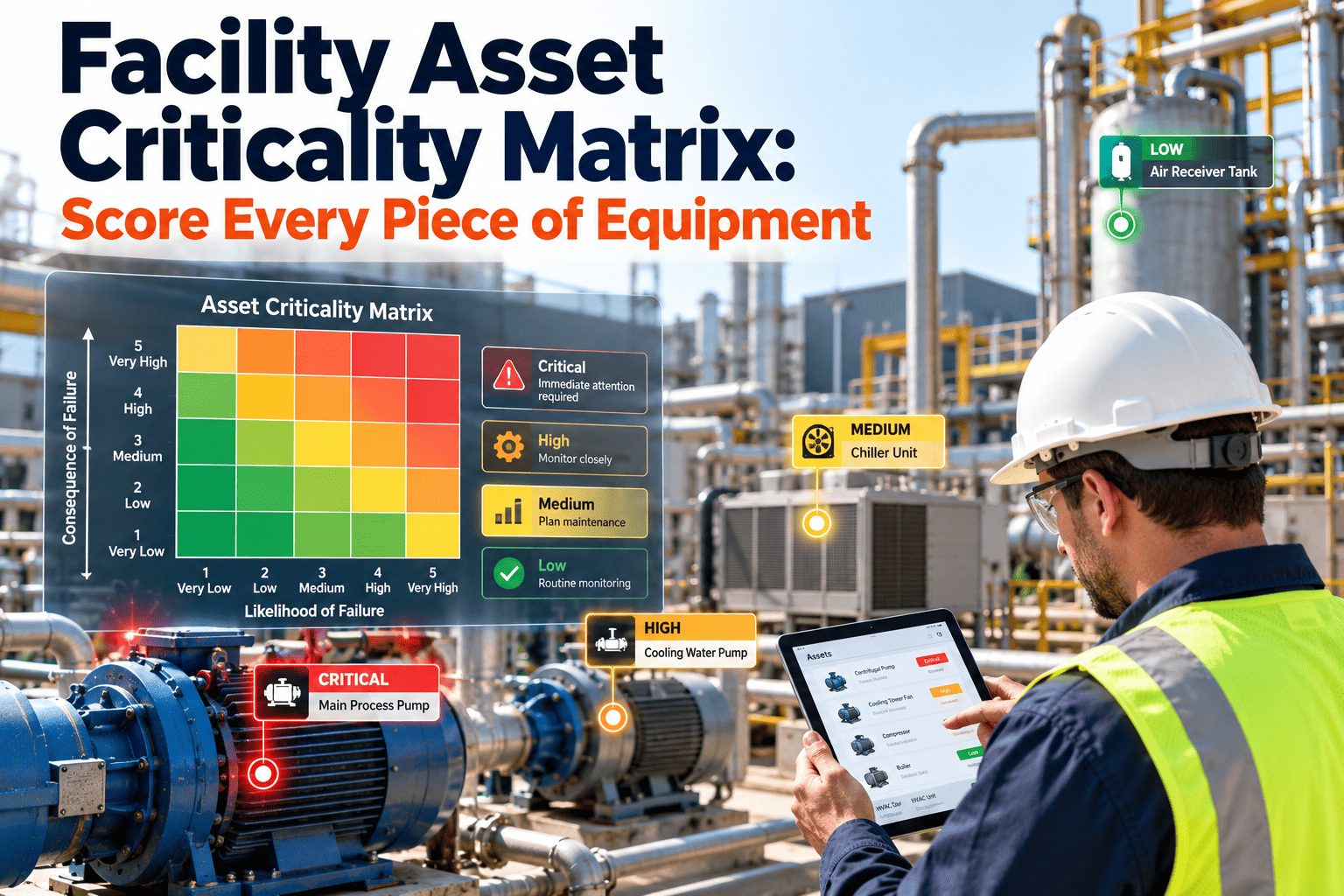
Not every asset deserves the same maintenance effort, and treating them all alike wastes money while leaving real risks exposed. A criticality matrix ranks equipment by what happens if it fails and how likely failure is. That ranking decides where preventive maintenance, spares and inspection time go first. This guide walks through a 5x5 model, weighting, and the scoring session facility teams run, and shows how a maintenance management platform keeps the scores working.
Facility Asset Criticality Matrix: Score Every Piece of Equipment
Balance failure impact against failure probability, rank every asset on one scale, and point your maintenance budget at the equipment that can hurt the building most.
What Criticality Scoring Actually Solves
Without a ranking, priority is set by whoever shouts loudest or whatever failed last. Criticality replaces opinion with a documented, repeatable score.
- Identical PM frequency on a lobby fan and a data hall chiller
- Emergency calls compete on volume, not consequence
- Spares bought for convenience, not for risk
- Budget requests hard to defend
- Maintenance strategy matched to consequence
- Clear response targets by tier
- Critical spares stocked on purpose
- Spend justified with a visible ranking
SMRP guidance on criticality assessment treats it as a structured, repeatable method for ranking assets, rather than a one-off judgment call.
The 5x5 Model
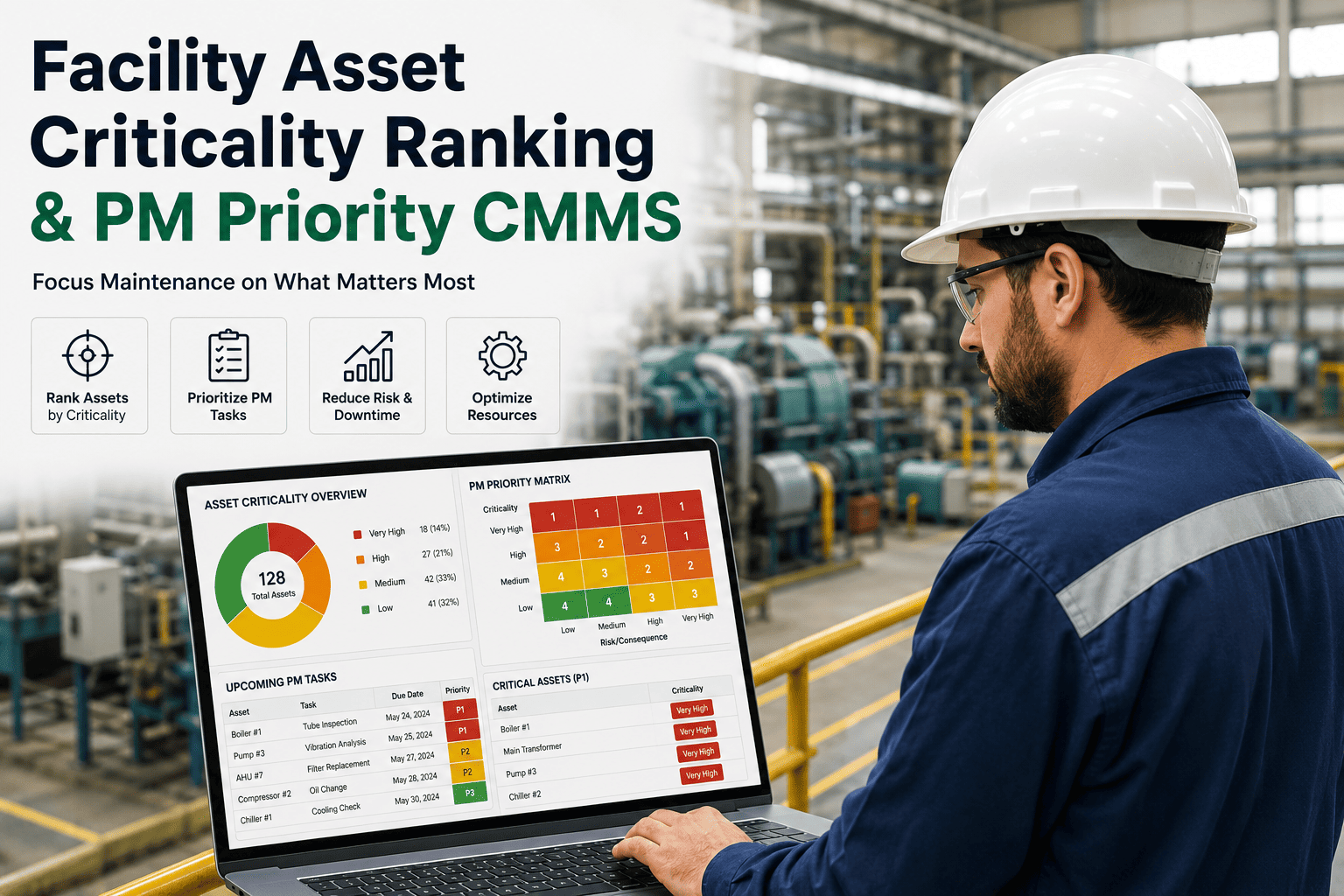
Score consequence of failure on a scale of 1 to 5, score likelihood on a scale of 1 to 5, and multiply. The product places the asset on the grid.
Tier bands
Band cut-offs are a starting point. Adjust them so the critical tier stays small enough to manage, typically a minority of the register.
Scoring the Consequence Side
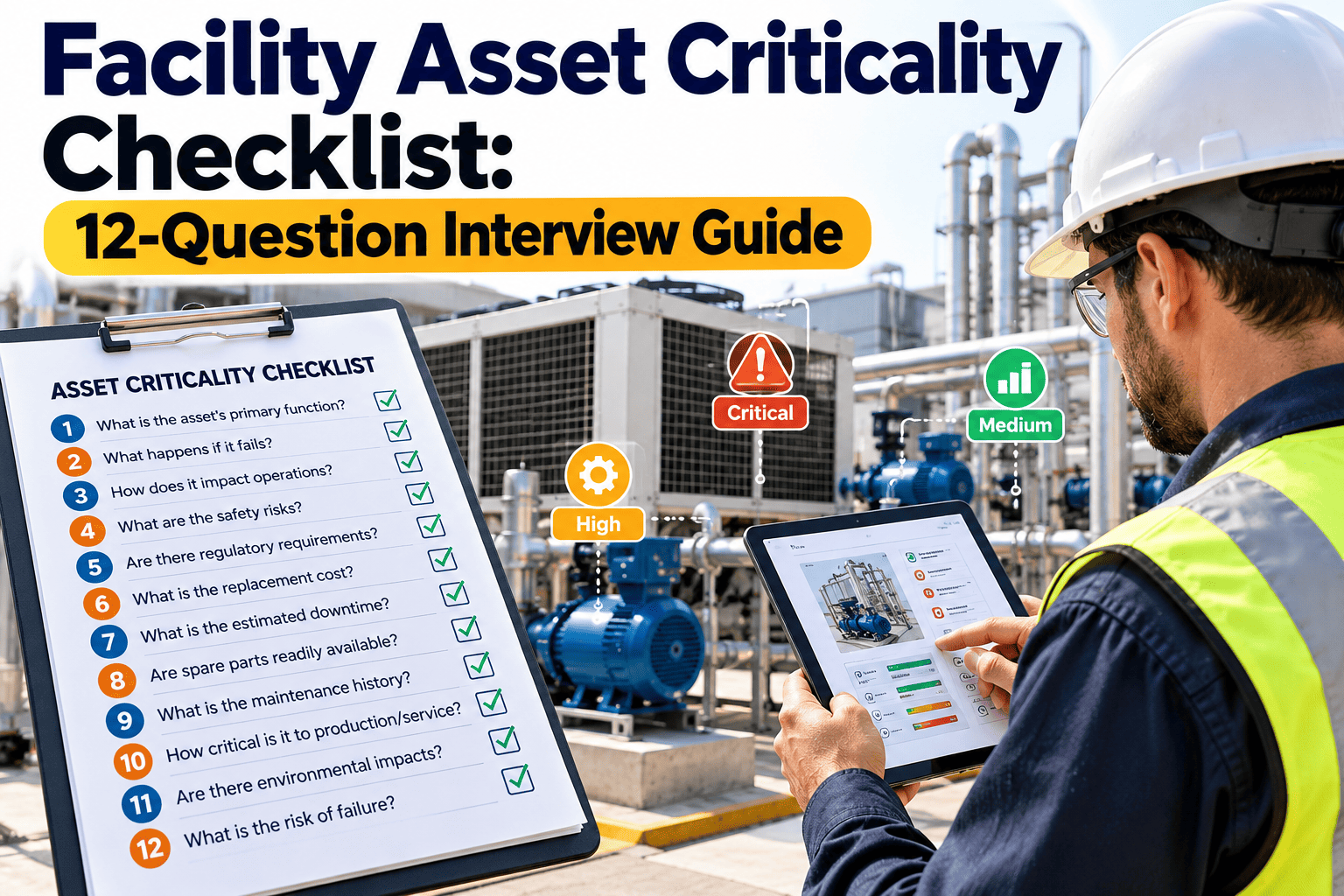
Consequence is rarely one-dimensional. Score several impact categories and take the highest, or apply weights when your organization wants a blended figure.
| Score | Safety | Operations | Environment and compliance | Cost |
|---|---|---|---|---|
| 5 | Potential serious injury or life-safety loss | Site or key function shut down | Regulatory breach or reportable release | Very high repair or loss |
| 4 | Injury requiring treatment | Major area or tenant disrupted | Likely audit finding | High |
| 3 | Minor injury possible | Noticeable disruption, workaround exists | Near-miss with compliance | Moderate |
| 2 | Negligible risk | Minor inconvenience | No compliance link | Low |
| 1 | No risk | Unnoticed | None | Trivial |
Scoring the likelihood side
- Use failure history from work orders wherever it exists, rather than memory.
- Factor in age, condition, operating hours and environment.
- Consider whether redundancy lowers the effective likelihood of loss of function.
- Re-score after major repair, replacement or change of duty.
Example: Three Assets, Three Outcomes
The fire pump scores lower than the chilled water pump on this grid, which is why life-safety assets often carry a compliance override that forces a minimum tier regardless of score.
Keep Criticality Attached to Every Asset Record
Oxmaint stores the score on the asset, so priority, preventive schedules and reporting all follow it.
Run the Scoring Session
A workshop beats a spreadsheet filled in alone. Different roles see different risks, and the discussion exposes hidden dependencies.
Who should attend
- Maintenance technicians and supervisors who know real failure patterns.
- Operations or tenant-facing staff who understand impact.
- Safety and compliance owners.
- Finance or asset planning when cost weighting is used.
From Tier to Maintenance Strategy
| Tier | Strategy | Inspection and PM | Spares and response |
|---|---|---|---|
| Critical | Condition-based plus preventive | Frequent inspections, condition monitoring where feasible | Critical spares on site, fastest response target |
| High | Preventive | Regular scheduled tasks with defined checks | Key spares stocked, priority response |
| Medium | Preventive, reduced frequency | Routine rounds | Spares via supplier lead time |
| Low | Run to failure or minimal PM | Opportunistic checks | Standard response |
Common Scoring Mistakes
How Oxmaint Keeps the Matrix Useful
- Asset management records hold the criticality score, tier and compliance flag.
- Preventive maintenance templates attach to tiers, so critical assets get tighter schedules.
- Work order priority and response targets can follow the asset tier.
- Failure history from corrective work orders supports better likelihood scoring at the next review.
- Inventory links critical spares to the assets they protect.
- Dashboards show open work, overdue tasks and repeat failures by tier.
Criticality Matrix FAQs
Rank Your Assets and Focus Maintenance Where It Counts
Run the scoring session, load the results, and let criticality guide every schedule, spare and work order.