Facility Equipment Lifecycle Management Strategy for Commercial Buildings

By shreen on March 9, 2026

facility_equipment_lifecycle_management

Commercial buildings lose an average of $0.72 per square foot annually to premature equipment failures that a structured lifecycle management strategy would prevent. A 250,000 sq ft office complex replacing a single chiller 8 years before end-of-life wastes $180,000 in residual asset value — while the building next door running the same equipment model extends its service life by 40% through runtime-based maintenance scheduling. Facility teams managing equipment lifecycles through Oxmaint CMMS — Sign Up Free to start tracking asset lifecycles report 35% lower total cost of ownership and 60% fewer unplanned replacements. This guide delivers a complete lifecycle management framework covering acquisition planning, commissioning, preventive maintenance optimization, condition monitoring, and end-of-life decision protocols — all orchestrated through a centralized digital platform. Book a demo to see lifecycle dashboards in action.

73%
Of commercial building equipment fails before reaching manufacturer-rated service life due to inadequate lifecycle tracking
$4.2M
Average 10-year capital savings for a 500,000 sq ft commercial portfolio using lifecycle-optimized replacement scheduling
40%
Extension in average equipment service life when facilities implement condition-based lifecycle management through CMMS

Why Calendar-Based Replacement Schedules Waste Capital

Most commercial building operators replace equipment on fixed calendar schedules — 15 years for chillers, 20 years for boilers, 25 years for electrical switchgear — regardless of actual condition. This one-size-fits-all approach simultaneously causes two expensive problems: replacing equipment that still has years of productive life left, and missing critical degradation in units that need intervention sooner. Facilities that sign up for Oxmaint shift from calendar-based to condition-based lifecycle decisions, capturing the full value of every asset.

Calendar-Based Replacement
Fixed replacement cycles ignore actual equipment condition — a well-maintained chiller performing at 94% efficiency gets scrapped at year 15 alongside a neglected unit at 72% efficiency
Capital budget spikes cluster replacements into the same fiscal years when multiple assets hit calendar thresholds simultaneously
No degradation visibility between scheduled assessments leaves facility managers reacting to failures rather than planning interventions
Warranty and service history scattered across filing cabinets, email threads, and vendor portals with no consolidated asset record
Lifecycle-Optimized with CMMS
+
Condition-driven decisions use vibration analysis, thermography, oil analysis, and efficiency trending to determine actual remaining useful life
+
Staggered capital planning spreads replacements across fiscal years based on real degradation curves rather than arbitrary calendar dates
+
Continuous health scoring tracks every asset's lifecycle position in real time — from commissioning through optimal performance to managed decline
+
Complete digital asset record consolidates purchase data, warranties, maintenance history, inspections, and condition assessments in a single platform
Key Insight
$0.72/sq ft
Commercial buildings without structured lifecycle management lose an average of $0.72 per square foot annually to a combination of premature replacements, emergency repairs, energy waste from degraded equipment, and unplanned tenant disruptions — totaling $360,000 per year for a typical 500,000 sq ft Class A office building.

Equipment Lifecycle Management Framework

A complete lifecycle strategy covers six phases — from acquisition planning through decommissioning. Each phase generates data that feeds the next, creating a continuous improvement loop. Facilities managing this framework through Oxmaint's lifecycle management module — Sign Up Free automate phase transitions and trigger the right maintenance actions at the right time.


ACQ
Acquisition and Specification Planning

Lifecycle management starts before purchase orders are issued. Equipment specifications should include total cost of ownership projections, not just purchase price. A rooftop unit that costs $8,000 less upfront but requires 30% more maintenance labor over 15 years is the more expensive choice — and without lifecycle cost modeling, that calculation never happens.

Total cost of ownership modeling — compare lifecycle costs across vendors including energy consumption, maintenance frequency, spare parts availability, and expected service life
Warranty terms analysis — map coverage periods, exclusion clauses, and required maintenance obligations to your preventive maintenance schedule
Spare parts supply chain assessment — verify component availability, lead times, and identify single-source dependencies before committing
CMMS asset template creation — pre-build the digital asset record with nameplate data, maintenance schedules, and condition monitoring parameters
Identifies high-lifecycle-cost equipment before purchase commitment
Flags warranty gaps that increase unprotected maintenance exposure

COM
Commissioning and Baseline Documentation

Commissioning establishes the performance baseline that every future condition assessment will measure against. Equipment installed without proper commissioning documentation lacks a reference point — you cannot detect degradation if you never recorded what "normal" looks like. Every commissioning data point should flow directly into the CMMS asset record — Sign Up for Oxmaint to digitize commissioning workflows.

Baseline vibration signatures — record initial vibration levels on all rotating equipment to establish alarm and trip thresholds
Thermal imaging baseline — capture reference thermograms of electrical connections, mechanical bearings, and heat transfer surfaces
Design vs actual performance verification — confirm equipment meets specified capacity, efficiency, and operating parameters before warranty clock starts
Catches installation defects before warranty coverage begins
Establishes degradation measurement reference points

OPT
Optimized Preventive Maintenance Execution

Preventive maintenance is the single largest controllable factor in equipment lifecycle extension. But over-maintenance wastes labor while under-maintenance accelerates wear. The target is maintenance optimization — the right tasks at the right intervals based on actual operating conditions and manufacturer requirements. Book a demo to see how Oxmaint auto-adjusts PM schedules based on runtime data.

Runtime-based PM scheduling — trigger maintenance by actual operating hours rather than calendar intervals for variable-load equipment
PM task compliance tracking — monitor completion rates, overdue tasks, and deferred maintenance backlog impact on remaining useful life
Maintenance cost per asset trending — track cost trajectories to identify assets approaching the repair-vs-replace crossover point
Vendor service agreement management — align third-party PM contracts with CMMS schedules to eliminate duplicate work and coverage gaps
Identifies over-maintained assets wasting labor budget
Flags under-maintained equipment at risk of accelerated degradation

CDM
Condition Monitoring and Health Scoring

Condition monitoring transforms lifecycle management from guesswork to data-driven decision-making. Regular vibration analysis, thermographic surveys, oil sampling, and performance testing create trend lines that predict when equipment will cross from acceptable degradation into failure risk territory — giving facility teams months of planning time instead of emergency response pressure.

Vibration analysis program — monthly route-based data collection on all rotating equipment above 5 HP with trend analysis and severity classification
Thermographic survey schedule — quarterly infrared scans of electrical panels, mechanical systems, and building envelope thermal bridges
Equipment health score algorithm — composite rating combining condition data, maintenance history, age, and manufacturer reliability curves
Detects bearing degradation 6-12 months before catastrophic failure
Identifies electrical connection deterioration before arc flash events

EOL
End-of-Life Decision Protocol

The repair-versus-replace decision is the highest-stakes lifecycle judgment a facility manager makes. Getting it wrong in either direction costs tens of thousands of dollars per asset. A structured decision protocol eliminates gut-feel replacements and extends asset value extraction to the optimal point. Track every decision factor in Oxmaint's asset lifecycle dashboard — Sign Up Free.

Repair cost ratio threshold — flag assets where annual repair costs exceed 50% of replacement value as candidates for capital planning
Energy efficiency degradation tracking — quantify the annual energy cost penalty of running degraded equipment versus new high-efficiency replacement
Spare parts obsolescence monitoring — track manufacturer discontinuation notices and lead time increases that signal approaching end-of-support
Prevents premature replacement of assets with remaining useful life
Flags critical spare parts supply chain risks before they cause extended downtime
Stop replacing equipment too early — or too late. Oxmaint's lifecycle management platform gives you the data to make every replacement decision at the optimal economic point.

Critical Building Systems Lifecycle Benchmarks

Every equipment category in a commercial building has different lifecycle characteristics. Understanding typical service lives, failure modes, and maintenance cost curves allows facility teams to prioritize lifecycle management efforts where the financial impact is greatest.


HVAC Chillers

Typical service life of 20-25 years with proper maintenance. Efficiency degradation of 2-3% annually after year 10 creates compounding energy costs. Compressor overhaul at year 12-15 extends life by 8-10 years at 40% of replacement cost.

Vibration Monitoring Oil Analysis

Electrical Switchgear

Expected lifespan of 25-30 years but breaker mechanisms degrade with each operation cycle. Thermographic surveys every 6 months detect connection deterioration. Contact resistance testing at year 15 determines whether overhaul or replacement is warranted.

Thermography Contact Resistance

Elevator Systems

Cab and hoistway equipment lasts 20-25 years, but controller electronics and safety devices require mid-life modernization at year 12-15. Door operator failures account for 68% of elevator service calls and are highly predictable through usage-cycle tracking.

Cycle Counting Safety Testing

Roofing Systems

Commercial flat roofing systems have 15-25 year lifecycles depending on membrane type. Annual inspections with moisture surveys detect subsurface deterioration invisible to visual checks. Targeted repairs at problem areas extend total roof life by 5-8 years beyond typical replacement schedules.

Moisture Survey IR Scanning

Platform Capabilities for Lifecycle Management

Effective lifecycle management requires a digital platform that connects acquisition data, maintenance records, condition assessments, and financial analysis into actionable asset intelligence. Here is how Oxmaint — Sign Up Free to explore these features delivers each capability.


Asset Registry with Full History

Every piece of equipment gets a digital record from day one — nameplate data, purchase information, warranty terms, installation photos, commissioning baselines, and every maintenance action performed over its entire life. No more searching filing cabinets for 12-year-old installation records when planning replacements.


Automated PM Scheduling Engine

Schedule preventive maintenance by calendar, runtime hours, or condition triggers — and let the system auto-adjust intervals based on actual operating data. Equipment running 16-hour shifts gets shorter PM intervals than identical units running 8 hours, without manual schedule management.


Lifecycle Cost Analytics Dashboard

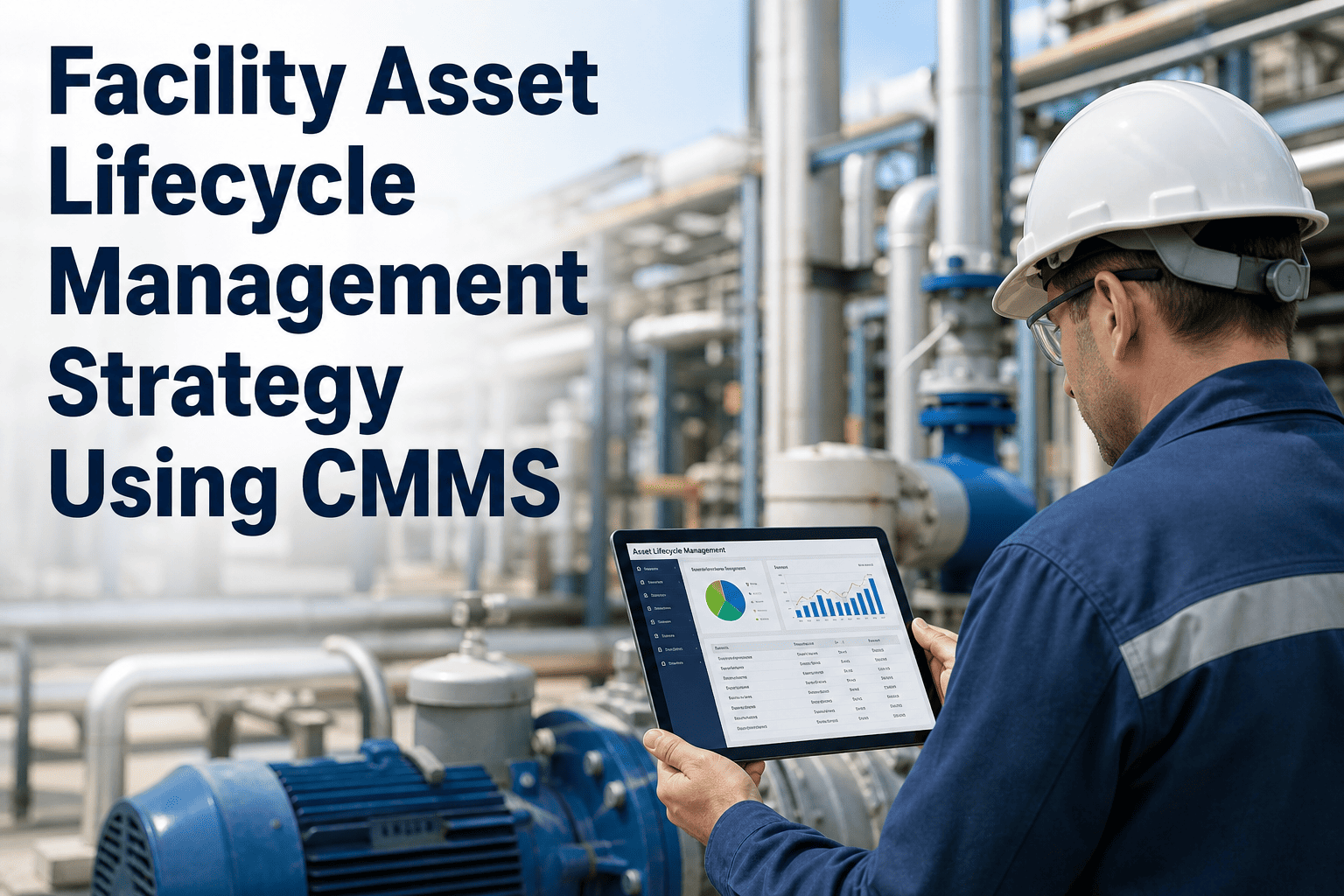
Visualize total cost of ownership per asset with breakdowns by maintenance labor, parts, energy consumption, and downtime impact. Identify the exact point where repair costs cross the replacement threshold — and build capital budget projections 3-5 years ahead based on fleet-wide degradation trends.


Condition-Based Work Order Generation

When vibration readings exceed alarm thresholds, when thermographic scans detect hot spots, or when efficiency drops below target — the system automatically generates prioritized work orders with the relevant condition data attached, so technicians arrive at the asset with full diagnostic context.

We were replacing chillers on a 20-year calendar cycle regardless of condition. After implementing lifecycle tracking through CMMS, we extended two units to year 27 while accelerating replacement of a third that was failing at year 14. The net savings funded our entire building automation upgrade.

— Director of Engineering, Class A Office Portfolio, 1.2M sq ft

Start Managing Equipment Lifecycles — Not Just Maintenance Tasks

Oxmaint gives facility managers the lifecycle intelligence to extend equipment life, optimize capital spending, and eliminate the reactive replacement cycle. Every asset gets a complete digital history from acquisition through decommissioning — with automated alerts when condition data signals it is time to plan the next move.
Frequently Asked Questions

What is facility equipment lifecycle management?
Lifecycle management is a systematic approach to tracking and optimizing every phase of an equipment asset's life — from acquisition planning and commissioning through active service, condition monitoring, and eventual replacement. Unlike basic preventive maintenance, lifecycle management focuses on maximizing the total economic value extracted from each asset over its full service life.
How does lifecycle management differ from preventive maintenance?
Preventive maintenance keeps equipment running day-to-day. Lifecycle management takes a 15-25 year view — connecting PM execution quality to long-term asset health, tracking degradation trends over years, and making data-driven decisions about when to repair, refurbish, or replace. Sign up for Oxmaint to see both perspectives in a single platform.
Which equipment should be prioritized for lifecycle tracking?
Start with the highest-value, highest-impact assets: central plant equipment (chillers, boilers, cooling towers), electrical distribution (switchgear, transformers), vertical transportation (elevators, escalators), and fire/life safety systems. These represent 60-70% of total equipment replacement cost in a typical commercial building.
How quickly can a CMMS be set up for lifecycle management?
Core asset registry setup takes 2-4 weeks for a typical commercial building. Historical maintenance data migration adds another 2-3 weeks. Most facilities are running automated lifecycle tracking within 60 days. Book a demo to see the implementation roadmap and timeline for your building portfolio.
What data inputs does condition-based lifecycle management require?
The foundation is consistent maintenance records — work order history, parts consumption, and labor hours per asset. Adding condition monitoring data (vibration, thermography, oil analysis) dramatically improves prediction accuracy. Most facilities start with maintenance history and layer in condition monitoring over the first 6-12 months.
Can lifecycle management work across a multi-building portfolio?
Portfolio-level lifecycle management is where the largest capital savings appear. Comparing identical equipment across buildings reveals which maintenance practices actually extend service life and which buildings are aging faster. Sign up for Oxmaint to manage lifecycle data across unlimited building locations from a single dashboard.

Share This Story, Choose Your Platform!