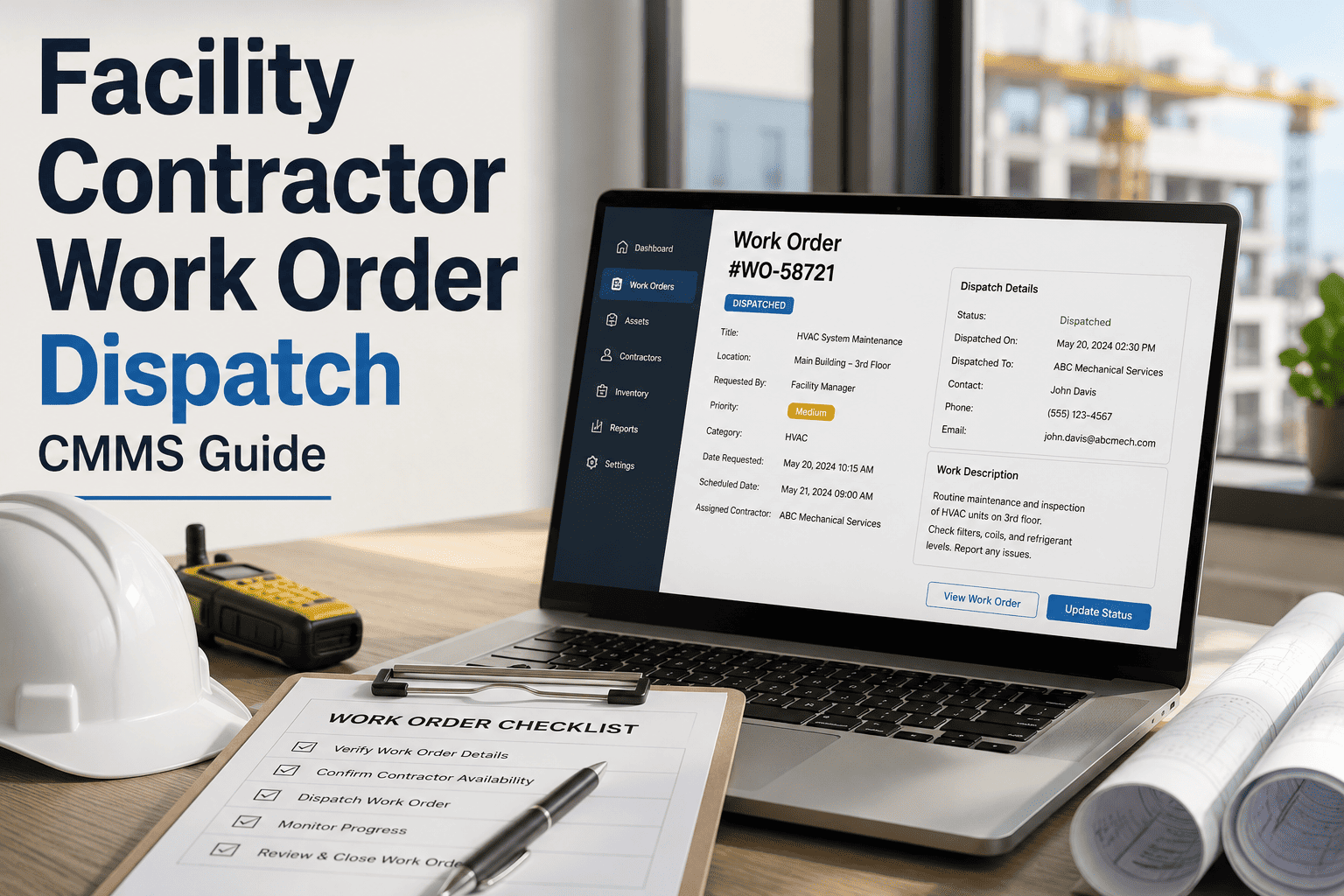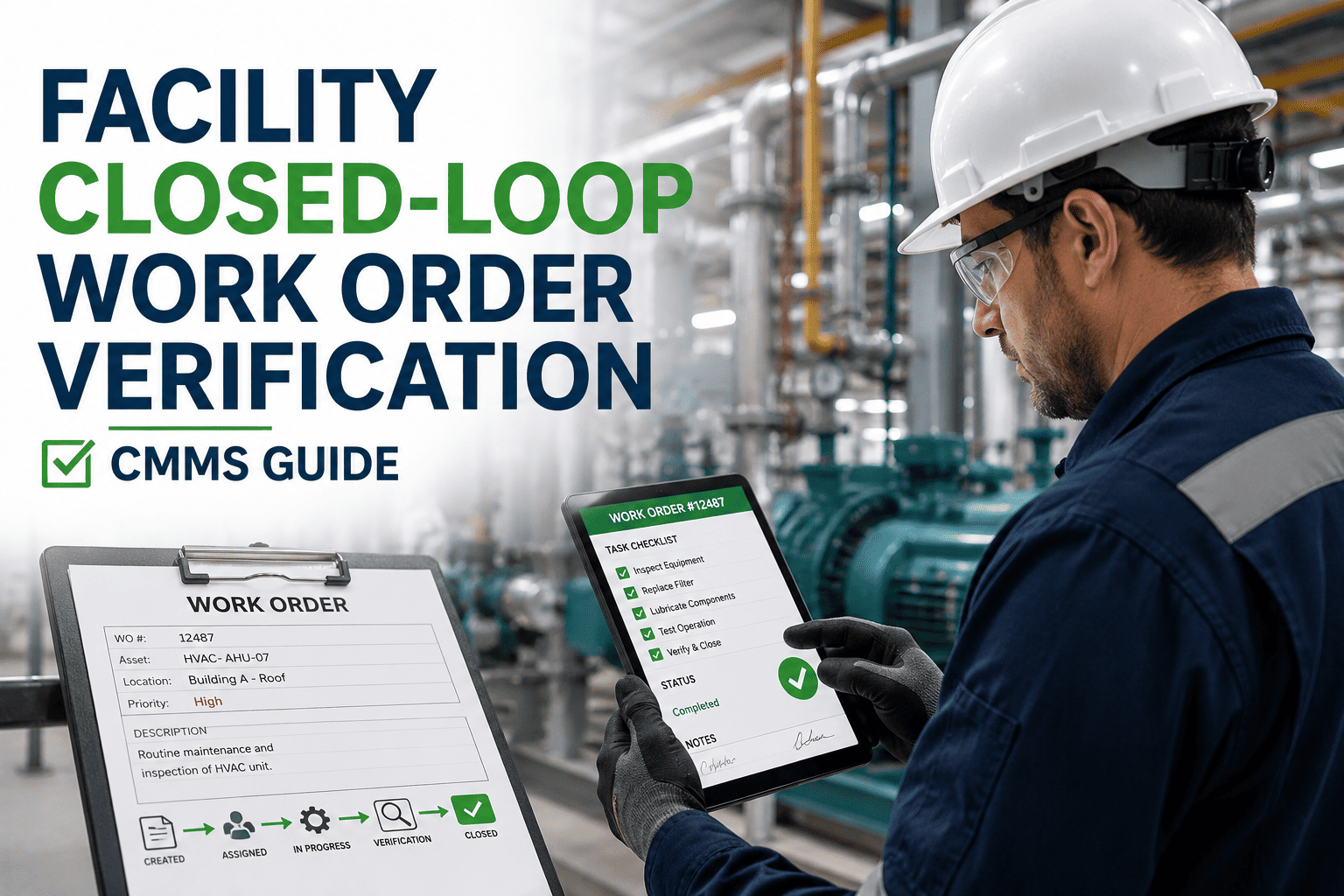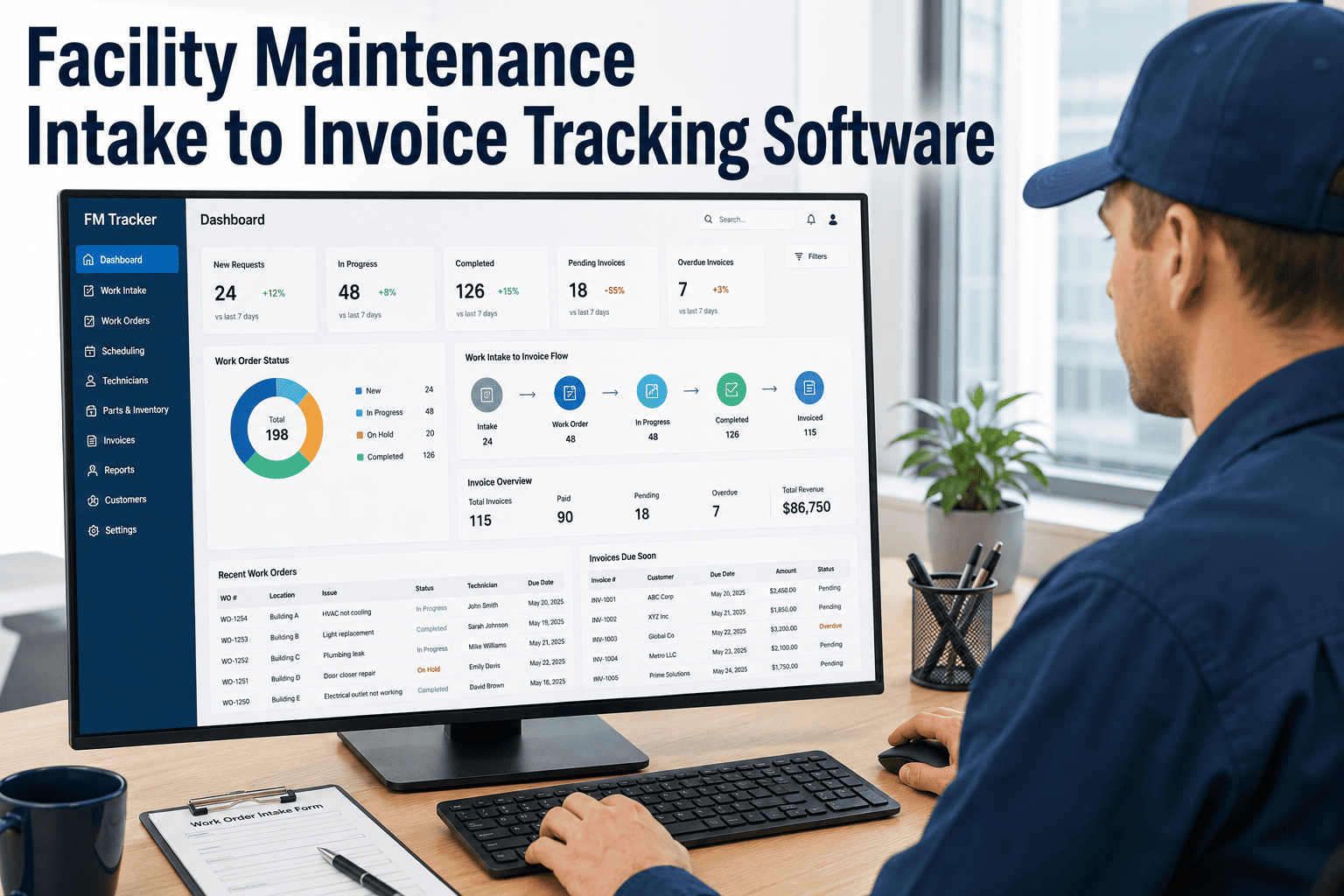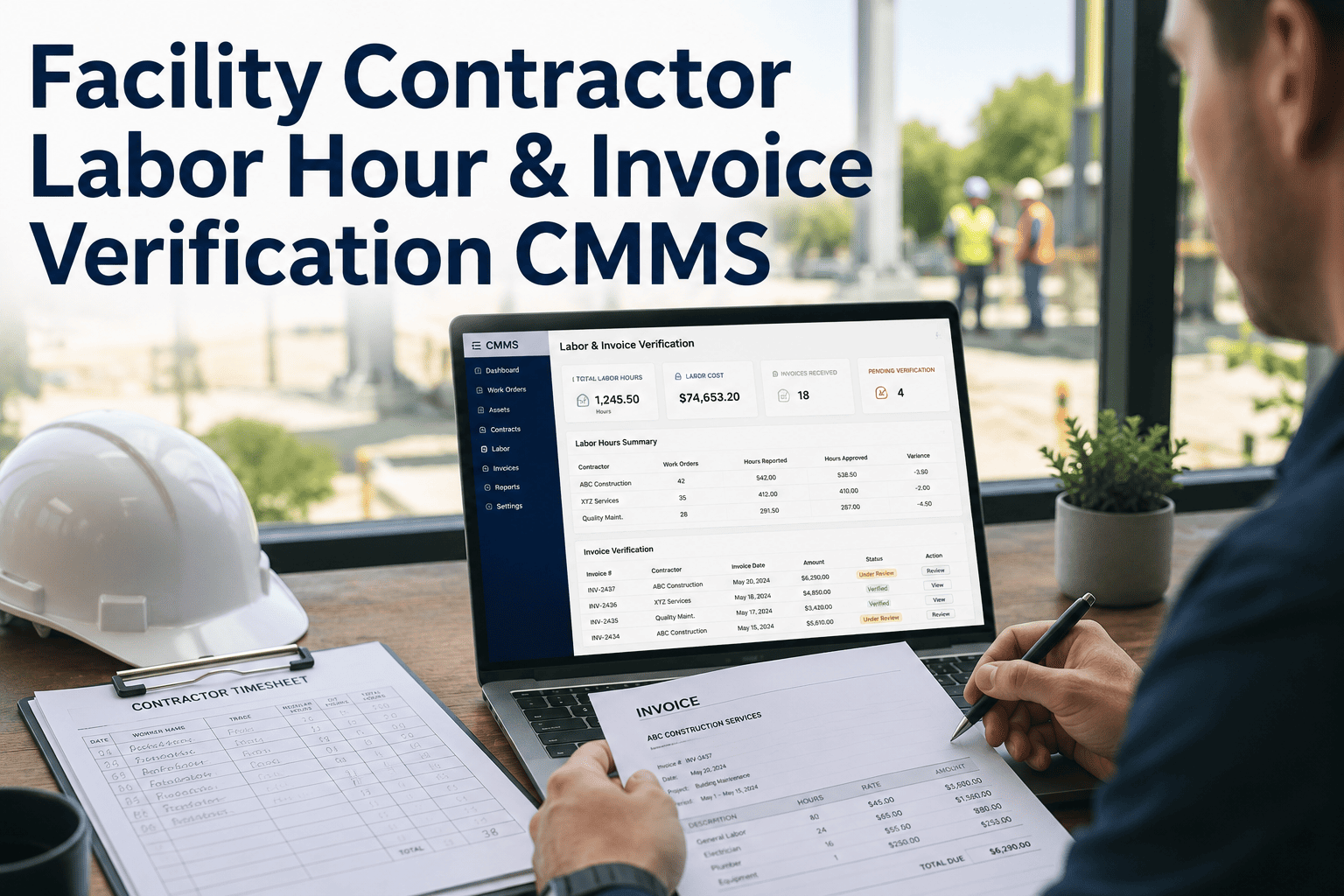
Verifying facility contractor labor hours against actual work-order scope is where most maintenance teams quietly leak 8–14% of their annual service spend — typically through rounded-up timestamps, unbundled trip charges, and materials billed but never installed. A CMMS that ties every clock-in/out event, part issue, and photo evidence directly to the original work order line turns invoice approval from a gut-check into a five-minute audit. Facilities running this closed-loop verification consistently cut invoice disputes by 60% or more within two billing cycles. You can Start Free Trial to see the labor-to-invoice reconciliation dashboard built specifically for facility contractors.
Are you paying for contractor hours nobody actually worked?
The average facility overpays contractors by 11% on labor invoices — rounded timestamps, scope creep, and materials billed without installation evidence. A CMMS-based verification loop closes that gap in a single billing cycle.
What unverified contractor invoices actually cost your facility
A 180-asset facility spending $42,000 annually on outsourced HVAC, electrical, and janitorial labor typically loses $4,600–$5,900 per year to invoice leakage. Here is where the money leaves.
The labor-to-invoice verification equation
A defensible approval workflow compares billed hours against CMMS-tracked clock events, validated against work-order scope and materials issued. The formula below is the one audit-ready facilities use every billing cycle.
Five-stage CMMS invoice verification workflow
Each stage produces an audit artifact. Skip any one and the chain of custody breaks — which is exactly what contractors rely on when disputing a short-paid invoice.
Work order scope lock
Before dispatch, the work order scope, estimated hours, and bill-of-materials are locked in the CMMS. Any deviation requires a formal change order — not a footnote on the invoice.
Geo-stamped clock events
Contractors clock in and out through the CMMS mobile app. Each event carries a GPS coordinate, timestamp, and work-order ID — eliminating rounded-up hours and phantom site visits.
Materials validation
Every part installed is scanned or logged against the work order BOM. The CMMS cross-references vendor delivery receipts and facility inventory issues before the line is approved.
Automated variance flag
On invoice receipt, the CMMS auto-calculates VIT and compares it to the billed total. Variances over 2% are routed to the facility manager with a side-by-side discrepancy report.
Audit-ready approval
Approved invoices carry a complete evidence packet — clock events, material scans, photos, scope sign-off — stored against the work order for seven-year compliance retention.
Manual reconciliation vs. CMMS-verified invoices
The difference is not just speed — it is whether you can defend a short-pay decision when a contractor disputes your adjustment.
| Verification Dimension | Manual Process | CMMS-Verified |
|---|---|---|
| Time per invoice review | 22–35 minutes cross-referencing paper timesheets | 3–5 minutes, auto-flagged exceptions only |
| Labor hour evidence | Contractor self-reported, often rounded to nearest half-hour | Geo-stamped clock events tied to work order ID |
| Materials cross-check | Visual inspection of delivery receipts vs. invoice lines | Auto-matched against BOM and inventory issue logs |
| Scope-creep detection | Caught only if reviewer remembers original scope | Automatic variance flag when hours exceed estimate by 2%+ |
| Dispute defensibility | Handwritten notes, disputed by contractor counsel | Time-stamped evidence packet, rarely disputed |
| Annual leakage (mid-size facility) | $4,600–$5,900 typical | Under $400 after two billing cycles |
A 180-asset plant, one billing cycle, $3,840 recovered
A Midwest manufacturing facility processing 140 contractor invoices per month deployed CMMS-based verification. Here is what the first audited cycle looked like.
The contractor accepted the adjustment without dispute — the geo-stamped clock data and missing inventory scans were indisputable. Across all 140 invoices that month, the facility recovered $11,200 total. Annualized, that is $134,400 — roughly 3.2× the CMMS subscription cost.
Stop paying for hours nobody worked.
Deploy CMMS-based contractor invoice verification and recover 8–14% of your annual labor spend within the first billing cycle.
Contractor invoice verification checklist
Run every contractor invoice through these eight checks before payment release. The CMMS automates items 1–5; items 6–8 require human sign-off but take under two minutes each when the data is already assembled.
Clock hours match work order
CMMS clock-in/out events reconcile to billed hours within 2% tolerance. Flag any rounding to nearest half-hour.
GPS coordinates on site
Every clock event geo-stamped within 500m of the facility address. Reject events from contractor's shop or home.
Materials issued = materials billed
BOM lines matched against inventory issue logs and vendor delivery receipts. Quantity and unit cost variance flagged.
Scope within estimate
Total hours and materials fall within the original work order estimate. Excess requires approved change order reference.
Rate matches contract
Billed hourly rate and material markups match the master service agreement. Holiday/OT premiums validated against schedule.
Photo evidence review
Before/after photos attached to work order confirm work was performed and completed to facility standard.
Trip charge validation
Trip charges match actual dispatch count from CMMS. Duplicate trips for same work order flagged and removed.
Final approval sign-off
Facility manager reviews the assembled evidence packet and approves or short-pays with documented reasoning.
Contractor invoice verification, answered
The five questions facility managers ask most before deploying CMMS-based labor and invoice verification.
How does the CMMS capture contractor clock hours without forcing them to use our system?
Contractors use a lightweight mobile web app — no download required. They receive a work order link, clock in with a GPS stamp on arrival, and clock out on completion. The entire process takes under 15 seconds per event and works on any smartphone. Most contractors adopt it within one billing cycle because it also accelerates their own invoice approval.
What happens when the contractor disputes a short-pay adjustment?
The CMMS generates a complete evidence packet — geo-stamped clock events, material issue logs, BOM comparison, scope variance calculation, and photo documentation — attached to the work order. You export this as a single PDF. In practice, contractors rarely dispute when presented with timestamped GPS data. Facilities report dispute rates dropping by 60–80% after the first two cycles. You can see the dispute-resolution workflow by booking a demo at Book a Demo.
Can the system handle multiple contractors with different rate structures?
Yes. Each contractor profile stores their master service agreement rates — straight time, overtime, holiday premium, material markup percentage, and trip charge schedule. The CMMS applies the correct rate automatically based on the work order's assigned contractor, dispatch time, and day of week. Rate updates are versioned with effective dates so historical invoices always calculate against the rate in effect at time of service.
How long does implementation take for a facility with 50+ contractors?
Typical deployment is 3–4 weeks: week one for contractor profile and rate setup, week two for work order template configuration, week three for mobile clock-event pilot with two to three contractors, and week four for full rollout. Most facilities process their first fully verified billing cycle by week five. Existing work order data can be imported via CSV or API integration with your current system.
What is the typical payback period for a CMMS invoice verification deployment?
Facilities spending $40K+ annually on contractor labor typically recover the full CMMS subscription cost within the first 60–90 days of go-live. A 180-asset plant spending $42K per year on outsourced labor recovers an average of $3,800–$5,900 annually — against a subscription cost of roughly $4,200. Year-two ROI exceeds 300% because the verification infrastructure is already in place. You can calculate your specific payback by starting a Start Free Trial with your actual invoice volume.
Verify every contractor hour. Recover every leaked dollar.
Join the facilities that cut invoice disputes by 60% and recovered 8–14% of annual contractor spend within one billing cycle.
Free 14-day trial · No credit card